For your mobile home, the best storm shelter locations include underground shelters installed within 150 feet of your home, above-ground safe rooms anchored to your property, or transportable shelters that move with you. You’ll want to choose a spot with good soil drainage, clear pathways, and no overhead hazards like trees or power lines. If personal shelters aren’t feasible, nearby community shelters serve as critical backups. There’s much more to reflect upon when making the safest choice.
Key Takeaways
- Underground storm shelters offer maximum protection but require proper soil drainage assessment and excavation before installation near mobile homes.
- Above-ground safe rooms provide effective tornado protection without excavation and can be customized to fit specific property layouts.
- Transportable tornado shelters built with industrial-strength steel move with your mobile home and protect against EF5 tornadoes.
- Position any storm shelter within 150 feet of your mobile home to ensure rapid access during severe weather emergencies.
- Community storm shelters in mobile home parks or public buildings serve as critical backup options when personal shelters aren’t feasible.
Why Mobile Homes Need a Separate Storm Shelter
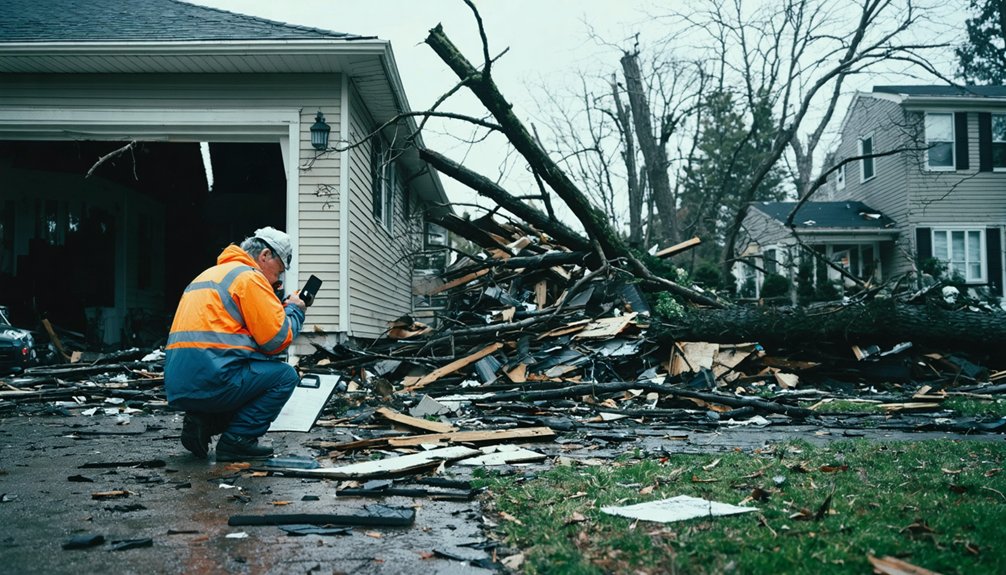
Mobile homes offer affordability and flexibility, but they’re dangerously vulnerable during tornadoes and severe storms. Their lightweight construction and minimal anchoring provide virtually no structural resistance against high winds.
Nearly half of all tornado fatalities occur in mobile homes, despite representing less than 10% of total housing stock.
You can’t rely on your mobile home’s walls to protect you when severe weather strikes. Storm preparedness isn’t optional—it’s survival.
A separate, dedicated shelter gives you genuine protection that your mobile home simply can’t provide.
Shelter accessibility matters because seconds count during a tornado warning. Having a properly installed storm shelter nearby means you’re not gambling with your life.
Your freedom to live in a mobile home shouldn’t come at the cost of your safety.
Underground Storm Shelters for Mobile Home Properties
When installing an underground storm shelter on your mobile home property, you’ll need to excavate a hole, lower the shelter into place, and backfill the surrounding area to secure the structure.
You must assess your soil’s drainage capacity beforehand, as poor drainage can lead to water accumulation that compromises the shelter’s structural integrity.
Keep in mind that this option requires land ownership, making it impractical if you’re renting or don’t control the property.
Excavation And Installation Process
Installing an underground storm shelter on your mobile home property starts with selecting the right location—one with stable soil, proper drainage, and enough clearance from trees, power lines, and other hazards.
Proper excavation techniques and understanding installation challenges guarantee your shelter performs when it matters most.
- Excavate to manufacturer-specified depth, accounting for soil composition and groundwater levels
- Lower the prefabricated shelter into the hole using professional-grade lifting equipment
- Backfill around the structure carefully, compacting soil to prevent shifting or settling
- Anchor the shelter according to FEMA guidelines and local building codes
- Verify drainage slopes away from the entrance to prevent water accumulation
Taking ownership of this process means you’re securing reliable, permanent protection that’s entirely yours—regardless of what storm conditions develop overhead.
Soil Drainage Requirements
Proper soil drainage directly determines whether your underground shelter remains a reliable refuge or becomes a flooded liability.
Sandy and gravelly soils drain efficiently, making them ideal for underground installations. Clay-heavy soils retain water, creating hydrostatic pressure that can compromise structural integrity over time.
You’ll need a professional soil assessment before committing to your installation site. Effective drainage techniques include installing perforated drain pipes around the shelter’s perimeter, adding gravel backfill layers, and positioning the structure above your property’s natural water table.
Sloping surrounding ground away from the entrance further redirects surface runoff.
Don’t ignore seasonal water patterns on your property. Areas prone to pooling after heavy rainfall signal problematic soil types that demand either relocation of your shelter or significant drainage system investment.
Property Ownership Considerations
Three critical ownership factors determine whether you can legally install an underground storm shelter on your mobile home property.
Property leasing arrangements often restrict permanent installations, making storm preparedness planning essential before signing any lease agreement.
Key ownership considerations include:
- Land ownership grants full installation rights without landlord approval requirements.
- Lease agreements must be reviewed carefully for excavation and permanent structure restrictions.
- Landlord written consent is mandatory when you’re renting the land beneath your mobile home.
- Local zoning regulations dictate underground shelter placement and permit requirements.
- Property transfer implications determine whether your shelter stays or moves with you.
Understanding these factors before investing in underground protection guarantees your storm preparedness decisions align with your legal rights and long-term housing flexibility.
Above-Ground Safe Rooms Designed for Mobile Home Properties
When underground installation isn’t feasible due to property or soil limitations, above-ground safe rooms offer a highly effective alternative for mobile home residents. You can position these structures adjacent to your mobile home or inside an existing outdoor building, anchored directly onto a concrete slab for maximum structural integrity.
Safe room advantages include ground-level accessibility, eliminating stairway concerns while delivering tornado-force wind resistance comparable to below-ground options.
You’re not locked into a one-size-fits-all solution either — shelter customization allows you to select dimensions, door placement, and ventilation configurations that suit your specific property layout.
Engineered to withstand EF5 conditions when properly anchored, above-ground safe rooms give you reliable protection without requiring land ownership or major excavation, making them a genuinely practical choice for mobile home living.
Transportable Shelters That Move With Your Mobile Home
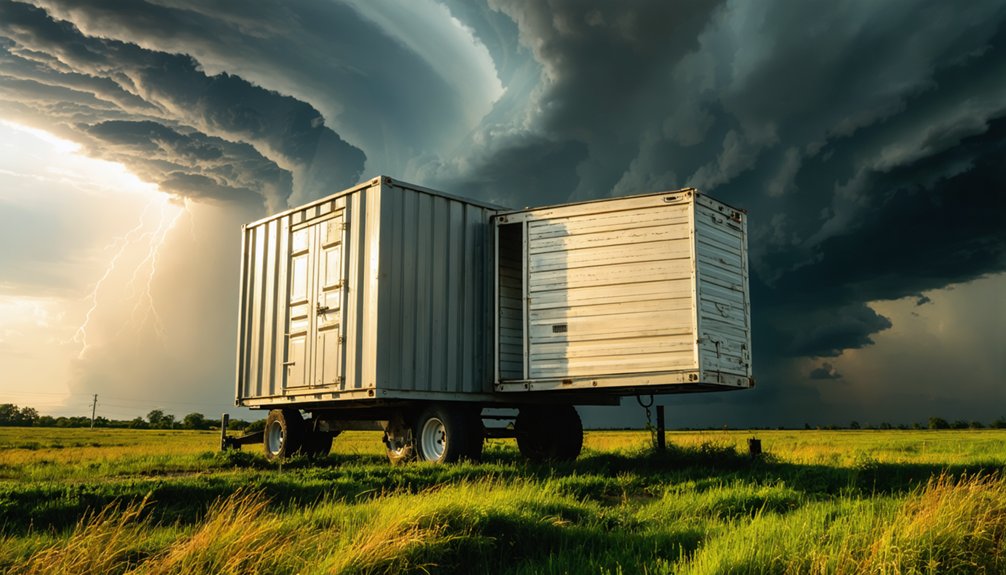
If you’re a mobile home resident who anticipates relocating, a transportable tornado shelter lets you bring your protection with you rather than leaving it behind.
These shelters feature industrial-strength steel construction with secure locking mechanisms, anchored to an outside concrete slab until you’re ready to move.
Rated to withstand EF5 tornado forces, they deliver safety standards comparable to permanent installations without sacrificing your flexibility.
Mobility And Relocation Benefits
One of the standout advantages of transportable tornado shelters is that they move with you when you relocate your mobile home. You’re not leaving your investment or your safety behind.
These shelters offer shelter customization and safety features that match permanent installations.
Key relocation benefits include:
- Portability: Industrial-strength steel construction withstands transport and repeated installation
- Anchoring flexibility: Secure attachment to new concrete slabs wherever you settle
- EF5-rated protection: Your safety standards don’t downgrade when your address changes
- Cost efficiency: You avoid purchasing a new shelter at each location
- Adaptable safety features: Locking mechanisms and ventilation systems perform consistently across installations
You’ve earned the freedom to move without compromising protection. A transportable shelter guarantees your safety travels with you.
Steel Construction And Security
Three layers of industrial-strength steel give transportable tornado shelters their structural integrity, letting them withstand EF5-force winds and high-velocity debris impacts without compromising your safety.
Steel durability isn’t just a selling point—it’s the core reason these units perform comparably to permanent installations. You’re getting military-grade construction engineered to absorb extreme rotational forces that would destroy conventional structures.
Shelter security comes from precision-engineered locking mechanisms that seal the door against catastrophic wind pressure. These locks prevent forced entry from debris-driven impacts while keeping you secured inside until conditions clear.
The anchoring system connects directly to your concrete slab, eliminating movement during the storm’s peak intensity. You’re not sacrificing protection for portability—you’re getting both in a single certified unit built to travel and defend.
How Far Is Too Far? The Safe Distance Rule for Storm Shelters
When a tornado strikes, every second counts—and the distance between your mobile home and your storm shelter can mean the difference between life and death.
Shelter accessibility and evacuation timing directly impact your survival odds, so placement isn’t negotiable.
Follow these critical distance guidelines:
- Position your shelter within 150 feet of your mobile home for rapid access
- Clear all pathways of obstacles, debris, and clutter before severe weather season
- Avoid placing shelters near trees or power lines that could block emergency exit routes
- Account for nighttime navigation—lighting along your shelter path is essential
- Time your practice drills—you should reach your shelter in under 60 seconds
Your shelter’s proximity isn’t just convenience—it’s your freedom to survive on your own terms.
Community Storm Shelters as a Backup Option for Mobile Home Residents
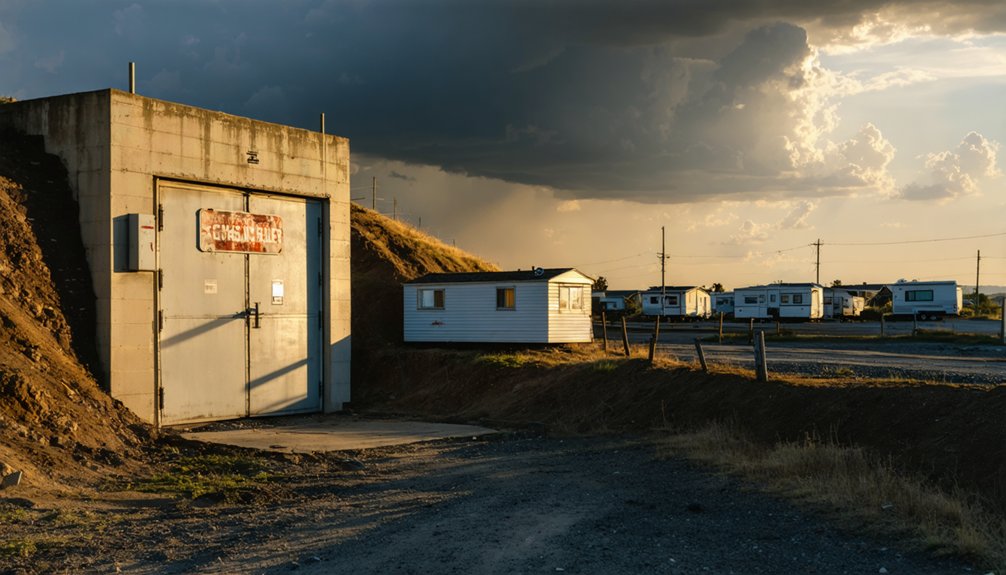
Community storm shelters serve as a critical backup option when a personal shelter isn’t feasible—but they come with serious limitations you need to understand.
Despite their community shelter benefits, nearly half of all tornado fatalities occur in mobile homes, partly because residents in “Dixie Alley” live 20 or more miles from the nearest shelter. That distance can cost you your life.
Nearly half of all tornado fatalities occur in mobile homes—often because the nearest shelter is simply too far away.
Since the deadly 2011 tornado outbreak killed over 300 people, community shelter usage has increased considerably. Mobile home parks now frequently provide purpose-built structures rated for tornado-force winds.
Churches and fortified public buildings also serve as designated safety locations.
For emergency preparedness, identify your nearest community shelter today—don’t wait for severe weather.
Know your route, travel time, and any access restrictions before a tornado warning activates.
Soil, Drainage, and Clearance Rules for Shelter Placement
Whether you rely on a community shelter or install your own, where you place that shelter on your property determines how well it protects you.
Soil types and drainage solutions directly affect your shelter’s structural integrity and long-term safety.
Follow these critical placement rules:
- Choose stable soil that supports your shelter’s foundation without shifting or settling.
- Implement drainage solutions to prevent water accumulation around and inside your shelter.
- Maintain clear pathways free of clutter, obstacles, and overgrown vegetation.
- Keep safe distances from trees, power lines, and other storm-generated hazards.
- Follow local building codes and FEMA guidelines to guarantee certified compliance.
Ignoring these factors compromises your shelter’s effectiveness exactly when you need it most.
Take control of your safety by making smart placement decisions now.
NSSA Certification Standards for Mobile Home Shelters
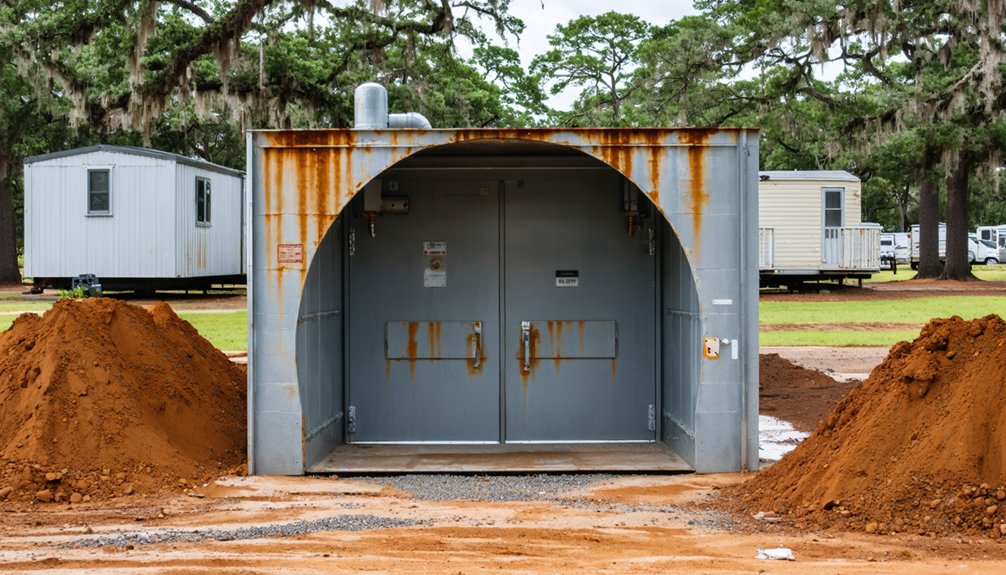
Choosing a storm shelter without verified certification puts your life at risk. The National Storm Shelter Association (NSSA) sets the standards that separate genuine protection from false security.
NSSA benefits extend across all shelter types, ensuring concrete walls reinforced with steel meet rigorous construction requirements. Certified doors withstand EF5 tornado forces and flying debris impacts.
Ventilation systems maintain breathable air during extended occupancy, keeping you safe when storms linger. Below-grade shelter types position you below flooding risks during heavy rainfall.
You’ll recognize certified shelters by the official NSSA seal, confirming adherence to strict national safety standards. Before purchasing any shelter for your mobile home, verify that certification documentation exists.
Don’t compromise your family’s safety by accepting unverified products that claim protection without proven testing credentials.
Frequently Asked Questions
Can Renters Install a Storm Shelter Without Landowner Permission?
You can’t install a storm shelter without your landlord’s permission. Renter rights don’t override property ownership, and storm shelter regulations require landowner authorization before any ground excavation or permanent anchoring modifications occur on private property.
How Much Does a Certified Mobile Home Storm Shelter Typically Cost?
With nearly half of tornado fatalities occurring in mobile homes, you can’t afford to wait. Shelter installation costs vary by storm shelter types, typically ranging from $3,000 to $15,000 for certified protection.
Are Storm Shelters Covered Under Standard Mobile Home Insurance Policies?
Standard mobile home insurance policies typically don’t cover storm shelters. You’ll need to check with your provider about adding riders for storm preparedness equipment. Securing proper insurance coverage guarantees your shelter investment remains financially protected.
What Is the Maximum Occupancy Capacity for Residential Storm Shelters?
Your storm shelter regulations don’t specify a universal maximum — manufacturers determine occupancy safety limits based on interior square footage. You’ll find capacity ratings on your shelter’s certification label, so always follow those guidelines strictly.
How Long Can People Safely Remain Inside a Sealed Storm Shelter?
You can stay safely sheltered for several hours when you’ve stocked emergency supplies and your ventilation systems circulate fresh air, keeping you breathing freely, thinking clearly, and remaining protected until conditions outside become safe.
References
- https://blog.bluebeam.com/tornado-shelter-options/
- https://stormsheltersofia.com/blog/tornado-shelters-for-mobile-homes/
- https://atlassaferooms.com/safe-rooms/
- https://survive-a-storm.com/blog/tornado-safety-options-mobile-homes/
- https://www.facebook.com/groups/188202667969872/posts/7119658031490933/
- https://jtserviceco.com/finding-the-ideal-spot-for-your-storm-shelter/
- https://www.youtube.com/watch?v=4mlCWSPhKy0
- https://www.reddit.com/r/tornado/comments/1llfil6/tornado_safety_in_a_mobile_home_whats_our_safest/
- https://www.weather.gov/media/wrn/Mobile-Home-Safety-One-Pager-Final.pdf
- https://ussaferoom.com/mobile-home-tornado-shelters/