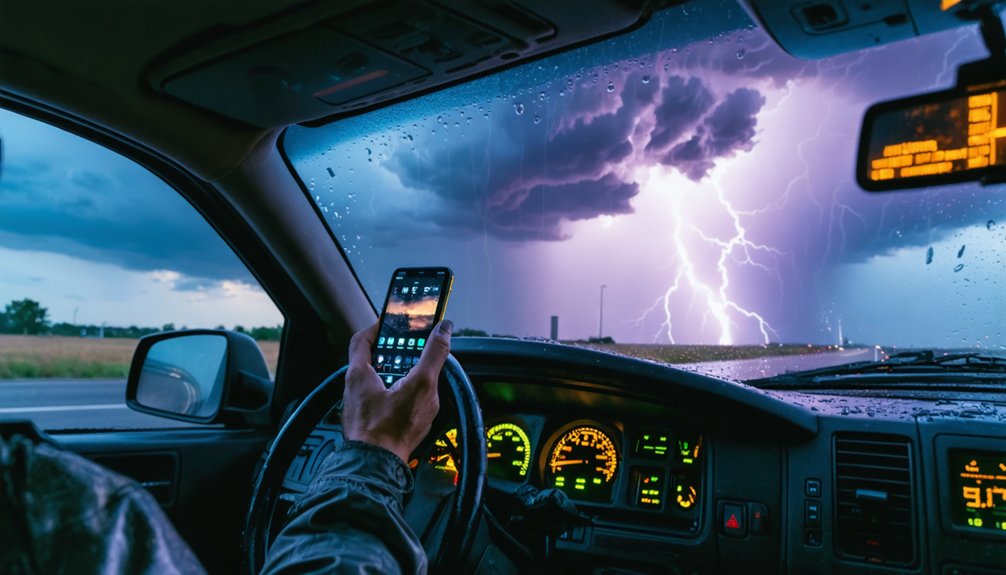
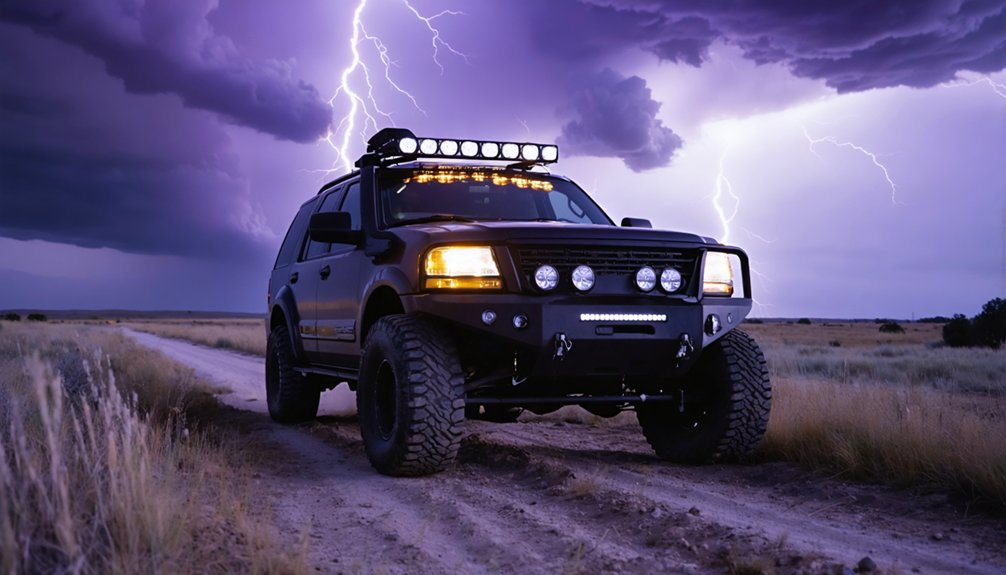
For storm chasing, you’ll want a full-size SUV or minivan with all-wheel drive, unlimited mileage, and solid cargo capacity. National chains like Enterprise and Hertz stock suitable options, but you must verify hail damage clauses and off-road restrictions before signing. Budget $1,500–$2,000 for a three-week trip, and book early during peak season. Understanding rental insurance gaps and vehicle-specific tradeoffs will sharpen every decision you make on the road ahead.
Key Takeaways
- Mid-size SUVs and minivans are ideal storm chasing rentals, offering elevated visibility, all-wheel drive, cargo space, and highway efficiency.
- Always choose unlimited mileage packages, as storm chase routes can cover thousands of miles across multiple states.
- Review rental agreements carefully, since collision damage waivers often exclude hail strikes, tire damage, and unpaved road incidents.
- Book rentals well in advance during peak tornado season (late April to early June) to secure preferred vehicle classes.
- Guided chase tours from operators like Silver Lining Tours often outvalue solo rentals by bundling vehicles, equipment, and expert forecasting.
Can You Really Chase Storms in a Rental Car?
Whether a rental car can handle storm chasing depends less on the vehicle’s origin and more on how well it matches the physical and operational demands of field meteorology.
You’ll find that mid-size SUVs and minivans perform reliably across the interstate distances that storm tracking demands. What matters is cargo capacity, seating height, drivetrain performance, and highway efficiency.
Safety tips from experienced chasers consistently emphasize selecting vehicles with high visibility sightlines and adequate clearance for wet rural roads.
Rental agreements introduce real constraints—off-road travel, hail exposure, and rapid mileage accumulation can all trigger coverage disputes. Review your collision terms carefully before committing.
When you choose the right vehicle class and confirm your insurance terms, a rental becomes a fully capable chase platform.
Best Rental Vehicle Types for Storm Chasing
When you’re selecting a rental vehicle for storm chasing, the class you choose directly shapes your situational awareness, gear capacity, and operational endurance.
Mid-size and full-size SUVs deliver elevated seating positions, improving storm structure visibility while accommodating substantial storm gear loads.
Minivans offer superior interior volume, making them practical for multi-person teams running extended chase routes across Tornado Alley.
All-wheel drive provides measurable traction advantages on saturated backroads, though it doesn’t replace disciplined route selection.
Prioritize unlimited mileage packages because aggressive chase routes routinely exceed 500 miles daily.
Strong cargo organization keeps instruments, cameras, and emergency supplies accessible without compromising driver focus.
Reliable air conditioning and multiple charging ports sustain operational efficiency through intense, heat-heavy chase days where fatigue and equipment failure directly compromise your decision-making.
SUV vs. Minivan: Which Wins on a Chase?
SUVs and minivans both serve legitimate roles in storm chasing, but they perform differently where it counts.
SUV advantages include higher ground clearance, better handling on degraded roads, and a commanding seating position that improves storm structure visibility. You’ll also find that SUVs handle rapid directional changes more confidently during active intercepts.
Minivan disadvantages become apparent in the field. Sliding doors slow egress under rapidly evolving threat scenarios, and lower ground clearance limits your options on muddy county roads.
That said, minivans offer superior interior space for passengers and gear, making them attractive to tour operators prioritizing comfort over agility.
If you’re chasing solo or in a small crew, the SUV’s performance edge matters more. For group tours managing equipment and passenger comfort, a minivan remains a practical compromise.
Visibility, Cargo Space, and Power: Features That Actually Matter on a Chase
When you’re selecting a rental for storm chasing, three functional criteria separate adequate vehicles from genuinely capable ones: seating height, cargo capacity, and highway performance.
A higher seating position lets you read storm structure, monitor road conditions, and track surrounding traffic with far greater accuracy than a low-profile sedan allows.
You’ll also need reliable cargo space for cameras, radar equipment, and emergency supplies, paired with an engine that sustains high interstate speeds without strain during rapid target repositioning.
Elevated Seating Enhances Visibility
Sitting higher off the ground changes how much you can see and how quickly you can read a developing storm. An elevated seating position gives you a direct sightline over flat terrain, letting you track wall clouds, rotation, and inflow bands without obstruction.
That visibility enhancement isn’t a luxury—it’s a tactical advantage when seconds matter.
SUVs and vans consistently outperform sedans here. You’ll spot hazardous road conditions earlier, identify escape routes faster, and assess storm structure with greater precision.
Seating comfort compounds this benefit. On 10-to-12-hour chase days across Tornado Alley’s highways, fatigue degrades decision-making. A vehicle that keeps you physically comfortable keeps your judgment sharp.
Prioritize models with adjustable, well-bolstered seats and a commanding forward view when selecting your rental.
Cargo Space For Gear
Gear accumulates fast on a multi-day chase—cameras, radar tablets, portable weather stations, coolers, extra clothing, and emergency supplies all compete for space before you’ve left the staging area.
A cramped vehicle forces poor cargo organization, which slows your reaction time when conditions shift and you need equipment immediately. SUVs and minivans offer configurable rear sections that let you segment gear by priority and access frequency.
Flat load floors simplify gear protection during rapid repositioning over rough or wet roads. You’ll want hard cases secured against lateral movement, not sliding freely into each other during emergency turns.
Evaluate trunk depth, fold-flat seat configurations, and tie-down anchor points before committing to a rental. Interior volume isn’t a comfort luxury—it’s an operational requirement that directly affects your field efficiency and equipment integrity.
Highway Power Matters Most
Once your gear is loaded and organized, the vehicle still has to perform across hundreds of highway miles before you ever get close to a storm. Highway performance isn’t optional — it’s foundational.
You’re repositioning constantly, sometimes covering 400 or 500 miles in a single day across flat Tornado Alley terrain.
Engine reliability directly affects your options. A sluggish or underpowered vehicle limits your ability to accelerate quickly when a situation changes, merge decisively, or maintain speed during extended highway runs.
Mid-size SUVs and full-size vans deliver the power-to-load ratio you need without straining under the weight of passengers and equipment.
Prioritize vehicles with proven powertrain records. Mechanical failure on a chase day doesn’t just cost time — it potentially removes you from position entirely.
How Much Does a Storm Chasing Rental Actually Cost?
How much you’ll actually spend on a storm-chasing rental depends on trip length, vehicle class, mileage terms, and damage coverage.
For a three-week trip, cost breakdown estimates place total rental fees between $1,500 and $2,000. That figure shifts considerably based on whether you select a mid-size SUV, full-size SUV, or minivan.
Unlimited mileage is critical. Storm routes routinely cover hundreds of interstate miles daily, and per-mile charges will destroy your budget fast.
Collision coverage and weather-related damage policies add meaningful cost but protect you from expensive post-chase claims involving hail or debris.
Weather damage coverage costs more upfront but shields you from devastating post-chase repair bills.
For practical budget tips, book early during peak spring season, compare unlimited-mileage packages across multiple agencies, and confirm windshield and tire damage terms before signing anything.
Undisclosed deductibles create financial exposure you can’t afford in the field.
Best Rental Companies for Storm Chasing Season
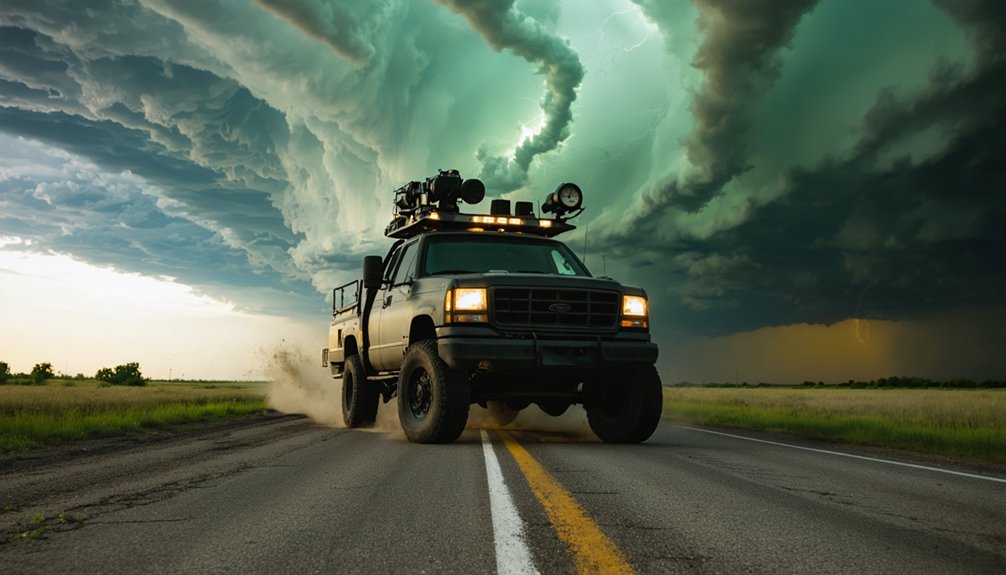
Knowing what a three-week chase trip costs sets your budget, but choosing the right rental company determines whether that budget holds up under field conditions.
Prioritize agencies offering unlimited mileage, since storm chasing essentials like long interstate repositioning runs burn mileage fast. Confirm explicit policies on hail damage, windshield chips, and tire failures before signing anything.
National chains like Enterprise and Hertz typically stock full-size SUVs and minivans, your strongest rental vehicle tips pointing toward models with high seating positions and ample cargo clearance.
Regional agencies near Oklahoma City or Amarillo occasionally offer more flexible damage terms during spring season.
Always carry supplemental insurance documentation and confirm roadside assistance coverage. A company that restricts weather-related claims will cost you far more than its daily rate suggests.
Hail, Mud, and Debris: Protecting Your Rental in the Field
Three distinct hazards—hail, mud, and airborne debris—drive the majority of rental damage claims in storm-chasing operations, and each requires a different defensive response.
For hail protection, you’ll want to reposition aggressively when core penetration becomes unavoidable—use radar loops to identify hail cores before you’re underneath them. Covered parking structures and highway overpasses provide temporary shelter when repositioning isn’t viable.
Mud management demands route discipline; stay on paved surfaces whenever possible, since off-road travel typically voids rental agreements outright. If mud exposure occurs, document conditions immediately with timestamped photos.
Airborne debris—fence posts, lumber, road signs—increases dramatically near confirmed tornadoes. Maintain lateral distance from circulation, and never allow target fixation to override your exit strategy.
Methodical decision-making eliminates most preventable damage scenarios.
Rental Insurance: What Storm Chasers Usually Get Wrong
When you book a rental for storm chasing, you’re likely assuming that the collision damage waiver covers all storm-related incidents. However, most CDW policies explicitly exclude damage caused by severe weather, off-road use, or driver negligence.
You’ll also find that standard liability coverage doesn’t account for hail strikes, windshield impacts from flying debris, or tire damage on unpaved rural roads—gaps that become costly the moment a supercell crosses your path.
Before you sign the rental agreement, you need to confirm exactly which weather-related damage clauses apply, what deductible thresholds trigger out-of-pocket exposure, and whether your personal auto policy or credit card coverage extends to storm-environment scenarios.
Common Coverage Gaps
Most storm chasers assume their rental coverage is solid until a hail dent or cracked windshield turns into a four-figure dispute at the return desk.
Standard collision damage waivers often exclude weather-related destruction, leaving dangerous insurance gaps you won’t discover until it’s too late.
Rental restrictions buried in your agreement frequently prohibit unpaved roads entirely, which kills your flexibility during active chase days.
Liability concerns multiply when you’re operating near storm debris fields or congested rural intersections.
Many contracts impose mileage limits that conflict directly with multi-state chasing routes. Skipping the unlimited mileage upgrade is a costly mistake.
Vehicle maintenance clauses can also shift mechanical responsibility onto you if poor conditions accelerate wear.
Review every line before signing—storm preparedness starts long before you reach Tornado Alley.
Weather Damage Misconceptions
Hail damage, cracked windshields, and debris strikes fall into a category most rental customers never think to verify: weather-related exclusions.
Weather damage myths persist because standard collision coverage *sounds* all-encompassing—it isn’t. Most rental agreements treat hail and flying debris as acts of nature, which means your collision waiver won’t cover them.
Storm chasing realities demand that you read the fine print before you’re staring at a dented hood in Oklahoma. Confirm whether all-encompassing coverage is included, not just collision.
Many rental companies offer it separately, and skipping it exposes you to full replacement liability. Your personal auto policy or credit card benefits might bridge that gap—but verify coverage limits and exclusions specifically for weather events before you accept the keys.
Booking a Storm Chasing Rental During Peak Tornado Season
Peak tornado season—running roughly from late April through early June—drives intense demand for rental vehicles across Oklahoma, Kansas, and the Texas Panhandle, so you’ll want to book well in advance if you’re planning a multi-week chase trip.
Tight vehicle supply in storm-prone regions means preferred classes—full-size SUVs, minivans—disappear fast. Securing unlimited mileage terms is critical, since storm chasing logistics routinely push vehicles beyond 500 miles daily across interstate corridors.
Confirm collision coverage, hail damage policies, and windshield chip deductibles before signing. Many standard policies exclude weather-related cosmetic damage, leaving you exposed.
Follow basic vehicle maintenance tips: verify tire pressure, fluid levels, and wiper condition at pickup. Roadside assistance enrollment adds a practical safety net when rapid repositioning forces you onto unfamiliar rural routes under deteriorating conditions.
When a Chase Tour Makes More Sense Than Renting Your Own Vehicle
If you lack meteorological training or field experience, joining an established chase tour eliminates the guesswork that makes solo rentals genuinely dangerous.
Operators like Silver Lining Tours, Tempest Tours, and Extreme Tornado Tours supply vehicles, instruments, radar access, and professional forecasting, costs you’d otherwise absorb individually.
When you factor in rental fees, unlimited mileage charges, insurance riders, and equipment procurement, a guided tour frequently delivers better value per chase day than managing your own vehicle independently.
Guided Expertise Reduces Risk
Renting your own vehicle gives you flexibility, but it transfers the full weight of meteorological decision-making onto you. Without guided strategies built from years of field experience, you’re interpreting radar, managing positioning, and executing escape routes simultaneously.
That’s a significant cognitive load under rapidly evolving severe weather conditions.
Joining an established operator like Silver Lining Tours or Tempest Tours embeds you within a structured risk management framework. Experienced lead chasers track mesoscale convective patterns, coordinate multi-vehicle positioning, and make real-time abort calls based on storm behavior you may not yet read accurately.
They’ve already absorbed the hard lessons about road networks, target selection, and when to disengage. You retain the freedom of the chase experience while offloading the decisions that carry the highest consequences.
Tours Supply All Equipment
Beyond decision-making support, guided tours strip away another major logistical burden: equipment acquisition. When you join an established operator, you’re not sourcing radar software, weather instruments, or camera mounts independently.
Tour logistics handle everything: the vehicle, the gear, and the technical infrastructure supporting each chase day.
Equipment rental becomes irrelevant because operators like Silver Lining Tours or Tempest Tours integrate professional tools directly into their chase fleet. You’re accessing calibrated instrumentation, reliable charging systems, and optimized cargo layouts without negotiating separate contracts or managing transport.
For chasers prioritizing field time over procurement headaches, this structure delivers a measurable operational advantage. Your energy stays focused on reading storm structure, not managing a fragmented gear checklist across multiple vendors and vehicle configurations.
Cost Comparison Favors Tours
When you break down the numbers, renting your own vehicle rarely wins on cost for a multi-week chase trip. A three-week rental runs roughly $1,500–$2,000 before factoring in fuel, insurance riders, unlimited mileage upgrades, and potential hail or debris damage claims.
Tour packages absorb those variables into a single rate, delivering better cost efficiency without hidden exposure.
Rental flexibility sounds appealing until you’re managing route logistics, equipment, and radar simultaneously. Chase tours eliminate that friction. You’re not negotiating liability terms or worrying about off-road policy violations—you’re chasing.
Established operators like Silver Lining Tours and Tempest Tours also spread vehicle costs across multiple passengers, lowering your per-day rate considerably. For multi-week commitments, the financial case for touring over solo renting is straightforward.
Frequently Asked Questions
Can Storm Chasing Experience Levels Affect Which Rental Vehicle You Should Choose?
Your experience levels absolutely affect which vehicle types you should choose. Beginners need higher visibility and spacious SUVs, while seasoned chasers can effectively utilize compact, maneuverable options that enable faster, more independent repositioning during rapidly evolving storm scenarios.
Are There Age Restrictions That Prevent Younger Chasers From Renting Chase-Suitable Vehicles?
Age restrictions can clip your wings—most rental policies bar drivers under 25 from larger SUVs or vans. You’ll also face surcharges and limited vehicle insurance options, directly affecting your access to chase-suitable vehicles.
Do Rental Companies Ever Track Vehicle Location During Active Severe Weather Outbreaks?
Yes, many rental companies use GPS-based rental tracking systems, and they’re not doing weather monitoring — they’re watching your location. You should review your agreement carefully, as flagged deviations during severe outbreaks can trigger alerts or contract violations.
Can You Legally Mount External Camera Equipment Onto a Rented Storm Chasing Vehicle?
You’ll need to review your rental agreements carefully before any camera mounting. Most contracts prohibit exterior modifications, and violating those terms can void your coverage, leaving you fully liable for any resulting damage.
Are There Seasonal Discounts Available for Storm Chasers Renting Vehicles Long-Term?
Long-term rentals don’t guarantee seasonal promotions specifically for storm chasers. You’ll need to negotiate directly with rental agencies, as standard long-term discounts may apply, but dedicated chaser pricing remains largely unconfirmed.
References
- https://www.reddit.com/r/stormchasing/comments/118gquq/help_with_car_rental_for_storm_chasing_british/
- https://www.stormchasingusa.com/what-to-consider-before-a-storm-chasing-tour/
- https://stormtrack.org/threads/rental-cars.31718/
- https://www.stormtours.com/information/storm-chasing-vehicles/
- https://extremetornadotours.com
- https://stormchasing.com
- https://www.youtube.com/watch?v=GU-KqSOfjwM
- https://bobistheoilguy.com/forums/threads/tornado-chaser-reed-timmer-posing-with-his-latest-rental-car.383360/
- https://www.tornadicexpeditions.com/the-tour-van
- https://www.instagram.com/p/C2neqYLutWi/