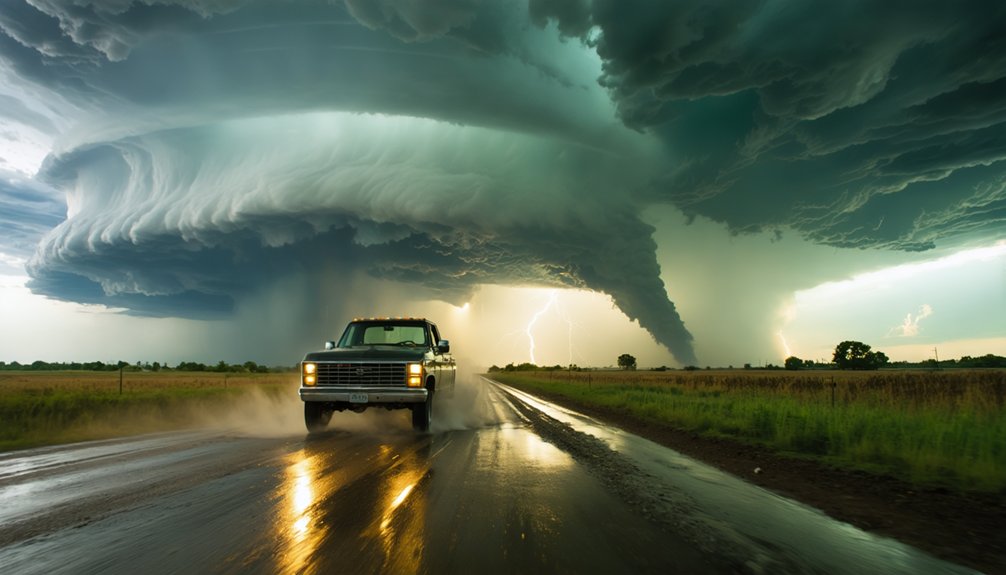
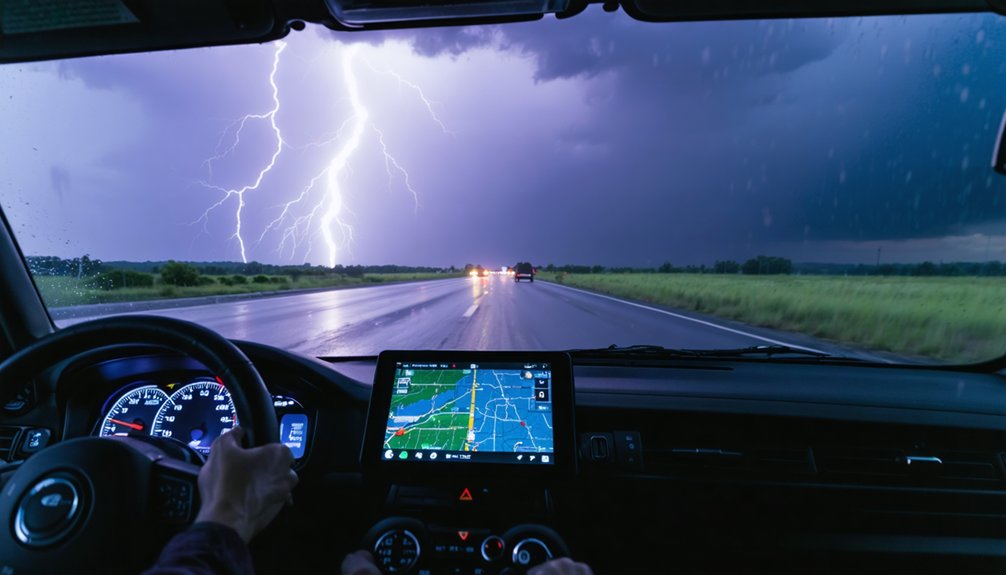
Whether you’re piloting through live thunderstorms in Microsoft Flight Simulator or reading supercell signatures in Helicity, the best weather and storm simulator games treat atmospheric conditions as genuine mechanics, not cosmetic backdrops. Titles like The Long Dark, Red Dead Redemption 2, and Storm Chasers force real decision-making under pressure. Educational tools like NOAA HotSeat even teach authentic meteorology. Each option suits a different play style, and understanding what separates them will sharpen how you choose.
Key Takeaways
- Microsoft Flight Simulator uses real-time meteorological data, modeling turbulence, icing, wind shear, and convective thunderstorm behavior with genuine precision.
- Top storm chasing titles include Helicity, STR, Storm Chasers, and SCR7, each emphasizing physics-accurate atmospheric mechanics over arcade gameplay.
- Survival games like Red Dead Redemption 2 and No Man’s Sky integrate weather as a core gameplay mechanic affecting movement and resources.
- Indie titles such as Weather Machine Simulator and A Painted Ocean treat atmospheric conditions as central gameplay systems rather than cosmetic effects.
- Hurricane simulation tools like NOAA HotSeat and SciJinks allow users to manipulate pressure and temperature variables to model real storm formation.
What Separates Realistic Weather Games From Shallow Effects
Weather in games falls into two categories: cosmetic dressing and systemic mechanics. Shallow effects deliver atmospheric effects visually — rain animations, wind sounds — without altering core gameplay strategies or environmental interaction. You’ll recognize them immediately: weather changes nothing you actually do.
Realistic weather realism runs deeper. It shifts storm dynamics that force you to adapt, recalculate, and survive. In The Witcher 3, rain soaks armor and affects movement. In Breath of the Wild, wet surfaces rewrite your climbing options entirely.
These systems create genuine survival challenges because weather actively reshapes your decisions. Game immersion follows naturally when weather carries mechanical weight. Your player experience transforms when a storm isn’t decoration but a threat demanding response.
That distinction — cosmetic versus consequential — separates forgettable weather from systems worth studying.
Microsoft Flight Simulator’s Real-Time Storm System Explained
When you load into Microsoft Flight Simulator, you’re connecting to real-time meteorological data that mirrors actual global conditions. This means the thunderstorm forming over the Gulf of Mexico in reality appears in your cockpit view simultaneously.
The system doesn’t simulate generic storm templates; instead, it pulls live atmospheric pressure readings, wind shear data, and precipitation patterns to construct dynamic storms that behave with measurable accuracy.
You’ll notice this precision immediately as turbulence, visibility drops, and icing conditions respond to the same variables a real pilot would calculate before takeoff.
Real-Time Weather Integration
Microsoft Flight Simulator’s real-time storm system stands apart from other flight games by pulling live meteorological data directly from global weather services. This means the thunderstorm you’re flying through over Chicago mirrors what’s actually happening in the sky above Chicago at that moment.
This integration delivers realism immersion that static weather engines simply can’t replicate. You’re not flying through scripted conditions—you’re maneuvering through genuine atmospheric data translated into turbulence, icing, and visibility shifts.
Weather unpredictability becomes a core mechanic rather than a cosmetic layer. Wind shear, pressure systems, and storm cells behave according to real physics models fed by live inputs.
That means your flight planning demands the same situational awareness a real pilot exercises, keeping every session technically demanding and genuinely dynamic.
Dynamic Storm Mechanics
Because Microsoft Flight Simulator pulls live meteorological data rather than cycling through scripted weather patterns, its storm system operates on a fundamentally different mechanical layer than most flight games.
You’re not experiencing pre-built conditions — you’re maneuvering through real dynamic storm impacts pulled from actual atmospheric feeds.
Here’s what makes this system technically distinct:
- Live METAR and wind shear data updates turbulence intensity in real time
- Convective cell modeling generates authentic thunderstorm vertical development
- Precipitation physics alter visibility, airspeed readings, and control responsiveness
- Pressure gradient simulation shifts crosswinds mid-approach without warning
These mechanics deliver immersive weather experiences that demand genuine pilot decision-making.
You’ll reroute, descend, or abort approaches based on conditions matching whatever’s actually happening globally — giving you unprecedented atmospheric freedom within a simulated environment.
Global Weather Accuracy
Unlike most simulators that rely on static or scripted weather databases, Microsoft Flight Simulator pulls live atmospheric data directly from real-world meteorological sources — meaning the storm you’re flying through over Miami right now mirrors what’s actually developing in that airspace.
The system integrates weather forecasting models from global agencies, translating atmospheric pressure differentials, wind shear patterns, and precipitation data into rendered environments you can actually navigate. You’re not experiencing approximations — you’re interacting with real global patterns mapped onto a simulated Earth.
Thunderstorms build dynamically over the Atlantic. Snowstorms materialize across Siberian corridors. The precision extends beyond aesthetics; turbulence, visibility reduction, and crosswind behavior all respond to actual meteorological conditions.
For aviation enthusiasts and simulation purists, that accuracy fundamentally separates Microsoft Flight Simulator from every competing platform.
The Most Realistic Storm Chasing Games Ranked
If storm chasing simulation is your focus, four titles stand out for mechanical depth and atmospheric accuracy: Helicity, STR, Storm Chasers, SCR7, and Twisted.
Each game prioritizes realistic tornado pursuit through distinct chase mechanics, from vehicle handling under extreme wind loads to storm cell tracking and intercept positioning.
You’ll find that the best chasing simulators distinguish themselves by modeling storm behavior dynamically rather than scripting weather events as fixed sequences.
Top Storm Chasing Titles
Five storm chasing titles stand out for their commitment to realistic meteorological simulation, each offering a distinct approach to replicating the chaos and precision of actual storm pursuit.
Understanding storm dynamics and mastering chase strategies separates casual players from skilled virtual meteorologists.
- Helicity – Delivers physics-accurate storm mechanics demanding real positioning decisions.
- STR (Storm Trackers) – Prioritizes detailed atmospheric modeling, rewarding methodical chase strategies.
- Storm Chasers – Immerses you directly into tornado pursuit with authentic storm dynamics.
- SCR7 – Ranks among elite simulators, emphasizing technical precision over arcade-style gameplay.
Each title challenges you to interpret rapidly shifting conditions, adapt your approach mid-chase, and respect the unpredictability that defines real-world storm pursuit.
Your decisions carry genuine consequence here.
Realistic Tornado Pursuit Mechanics
Together, these titles demand disciplined decision-making.
You’re not just chasing—you’re analyzing, calculating, and executing under conditions that replicate genuine field complexity.
Best Chasing Simulation Features
What separates a passable storm chasing game from a genuinely elite one comes down to layered simulation depth—atmospheric modeling, vehicle handling under wind load, radar interpretation, and real-time decision branching.
The best titles reward sharp chasing strategies while penalizing reckless positioning.
Top features defining elite chasing simulations:
- Dynamic radar systems — live-updated supercell signatures requiring active interpretation
- Wind load physics — vehicle drift, door resistance, and debris impact affecting storm safety decisions
- Route branching — multiple intercept paths with genuine consequence for wrong reads
- Atmospheric escalation — storms that intensify, shift, or collapse based on modeled instability
STR and SCR7 both deliver these mechanics with precision.
You’re not just watching weather—you’re reading it, committing to positions, and executing under pressure.
How The Long Dark Turns Weather Into Your Biggest Enemy
When survival games talk about weather mechanics, few execute the concept as ruthlessly as *The Long Dark*. Here, weather isn’t atmospheric decoration — it’s your primary adversary. Blizzards slash visibility to near zero, forcing you to master weather survival strategies before venturing far from shelter.
The environmental impact hits every system simultaneously. Cold drains body heat, hunger accelerates, and fatigue compounds quickly. You’re constantly reading wind direction, cloud formations, and temperature drops to make calculated movement decisions.
The game rewards players who treat meteorological data like tactical intelligence. You’ll learn to exploit clear windows between storms, ration resources accordingly, and never underestimate a sudden temperature shift.
*The Long Dark* strips away comfort and hands weather real authority — making atmospheric conditions the truest measure of your survival competence.
Open-World Weather Simulator Games Ranked by Depth
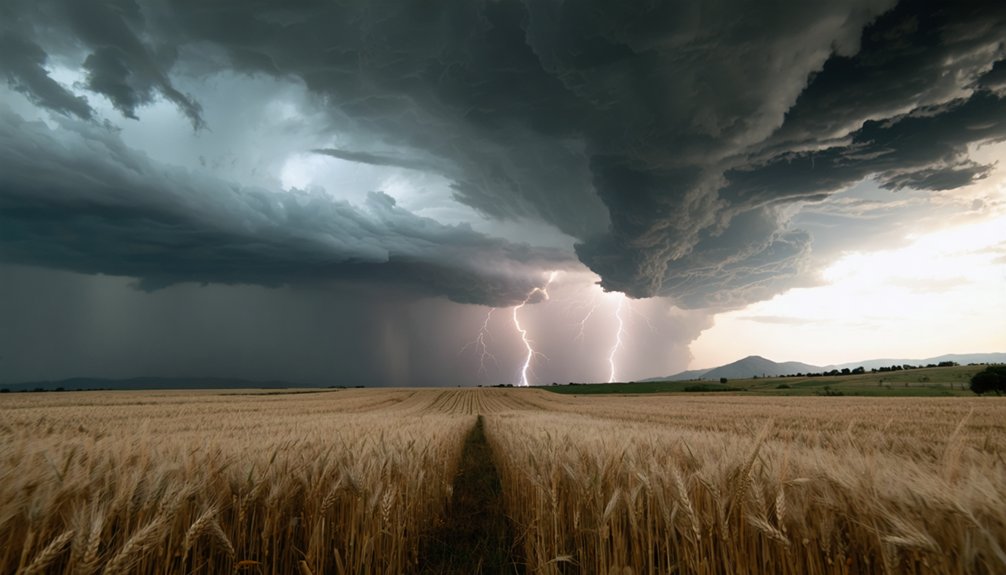
Open-world games vary wildly in how seriously they treat weather as a mechanical system rather than a visual layer. When weather impact shapes your actual decisions, open world immersion deepens considerably.
Here’s how four titles rank by depth:
- Breath of the Wild — Rain alters surface friction, disabling climbing and reshaping combat approaches entirely.
- Red Dead Redemption 2 — Snow accumulates realistically, slowing movement and transforming NPC behavior dynamically.
- Ghost of Tsushima — Storms shift enemy visibility and wind direction, affecting stealth and navigation.
- No Man’s Sky — Planetary weather variations force resource management and shelter-seeking across alien environments.
You’ll notice the highest-ranked titles treat weather as a gameplay variable, not decoration.
Depth means consequences, not just visuals.
Few naval games have matched the mechanical sophistication Assassin’s Creed IV: Black Flag brings to storm simulation. When you’re traversing treacherous waters, storm navigation demands real tactical adjustments — you’re managing sail angles, crew positioning, and cannon accuracy simultaneously as waves destabilize your vessel’s trajectory.
Few naval games demand the tactical depth Black Flag requires — managing sails, crew, and cannons while storms actively fight against you.
The game’s naval combat system responds dynamically to weather conditions. Wind direction shifts unpredictably, forcing you to recalibrate your approach mid-engagement. Towering waves obstruct enemy sightlines, creating tactical windows you’d otherwise never access during calm conditions.
Rain reduces visibility, making positioning decisions genuinely consequential.
What separates Black Flag from competitors is how weather isn’t decorative — it’s mechanically integrated. Every storm variable directly affects your ship’s performance, rewarding players who master environmental reading over those relying purely on firepower.
How The Witcher 3 Uses Weather to Change Every Fight
When you fight in The Witcher 3 during a rainstorm, soaked armor loses protective efficiency, forcing you to reassess your defensive strategy mid-combat.
Wind shifts change projectile trajectories and alter enemy positioning, so you’ll need to adjust your attack angles and timing on the fly.
Storms push enemies into reactive patterns, tightening their formations or driving them toward cover, which you can exploit to control engagement geometry.
Rain Weakens Armor Protection
Rain in The Witcher 3: Wild Hunt doesn’t just set the mood—it actively degrades Geralt’s combat effectiveness by soaking his armor, reducing its protective value and forcing you to rethink engagement strategies mid-fight.
Rain effects trigger real armor degradation mechanics you can’t ignore:
- Saturated armor absorbs less impact, leaving Geralt vulnerable to slashing and piercing attacks.
- Reduced mobility slows dodge timing, making enemy counters harder to avoid.
- Visibility drops force you to rely on Witcher Senses rather than visual tracking.
- Stamina drain increases, meaning signs cost more and cooldowns extend under sustained rainfall.
You’re no longer fighting just enemies—you’re fighting conditions.
Mastering rain effects means adjusting your sign loadout, repositioning constantly, and accepting that armor degradation demands tactical flexibility, not brute force.
Wind Shifts Combat Tactics
Wind in The Witcher 3 doesn’t behave as background scenery—it actively reshapes how you position, cast, and engage. The wind impact on Geralt’s Igni sign forces you to track airflow direction before committing to fire-based attacks.
Cast into the wind, and your damage disperses; cast with it, and you amplify your reach considerably.
Enemy archers face the same constraint. Wind pressure throws projectile trajectories off course, giving you exploitable windows to close distance without taking full arrow damage.
Your tactical adaptations extend to positioning near natural windbreaks—rock formations, dense tree lines—reducing exposure during prolonged fights.
Wind also affects stamina drain during dodges across open terrain.
You’re not fighting despite the weather. You’re reading it, adjusting constantly, and treating wind as a combat variable rather than atmosphere.
Storms Alter Enemy Behavior
Storms in The Witcher 3 don’t just change how the environment looks—they restructure enemy AI patterns, aggression timing, and group coordination in ways that demand you reassess your approach mid-fight.
Mastering storm tactics means reading how enemies adapt before they press their advantage.
Key enemy adaptation shifts during storms:
- Reduced detection range — Rain and wind noise mask your movement, letting you reposition aggressively.
- Altered patrol timing — Enemies cluster or retreat, breaking standard formations you’ve memorized.
- Elemental vulnerability windows — Lightning-charged air amplifies Igni effectiveness against wet targets.
- Hesitation gaps — Strong gusts momentarily stagger lighter enemies, creating critical attack openings.
You’re not just fighting opponents—you’re exploiting environmental pressure they can’t fully counter.
Indie Weather Simulator Games With Mechanics AAA Titles Miss

While AAA studios pour millions into weather as a visual spectacle, indie developers often engineer weather as a core mechanical system you can’t simply ignore or walk through.
Indie innovation drives titles like *A Painted Ocean*, which simulates oceanic weather patterns with genuine atmospheric immersion, modeling pressure systems rather than looping animations.
A Painted Ocean models real pressure systems, delivering oceanic weather as living atmosphere rather than recycled visual loops.
*Lovely Weather We’re Having* treats weather as gameplay identity, not decoration.
*Weather Machine Simulator* hands you direct atmospheric controls, letting you manipulate conditions with technical precision AAA engines never expose to players.
*And Now, The Weather.* uses procedural systems that generate emergent consequences rather than scripted sequences.
These games respect your intelligence. You’re not watching weather—you’re calculating it, responding to it, and surviving it.
That’s a mechanical depth most blockbuster titles deliberately avoid.
Weather Games That Teach Real Meteorology While You Play
A narrow category of weather games crosses into genuine meteorological education, and the titles that do it best treat simulation accuracy as a design constraint, not a feature.
These interactive learning tools give you real atmospheric science without locking it behind textbooks.
- Create a Hurricane – National Hurricane Center’s tool simulates actual storm formation variables you control directly.
- NOAA HotSeat – Tests your severe weather warning timing against real meteorology education benchmarks.
- Hurricane Simulation by SciJinks – Lets you manipulate sea temperature and atmospheric pressure to build tropical cyclones.
- National Geographic Extreme Weather Challenge – Frames storm chasing decisions around accurate meteorological data.
Each title removes guesswork and replaces it with systems grounded in atmospheric physics, giving you genuine insight into how storms actually behave.
Which Weather Simulator Game Fits Your Play Style?

Whether you want to chase tornadoes, survive blizzards, or navigate naval storms, your play style determines which weather simulator actually delivers. Match your preferences against each game’s core mechanics before committing.
For active storm interaction, Storm Chasers and Helicity reward precision decision-making under pressure.
If you prefer weather strategy embedded in survival loops, The Long Dark forces resource management against relentless cold and storms.
Action-oriented players gain more from Assassin’s Creed IV’s naval chaos or Far Cry 6’s combat-shifting tropical storms.
Casual explorers benefit from Ghost of Tsushima or Breath of the Wild, where weather reshapes exploration organically.
Simulation purists should prioritize Microsoft Flight Simulator for data-driven atmospheric accuracy.
Identify whether you want weather as a backdrop, a tactical variable, or the primary challenge, then select accordingly.
Frequently Asked Questions
Can Weather Simulator Games Run Smoothly on Older Gaming Hardware?
Your older hardware can move mountains with the right settings! You’ll want to check performance optimization options and hardware compatibility for each title, as lowering graphics settings often guarantees smoother gameplay experiences on aging systems.
Are There Multiplayer Weather Simulator Games Available for Cooperative Play?
Yes, you’ll find multiplayer features in titles like Sea of Thieves and Storm Chasers, where cooperative gameplay mechanics let you tackle dynamic weather systems together, enhancing teamwork through shared storm navigation and survival challenges.
Do Weather Simulator Games Require Internet Connections to Function Properly?
Most don’t! While Microsoft Flight Simulator downloads a universe of real-time weather patterns for unmatched simulation realism, offline titles like The Long Dark and Red Dead Redemption 2 let you experience brutal storms completely untethered from the internet.
Which Weather Simulator Games Offer Modding Support for Custom Storms?
You’ll find robust storm customization in Forza Horizon 5, The Witcher 3, and No Man’s Sky, where an active modding community lets you engineer custom storms, tweak atmospheric variables, and expand weather systems beyond vanilla parameters.
Are Any Storm Simulator Games Available on Mobile Platforms?
You’ll find storm tracking apps like Storm Chasers available on mobile platforms, offering core mobile features for virtual tornado pursuit. National Geographic’s Extreme Weather Challenge also delivers accessible, on-the-go storm simulation experiences optimized for mobile devices.
References
- https://www.top10gem.com/en/articles/top-10-games-with-the-best-weather-systems
- https://www.youtube.com/watch?v=LxlG7i-hfkA
- https://www.youtube.com/watch?v=rcH2Ne1zGCY
- https://www.youtube.com/watch?v=TwotPxlEhpo
- https://phillyweatherauthority.com/interactive-weather-games/
- https://www.nesdis.noaa.gov/about/k-12-education/educational-games-simulations
- https://itch.io/games/genre-simulation/tag-weather
- https://livestormchasers.com/sims/