When you spot a tornado, move immediately to a basement or underground cellar. If there’s no basement, use an interior room or hallway on the lowest floor, away from windows. Abandon mobile homes entirely and reach a sturdy structure fast. If you’re outdoors with no shelter, lie flat in a low-lying ditch and cover your head and neck. The details below will sharpen every decision you’ll need to make.
Key Takeaways
- Move to a basement or underground cellar immediately for maximum protection against tornado winds and debris.
- If indoors without a basement, shelter in an interior room or hallway on the lowest floor.
- Evacuate mobile homes immediately and seek the nearest sturdy, permanent structure for safety.
- If caught outdoors, lie flat in a low-lying ditch, covering your head and neck with arms.
- Stay sheltered until official all-clear signals confirm the tornado threat has completely passed.
Warning Signs That a Tornado Is Nearby
Tornadoes announce their arrival through a distinct set of observable warning signs. Understanding these indicators separates fact from tornado myths and keeps you alive.
Watch for a dark, greenish sky—a reliable atmospheric signal embedded in established weather patterns. Large hail combined with low-lying cloud rotation signals immediate danger.
A green-tinted sky and large hail aren’t coincidences—they’re the atmosphere warning you to move now.
You’ll also hear a loud, persistent roar resembling a freight train, which confirms proximity. A rotating funnel-shaped cloud or approaching debris cloud demands instant action on your part.
Don’t dismiss a sudden calm following heavy rain; that deceptive stillness often precedes impact. Recognizing these specific cues gives you critical seconds to respond decisively.
Your survival depends on reading these signals accurately, not on waiting for absolute confirmation before acting.
Move to Shelter the Moment You Spot a Tornado
The instant you spot a tornado, you must move to shelter immediately—every second of delay increases your exposure risk.
Identify the nearest sturdy building and proceed directly to its basement, interior hallway, or lowest-floor windowless room.
Remaining outdoors or hesitating in an exposed location dramatically raises your probability of injury from wind-driven debris and structural collapse.
Prioritize Immediate Shelter Relocation
When you spot a tornado, every second counts — relocate to shelter immediately without hesitation.
Your shelter types matter greatly: a basement or underground cellar offers maximum protection, while interior rooms without windows, such as hallways or closets, serve as viable alternatives on the lowest floor.
Your relocation strategies must be decisive and pre-planned. Don’t waste time gathering belongings — move directly to your designated safe zone.
If you’re in a mobile home, evacuate instantly to the nearest sturdy structure, as tie-downs won’t prevent overturn. In commercial buildings, descend to the lowest level, avoiding windows, outer walls, and corners entirely.
Once sheltered, stay put until official tornado warnings expire. Monitoring NOAA weather radio confirms when conditions are genuinely safe to exit.
Identify Nearest Safe Structure
Identifying the nearest safe structure requires split-second assessment — scan your immediate surroundings for three primary options: a building with a basement, an interior windowless room on the lowest floor, or a designated storm shelter. Your decision directly impacts survival odds.
Prioritize safe locations in this order:
- Basement or underground storm shelter — highest survival rate
- Interior hallway or closet on the lowest floor — eliminates window exposure
- Low-lying ditch or ravine — last resort when structures are unreachable
Once sheltered, notify your emergency contacts immediately so others can track your location.
Don’t waste time evaluating options extensively — every second of hesitation narrows your safety margin. Commercial spaces like malls or theaters offer their lowest level as viable protection.
Commit to your nearest option and move decisively.
Avoid Dangerous Outdoor Exposure
Once you’ve identified your nearest safe structure, your next move is non-negotiable — get inside immediately. Outdoor exposure during a tornado isn’t a calculated risk; it’s a fatal one. Every second you remain outside increases your vulnerability to debris traveling at speeds exceeding 200 mph.
Tornado preparedness means acting before conditions deteriorate. Don’t wait for the funnel to become visible — rotation, hail, and sudden atmospheric calm are your cues to move.
Outdoor safety depends entirely on decisive, pre-planned action rather than real-time improvisation. Avoid bridges, overpasses, and open fields, which offer zero protection against wind-driven projectiles.
If a structure is unreachable, locate a low-lying ditch, lie flat, and shield your head. Standing upright outdoors during active tornado conditions is statistically indefensible.
Where to Find Safe Shelter Inside a Building
Finding safe shelter inside a building comes down to a few critical principles: distance from windows, proximity to the ground, and structural integrity.
The closer you are to the ground and the farther from windows, the better your chances of survival.
You’ll want to prioritize interior spaces built with reinforced building materials, keeping yourself as low as possible.
Your best safe room options follow this hierarchy:
- Basement or underground cellar — lowest risk, maximum structural protection
- Interior bathroom, closet, or hallway on the lowest floor — no exterior walls or windows
- Beneath a sturdy staircase or interior load-bearing wall — secondary protection when other options aren’t available
Avoid corners, exterior walls, and any glass surfaces.
If you’re in a large commercial building, move to the lowest level immediately. Cover your head and neck regardless of your chosen location.
What to Do If You’re in a Mobile Home During a Tornado
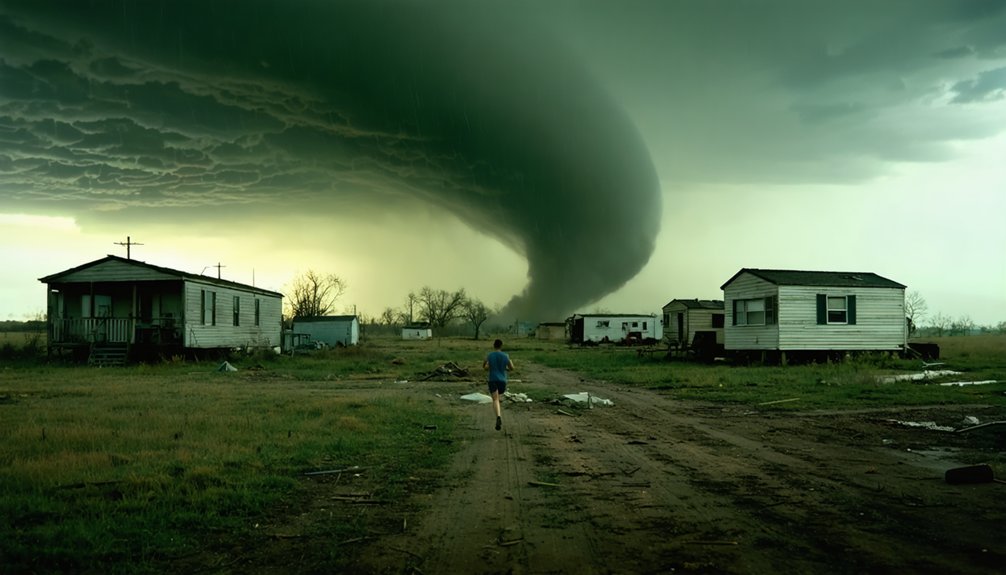
While sturdy buildings offer layered shelter options, mobile homes remove that safety margin entirely. Even properly anchored units with tie-downs can’t withstand tornado-force winds—they overturn, collapse, and become lethal debris fields within seconds.
Your mobile home safety protocol is straightforward: get out before the tornado arrives. Don’t wait to assess the storm’s trajectory. Execute your evacuation plans immediately and move to the nearest permanent structure with a basement or reinforced interior room.
If no building is accessible, locate a low-lying ditch or ravine, lie flat, and cover your head and neck. Never shelter in storage units, temporary structures, or underneath your mobile home. These options offer zero structural protection and dramatically increase your injury risk.
Prioritize movement over hesitation every time.
How to Stay Safe When You’re in a Car?
Vehicles rank among the most dangerous places to be during a tornado, and your first move should be straightforward: drive immediately to the nearest sturdy building.
When a tornado threatens, your vehicle offers little protection — get to the nearest solid structure immediately.
Tornado preparedness means knowing your options before danger strikes.
If reaching shelter isn’t possible, follow these driving safety priorities:
- Drive at right angles to the tornado’s path to maximize your escape distance.
- Pull over, keep your seatbelt fastened, and stay low below window level if buildings remain inaccessible.
- Abandon your vehicle entirely and move to a low-lying ditch or ravine, covering your head and neck with your arms.
Never shelter under highway overpasses — they funnel wind and increase debris impact.
You’re far more vulnerable elevated above ground than lying flat in a depression below roadway level.
What to Do If a Tornado Catches You Outdoors?

Being caught outdoors during a tornado puts you at severe risk, but your immediate actions determine survival outcomes. Your outdoor safety protocol begins with locating the nearest low-lying area — ditches or ravines provide critical protection when buildings aren’t accessible.
Lie flat, face down, covering your head and neck with your arms. Select areas with minimal trees to reduce projectile debris impact.
Never shelter under bridges or highway overpasses; they create dangerous wind tunnels that amplify tornado forces.
Emergency preparedness means knowing that locations noticeably lower than roadway level offer better protection than vehicle interiors. Keep your body as low as possible, minimizing exposed surface area.
Distance yourself from vehicles, which tornadic winds can launch as projectiles, compounding your injury risk substantially.
Places That Feel Safe From a Tornado But Aren’t
Certain locations create a dangerous illusion of safety during tornado events, and understanding why they fail can prevent fatal miscalculations.
Tornado myths and shelter misconceptions cost lives annually. You must eliminate these false options immediately:
- Highway overpasses funnel wind, accelerating debris velocity and eliminating any meaningful protection.
- Interior corners of buildings concentrate structural collapse pressure, making them deadlier than central interior spaces.
- Mobile homes with tie-downs still overturn under tornado-force winds, providing zero structural integrity.
These shelter misconceptions persist because they feel instinctively logical. Overpasses appear solid. Corners seem reinforced. Tie-downs suggest stability.
None of these assumptions hold against rotational wind forces exceeding 100 mph. Your survival depends on rejecting comfortable illusions and choosing verified, proven shelter immediately when tornado conditions develop.
The Right Body Position to Survive a Tornado

If you’re caught outdoors with no shelter available, lie flat on your stomach in the lowest ground you can find, such as a ditch or ravine.
Keep your body as close to the ground as possible, reducing your profile against wind-driven debris that can reach projectile velocities exceeding 100 mph.
Cover your head and neck with your arms or any available object, as these areas represent your most critical and vulnerable targets during tornado impact.
Lie Flat and Low
When caught outside during a tornado without access to a sturdy building, your body position becomes a critical survival factor. Lying flat in a low-lying ditch or ravine dramatically improves your tornado survival odds by reducing your exposure to airborne debris.
Execute these injury prevention steps immediately:
- Drop into the lowest depression available, prioritizing ditches or ravines below roadway level.
- Press your body completely flat against the ground, face downward.
- Cover your head and neck using both arms or a protective object.
Avoid bridges and overpasses entirely—they create dangerous wind tunnels that amplify debris velocity.
Select locations with minimal trees, reducing projectile risk. Your horizontal, low profile minimizes the surface area exposed to tornado-force winds exceeding 100 mph.
Protect Head and Neck
Once you’ve pressed your body flat against the ground, your arms become your last line of defense against tornado-generated debris. Cross them firmly over your head and neck, creating a protective barrier against airborne projectiles traveling at lethal velocities.
Head protection isn’t optional — it’s your primary injury prevention strategy when no shelter exists.
Position both hands interlaced behind your neck, keeping your elbows tucked forward to shield your temples. If you have a jacket, bag, or any available material, layer it over your arms for additional coverage.
Tornado debris — including glass shards, wood fragments, and metal pieces — travels at speeds exceeding 100 mph. Your neck’s crucial arteries and your skull’s structural integrity determine your survival odds.
Maintain this position until conditions completely subside.
When Is It Actually Safe to Leave Tornado Shelter?
Leaving tornado shelter too early remains one of the most dangerous decisions you can make during severe weather events.
Tornado shelter duration should extend until official confirmation arrives. Follow these signs safe exit criteria before emerging:
- The tornado warning has officially expired via NOAA weather radio or local emergency broadcasts.
- Local authorities have issued an all-clear signal for your specific area.
- No secondary tornado activity appears on updated radar or emergency channels.
You’re not free to leave simply because conditions seem calm outside.
Post-tornado silence doesn’t guarantee safety—secondary tornadoes frequently follow initial touchdowns.
Keep your battery-powered radio active throughout the waiting period. Monitor continuous updates from verified sources. Your autonomy depends on accurate information, not assumptions about clearing skies.
How to Monitor Tornado Warnings After You’re in Shelter
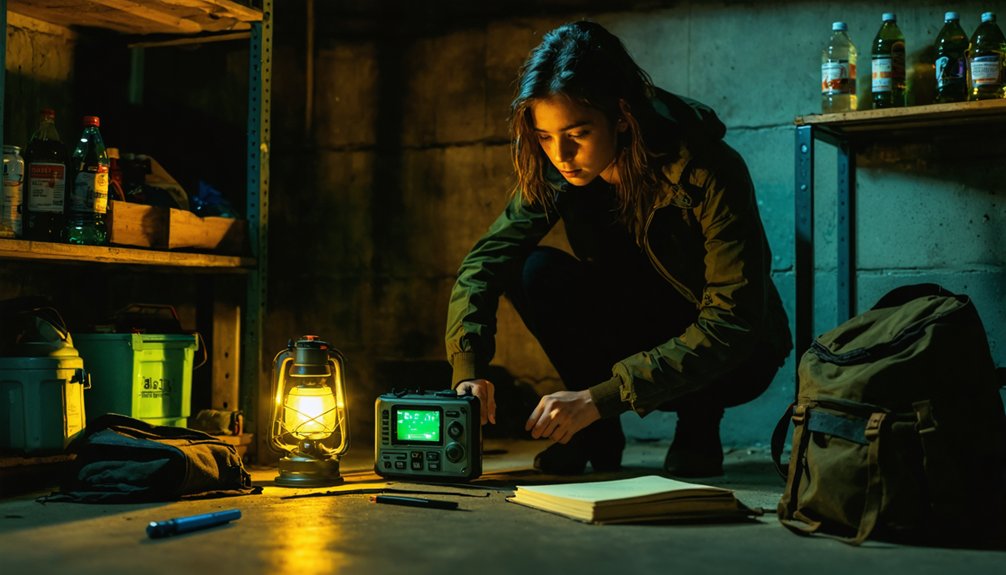
Staying sheltered until official confirmation arrives means you need reliable, real-time information—and that requires a deliberate monitoring setup before the storm hits.
Your tornado communication strategies should include layered emergency alert systems: a battery-powered NOAA weather radio serves as your primary source when power fails. Activate wireless emergency alerts on your phone so warnings push directly to you. Monitor local media broadcasts if battery reserves allow.
Distinguish between a tornado watch—conditions favor formation—and a tornado warning, which demands immediate action. Don’t rely on outdoor sirens alone; they’re designed for outdoor detection, not interior shelter.
A tornado watch means conditions are favorable. A tornado warning means move now—every second counts.
Remain in position until the National Weather Service officially expires the active warning. Redundant information sources eliminate dangerous assumptions and keep your decision-making grounded in verified data.
Frequently Asked Questions
Can Pets Be Brought Into Tornado Shelters During an Emergency?
Your pet’s life is everything! Prioritize pet safety and shelter preparedness by checking your designated shelter’s pet policy beforehand. You’ll want to bring carriers, supplies, and guarantee animals don’t compromise your emergency evacuation speed.
How Long Does a Typical Tornado Last Before It Dissipates Completely?
Tornado lifespan varies—most last under 10 minutes, though intense ones persist up to an hour. You’ll notice tornado formation accelerates dissipation unpredictably, so don’t assume it’s safe. Stay sheltered until official warnings expire completely.
Should Tornado Emergency Supplies Be Pre-Packed Before Storm Season Begins?
Yes, you should pre-pack supplies before storm season. Follow a tornado preparedness tips checklist including a battery-powered radio, water, and first aid kit. Your emergency supply checklist guarantees you’re ready before warnings demand immediate action.
Are Underground Parking Garages Considered Safe During a Tornado Warning?
Underground parking garages aren’t recommended for tornado safety—their garage structure lacks verified reinforcement data. You’re better off seeking the lowest interior floor of a sturdy building, avoiding outer walls and windows for maximum protection.
How Do Tornadoes Typically Behave When Crossing Large Bodies of Water?
Like a wandering predator, tornadoes don’t weaken when crossing water — they’re relentless. During water interaction, tornado formation sustains intensity, often spawning waterspouts. You shouldn’t assume large bodies of water provide barriers; they don’t guarantee your safety.
References
- https://www.vaemergency.gov/threats/tornadoes
- https://www.dentoncounty.gov/1750/Stay-Safe-During-a-Tornado
- https://www.weather.gov/safety/tornado-during
- https://www.redcross.org/get-help/how-to-prepare-for-emergencies/types-of-emergencies/tornado.html
- https://www.progressive.com/answers/tornado-safety-while-driving/
- https://www.vdh.virginia.gov/news/severe-weather-preparedness/tornado-safety/
- https://www.youtube.com/shorts/SRk5AMBtY7Q