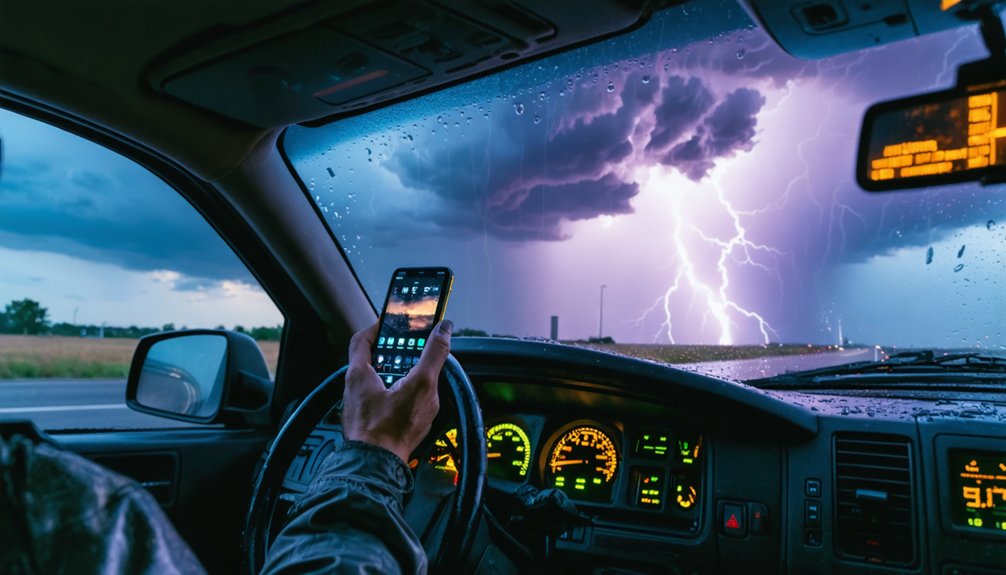
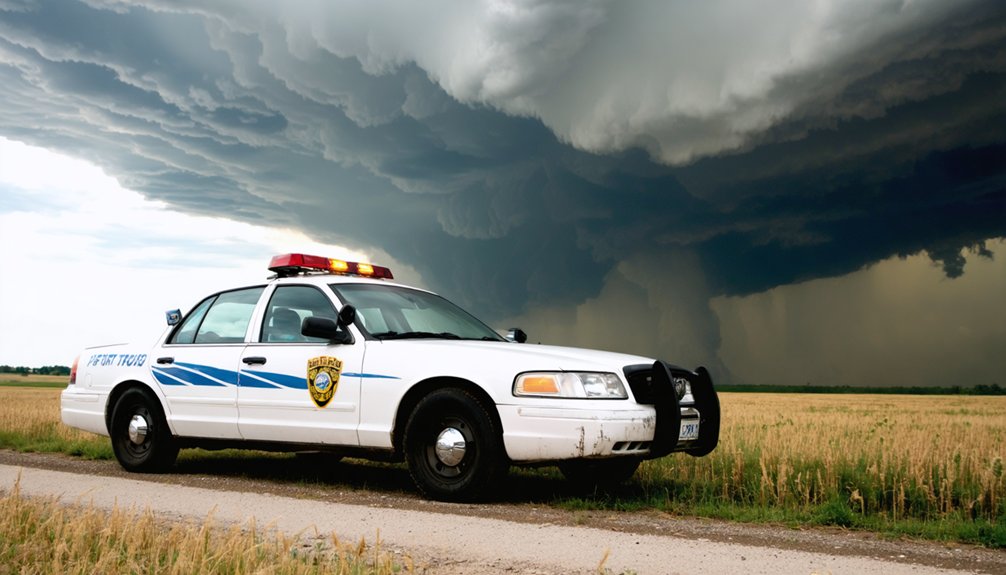
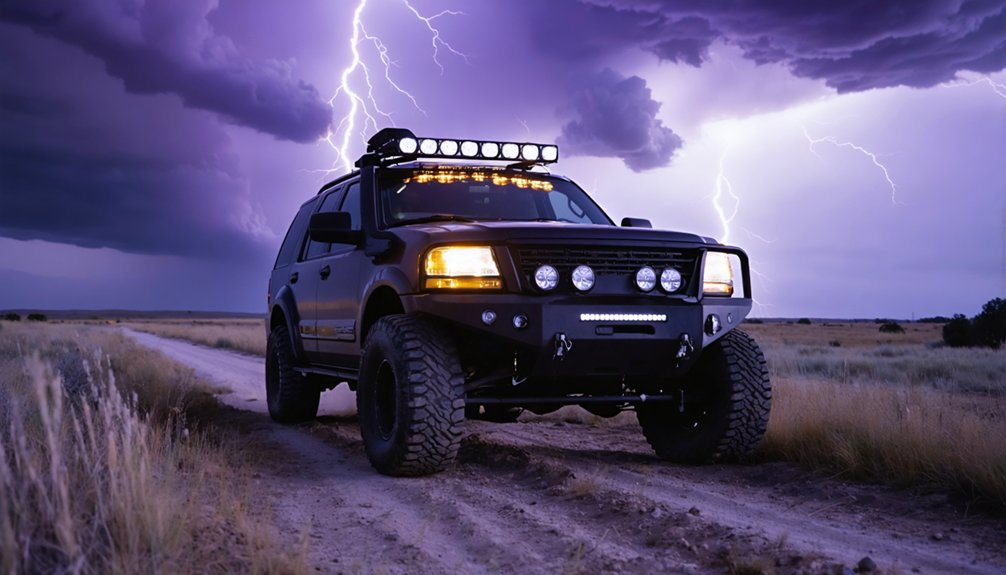
For storm chasing, your best vehicle depends on terrain and crew size. Trucks dominate off-road scenarios with 20 inches of ground clearance and body-on-frame durability. SUVs balance highway comfort with true four-wheel drive capability. Vans offer interior space but struggle with high centers of gravity on uneven ground. Each platform has distinct trade-offs in fuel range, sightlines, and reliability that’ll directly shape your operational success in the field.
Key Takeaways
- Trucks excel in off-road capability, offering 20 inches of ground clearance and body-on-frame construction ideal for unpaved chase terrain.
- SUVs balance highway handling, passenger comfort, and true four-wheel drive, making them versatile for multi-person storm chasing operations.
- Vans provide the highest seat height at 51 inches but suffer stability issues, limiting them to paved-road chasing only.
- Fuel range matters significantly; minivans achieve 22–23 mpg, while trucks offer larger tanks but lower overall fuel economy.
- Ultimately, chase style, crew size, and terrain type determine whether a truck, SUV, or van is most suitable.
What Storm Chasers Actually Need From a Vehicle
Storm chasing isn’t just a thrill-seeking hobby—it’s a high-stakes pursuit that demands a vehicle capable of handling unpredictable terrain, extreme weather, and long-distance travel without breaking down at the worst possible moment.
You need a platform that supports essential chase accessories—laptops, radios, weather instruments—while remaining structurally sound under punishment. Off-road capability, ground clearance, fuel range, and interior space aren’t optional features; they’re operational requirements.
Your platform must support laptops, radios, and instruments while withstanding punishment—off-road capability and interior space are operational requirements.
Vehicle modifications like reinforced suspension, larger tires, and roof mounts directly impact your safety and effectiveness in the field. Comfort matters too, since multi-day chases involve extended driving across rough terrain.
Prioritizing reliability, visibility, and adaptability over aesthetics separates serious chasers from unprepared ones. Your vehicle choice ultimately determines how far you can push into the storm’s path.
Off-Road Performance Across Trucks, SUVs, and Vans
When you’re pushing into compromised terrain ahead of a developing supercell, your vehicle’s off-road architecture becomes a critical variable.
Body-on-frame construction gives trucks distinct off-road advantages, handling abuse that unibody SUVs can’t absorb cleanly.
Vans lose vehicle stability rapidly on uneven ground due to high centers of gravity and limited suspension articulation.
Here’s how each platform performs off-road:
- Trucks — 20 inches of sheet metal clearance, superior frame flex, and payload capacity for recovery gear.
- SUVs — True four-wheel drive systems (Wrangler-class) outperform all-wheel drive variants markedly on technical terrain.
- Vans — Progressive side-to-side sway forces speed reductions on dirt roads, limiting repositioning speed during fast-moving storm events.
Your exit route depends heavily on which platform you’re running.
Fuel Range and Reliability for Multi-State Chases
Multi-state chases burn hundreds of miles per day, so your fuel range and platform reliability aren’t secondary concerns — they’re operational constraints.
Minivans deliver 22–23 mpg with a 3.7L V6, making them surprisingly competitive on fuel efficiency during highway repositioning. Trucks sacrifice economy for raw capability but compensate with larger tanks and stronger towing margins.
SUVs rank lowest on fuel efficiency, though their reliability ratings remain consistently strong across rough-road deployments.
When you’re running three states in 14 hours, a breakdown isn’t inconvenient — it’s mission-ending. Trucks and SUVs carry the most robust reliability ratings for sustained abuse across varied terrain.
Vans offer range per tank but introduce mechanical stress on uneven roads. Prioritize platforms with proven drivetrain durability before chasing season begins.
Sightlines, Cabin Space, and Ride Comfort on Storm Chases
Fuel economy and reliability get you to the storm — sightlines, cabin space, and ride comfort determine how effectively you operate once you’re there.
Visibility concerns vary sharply across vehicle types. Seating arrangements directly impact your ability to track rotation, read radar, and coordinate with your team under pressure.
Here’s how each platform compares:
- Trucks sit at 41 inches, providing elevated sightlines and bigger tire options that reduce flat risks on rough terrain.
- Vans reach 51 inches seat height but suffer progressive side-to-side sway on dirt roads, forcing dangerous slowdowns mid-chase.
- SUVs balance cabin space, seating flexibility, and highway handling, making them versatile for multi-person operations without sacrificing comfort.
Your vehicle’s interior directly shapes your decision-making speed when conditions deteriorate fast.
Which Vehicle Wins for Storm Chasing?
Each vehicle type carries distinct trade-offs that make a definitive winner dependent on your specific chasing priorities.
Trucks deliver superior off-road capability, payload capacity, and storm durability at lower cost, making them ideal if you’re chasing remote terrain.
SUVs balance highway handling, passenger comfort, and vehicle customization effectively, suiting chasers who prioritize flexibility across varied conditions.
Vans provide the highest seating elevation but suffer considerably on rough terrain from sway and limited ground clearance.
If you’re chasing solo or with a small crew across unpaved roads, trucks win.
If you’re running highway intercepts with gear-heavy setups, SUVs compete strongly.
Vans suit urban or paved-road chasing only.
Ultimately, your chase style, crew size, and terrain dictate the correct choice—no single vehicle dominates every scenario.
Frequently Asked Questions
Can Storm Chasers Legally Modify Vehicles With Specialized Equipment for Chasing?
Like a storm itself, vehicle modifications exist in a gray area—you’ll find no universal storm chasing regulations restricting specialized equipment. You’re generally free to customize your vehicle, though local traffic laws always apply.
How Do Insurance Costs Differ Between Trucks, SUVS, and Vans for Chasers?
Insurance premiums vary across vehicle types: you’ll typically pay less for trucks due to their durability, while SUVs cost moderately more, and vans often carry higher rates given their increased storm-damage vulnerability and specialized modifications.
What Safety Gear Should Storm Chasers Always Keep Inside Their Vehicles?
When traversing nature’s intense expressions, you’ll want first aid kits, communication tools like weather radios and satellite phones, fire extinguishers, seatbelt cutters, and emergency flares always secured inside your vehicle for peak preparedness.
How Does Vehicle Color Affect Heat Absorption During Long Storm Chasing Trips?
Your vehicle’s color directly impacts heat retention during long chases. Darker shades absorb more solar radiation, raising cabin temperatures considerably. Understanding color psychology helps you choose lighter hues, reducing cooling demands and keeping you comfortable and free on extended pursuits.
Are There Specific Licenses Required to Operate Heavily Modified Storm Chasing Vehicles?
You’ll typically need standard licensing, but heavily modified storm chasing vehicles may trigger specific vehicle regulations requiring inspections or endorsements. Always verify local license requirements, as modifications affecting weight, height, or safety systems can demand additional compliance.
References
- https://www.stormchase.us/Articles/WhatsTheIdeal.html
- https://www.youtube.com/watch?v=D_ELI23UGVQ
- https://davidmayhewphotography.com/the-perfect-storm-chase-vehicle/
- https://www.outsideonline.com/outdoor-gear/cars-trucks/van-vs-pickup-truck/
- https://centorioutdoors.com/blogs/news/the-best-overlanding-vehicle-pickup-vs-suv-vs-pickup-vs-van
- https://www.youtube.com/watch?v=m94xhFzbCFw
- https://stormtrack.org/threads/what-makes-the-best-storm-chasing-vehicle.6805/latest