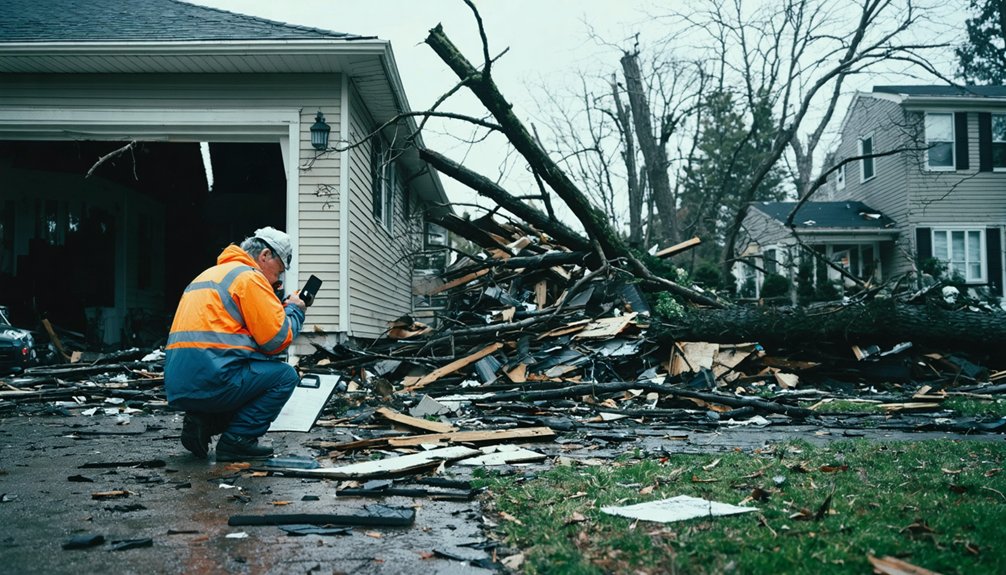
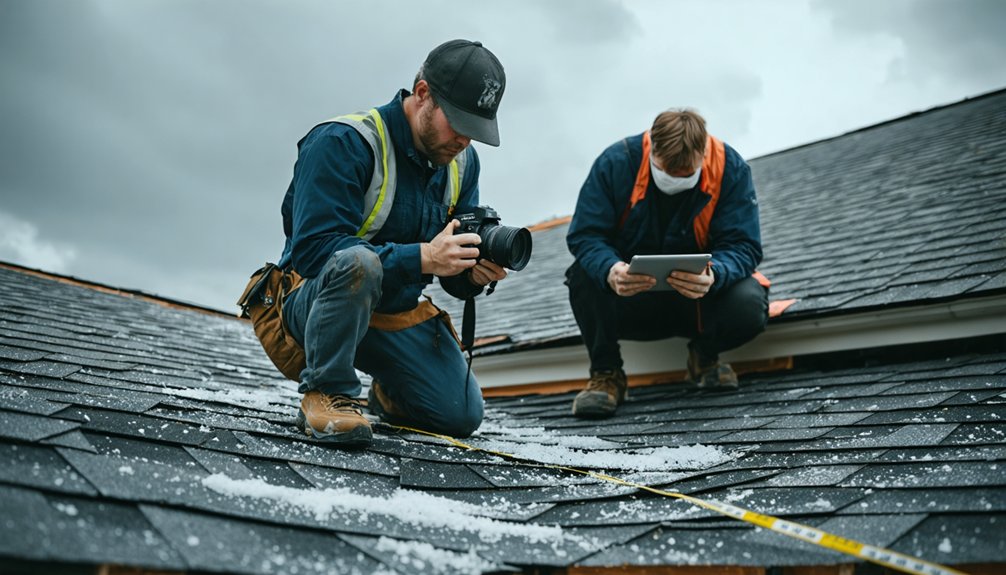
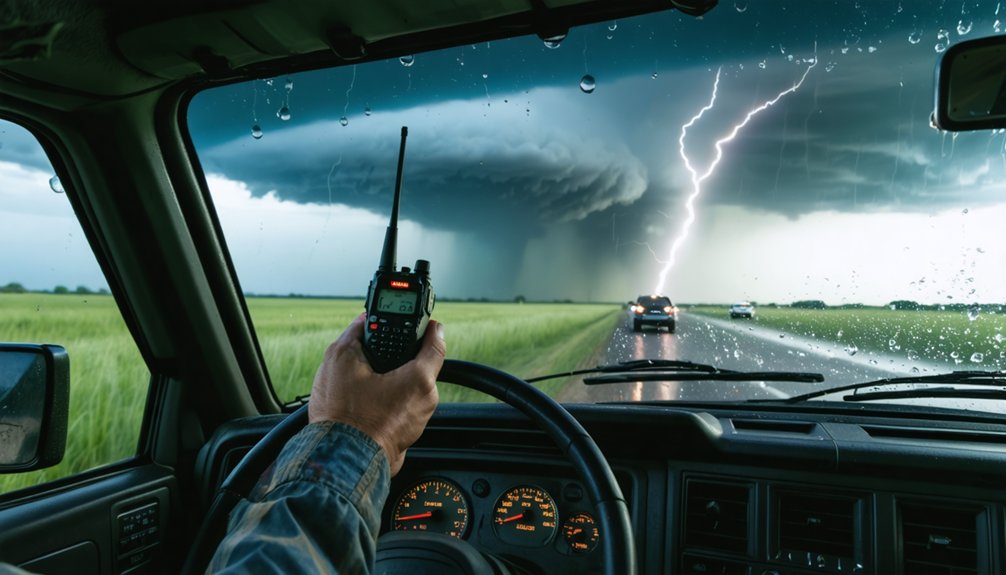
When communicating during storm chases, you must pre-program backup VHF/UHF channels, carry satellite phones, and deploy mobile hotspots before field deployment. Test all frequencies 24 hours prior and select IP67-rated, rugged devices. Assign structured roles — navigator, spotter, radio operator, safety officer — and use verbal confirmation codes when visibility degrades. Never transmit unverified data, and always tag reports with GPS coordinates and timestamps. The protocols outlined ahead will sharpen every layer of your communication strategy.
Key Takeaways
- Carry spare batteries and portable chargers to ensure communication devices remain operational throughout the chase.
- Pre-program backup radio channels and verify all frequencies 24 hours before field deployment.
- Assign structured communication roles—navigator, spotter, radio operator, and safety officer—to minimize confusion during high-stress situations.
- Use verbal confirmation codes to maintain clarity when visibility and signal quality degrade significantly.
- Report only verified, accurately tagged data with timestamps and GPS coordinates, avoiding unverified storm reports.
Why Communication Fails Storm Chasers at Critical Moments
When high winds tear through a storm system, they don’t just threaten physical safety—they actively degrade radio signal integrity, forcing chasers to rely on boosters and amplifiers that may not be on hand. Rain intensity compounds the problem, weakening transmission strength precisely when you need it most.
Communication breakdowns escalate when darkness eliminates visual cues, leaving voice protocols as your only coordination lifeline. Equipment malfunctions strike without warning—dead batteries, waterlogged devices, and signal interference can simultaneously disable your primary and backup systems.
Darkness strips away visual cues. When equipment fails simultaneously, voice protocols become your final—and only—lifeline.
You can’t afford single-point failures in high-risk environments. Visibility barriers demand pre-planned verbal confirmation codes, because improvised communication under extreme conditions introduces dangerous ambiguity.
Understanding these failure points isn’t optional; it’s the operational foundation that determines whether your team stays coordinated or dangerously isolated.
Essential Radio and Satellite Tools Every Storm Chaser Needs
You’ll rely on two-way radios as your primary field communication tool, since they deliver instant, license-free transmission across short ranges without cellular dependency.
Satellite phones extend your reach into remote, infrastructure-free terrain, maintaining contact when terrestrial networks collapse under storm interference.
Always pre-program backup channels before deployment, ensuring your team switches seamlessly to redundant frequencies if primary signals degrade.
Two-Way Radio Essentials
Two-way radios are your primary lifeline when chasing severe storms, delivering real-time voice transmission across dedicated frequencies even when cellular networks fail. You’ll need to master radio etiquette to keep transmissions clear, concise, and actionable — unnecessary chatter clogs channels during critical moments.
Select radios operating across NOAA weather frequencies and amateur bands, ensuring you’ve got redundant channels pre-programmed before deployment. High winds and heavy rainfall degrade signal strength considerably, so invest in signal amplification equipment to maintain reliable transmission ranges across extended distances.
Always carry spare batteries and portable charging solutions to sustain continuous operation. Pre-coordinate backup frequencies with your team, establishing clear verbal confirmation codes for low-visibility conditions.
Your radio discipline directly determines your team’s situational awareness and, ultimately, your collective safety during high-risk pursuits.
Satellite Phone Benefits
Satellite phones operate independently of terrestrial cell towers, connecting directly to low-Earth orbit satellite constellations like Iridium’s 66-satellite network to deliver reliable voice and SMS transmission from virtually any geographic location.
When you’re pursuing severe weather across remote terrain, you can’t afford dropped connections. Satellite encryption protocols secure your transmissions against interception, protecting sensitive positional and meteorological data you’re broadcasting to your team.
Operating across L-band signal frequency ranges (1–2 GHz), these devices maintain stable connections even when conventional networks collapse under storm infrastructure damage.
You’ll transmit GPS coordinates, hazard alerts, and real-time observations without relying on compromised cell towers.
Battery life and device ruggedness remain critical considerations—deploy models rated for extreme environmental conditions to guarantee your communication capability survives the same storm you’re documenting.
Backup Channel Redundancy
When primary communication channels fail mid-chase, backup channel redundancy becomes your operational lifeline. Storm communication breaks down fast under severe conditions, making redundancy protocols non-negotiable for your survival and team coordination.
Pre-program these three backup channels before every deployment:
- Secondary VHF/UHF frequencies — designated fallback channels your entire team confirms before departure, ensuring zero confusion during network failure
- Satellite phone circuits — independent infrastructure bypasses terrestrial tower outages that cripple standard radio systems during intense storm events
- Mobile hotspot networks — LTE-based connectivity sustains data transmission when conventional communication infrastructure collapses completely
Testing each backup channel 24 hours before deployment isn’t optional — it’s your tactical advantage. You can’t afford discovering dead channels when a tornado’s 300 meters out.
Redundancy keeps your freedom and your life intact.
How to Build a Backup Communication Plan for Signal Failure
Signal failure during storm chasing isn’t a matter of if—it’s a matter of when, so you’ll need a layered backup communication plan before heading into the field.
Start with backup device selection—prioritize satellite phones, two-way radios, and mobile hotspots as independent fallback options. Each device should operate on separate frequency bands, eliminating single-point failure risks.
Satellite phones, two-way radios, and mobile hotspots on separate frequency bands eliminate dangerous single-point communication failures.
Enable signal encryption across all devices to protect transmitted data from interception, especially when coordinating on shared networks.
Pre-assign designated meeting points and verbal confirmation codes so your team communicates effectively even when electronic signals fail completely.
Document every backup protocol in a physical checklist—digital-only plans become useless when power dies.
Test all devices before deployment, verify frequencies, and confirm every team member understands their specific communication role under failure conditions.
Pre-Defined Roles That Keep Storm Chaser Teams Coordinated
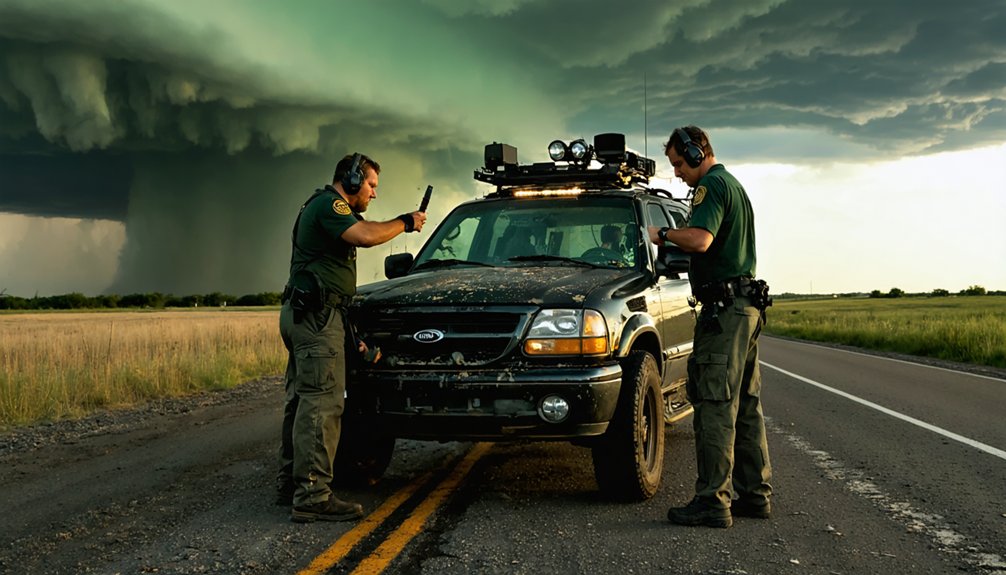
When building a coordinated storm chaser team, you must assign specific communication roles—navigator, spotter, and radio operator—before deployment to eliminate confusion during fast-moving events.
Your team leader must follow pre-established decision-making protocols, using verified data inputs to issue clear directives without hesitation.
You should also define backup role assignments so that if a primary communicator becomes incapacitated, a designated replacement assumes full responsibility instantly.
Assigning Team Communication Roles
Assigning pre-defined communication roles before a chase begins keeps your team coordinated when storm conditions deteriorate rapidly. Effective role delegation eliminates confusion, ensuring every member executes specific tasks without hesitation. Strong team communication depends on clarity, not improvisation.
Assign these three critical roles before deploying:
- Primary Radio Operator – Maintains continuous contact with NWS offices and external networks, transmitting verified position data every 15 minutes.
- Navigation Coordinator – Monitors GPS systems, cross-referencing real-time location tracking against storm trajectory models.
- Safety Officer – Monitors hazard alerts, triggering immediate evacuation protocols when conditions exceed pre-established risk thresholds.
Each role carries direct accountability. When storm intensity escalates, you can’t afford role ambiguity—your team’s survival depends on pre-assigned responsibilities functioning without overlap or gaps.
Leader Decision-Making Protocols
Effective leader decision-making protocols eliminate ambiguity before conditions force reactive choices. Your team leader must hold final authority over all storm communication decisions, including route changes, evacuation triggers, and equipment deployment. Pre-define these authority boundaries during your briefing phase, not mid-chase.
Assign your leader a dedicated radio channel separate from general team coordination traffic. This separation ensures critical directives transmit without interference from routine data exchanges. When visibility drops or high winds degrade signal quality, your leader’s pre-established verbal confirmation codes maintain command clarity.
Document every leader decision with timestamps and location coordinates. These records validate post-event reporting and refine future protocols. You’ll eliminate reactive chaos by building decision trees your leader executes under pressure. Structured authority protects your team when dynamic storm conditions demand split-second precision.
Backup Role Contingency Plans
Leader authority means nothing if your leader becomes incapacitated mid-chase. You need contingency communication strategies that activate instantly, without hesitation or confusion.
Pre-assign backup roles before every deployment:
- Secondary Communicator – Immediately assumes radio control, executing emergency signal protocols the moment your leader goes dark.
- Navigation Backup – Takes GPS ownership, transmitting real-time coordinates to your network without waiting for authorization.
- Emergency Liaison – Contacts NWS and rescue teams directly, bypassing standard chain-of-command restrictions.
These roles aren’t suggestions—they’re survival architecture. Document each assignment in your pre-chase briefing logs.
Every team member must memorize their fallback responsibilities cold, because storms don’t pause while you figure out who’s in charge. Your freedom depends on preparation, not improvisation.
What to Do When High Winds and Rain Kill Your Signal
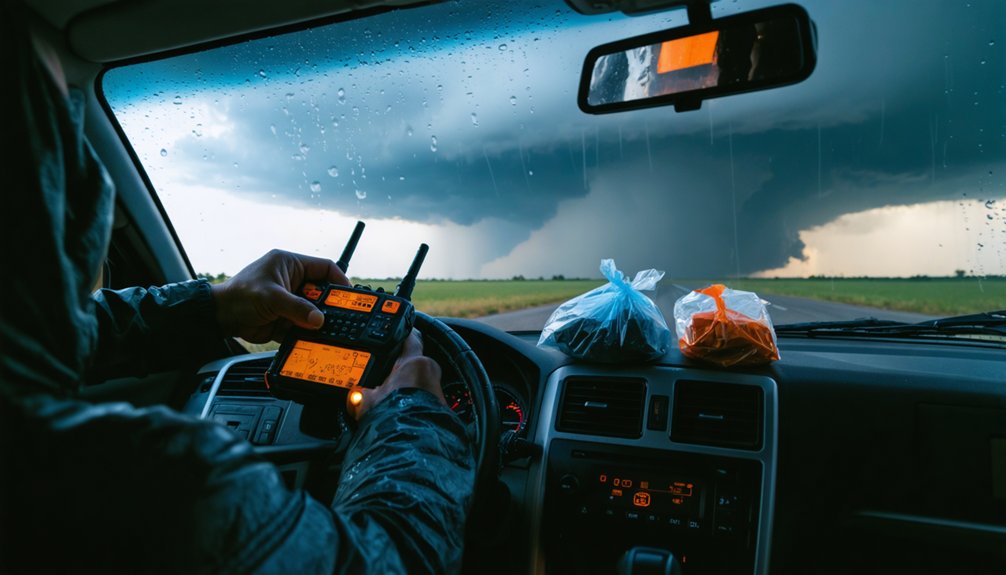
When high winds and rain degrade your radio signal, you’ll need amplifiers and boosters to restore transmission quality.
Wind resilience starts with securing your antenna against gusts exceeding 60 mph, preventing signal scatter and transmission loss. Deploy directional antennas to minimize interference from surrounding atmospheric turbulence.
Rainproof communication demands waterproof equipment rated at IP67 or higher, ensuring continued transmission during heavy precipitation events. Rain attenuation weakens signals at higher frequencies, so switching to lower-frequency bands maintains stronger penetration through storm cells.
Pre-establish verbal confirmation codes before deploying into high-risk environments. These codes eliminate ambiguity when audio clarity drops below acceptable thresholds.
Additionally, activate mobile hotspots as redundant data channels when primary radio transmission fails, preserving your team’s real-time coordination capabilities throughout deteriorating storm conditions.
Legal and Ethical Rules Storm Chasers Must Follow
Storm chasers must comply with local, state, and federal laws governing road use, trespassing, and emergency response zones. Legal compliance protects your freedom to operate and shields communities from harm.
Compliance with road, trespassing, and emergency zone laws preserves your right to chase and keeps communities safe.
Ethical standards demand you report only verified, accurate data—never sensationalize events for attention.
Follow these critical rules:
- Never share unverified storm reports—false data triggers panic, wastes emergency resources, and destroys your credibility permanently.
- Respect restricted zones—entering emergency perimeters violates federal law and endangers first responders counting on clear access.
- Protect private data—unauthorized disclosure of location or personal information violates privacy laws and erodes public trust instantly.
Your freedom to chase depends entirely on responsible behavior. Violate these standards, and you risk losing access to the skies forever.
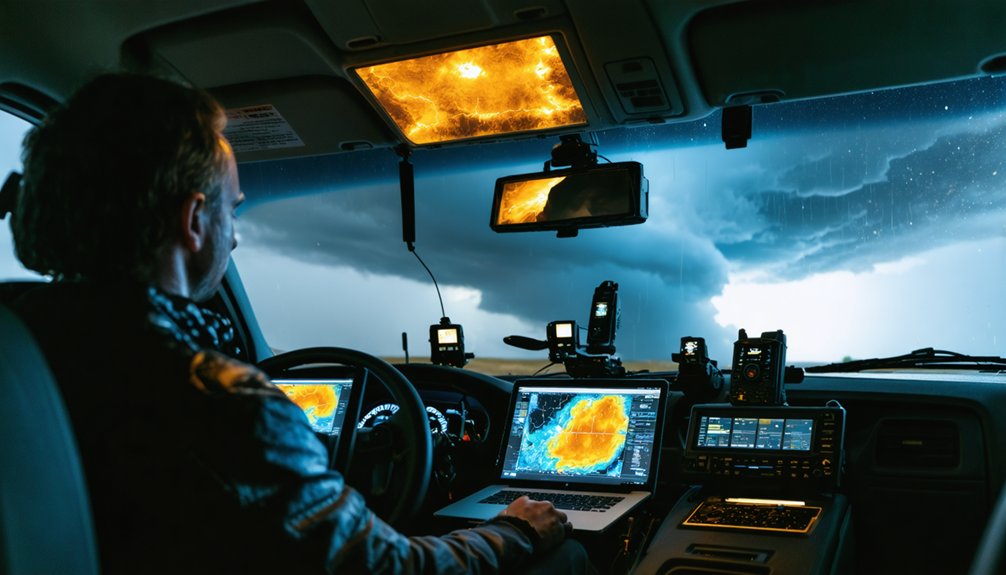
Accurate data sharing starts before you transmit a single report—cross-verify every observation against at least one independent source, whether a fellow chaser’s feed, radar returns, or NWS confirmation. Data verification isn’t optional; it’s your frontline defense against misinformation prevention failures that can trigger unnecessary evacuations or, worse, dangerous complacency.
Tag every report with precise timestamps, GPS coordinates, and your observational methodology. Avoid estimating wind speeds without instrumentation—label uncertainty explicitly when it exists.
Don’t amplify unverified secondhand accounts through social media just to post first; speed without accuracy is operationally worthless.
Use dedicated chaser networks that enforce cross-referenced reporting standards. When your data contradicts official sources, flag the discrepancy rather than overriding it unilaterally.
Your credibility—and public safety—depends on disciplined, documented, and verifiable storm reporting every single time.
How to File Accurate Post-Event Reports With the NWS
Filing a post-event report with the NWS demands the same documentation discipline you applied in the field. Accurate submissions fuel storm data validation and sharpen weather pattern analysis for future forecasters. Every detail you record protects the next chaser.
Filing a post-event NWS report demands the same discipline you carried into the field — accurate details protect every chaser who follows.
- Include precise timestamps — exact occurrence moments eliminate ambiguity and anchor your observations to verifiable meteorological records.
- Log GPS coordinates — location data identifies precise detection sites, strengthening official severe weather databases with irrefutable geographic evidence.
- Submit verified accounts only — unconfirmed details corrupt long-term research and undermine the integrity every independent chaser fights to protect.
Send your report to the nearest NWS office promptly. Delayed submissions still contribute to research, but timely reports carry greater operational weight.
Your documentation isn’t bureaucratic obligation — it’s your lasting contribution to atmospheric science.
Frequently Asked Questions
How Do Storm Chasers Communicate Safely With the Public During Active Chases?
You’ll boost public awareness by broadcasting verified, real-time updates via social media and dedicated apps. Use effective messaging—share precise GPS coordinates, timestamps, and cross-verified reports while avoiding unverified data that could trigger unnecessary panic or dangerous misinformation.
What Mental Health Support Exists for Storm Chasers After Traumatic Weather Events?
You’ve faced storms that could shake mountains, but mental health resources and trauma support programs can rebuild you. Access peer networks, counseling services, and PTSD-focused therapists specializing in high-risk field experiences for precise, targeted recovery.
How Do Storm Chasers Coordinate Communication With Emergency Responders on Scene?
You’ll coordinate with emergency responders using dedicated communication equipment on pre-assigned radio frequencies. Monitor signal interference from high winds and rain, activate boosters when needed, and transmit precise GPS coordinates, timestamps, and verified storm data to responders instantly.
Can Storm Chasers Use Drones to Extend Their Communication Range Effectively?
You can deploy drones for drone communication relay, effectively boosting signal enhancement across remote terrain. They’ll extend your radio range, transmit real-time GPS data, and maintain critical network redundancy when ground-based infrastructure fails during high-intensity storm events.
How Do International Storm Chasers Handle Cross-Border Communication Regulations Legally?
You’ll need to research each country’s international regulations before crossing borders. Follow border protocols, obtain required radio licenses, and verify frequency permissions. Respect local laws governing communication standards to guarantee you’re operating legally and safely across jurisdictions.
References
- https://www.atms.unca.edu/cgodfrey/courses/swfex/pdf/ChasingSafety.pdf
- https://midweststormchasers.org/safety-tips/
- https://stormchaser.com/Storm-Chasing-Safety.pdf
- https://midlandusa.com/blogs/blog/how-to-use-two-way-radios-while-storm-chasing
- https://www.meteor.iastate.edu/~mairah/mrmair/culture/chasers.html
- https://en.wikipedia.org/wiki/Storm_chasing
- https://crazystormchasers.com/storm-chasing-safety-tips-and-guidelines/
- https://will.illinois.edu/weatherrealness/episode/storm-chasing-can-be-deadly-heres-how-to-stay-safe
- https://www.youtube.com/watch?v=nxPSFg2R8YY
- https://crazystormchasers.com/risk-and-reward-in-storm-chasing/