Guided storm chasing tours give you safer access to some of nature’s most powerful weather events than you’d ever achieve chasing alone. You’ll benefit from 10–15 years of expert meteorological experience, real-time radar analysis, and precision storm positioning that keeps you out of harm’s way. Guides teach you to interpret supercell structures, wall clouds, and atmospheric dynamics as they unfold. Costs range from $2,000 to $4,500, covering multi-state expeditions across prime tornado corridors. Keep going to discover everything you need to know before booking your first chase.
Key Takeaways
- Expert guides with 10–15 years of experience ensure participants stay safely positioned away from tornado paths, hail, and lightning strikes.
- Advanced radar, satellite imagery, and weather models allow precise storm tracking and real-time route adjustments for optimal positioning.
- Guides provide live educational insights on cloud formation, supercell structure, and atmospheric dynamics, enhancing meteorological understanding.
- Tour packages ranging from $2,000–$4,500 include transportation, meals, professional equipment, and access to premium weather data tools.
- Peak chasing seasons from April through August target Oklahoma, Texas, Kansas, and Nebraska for consistent, high-probability supercell activity.
Why Expert Guides Make Storm Chasing Safer Than Going Alone
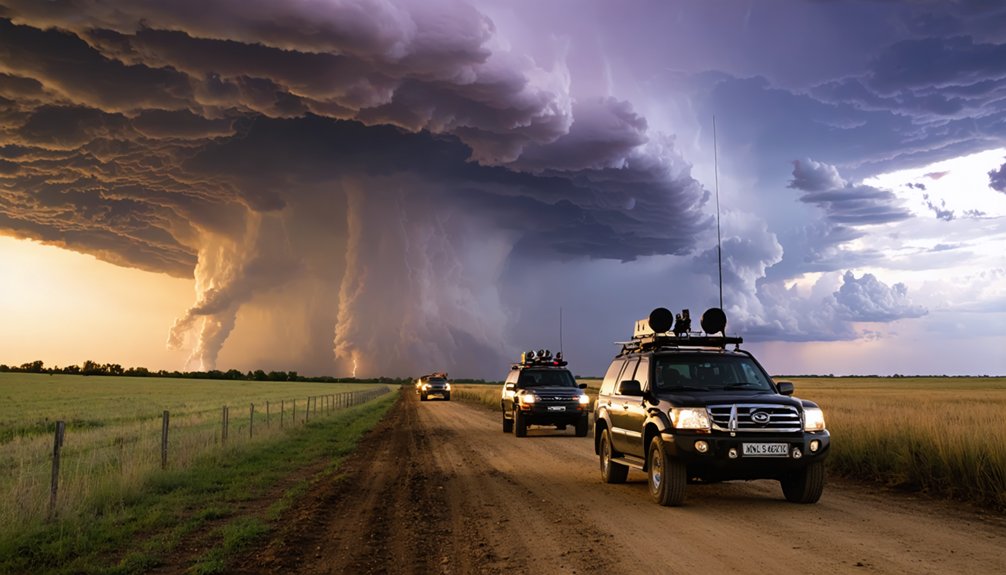
When you chase storms alone, you’re steering through one of nature’s most unpredictable and lethal environments without the expertise to manage it. Expert guides bring 10 to 15 years of experience in storm safety, positioning you away from dangerous hail, lightning, and tornado paths. Their meteorological knowledge drives accurate weather predictions, letting them anticipate storm behavior before conditions deteriorate.
Professional guides continuously monitor escape routes, making split-second decisions that protect every participant. They conduct thorough safety briefings before each chase, ensuring you understand the risks and protocols.
Tour companies also require waivers that formally acknowledge inherent hazards, reinforcing a culture of informed awareness.
Since the 1950s, only three deaths have occurred in actual storm-related incidents on guided tours — a reflection of what structured expertise delivers over reckless solo attempts.
How Guides Put You in Front of the Right Storm at the Right Time
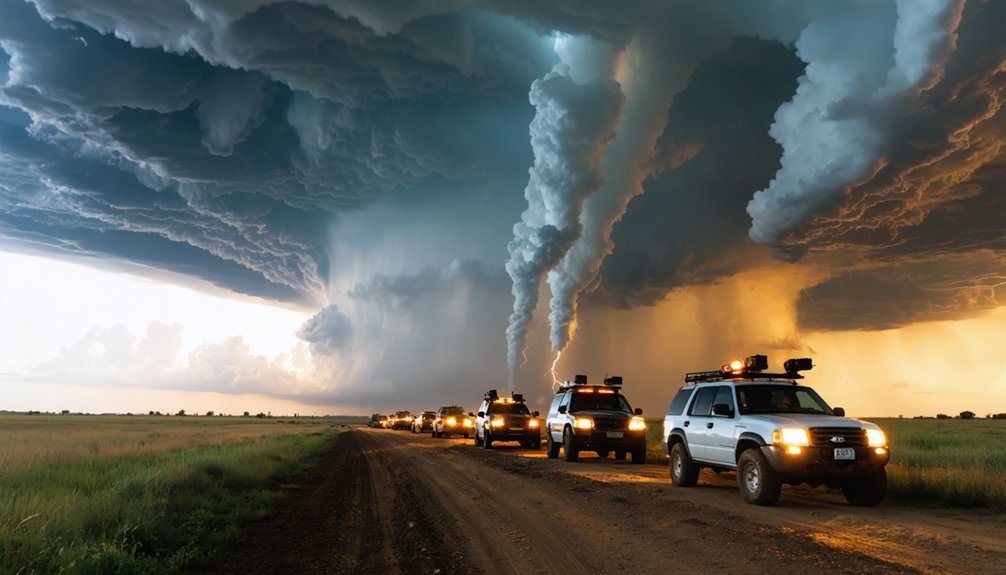
Positioning you in front of the right storm isn’t luck — it’s a calculated process built on meteorological expertise and real-time data analysis. Guides apply advanced meteorological techniques to track developing supercells, ensuring you’re exactly where conditions peak.
Here’s what drives precision targeting:
- Weather models identify supercell development hours before rotation begins
- Radar data pinpoints storm structure, movement speed, and trajectory
- Satellite imagery confirms atmospheric instability across multiple states
- Safety protocols determine ideal positioning distances from active tornado paths
- Real-time adjustments redirect chase vehicles when storms shift unexpectedly
You’re not wandering highways hoping for action. Your guide interprets atmospheric dynamics continuously, repositioning the team with purpose. That combination of forecasting skill and decisive movement puts you at the most spectacular, photogenic moments severe weather produces.
What Guides Actually Teach You About Storm Formation
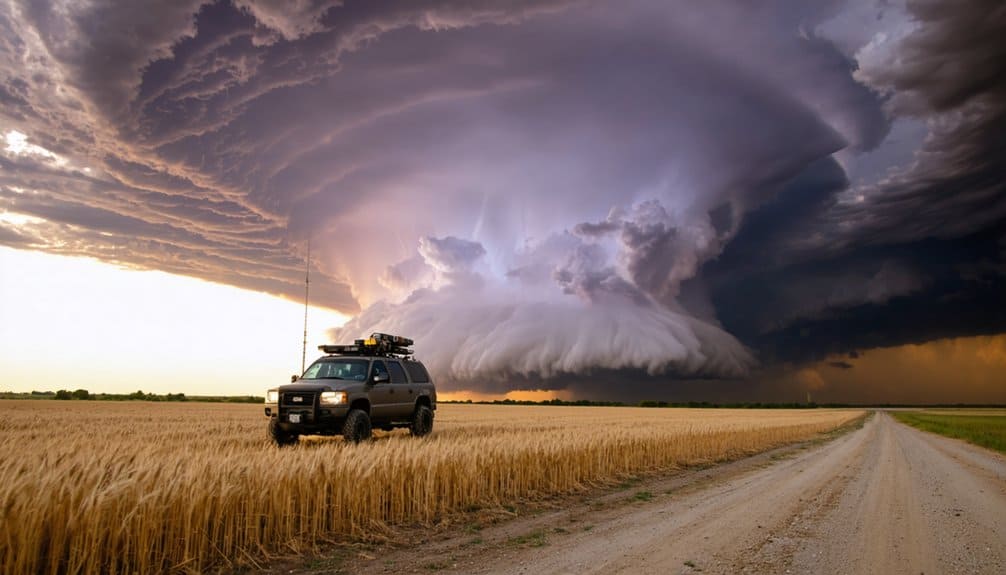
Precision targeting gets you to the storm — but what you learn once you’re there transforms the experience entirely. Guides break down cloud formation in real time, explaining why wall clouds descend, how rotation tightens, and what specific visual cues signal imminent tornado development. You’re not just watching — you’re understanding atmospheric dynamics as they unfold directly in front of you.
Guides identify inflow bands, rear-flank downdrafts, and mesocyclone structure while you observe each feature forming overhead. You’ll recognize the difference between a high-precipitation supercell and a classic supercell. That knowledge sticks.
You leave with a functional meteorological framework, not just photographs. Professional instruction converts raw visual spectacle into genuine comprehension — giving you the freedom to interpret severe weather independently long after the tour ends.
What Professional Storm Chasing Tours Cost
Costs for guided storm chasing tours range from $2,000 to $4,500, depending on duration, group size, and included amenities. You’re investing in expert-led experiences that bundle storm safety protocols, cutting-edge weather technology, and logistical support into one package.
Guided storm chasing tours run $2,000–$4,500, bundling expert leadership, advanced weather technology, and full logistical support.
Here’s what your investment typically covers:
- Duration: 5-day to 10-day expeditions across multiple states
- Group size: Small groups, often limited to four guests, ensuring personalized attention
- Technology access: Professional radar, satellite imagery, and real-time weather models
- Inclusions: Meals, transportation, and high-resolution camera equipment
- Season: Peak operations run April through August, with May offering prime tornado activity
Tours operate across Oklahoma, Texas, and the northern plains, shifting zones monthly to maximize your chase opportunities.
Which States and Seasons Are Best for Storm Chasing Tours?
Storm chasing tours concentrate activity across three primary states—Oklahoma, Texas, and the northern plains—where atmospheric conditions consistently produce supercells and tornadoes. Regional climate differences across these zones determine when and where guides position their teams throughout the season.
Seasonal patterns drive tour scheduling from April through August, with May representing peak tornado activity across the central plains. Early season targets shift toward Texas and Oklahoma, where warm Gulf moisture collides with dry continental air.
By June, activity migrates northward into Kansas, Nebraska, and South Dakota as the jet stream repositions.
You’ll experience the most dynamic storm environments by aligning your tour dates with these predictable atmospheric windows. Guides track these shifting zones precisely, ensuring you’re positioned in the highest-probability corridors when supercell development peaks.
Frequently Asked Questions
What Should I Pack for a Guided Storm Chasing Tour?
Pack your saddlebags with layers, sturdy boots, and rain gear for storm safety. You’ll need sunscreen, snacks, and a camera. Weather preparedness means bringing medications and charging devices fully before chasing begins.
Are Guided Storm Chasing Tours Suitable for Children or Families?
Guided tours can work for families, but you’ll want to assess storm safety risks carefully. The family experience demands maturity, as severe weather’s unpredictable nature requires participants who can follow critical safety protocols without hesitation.
How Many Guests Typically Join a Professional Storm Chasing Tour?
You’ll typically share the adventure with just four guests max. This intimate setup enhances storm safety, letting guides focus on real-time weather forecasting while ensuring you’re perfectly positioned for every electrifying, awe-inspiring moment.
Do Tour Packages Include Meals and Accommodation During the Trip?
Yes, tour packages include meals and equipment, so you won’t worry about logistics. They handle weather preparedness essentials, letting you focus on storm chasing safety while guides manage schedules, accommodations, and transportation across remote locations efficiently.
What Camera Equipment Is Provided During a Professional Storm Chasing Tour?
You’ll get access to high-resolution cameras and communication devices, giving you top-tier photography gear to capture every moment. Storm safety stays prioritized while guides provide real-time data tools, ensuring you’re always equipped and protected.
References
- https://www.stormchasingusa.com/blog/beginners-guide-to-storm-chasing-with-organized-tours/
- https://www.stormchasingusa.com/what-to-consider-before-a-storm-chasing-tour/
- https://www.usatoday.com/story/news/nation/2024/05/20/tornado-tourism-storm-chasing-tours/73687994007/
- https://extremetornadotours.com
- https://www.gonomad.com/209494-storm-chasing-erik-burns-tornadic
- https://www.reddit.com/r/stormchasing/comments/1gq2x54/question_about_storm_chasing_tours/
- https://www.nationalgeographic.com/travel/article/storm-chasing-is-an-exhilarating-rush-but-is-it-safe
- https://www.stormchasingusa.com/inspiration/
- https://www.stormchasingusa.com/blog/my-impression-of-storm-chasing-with-silver-lining-tours/
- https://stormchasing.com