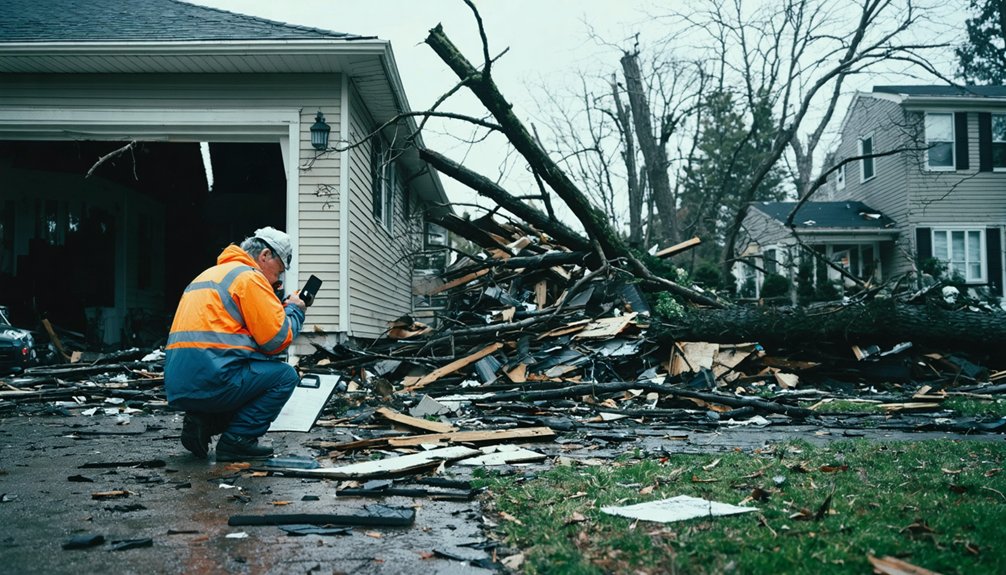
Insurers don’t take your word for it — they require verifiable evidence before approving a payout. When a tree damages your property, documentation is what establishes causation, confirms the scope of loss, and gives your claim a defensible foundation. Without photos, receipts, and professional assessments, adjusters can dispute severity, question timing, and reduce or deny what you’re owed. Everything covered ahead will sharpen exactly how to protect yourself.
Key Takeaways
- Insurers require verifiable evidence, not verbal accounts, to process claims and fulfill contractual obligations under policy terms.
- Documented photos, receipts, and written inventories prevent adjusters from rejecting or reducing your payout.
- Timestamps and weather reports establish causation, proving damage resulted from the storm rather than pre-existing conditions.
- Incomplete documentation leads to conservative estimates, payout erosion, and removes your ability to negotiate settlements.
- Without proper evidence, emotional stress increases while financial recovery is delayed or permanently eliminated.
Why Insurers Require Proof After Storm Tree Damage
When a storm damages trees on your property, insurers don’t take your word for it—they require verifiable proof before processing any claim. This isn’t arbitrary—it’s rooted in policy transparency and contractual obligation. Insurers operate on documented evidence, not verbal accounts, because ambiguous claims increase dispute risk and financial exposure on both sides.
Without proper claim education, you may unknowingly submit incomplete files, triggering delays or outright denials. Adjusters need photographic evidence, written inventories, and third-party assessments to verify damage extent and causation. These requirements protect you as much as the insurer—they establish a clear, defensible record that aligns with your policy terms.
Understanding why proof matters empowers you to respond strategically, protect your rights, and move your claim forward without unnecessary setbacks.
When to File a Tree Damage Claim After a Storm
After a storm damages trees on your property, you should report the incident to your insurer as soon as you’ve documented the scene with photos, videos, and written records.
Most policies enforce strict filing deadlines—sometimes as short as 24 to 72 hours—so you must review your policy terms immediately to avoid forfeiting your claim.
Missing these windows can trigger automatic denial, regardless of the damage’s severity or legitimacy.
Immediate Post-Storm Reporting
Timing your claim filing directly affects how quickly your insurer processes your payout. Once the storm passes and conditions are safe, you should document damage immediately.
Take immediate photos before any cleanup begins — wide shots for context, close-ups for contact points. Capture timestamps to confirm when you discovered the damage.
Contact your insurer’s emergency contacts within 24 hours of discovery. Most policies include strict reporting windows, and missing these deadlines can trigger automatic denials. Early reporting also accelerates your adjuster’s initial response, reducing unnecessary processing delays.
Don’t wait for full damage assessments before filing. Submit your initial report with available evidence, then supplement it with contractor invoices, weather reports, and professional assessments as you gather them. Speed and accuracy together protect your claim’s integrity.
Policy Deadline Awareness
Every insurance policy carries built-in filing deadlines, and missing them can void your claim entirely — regardless of how well you’ve documented the damage. Review your policy immediately after a storm to identify the exact submission window. Don’t assume you have unlimited time — most insurers enforce strict cutoffs ranging from 30 to 365 days post-incident.
Set policy reminders the moment you discover damage. Build a deadline calendar that tracks your initial filing date, adjuster response windows, and supplemental submission cutoffs. Missing any single checkpoint can stall or permanently close your claim.
Prompt filing also accelerates adjuster assignment and payout processing. Early reporting signals good faith compliance, strengthening your position if disputes arise later. Treat every deadline as non-negotiable — your financial recovery depends on it.
How Missing Documentation Cuts Your Insurance Payout
When you submit a claim with incomplete records, your insurer calculates your payout based only on what you can verify—gaps in evidence directly reduce your settlement value.
Vague descriptions, missing photos, or absent receipts give adjusters grounds to dispute damage severity and minimize compensation.
You can’t recover full costs if you can’t prove them with precise, verifiable documentation.
Gaps Reduce Claim Value
Missing documentation cuts into your insurance payout more than most policyholders realize. When you can’t substantiate damage severity, adjusters apply conservative estimates that trigger payout erosion across every line item.
Claim discrepancies emerge when your verbal account contradicts what physical evidence actually supports. Insurers won’t assume the worst-case scenario in your favor — they’ll default to the lowest defensible figure.
Without photos, receipts, or professional assessments, you’re surrendering negotiating leverage entirely. Each undocumented expense represents a direct reduction in your final settlement.
Ambiguous damage descriptions give adjusters justification to question causation, dispute scope, and deny line items outright. You control the outcome by controlling the evidence. Gaps in your documentation aren’t administrative oversights — they’re financial liabilities that directly shrink your compensation.
Vague Proof Delays Payouts
Vague proof doesn’t just weaken your claim — it stalls it entirely. Adjusters won’t approve payouts based on unclear testimony or ambiguous timelines. You need verifiable, structured evidence to move your claim forward efficiently.
Four documentation failures that trigger payout delays:
- Missing timestamps — undated photos create ambiguous timelines adjusters can’t verify
- Unclear testimony — verbal accounts without written support get flagged for additional review
- No damage progression evidence — insurers can’t confirm severity without sequential documentation
- Absent causation proof — without weather reports or professional assessments, your claim stalls indefinitely
Every gap you leave gives insurers justification to slow-walk your payout. Precise, organized records force faster decisions and protect your financial recovery completely.
What Happens When You File Without Documentation?
Filing a storm damage claim without documentation puts you at an immediate disadvantage. Insurers won’t accept verbal accounts as proof, so adjusters will likely reject or reduce your payout. Without photos, receipts, or written inventories, you can’t substantiate damage severity or out-of-pocket expenses. This forces you into disputes that demand legal consultation, consuming your time and resources.
The emotional impact of a denied claim compounds your stress during an already difficult recovery. You lose negotiating leverage when evidence is absent, and insurers control the outcome. Causation becomes impossible to prove without weather reports or professional assessments. Missing timestamps and ownership confirmations further weaken your position. Filing without documentation doesn’t just delay compensation—it potentially eliminates it entirely, stripping you of the financial protection your policy guarantees.
Photos and Videos That Strengthen Your Tree Damage Claim
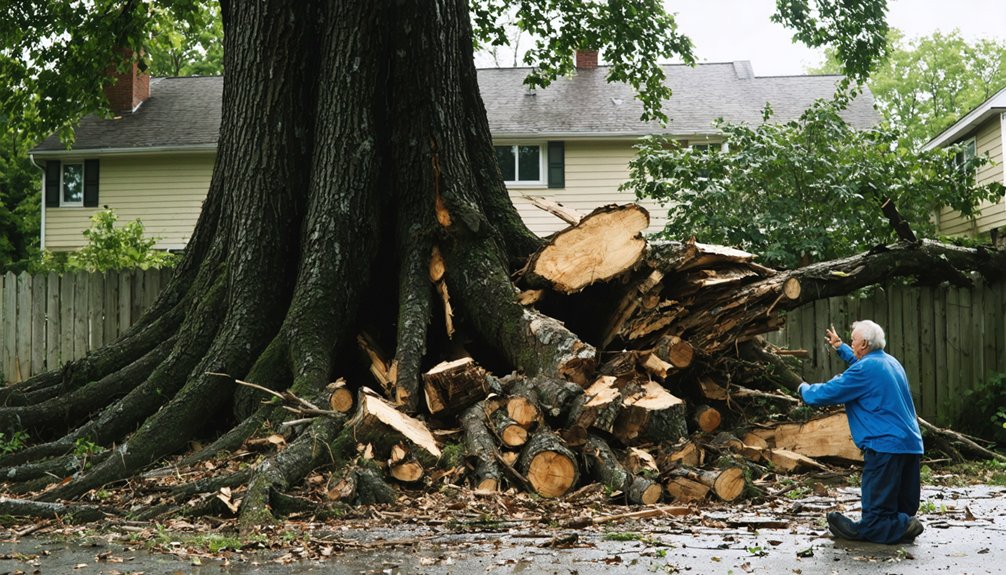
Photos and videos consistently serve as your strongest evidence when filing a tree damage claim. Capture high resolution timelapse sequences showing damage progression, and use drone perspectives to establish aerial context insurers can’t dispute. Your visual documentation must be deliberate and systematic.
Photos and videos are your strongest evidence — make every frame deliberate, systematic, and impossible for insurers to dispute.
Follow these four critical steps:
- Shoot wide-angle frames to establish overall property context before anything shifts
- Record close-up footage highlighting exact contact points between the tree and structure
- Apply timestamps immediately to confirm when damage was discovered
- Use drone perspectives to document roof-level and canopy damage adjusters can’t physically access
Every frame you capture becomes verifiable proof. Don’t rely on verbal descriptions when high resolution timelapse sequences and multi-angle footage can lock in your claim’s validity permanently.
Weather Reports and Assessments That Back Your Claim
After capturing visual evidence, you’ll need external documentation that independently confirms the storm’s severity and its impact on your trees.
Weather service reports, certified arborist assessments, and authority-issued records each establish critical facts that your photos alone can’t prove.
Together, these supporting documents corroborate causation, validate damage claims, and markedly reduce an adjuster’s grounds for dispute.
Storm Condition Verification Reports
Backing your claim with storm condition verification reports strengthens your position against an insurer’s scrutiny. These documents establish storm verification that ties weather events directly to your damage timelines, eliminating insurer doubts about causation.
Secure these four critical verification sources:
- Official weather service reports confirming storm intensity, wind speeds, and precipitation levels on the incident date
- Radar and meteorological data pinpointing your geographic location within the storm’s documented path
- Municipal emergency declarations validating that authorities recognized the storm’s severity
- Certified arborist assessments connecting tree structural failure directly to storm-force conditions
Each document removes ambiguity from your claim. Insurers can’t dispute verified atmospheric data. You’re building an irrefutable evidence chain that protects your right to a full, timely payout.
Professional Tree Health Assessments
A certified arborist‘s written assessment transforms your claim from opinion into verified fact. When you secure documentation from a licensed professional carrying recognized arborist certifications, you hand your insurer objective data they can’t dismiss. The assessment identifies whether pre-existing disease, structural weakness, or storm force caused the failure—a distinction that directly controls your payout.
Request root soil analysis when underground instability contributed to the tree’s collapse. This analysis establishes causation with measurable, scientific precision, eliminating adjuster speculation about damage origin.
Attach the arborist’s license number, inspection date, and methodology to every report you submit. Insurers process professionally validated assessments faster because the evidence requires no interpretation. You control the narrative when a credentialed expert’s findings anchor your claim documentation.
Supporting Evidence From Authorities
Weather reports and official assessments back up what your photos and arborist documents already show—they confirm that external, verifiable conditions caused your tree damage. Authorities provide independent, unbiased records that strengthen your position against insurer disputes.
Secure these four critical authority-based documents:
- Weather reports – Obtain official meteorological data confirming storm severity on the damage date.
- Police reports – Document incidents where falling trees created public safety hazards requiring law enforcement response.
- Legal affidavits – Collect sworn neighbor statements verifying they witnessed the damaging event directly.
- Municipal permits – Retrieve any required removal or emergency work permits issued by local authorities post-storm.
These records eliminate ambiguity around causation, giving your insurer verifiable, third-party confirmation that supports faster, dispute-free claim resolution.
Costs to Document When Filing a Tree Damage Insurance Claim
Filing a tree damage insurance claim requires you to document several distinct cost categories to avoid payout reductions or disputes. Retain all invoices covering emergency tree removal, stump grinding, and debris hauling.
Collect post repair estimates from licensed contractors before any permanent structural work begins, as adjusters use these figures to calculate settlement amounts.
Document landscaping replacement costs separately, including plants, soil, and labor required to restore your yard.
Keep receipts for temporary protective measures like tarps or boarding. Track all equipment rental fees tied directly to damage mitigation.
Log every out-of-pocket expense with dates, vendor names, and service descriptions. Organized, itemized records give you verifiable proof that withstands adjuster scrutiny and prevents insurers from justifying reduced payouts based on incomplete or ambiguous cost submissions.
How Poor Records Derail Your Tree Damage Claim
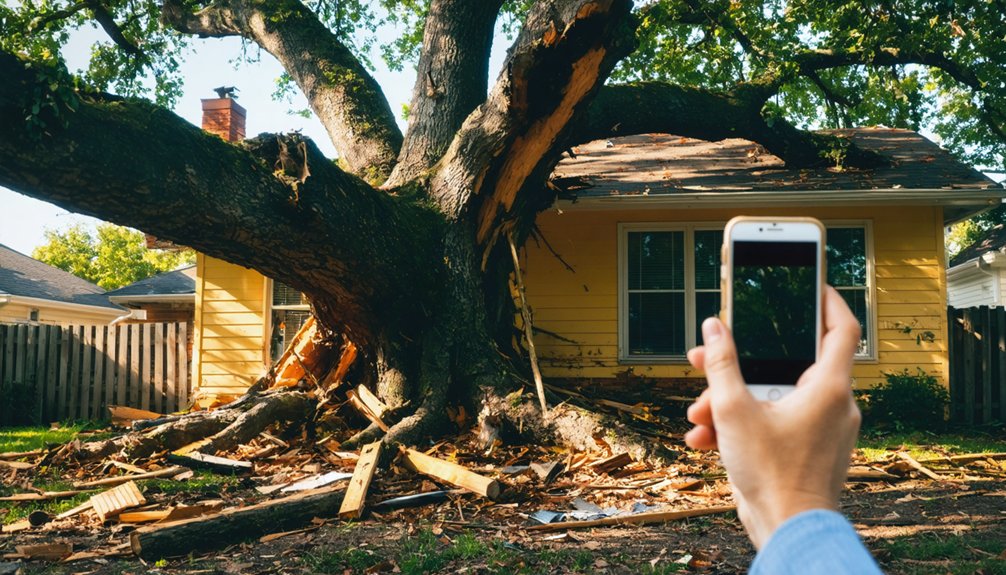
Keeping organized cost records protects your claim, but those records lose their power the moment gaps, inconsistencies, or missing documentation enter your file.
Poor record keeping habits give adjusters grounds to question your credibility during claimant interviews, where inconsistencies between verbal accounts and written evidence trigger immediate scrutiny.
Four ways weak records derail your claim:
- Missing photos leave damage severity open to adjuster interpretation, reducing your payout.
- No timestamps create causation disputes that stall processing indefinitely.
- Absent receipts invalidate temporary repair costs you’ve already paid out-of-pocket.
- Incomplete inventories force additional information requests, delaying your settlement.
You control your claim’s outcome by maintaining precise, verifiable documentation from the moment damage occurs.
Gaps cost you money and freedom.
How to Organize Your Tree Damage Claim for Faster Processing
Organizing your tree damage claim into a structured file system cuts processing time by eliminating the back-and-forth that stalls settlements.
Structured claim files eliminate unnecessary back-and-forth, accelerating settlements and keeping the process firmly on your timeline.
Use consistent file naming conventions—such as “2024-StormDamage-Photo-001” or “2024-AdjusterCall-Log”—so every document is instantly retrievable.
Group files by category: photos, invoices, communications, and third-party reports.
Store everything in chronological order within each folder.
Create digital backups across at least two platforms—cloud storage and an external drive—to protect against data loss.
Submit organized packets to your adjuster rather than scattered documents, as clear inventories reduce requests for additional data and accelerate review.
Label each item with a date, description, and relevance to the claim.
Structured files demonstrate credibility, minimize disputes, and position you to receive prompt policy payouts on your terms.
Mistakes That Delay or Deny Tree Damage Insurance Claims
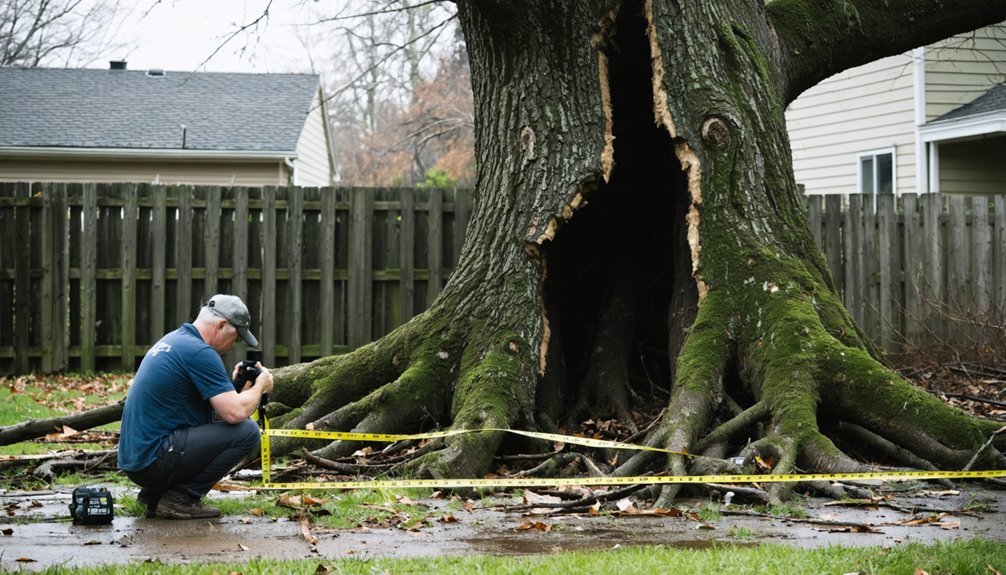
Even a well-organized claim file won’t protect you if foundational errors undermine the submission itself. Mistakes at the documentation stage cost you time, money, and leverage.
Avoid these four claim-killing errors:
- Skipping delayed inspections — Postponing professional assessments lets insurers argue damage predates the storm, weakening causation evidence.
- Omitting witness affidavits — Without signed neighbor statements confirming the event, adjusters can dispute when and how damage occurred.
- Filing ambiguous descriptions — Vague language about damage severity triggers adjuster pushback and reduces payout accuracy.
- Losing photo timestamps — Unverified discovery times create disputes over policy coverage windows.
Each error hands control to the insurer. You protect your claim by eliminating documentation gaps before submission, not after disputes arise.
Frequently Asked Questions
Does Homeowners Insurance Cover Tree Removal if No Property Damage Occurred?
Most homeowners insurance policies won’t cover tree removal if there’s no property damage. You’ll face insurance exclusions in this scenario, and without valid claim documentation proving impact, your insurer will likely deny reimbursement entirely.
Can a Neighbor’s Fallen Tree Be Claimed on Your Own Policy?
Yes, you can claim a neighbor’s fallen tree on your own policy if it damages your property. Your insurer handles neighbor liability disputes, covering repairs while managing boundary disputes, minus your deductible.
Are Tree Damage Claims Treated Differently Than Other Storm-Related Insurance Claims?
Yes, tree damage claims involve unique liability nuances that set them apart. You’ll navigate a more complex claim process where ownership, negligence, and causation evidence directly influence how your insurer evaluates and approves your payout.
Does Filing a Tree Damage Claim Increase Your Future Insurance Premiums?
Filing a tree damage claim can trigger insurance hikes, but it’s not guaranteed. Your premium impact depends on your claims history, insurer policies, and whether you’re deemed at-fault. Review your policy terms proactively.
Can You Reopen a Previously Denied Tree Damage Claim With New Documentation?
“It’s never too late.” You can reopen a denied claim by submitting additional evidence directly to your insurer appeal process. New photos, professional assessments, or weather reports strengthen your case, compelling adjusters to reconsider their original decision.
References
- https://www.preestrees.com/blog-posts/how-to-document-tree-damage-for-faster-insurance-claims
- https://www.allyourwaytreeservicefl.com/post/how-to-document-tree-damage-for-insurance-after-a-storm
- https://arborgrovetc.com/article/what-to-do-in-the-first-24-hours-after-storm-damage-a-homeowners-guide-to-emergency-tree-response/
- https://www.1treemergency.com/blog/insurance-documentation
- https://torocontractingrllc.com/are-fallen-trees-considered-storm-damage/
- https://www.bigcreektreeservice.com/blog/document-storm-damage-insurance-ohio
- https://panditlaw.com/storm-damage-documentation/
- https://arbor-works.com/learning-center/how-to-assess-tree-health-after-a-storm/
- https://discounttreesbroward.com/how-to-document-tree-conditions-for-insurance-claims-before-and-after-storms/
- https://dec.ny.gov/nature/forests-trees/urban-and-community-forestry/municipal-urban-forestry-program-support/storm-damage-management-for-municipal-trees