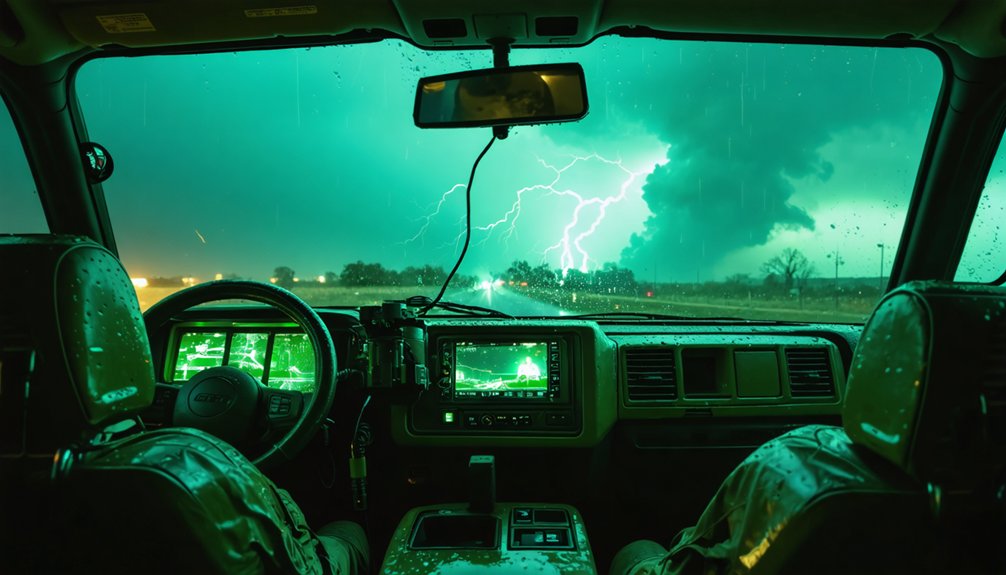
Top-quality storm chasing gear protects you when conditions turn deadly. You’ll need reinforced glass and shatterproof windshields against hail and debris, while portable lightning detectors warn of electrical hazards. Professional equipment like RadarScope Pro delivers 99% data reliability, and broadcast-quality cameras generate $400 per tornado clip to offset costs. Durable gear like RAM mounts and Manfrotto tripods withstand extreme conditions and serve multiple applications. Your investment pays dividends through enhanced safety, consistent performance, and long-term savings that become clear as you explore each equipment category.
Key Takeaways
- Top-quality equipment provides 99% data reliability and weather-resistant construction that withstands extreme wind, hail, and electrical hazards.
- Professional cameras generate revenue through broadcast footage sales, with tornado clips earning $400 and corporate shoots diversifying income streams.
- Reinforced vehicles with shatterproof windshields and structural reinforcement protect chasers from hail impacts, projectiles, and dangerous storm conditions.
- Durable gear like carbon fiber mounts and quality power systems reduces long-term maintenance costs and retains higher resale value.
- Advanced tools including mobile Doppler, lightning detectors, and real-time tracking systems deliver critical storm intelligence for safer deployments.
Superior Safety Features Protect You From Multiple Storm Hazards
Storm chasing demands equipment that shields you from nature’s most violent atmospheric conditions. Your vehicle’s reinforced glass construction becomes your primary defense against golf ball-sized hail impacts, while shatterproof windshield design prevents penetration from airborne projectiles. Hard-topped vehicles with structural reinforcement minimize injury risk when you can’t escape a storm’s path.
You’ll need portable lightning detectors like Thor Guard and StrikeAlert HD providing advance electrical activity warnings before strikes occur. Quality anemometers and barometers deliver real-time atmospheric measurements, enabling split-second decisions about positioning and retreat routes. RAM mounts with Twist-Lock systems secure your radar displays and communication devices during violent turbulence. Waterproof protective gear, safety glasses, and slip-resistant footwear guard against debris, precipitation, and unstable terrain. This equipment transforms dangerous encounters into calculated observations.
Advanced Data Collection Tools Deliver Comprehensive Storm Intelligence
While protective equipment keeps you safe during storm encounters, accurate measurement instruments determine whether you’re positioned correctly to document atmospheric phenomena without unnecessary risk.
Proper instrumentation transforms storm chasing from reckless pursuit into calculated science, enabling photographers to balance compelling documentation with survival.
Real-time risk assessment requires systems like the Kestrel 5500 Weather Meter, which logs wind speed, temperature, humidity, and pressure while withstanding storm conditions.
RadarScope Pro and Baron Mobile Threat Net enable continuous storm tracking through high-resolution radar data, revealing sudden movements and structural changes.
Mobile Doppler systems like DOW provide on-site wind measurements, while radiosondes capture vertical atmospheric profiles. Portable lightning detectors and electric field meters warn you of developing electrical hazards before strikes occur.
This extensive data collection lets you make informed positioning decisions, maximizing documentation opportunities while maintaining situational awareness throughout rapidly evolving storm environments.
Reliable Equipment Ensures Consistent Performance During Critical Moments
When atmospheric conditions deteriorate rapidly, your equipment’s reliability becomes the difference between capturing critical data and facing dangerous blind spots in your situational awareness. Baron Mobile Threat Net and RadarScope Pro deliver 99% data stream reliability, matching National Weather Service speed while providing enhanced data processing capabilities for hook echo identification. You’ll maintain power independence with Anker 737 PowerCore’s 24,000 mAh capacity during extended deployments.
GPS systems automatically reroute around closures while two-way radios guarantee seamless field integration when cellular networks fail. This reliability translates to measurable safety outcomes—just 13 fatalities across 14 years among 35,175 to 502,500 annual person-days of chasing activity. Weather-resistant housings withstand wind-driven rain, while robust data storage prevents metric loss during hardware failures. Your freedom to chase depends on equipment that performs when conditions matter most.
Professional-Grade Cameras Generate Revenue While Building Your Portfolio
Since the late 1990s, professional-grade cameras have transformed storm chasing from an expense-driven pursuit into a viable revenue stream, with individual chasers earning several hundred to low thousands of dollars daily by marketing footage to news agencies.
You’ll need broadcast-quality equipment like the Sony VX2100 or HDR-FX1 to compete effectively—national media typically pays $400 per tornado clip, while local outlets offer $100.
Your investment pays dividends through footage diversity. Winter weather, rain events, and corporate shoots generate bulk income beyond storm seasons.
Post production optimization matters too; high-quality material attracts Discovery and National Geographic contracts. Daily chasing increases your shot volume and success rates, building an extensive archive that can offset six-figure expenses over time.
File proper invoices and maintain business records to maximize sustainability.
Long-Term Cost Savings Through Durability And Multi-Purpose Applications
Strategic equipment investments reduce your total ownership costs by 40-60% over a five-year chase period when you prioritize durability and multi-function capability. Your RAM mounts transfer between vehicles while Manfrotto tripods handle cameras and spotting scopes, eliminating redundant purchases.
Vehicles with proven AWD systems and high ground clearance offer reduced maintenance intervals through enhanced component protection against hail and road debris. Quality power solutions like EcoFlow units provide reliable backup across multiple seasons without degradation.
When you’re ready to upgrade, well-maintained professional gear commands greater resale value—typically recovering 60-70% of initial investment. Carbon fiber tripods and waterproof protective equipment endure repeated exposures while maintaining functionality.
This approach lets you chase freely without equipment anxiety, knowing your tools withstand environmental extremes while serving multiple operational roles throughout extended deployment cycles.
Frequently Asked Questions
What Insurance Coverage Do Professional Storm Chasers Typically Carry for Their Equipment?
You’ll need specialized vehicle insurance for your chase rig and extensive equipment replacement coverage protecting cameras, weather instruments, and communication gear against hail, lightning, floods, and collision damage encountered during severe weather pursuits.
How Do Storm Chasers Legally Access Private Property During Active Pursuits?
You’ll need explicit permission before entering private land during chases. Obtaining landowner consent—whether verbal or written—is essential. Traversing legal access boundaries protects your freedom to chase while respecting property rights and avoiding trespassing citations or equipment impoundment.
What Permits or Licenses Are Required to Chase Storms Professionally?
You’ll need SKYWARN certification, HAM radio licensing, and possibly academic credentials—your passport to the storm’s theater. These validate your local weather forecasting skills and storm safety protocols, proving you’re not just chasing freedom, but respecting nature’s power responsibly.
How Do Storm Chasers Coordinate With Emergency Services During Severe Weather Events?
You’ll coordinate through real-time communication strategies with EOCs and National Weather Service, relaying ground-truth observations via spotter networks. Following coordinated response protocols, you’ll maintain contact with emergency services, providing critical situational updates that support their life-saving operations.
What Training or Certifications Should Beginners Complete Before Purchasing Professional Gear?
Before you break free to chase storms, complete SKYWARN certification and SpotterNetwork training to master proper safety protocols. Then gain hands-on storm observation experience through ride-alongs with veteran chasers who’ll teach real-world survival skills.