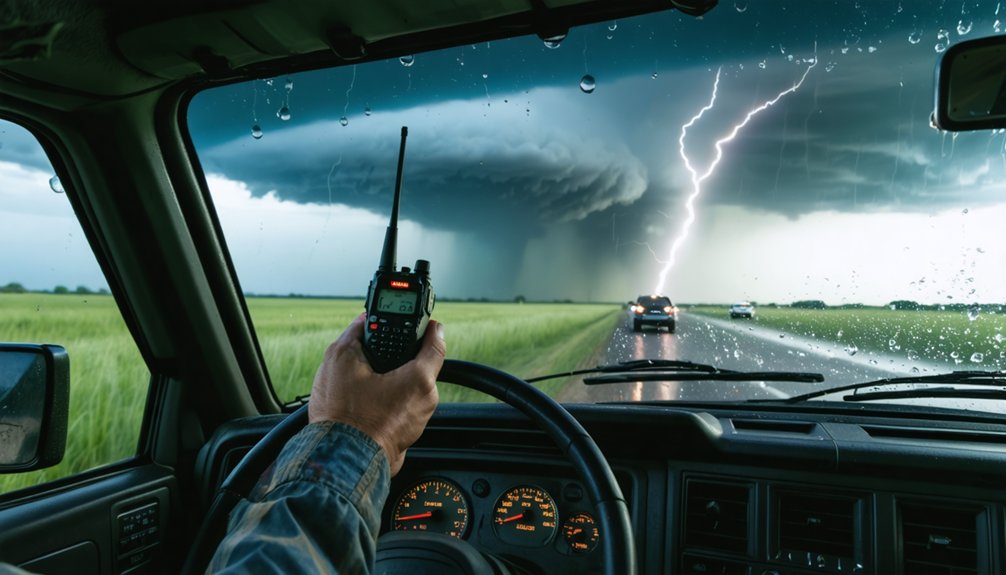
Clear communication determines whether your crew evacuates safely or gets caught in dangerous conditions. Without timely alerts, workers can’t secure equipment, execute evacuation plans, or reach designated shelters before storms intensify. Confusion eliminates decisive action exactly when minutes matter most. Poor communication directly causes injuries, project delays, and compromised site integrity. Building a reliable, layered communication strategy transforms storm response from reactive chaos into coordinated safety—and the details of that strategy are worth understanding completely.
Key Takeaways
- Clear communication ensures workers know exactly what to do, where to go, and when to act during dangerous storm conditions.
- Timely alerts create a critical decision-making window, allowing crews to secure equipment and execute evacuation plans before conditions worsen.
- Poor communication causes confusion, leaving workers exposed to storm hazards like wind, lightning, and flooding when minutes matter most.
- Coordinated emergency messaging across multiple channels ensures critical safety instructions reach all personnel without delay or misunderstanding.
- Consistent storm briefings and documented protocols help workers retain safety procedures, reducing injuries and protecting overall site integrity.
How Poor Storm Communication Puts Job Sites at Risk
When storm communication breaks down on a job site, the consequences move fast and compound quickly. Without timely alerts, you lose the window to secure equipment, adjust schedules, or execute an evacuation plan before conditions deteriorate. A communication breakdown doesn’t just create confusion—it eliminates your ability to act decisively when minutes define outcomes.
Poor storm preparedness amplifies every risk on site. Workers remain exposed to wind, flooding, lightning, and structural hazards because no one transmitted the right information through the right channels. Supervisors make reactive decisions instead of coordinated ones. Emergency responders operate without accurate situational data. Each failure multiplies the next.
You can’t recover time lost to miscommunication during a storm. The cost shows up in injuries, project delays, and compromised site integrity.
Early Warning Systems That Give Crews Time to Act
Before a storm reaches your site, early warning systems create the decision-making window that separates controlled response from reactive chaos. Early detection through meteorological alerts gives your crew measurable lead time to execute proactive measures before conditions deteriorate.
- Workers securing scaffold ties and loose materials before wind speeds spike
- Supervisors routing crews toward designated shelters as storm bands appear on radar
- Equipment operators powering down machinery before lightning strikes the surrounding area
Timely alerts delivered via SMS, email, or group apps eliminate guesswork and compress response timelines. When your team receives accurate forecasts hours—not minutes—before impact, you control the outcome.
That operational freedom comes directly from investing in reliable early warning infrastructure that keeps every crew member informed and ready to act.
What Your Emergency Action Plan Must Communicate Before Storm Season
Early warning systems only work if your crew knows what to do with the information they receive. Your emergency action plan must define emergency roles, response protocols, and communication frequency before storm season begins.
Every worker needs clear assignments, not assumptions. Schedule training sessions and storm drills to test your plan under pressure. Use message clarity as your standard—if instructions require interpretation, rewrite them.
Post hazard signage at entry points, evacuation routes, and shelter locations so workers can act without waiting for direction. Confirm equipment readiness across all critical systems, including backup communications and personal protective gear.
Document your protocols and distribute them through multiple channels. A plan that lives only in a binder won’t protect anyone when conditions deteriorate fast.
How to Brief Workers on Storm Hazards Before Conditions Deteriorate
Storm briefings aren’t effective if they happen too late or only once. Schedule hazard training before storm season peaks, and repeat it as forecasts develop.
Workers retain safety procedures better when they receive information early and consistently. Your storm preparedness strategy should include structured briefings that address specific, site-relevant risks.
Cover these hazards directly during each session:
- Wind and debris: Flying materials can strike workers within seconds of gusts reaching dangerous speeds.
- Lightning strike zones: Open ground, elevated equipment, and metal structures dramatically increase exposure risk.
- Flooding and structural failure: Rising water and compromised foundations create invisible hazards beneath normal sight lines.
Keep instructions plain and direct. Every worker should leave each briefing knowing exactly where to go, what to do, and when to act.
Fast Alerts That Drive Rapid Response When Storms Hit
When a storm intensifies without warning, every minute you delay an alert increases the risk of injury or death.
You need an emergency communication system that pushes immediate, concise alerts across multiple channels—SMS, PA systems, and mobile apps—so workers receive and act on critical information fast.
Coordinated response systems tie together site supervisors, first responders, and safety personnel, ensuring that evacuation orders and shutdown commands reach the right people before conditions turn life-threatening.
Immediate Alerts Save Lives
During a fast-moving storm, minutes separate a controlled evacuation from a life-threatening situation. Immediate communication through reliable emergency systems gives you the reaction time needed to move people safely. Timely notifications eliminate hesitation, cutting through confusion when conditions deteriorate rapidly.
- Workers receiving instant alerts abandon unsafe scaffolding before wind speeds spike.
- Site leaders coordinate shelter routes before rising floodwaters block exit paths.
- First responders mobilize precisely when distress signals reach command centers without delay.
Every second your alert system delays increases exposure risk. Emergency messaging platforms that prioritize speed and clarity keep your team protected and your operations defensible.
You can’t afford systems that lag, filter, or fragment critical warnings. Build redundancy into your alert infrastructure before storms demand it.
Coordinated Emergency Response Systems
Fast alerts mean nothing without the systems that route them to the right people at the right time. Coordinated emergency response systems give you the infrastructure to act decisively when storms escalate without warning.
You need pre-mapped evacuation routes, assigned roles, and verified contact trees before conditions deteriorate. Emergency preparedness isn’t passive documentation—it’s an active framework you test, update, and execute under pressure.
When your response coordination breaks down, delays compound and risks multiply. Integrated systems using SMS, PA networks, and redundant digital channels guarantee critical instructions reach every crew member, supervisor, and first responder simultaneously.
You can’t afford communication gaps during active storm events. Structured systems eliminate guesswork, compress response times, and protect your team’s autonomy to move quickly when every second matters.
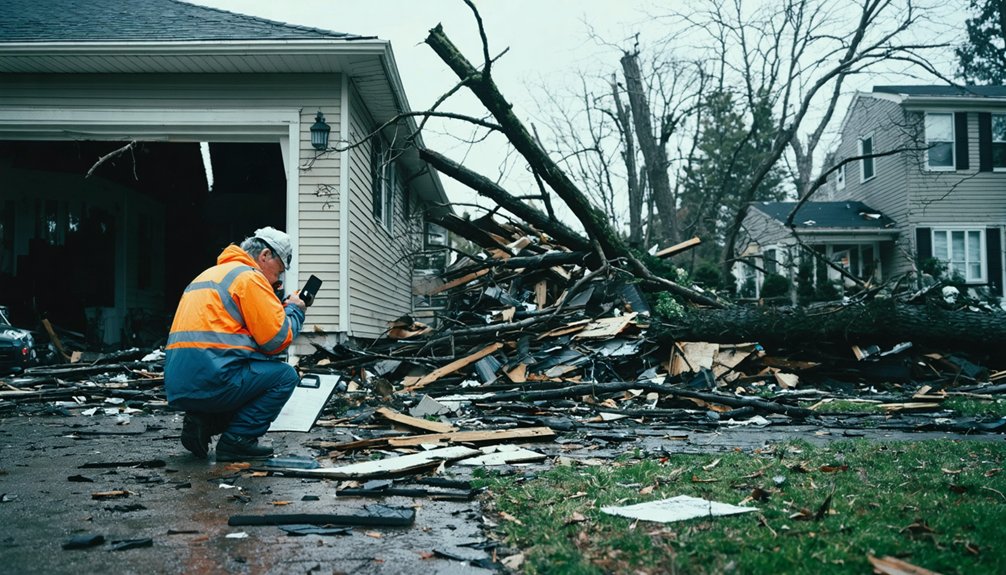
How to Coordinate Post-Storm Damage Assessment Before Work Resumes
Once the storm passes, how you organize your damage assessment process directly determines how quickly and safely work can resume.
Structured damage evaluation and precise resource allocation let you restore operations without exposing your crew to secondary hazards.
Coordinate your post-storm assessment using these field-proven steps:
- Document structural damage photographically — capture cracked foundations, collapsed scaffolding, and compromised overhead structures before anyone re-enters.
- Map hazard zones clearly — mark flooded areas, downed power lines, and unstable surfaces so workers avoid high-risk sections.
- Prioritize resource allocation by severity — direct repair crews, equipment, and materials toward life-safety hazards first, then operational infrastructure.
Sharing real-time assessment reports across your team guarantees everyone works from the same accurate data before resuming operations.
Why Backup Alert Systems Are Critical When Storms Disrupt Networks
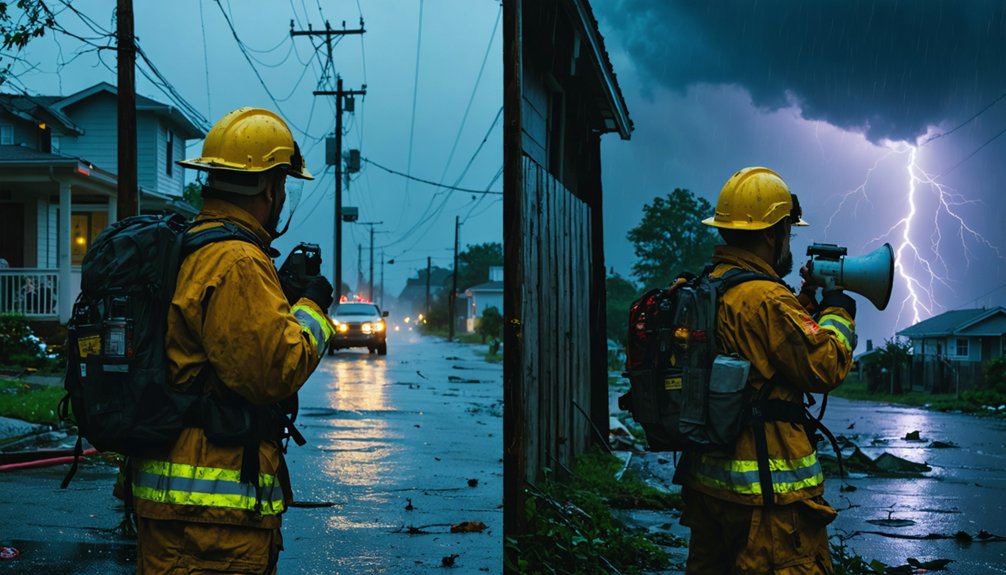
Restoring operations after a storm demands accurate data sharing—but that process breaks down fast if your communication infrastructure fails mid-assessment. Storms routinely disrupt cellular towers, internet connections, and power grids simultaneously, cutting off your primary alert channels at the worst possible moment.
That’s why backup systems aren’t optional—they’re operationally essential.
Network resilience depends on layered redundancy. Deploy SMS gateways, satellite communicators, and offline-capable public address systems so your messaging continues even when primary networks collapse. Each channel should activate automatically when the previous one fails.
You can’t afford communication gaps when hazards are still active post-storm. Test your backup systems before storm season, verify signal coverage across your entire site, and train your team to use every available channel independently.
Frequently Asked Questions
How Does Communication Affect Worker Morale During Prolonged Storm Recovery Periods?
Purposeful, precise postings boost your worker engagement by keeping teams informed on recovery strategies. You’ll maintain morale when you consistently share damage updates, resource availability, and realistic timelines, empowering workers to reclaim autonomy throughout prolonged storm recovery periods.
Who Is Legally Responsible for Storm Communication Failures on Construction Sites?
You bear storm liability as the site owner or general contractor when you neglect communication protocols. OSHA holds you accountable for failing to warn workers, document alerts, or coordinate emergency responses effectively.
Can Language Barriers Affect How Workers Receive and Respond to Storm Alerts?
Yes, language barriers directly impact alert accessibility and worker response times. You must prioritize language inclusivity by delivering storm alerts in multiple languages, ensuring every worker accurately understands evacuation procedures, hazard warnings, and emergency protocols without critical miscommunication risks.
How Often Should Emergency Communication Systems Be Tested Before Storm Season?
Like clockwork, you should test your emergency communication systems monthly, running emergency drills quarterly to guarantee system reliability. Don’t let storm season catch you unprepared—consistent testing keeps your channels sharp, responsive, and ready when every second counts.
What Role Do Subcontractors Play in a Site’s Storm Communication Chain?
You must integrate subcontractors into your communication protocols by assigning clear subcontractor responsibilities, ensuring they receive alerts, confirm receipt, and relay storm updates independently—keeping your entire site’s chain of command responsive and accountable during emergencies.
References
- https://stobuildinggroup.com/insights/communicating-to-weather-the-storm/
- https://stobgtheword.com/communicating-to-weather-the-storm/
- https://911cellular.com/blog/stay-connected-the-importance-of-emergency-communication-systems
- https://www.regroup.com/blog/stadium-and-event-safety-the-importance-of-communication/
- https://www.fema.gov/cbrn-tools/key-planning-factors-chemical-incident/kpf3/1
- https://riskonnect.com/business-continuity-resilience/why-effective-communication-is-the-key-to-emergency-response/
- https://www.cdc.gov/hurricanes/php/preparedness-and-safety-messaging/index.html
- https://www.facebook.com/FASTSIGNS/posts/clear-communication-is-key-before-during-and-after-a-major-weather-event-to-help/10156249287945811/
- https://www.cisa.gov/news-events/news/when-disaster-strikes-emergency-communicators-need-get-connected-and-stay-connected
- https://pmc.ncbi.nlm.nih.gov/articles/PMC4000058/