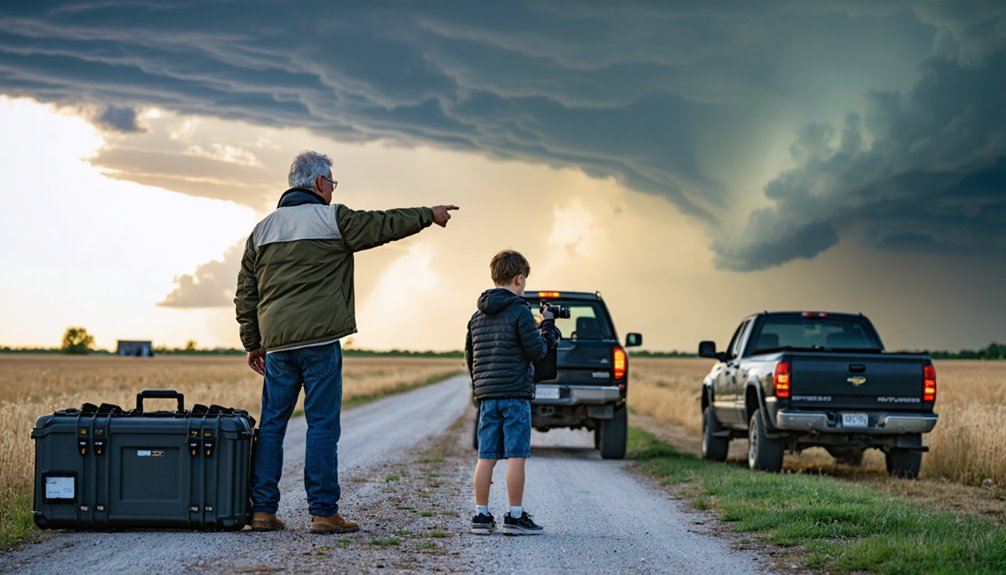
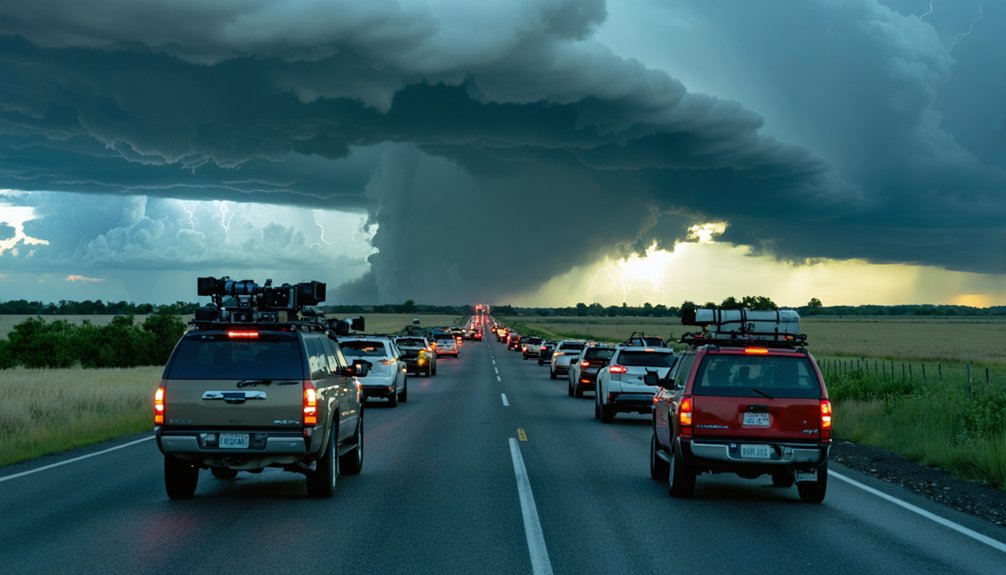
Bystander safety during storm chases matters because you’re sharing the road with a force that doesn’t discriminate. Chase traffic can block evacuation routes, trap innocent drivers, and delay emergency responders reaching tornado survivors. Lightning strikes miles before a tornado touches down, putting unprepared motorists at immediate risk. Reckless spectator clustering creates gridlock that eliminates every escape option in seconds. Understanding these specific dangers could be the difference between surviving a storm and becoming its next victim.
Key Takeaways
- Storm chaser traffic can create dangerous gridlock, trapping bystanders and blocking critical evacuation routes during severe weather events.
- Lightning strikes pose serious risks to bystanders near storms, with cloud-to-ground strikes occurring miles from visible rainfall.
- Blocked intersections caused by chase vehicle congestion delay emergency responders, preventing timely access to tornado survivors.
- Reckless chaser behavior sets dangerous precedents, increasing accident likelihood and eroding public trust in the storm-chasing community.
- Responsible chaser conduct preserves positive community relationships, ensuring cooperation and access during future severe weather emergencies.
The Specific Risks Bystanders Face Near an Active Storm Chase
When a storm chase moves through public roads and intersections, bystanders without training or warning face immediate, compounding dangers.
You’re sharing escape routes with trained chasers, yet you lack their situational awareness, communication, and equipment.
Chase crowds generate unsafe clustering, blocked lanes, and sudden stop-and-go traffic—conditions that can trap you before the storm even arrives.
Chase crowds create dangerous clustering and gridlock—trapping unprepared bystanders long before the storm reaches them.
Lightning intensifies these risks. Strikes can occur miles from the visible storm core, hitting tall objects, fences, and exposed positions where spectators often stand.
Crowd safety collapses quickly when bystander awareness is absent and people underestimate how fast tornadoes can change direction, accelerate, or widen.
You don’t need to be near the funnel to be in danger. Proximity to an active chase zone alone puts you at serious, measurable risk.
Why Lightning Is Already Striking Before the Tornado Appears
When you stop to watch a storm chase, lightning is already threatening you before any tornado forms.
Cloud-to-ground strikes can hit miles from the heaviest precipitation, meaning no roadside position near an active storm is genuinely safe.
If you hear thunder or see a strike within one mile, you’ve already stayed too long — get to hard shelter immediately.
Lightning Strikes Before Tornadoes
Before a tornado ever touches down, lightning’s already putting nearby bystanders at serious risk. Cloud-to-ground strikes can hit miles from the storm’s heaviest rainfall, and you won’t see them coming on radar. Storm awareness isn’t optional here — it’s your first line of defense.
Lightning safety guidance is clear: a strike within one mile means you shelter immediately. Standing near fences, power lines, or elevated ground multiplies your exposure.
One documented case involved a bystander struck while standing on a concrete pylon — nowhere near the funnel itself.
You don’t get to negotiate with a fast-moving electrical storm. If you’re watching from a roadside or parking area, understand that the storm’s electrical activity is already active and dangerous well before any visible tornado forms.
No Safe Distance Exists
Radar gives you precipitation data, not strike prediction — and that gap is exactly where bystanders get hurt. Lightning doesn’t follow the storm’s visible edge. Strikes can land miles beyond the precipitation core, hitting open fields, fences, power lines, and elevated terrain without warning.
Bystander awareness fails when people assume distance from the funnel means safety. It doesn’t. A strike less than one mile out is your signal to shelter immediately — not to wait for confirmation.
Situational preparedness means you’ve already identified cover before lightning gets close. You’re not reacting; you’re executing a plan.
No universally safe distance exists from an active storm. Every second you spend calculating whether you’re far enough is a second you should’ve already spent moving.
The Safe Distance Every Storm Chasing Bystander Needs to Know
When you’re watching a storm from the roadside, no single number defines absolute safety, but experienced chasers treat any position within one mile of a confirmed tornado or active lightning strike as an immediate evacuation trigger.
You need to keep your escape route running perpendicular to the storm’s projected path, never parallel to it, so a direction change doesn’t cut off your exit.
Before you park, confirm that your route stays clear of intersections, that you’re off the travel lane, and that you can leave without reversing into traffic or crossing the storm’s track.
Minimum Safe Viewing Distance
Storm chasers and researchers who’ve studied tornado dynamics consistently recommend staying at least one mile from a confirmed tornado, but that number alone doesn’t tell the full story.
Minimum safe viewing distance shifts constantly based on storm speed, direction changes, and debris field width.
Consider what’s actually at stake:
- A tornado can double its width in seconds, instantly swallowing what felt like a safe viewing position.
- Debris travels far beyond the visible funnel, striking people who believed they were protected.
- Lightning strikes outside the core kill bystanders who never saw the tornado touch down.
- Blocked roads eliminate your escape route when a storm accelerates unexpectedly.
You don’t get a second attempt at this.
Distance isn’t caution—it’s survival.
Escape Route Planning Essentials
Knowing your minimum safe distance means nothing if you can’t act on it. Your escape route must run perpendicular to the storm’s projected track, never across it. A tornado can accelerate, shift, or widen within seconds, collapsing your options fast.
Use planning tools like radar apps and road maps before you position yourself. Identify two exit roads minimum. Avoid routes that funnel through intersections, low-lying areas, or single-lane roads where congestion traps you.
Never rely on one direction. If your primary route becomes blocked by traffic, debris, or flooding, your secondary route keeps you free to move.
Nighttime positioning demands even stricter planning since visual confirmation of storm movement becomes unreliable. Your freedom to escape depends entirely on the decisions you make before the storm arrives.
How Chase Traffic Traps Innocent Drivers in the Storm’s Path
During active storm chases, converging vehicles can turn an ordinary rural highway into a gridlocked corridor that traps innocent drivers directly in a tornado’s projected path.
Traffic congestion from chase clusters leaves innocent motorists with zero escape options when conditions shift suddenly.
Traffic congestion from chase clusters leaves innocent motorists with zero escape options when conditions shift suddenly.
- A blocked intersection can delay your evacuation by fatal minutes
- Parked vehicles on shoulders force you into active lanes during peak danger
- Sudden chase-vehicle pullbacks push uninvolved drivers closer to the storm’s track
- Congested roads prevent emergency responders from reaching victims who need immediate help
You deserve unobstructed roads when your life depends on movement.
Chase traffic that prioritizes spectacle over responsibility strips that freedom from you without warning, without consent, and without accountability.
Recognize the pattern before you’re caught inside it.
Why Crowded Chase Spots Make Escape Routes Disappear
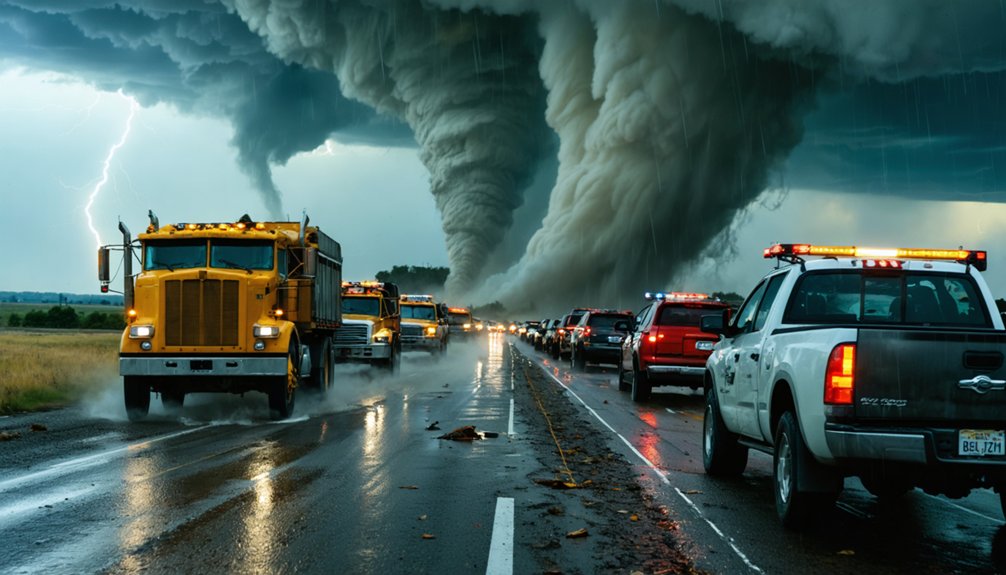
Blocked roads aren’t the only way a chase scene steals your options—crowded viewing spots do it just as fast, and with less warning.
When dozens of vehicles cluster at a single location, crowd dynamics compress your escape strategies into nothing. Parked cars block shoulders. Pedestrians fill gaps between vehicles. Drivers facing the storm won’t move until panic hits, and by then, movement becomes chaotic.
Tornadoes shift direction rapidly, and a position that looked safe minutes ago can fall directly into the projected path. Lightning strikes well outside the funnel, threatening everyone in that cluster before rotation even tightens.
You need a clear exit before you stop—not after. If leaving requires negotiating a crowd, you’ve already surrendered the freedom that keeps you alive.
How Bystander Behavior Near Storms Affects Chaser Ethics and Public Safety
What bystanders do near an active storm doesn’t stay contained to their own risk profile—it ripples outward, shaping how communities perceive storm chasers and how safely emergency responders can operate. Your choices carry ethical responsibility beyond your own safety.
When bystander awareness collapses, consequences spread fast:
- Blocked intersections delay ambulances reaching tornado survivors
- Spectator clusters normalize reckless positioning, encouraging others to copy dangerous behavior
- Flashing lights mimicking official vehicles confuse evacuating drivers during critical seconds
- Trespassing on private roads strains relationships between chasers and local communities
You’re not just protecting yourself—you’re either reinforcing responsible storm observation or undermining it.
Every choice you make near severe weather either strengthens responsible storm observation—or quietly erodes it.
Every unsafe decision you make near severe weather chips away at public trust, restricts emergency mobility, and makes the next storm event more dangerous for everyone involved.
Frequently Asked Questions
Can Bystanders Be Held Legally Liable for Blocking Emergency Vehicles During Chases?
Like a stone blocking a river’s flow, you can face serious legal consequences for obstructing emergency vehicle access. You’re actively breaking the law, risking fines, and endangering lives when you block emergency routes during storm chases.
What Should Bystanders Do if Caught Between a Tornado and Flooded Road?
If you’re caught between a tornado and flooded road, don’t cross the water. Follow emergency protocols: abandon your vehicle, seek sturdy shelter immediately, and apply these safety tips—move perpendicular to the tornado’s path on higher ground.
Are Children More Vulnerable Than Adults to Storm-Related Injuries Near Chases?
Yes, children’s smaller bodies and limited situational awareness make them markedly more vulnerable. You’ll find child safety and injury prevention demand extra vigilance near chases, as debris, lightning, and rapid storm shifts hit them harder and faster.
How Do Emergency Responders Communicate With Bystanders During Active Tornado Events?
During active tornado events, responders use emergency protocols like wireless alerts, sirens, and direct radio broadcasts. You’ll hear communication strategies delivered through official channels—stay tuned, follow instructions immediately, and don’t block roads responders need.
Does Storm Chasing Insurance Cover Injuries to Uninvolved Bystanders Nearby?
Picture storm debris flying past strangers—you’ll find that standard storm chasing policies rarely extend liability coverage to uninvolved bystanders. Insurance limitations mean you’re personally responsible, so prioritize bystander safety proactively.
References
- https://www.atms.unca.edu/cgodfrey/courses/swfex/pdf/ChasingSafety.pdf
- https://www.flame.org/~cdoswell/chasesums/Chase_safety.html
- http://www.stormeyes.org/tornado/chasing/FAQ/
- https://pmc.ncbi.nlm.nih.gov/articles/PMC7262986/
- https://will.illinois.edu/weatherrealness/episode/storm-chasing-can-be-deadly-heres-how-to-stay-safe
- https://www.youtube.com/watch?v=h28hru7UhY8
- https://stormchaser.com/Storm-Chasing-Safety.pdf
- https://www.reddit.com/r/tornado/comments/uivikx/the_ethics_of_storm_chasing/
- https://www.facebook.com/groups/1821133111780534/posts/1949178578975986/
- https://www.facebook.com/freddymckinneywx/posts/often-times-the-most-dangerous-part-of-chasing-is-not-the-tornado-but-other-driv/1180451410742078/