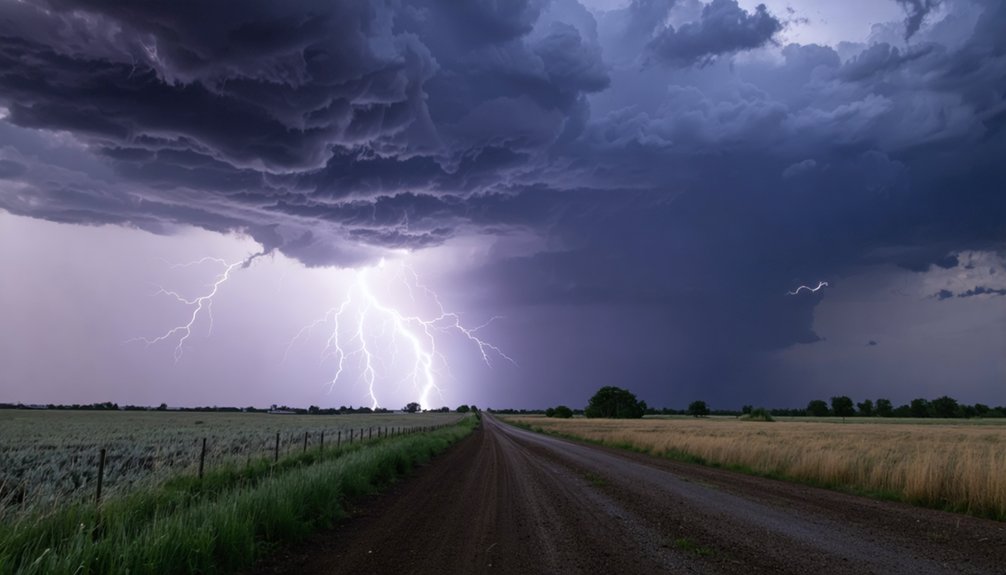
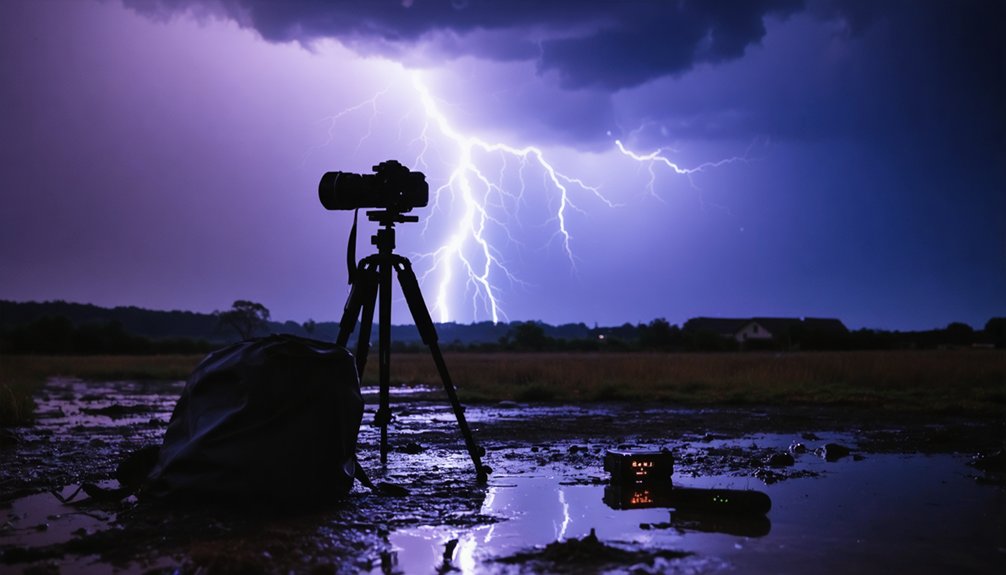
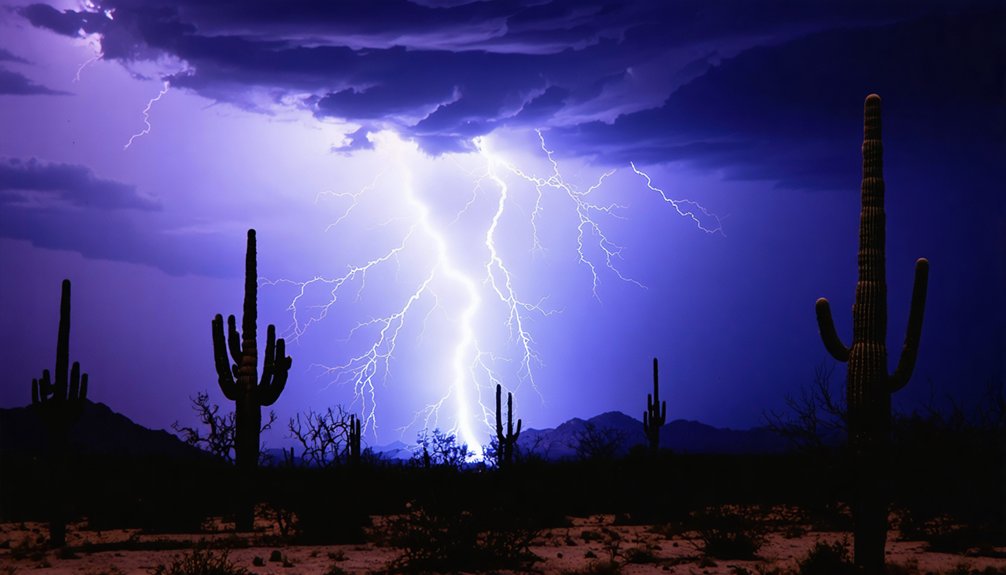
For 2026 storm chasing, your best options are the Nikon Z8, Canon R6 Mark II, and Sony a6600 — each offering weather sealing, fast autofocus, and reliable low-light performance. You’ll need at minimum an IPX4-rated body with a magnesium-alloy chassis to survive hail and grit. Shoot RAW, keep ISO between 3200–6400, and use f/2.8 glass to freeze debris without losing exposure. There’s a lot more to choosing the right kit that could make or break your next deployment.
Key Takeaways
- The Nikon Z8, Canon R6 Mark II, and Sony a6600 are top storm chasing cameras in 2026, offering weather sealing and fast performance.
- Full-frame sensors excel in low-light supercell conditions, while APS-C sensors offer portability for rapid repositioning during dynamic storm chases.
- Minimum IPX4 weather sealing, magnesium-alloy chassis, and gasket-sealed buttons are essential durability standards for storm chasing cameras.
- Optimal low-light settings include ISO 3200–6400, f/2.8 aperture, and 1/200–1/500s shutter speed, with RAW capture enabled.
- Wide-angle lenses (11–24mm) capture full storm structures, while stabilized 70–200mm f/2.8 telephoto lenses safely isolate tornado features.
Full-Frame vs. APS-C Sensors for Storm Photography
When choosing between full-frame and APS-C sensors for storm photography, the tradeoff comes down to light sensitivity versus portability. Sensor size directly impacts how your camera handles image noise in low-light conditions. Full-frame sensors capture more light per pixel, giving you cleaner shots during dusk-lit supercells or pre-tornado darkness. You’ll sacrifice less detail when pushing ISO limits.
APS-C sensors, however, aren’t a compromise — they’re a strategic choice. Stormchasers across the Central Plains favor them for their compact builds and reliable low-light performance.
You move faster, carry lighter, and react quicker when conditions shift without warning.
If you’re chasing freedom of movement without surrendering image quality, APS-C delivers. If maximum low-light fidelity is non-negotiable, go full-frame. Know your priority before you deploy.
The Best Storm Chasing Cameras for 2026
When you’re selecting a storm chasing camera for 2026, your top contenders are the Nikon Z8, Canon R6 Mark II, and Sony a6600—each delivering weather sealing, fast operation, and superior image quality under brutal field conditions.
You’ll want to prioritize geotagged timestamps, thermal metadata support, and low-light performance over raw megapixel counts.
The Canon R6 Mark II remains the dominant choice for EF-1–EF-2 documentation, while the Sony a6600 holds strong for Central Plains deployment where weight and weather resistance matter most.
Top Camera Model Picks
Three camera models stand out as the top picks for storm chasing in 2026: the Nikon Z8, Canon R6 Mark II, and Sony a6600. Each delivers the speed, sensor durability, and weather sealing you need when conditions turn violent fast.
The Nikon Z8 gives you professional-grade mirrorless performance with exceptional low-light output.
The Canon R6 Mark II excels in EF-1 to EF-2 documentation, offering reliable battery life and weather-sealed construction that handles humidity and grit without compromise.
The Sony a6600 rounds out the list as a compact, weather-sealed APS-C option built for Central Plains deployments.
You can’t afford gear failure mid-chase. These three models eliminate that risk, keeping you mobile, operational, and capturing critical atmospheric data when every second counts.
Key Performance Features
Knowing which cameras to carry is only half the equation—understanding why they perform under extreme conditions separates functional documentation from failed attempts. You need sensor durability that withstands hail, windblown grit, and rapid humidity shifts without compromising image integrity. Weather-sealed mirrorless bodies deliver that resilience consistently.
Beyond physical toughness, prioritize geotagged timestamps and thermal metadata over raw megapixel counts—2026 documentation demands contextual fidelity.
Fast autofocus and wide apertures like f/2.8 keep you capturing when light collapses suddenly.
Battery life becomes critical during extended chase sequences where charging isn’t an option. Carry minimum two spare batteries per body.
Systems like the Canon R6 Mark II and Nikon Z8 balance sensor durability, sustained battery life, and low-light performance—giving you full operational freedom when conditions turn violent.
Weather Sealing Standards Storm Chasing Cameras Must Meet
Storm chasing puts your gear through conditions that’ll destroy unprotected cameras fast—hail, windblown grit, and sudden humidity spikes demand serious weather sealing standards. Sensor durability depends entirely on how well your body resists infiltration before conditions deteriorate.
Storm chasing destroys unprotected cameras fast—serious weather sealing isn’t optional when hail, grit, and humidity spikes hit simultaneously.
- IPX4 minimum rating keeps moisture from killing your sensor mid-chase
- Gasket-sealed button arrays prevent grit from locking up controls when you need them most
- Magnesium-alloy chassis absorbs hail impact without cracking under pressure
- Sealed lens mounts stop dust from migrating into your mirrorless body during high-wind events
- Humidity-resistant coatings protect internal electronics when you cross rapid dew-point boundaries
Canon R6 Mark II and Sony a6600 both meet these sealing standards. Don’t compromise—one failed seal ends your documentation when it matters most.
Lenses That Actually Perform in Severe Weather
When conditions deteriorate fast, your lens choice determines whether you capture the event or lose it. You need lens stability and autofocus speed working together, because a missed lock or a shaky shot costs you the documentation that matters.
Start with an 11–16mm or 16–24mm wide-angle to pull in the full structure of a rotating supercell. Switch to a 24–70mm or 70–200mm f/2.8 when you’re isolating wall clouds or funnel features from a safe distance. That stabilized 70–200mm f/2.8 covers roughly 85% of documented tornado scenarios.
In Colorado’s high-plains lightning corridors, contrast-rich glass with fast autofocus isn’t optional—it’s survival. Fast apertures of f/2.8 or wider keep you shooting when ambient light collapses. Don’t compromise here.
Storm Chasing Camera Settings for Low-Light Tornado Scenarios
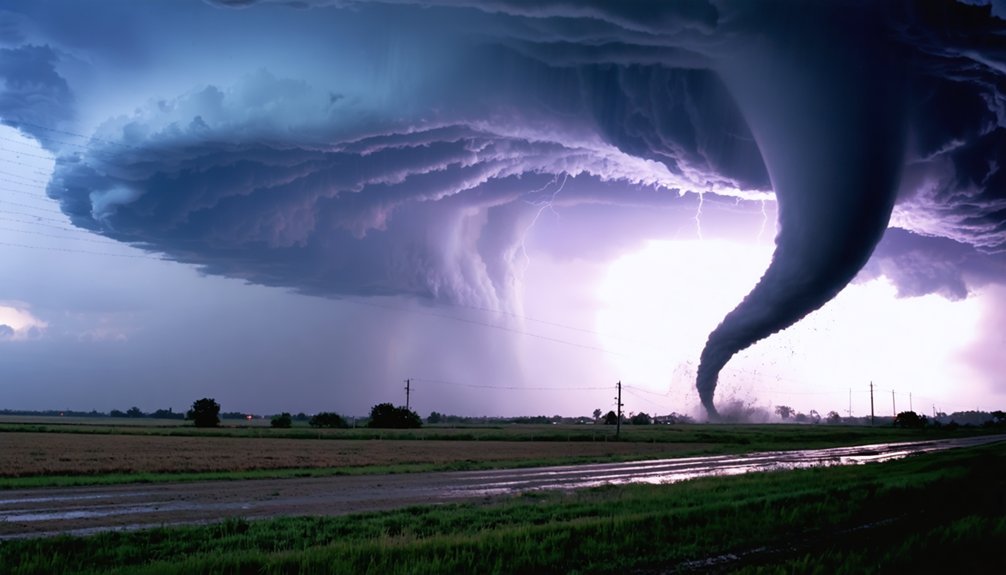
Low light during a tornado scenario punishes hesitation—you need your settings locked before the sky drops. Nighttime visibility demands aggressive ISO adjustments and lens flare reduction discipline to preserve usable footage.
- Set ISO between 3200–6400 on full-frame or APS-C bodies to retain shadow detail
- Open your aperture to f/2.8 or wider—every photon counts when rotation tightens
- Use shutter speeds between 1/200–1/500s to freeze debris without sacrificing exposure
- Enable in-camera RAW capture to protect dynamic range during post-processing
- Disable lens stabilization if you’re shooting from a locked tripod—it’ll fight you
You’re chasing freedom on the open plains—don’t let wrong settings chain you to unusable images when the funnel finally drops.
Metadata, RAW Capture, and Why Megapixels Aren’t Enough
Chasing megapixels is a trap—geotagged timestamps and thermal metadata are what professional documentation demands in 2026. When you’re capturing an EF-2 wedge at dusk, RAW files preserve dynamic range that JPEGs destroy. You need sensor calibration dialed in before the storm hits, not during.
Megapixels won’t save your documentation—geotagged timestamps and RAW dynamic range will when the EF-2 hits at dusk.
Metadata embeds your position, altitude, and atmospheric conditions automatically—information that megapixel counts simply can’t replicate.
Image stabilization matters here too. Shaky RAW files lose recoverable detail during post-processing, especially in turbulent wind environments. Use manual RAW capture apps like Halide Mark II when smartphones are your only backup option.
Your camera’s metadata pipeline is your documentation backbone. Prioritize bodies that timestamp, geotag, and log thermal data natively. That’s what separates professional storm documentation from amateur snapshots in 2026.
Storm Chasing Camera Kits at Every Price Point
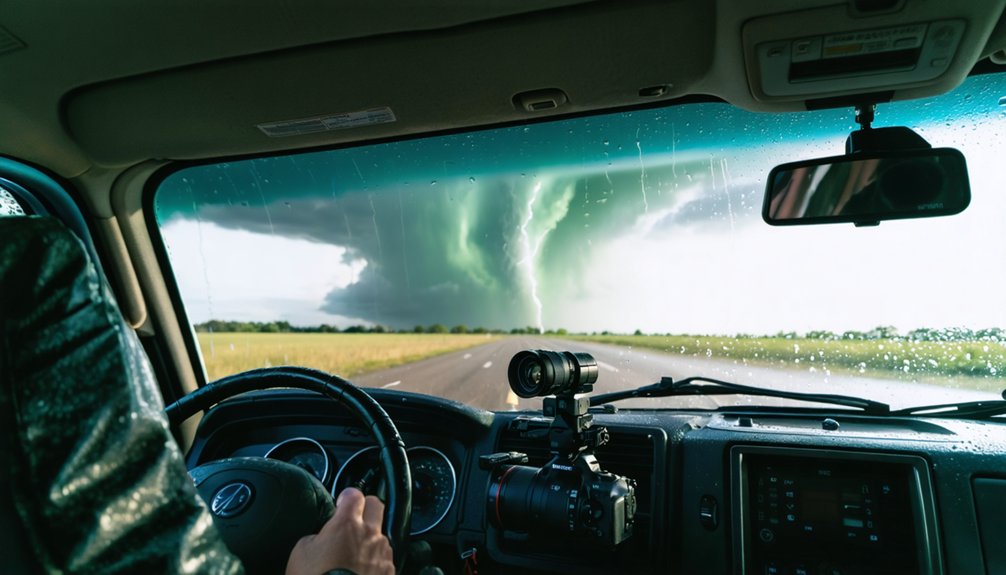
Budget determines your kit, but it doesn’t have to limit your capability. Sensor innovation and camera ergonomics now stretch across every price tier, giving you real options whether you’re chasing your first supercell or your hundredth.
- Entry: Nikon D3300 — lightweight, affordable, ready when you are
- Mid-tier: Sony a6600 — weather-sealed, APS-C precision built for the Central Plains
- Professional: Canon R6 Mark II with RF 70–200mm — $4,200–$4,800 of pure storm-ready control
- Storage: SanDisk 64GB Extreme PRO SDXC — fast, reliable, never fails you mid-chase
- Protection: Think Tank Photo Airport Security bag — your gear survives so you can shoot again
Every dollar you invest buys you freedom. Choose the kit that keeps you in the field.
Bags and Tripods Built for Hail, Wind, and Grit
When hail hits at 70 mph and windblown grit finds every gap in your gear, your bag and tripod aren’t accessories — they’re survival equipment. Think Tank Photo Airport Security bags protect mid-tier mirrorless systems during transport, combining rigid structure with weather-resistant materials that handle real punishment.
Your tripod needs locking leg sections, rubber feet with spike options, and an azimuth-tracking mount for precision positioning mid-storm. Flimsy consumer tripods fail when gusts spike unexpectedly.
Camera strap durability matters equally — nylon-reinforced, quick-release straps keep your body secure during sudden retreats.
After every deployment, run lens cleaning routines immediately. Grit embedded in coatings degrades image sharpness fast.
Protect your kit aggressively. The storm won’t wait, and neither will the damage.
Frequently Asked Questions
Can Smartphone Cameras Ever Replace Mirrorless Bodies for Storm Chasing Documentation?
No, they can’t. You’ll hit smartphone limitations fast—poor dynamic range, missing metadata fidelity. Mirrorless advantages dominate: weather sealing, RAW control, thermal data. Don’t compromise your documentation when conditions turn violent and every frame counts.
How Do Stormchasers Protect Cameras When Transitioning Between Humid and Dry Environments?
Use protective cases and climate resistant gear to seal your mirrorless body between shifts. You’ll prevent condensation damage by letting equipment slowly acclimate inside a sealed bag before exposing it to contrasting humidity levels.
Which Insurance Policies Typically Cover Storm Chasing Camera Equipment Damage?
You’ll need specialized inland marine or professional equipment policies for insurance coverage—standard homeowner’s plans won’t cut it. Seek riders that guarantee full equipment replacement after storm damage, ensuring you’re never grounded mid-chase.
Are There Legal Restrictions on Photographing Tornadoes Near Populated or Restricted Zones?
Yes, you’ll face real limits. Restricted zones, emergency perimeters, and FAA airspace rules can block permitted photography near populated areas. Know your tornado safety boundaries before you shoot — ignorance won’t protect your rights or your gear.
How Do Professional Stormchasers Back up Footage Safely During Active Chase Sequences?
Use dual SD cards with automatic redundancy, encrypt your data immediately with portable SSDs, and activate camera stabilization to prevent write errors. Don’t wait—back up every sequence in real-time before conditions deteriorate further.
References
- https://www.prairiepictures.com/camera-news-reviews-techniques/2017/4/6/best-gear-for-storm-photography
- https://www.youtube.com/watch?v=7LDitJDHtaM
- https://electronics.alibaba.com/buyingguides/tornado-photography-gear-guide-2026