Protecting your camera gear in extreme weather means staying ahead of threats you can’t always see. Heat silently degrades sensors and batteries before damage shows. Cold drains power fast and makes cables brittle. Moving between temperature extremes causes condensation that fogs lenses and risks sensor failure. Use insulated bags, silica gel, rain covers, and sealed plastic bags to stay protected. The expert strategies ahead cover every condition in detail.
Key Takeaways
- Shield cameras from direct sunlight using umbrellas or towels, and store gear in insulated bags to prevent heat damage.
- In cold weather, keep spare batteries in insulated pockets and use hand warmers to preserve electronics.
- Seal gear in zip-style plastic bags with silica gel when transitioning between cold and warm environments to prevent condensation.
- Use rain jackets and UV filters proactively, pointing lenses downward between shots to minimize water and dust entry.
- If water intrusion occurs, immediately remove batteries and memory cards, then air dry gear completely before powering on.
Protect Your Camera From Extreme Heat Before It’s Too Late
Heat is one of the most underestimated threats to camera gear, silently degrading batteries, image sensors, and LCD screens long before you notice a problem. Direct sunlight accelerates internal heat buildup faster than most shooters expect, so sun shielding isn’t optional — it’s essential. Use an umbrella, light towel, or makeshift shade to block solar exposure whenever you’re stationary.
Prioritize heat dissipation by storing your gear in an insulated camera bag between shots and keeping it out of parked vehicles. Reduce unnecessary LCD use and favor your viewfinder to limit internal heat sources.
When temperatures exceed 38°C, give your camera periodic rests in an air-conditioned environment. Your gear can’t recover from heat damage the way it can from a scratched filter.
Cold Weather Camera Protection That Actually Works
Cold drains your camera gear faster than most shooters prepare for, and batteries are the first casualty. In freezing temperatures, power cells lose capacity fast—keep spares in an interior jacket pocket for reliable battery warming when it counts. Chemical hand warmers tucked into your bag add another layer of insulation techniques that preserve both battery life and electronics.
Plastic and glass turn brittle in severe cold, so keep everything inside a padded, insulated bag until you’re ready to shoot. Avoid touching bare metal with unprotected hands—skin can freeze to equipment instantly.
Cold also makes cables snap, so handle them carefully and move deliberately. Your gear stays functional as long as you stay disciplined about keeping it insulated, warm, and protected between shots.
Stop Condensation From Destroying Your Gear Between Environments
Moving camera gear from cold air into a warm environment creates condensation the moment your equipment crosses the dew point threshold—and that moisture can damage sensors, fog lenses, and corrode contacts.
Moisture doesn’t ask permission—the moment warm air meets cold gear, condensation wins and your equipment loses.
Seal your camera and lenses inside zip-style plastic bags before leaving the cold. That simple humidity control measure traps cold, dry air around your gear instead of letting warm, moist air hit it directly.
Gear insulation matters here too—keeping everything inside a padded bag slows the temperature shift, buying your equipment time to equalize gradually.
Silica gel desiccant packets inside your bag actively pull residual moisture away.
Once inside, wait 15 to 60 minutes before opening the bag. Rushing that step is where most photographers make their mistake and pay for it later.
Keep Rain, Dust, and Wind From Wrecking Your Camera
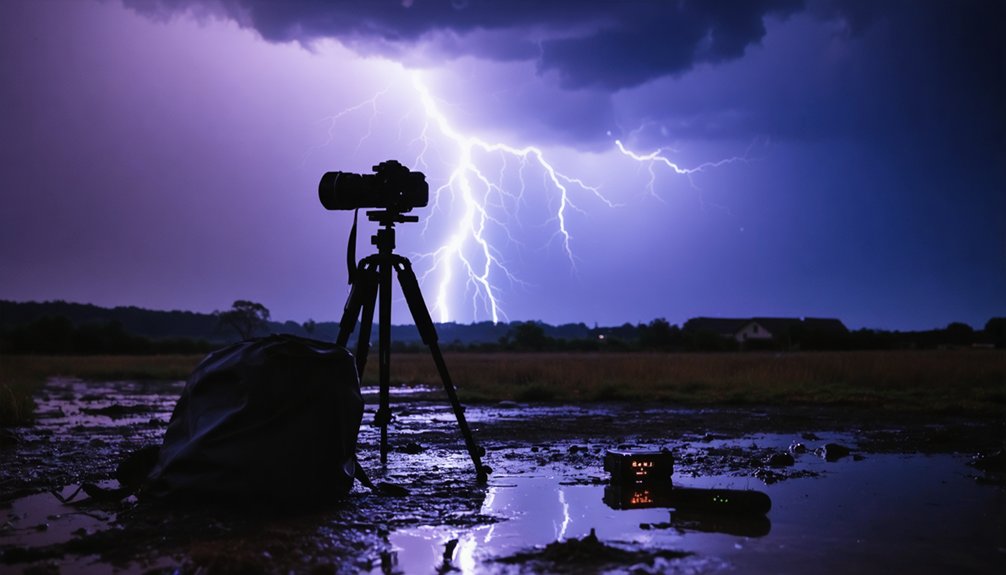
Rain, dust, and wind don’t give you much warning—so your protection strategy has to be preemptive rather than reactive. Fit your camera with a rain jacket or emergency hood before conditions worsen, not after. Point the lens down between shots to limit water entry, and use a UV filter as a first line of defense for lens cleaning situations—it takes the hit so your front element doesn’t.
In dusty or windy environments, minimize lens changes aggressively. When a swap is unavoidable, do it inside a vehicle or sealed bag. Protective covers aren’t optional gear here—they’re operational necessities.
Use compressed air and soft brushes during multi-day shoots to clear buildup. When you stop shooting, seal everything in your bag immediately. Hesitation costs you equipment.
How to Rescue Camera Gear After Weather Damage
When weather damage hits, your first moves determine whether the gear survives. Start with a quick damage assessment: remove the battery and memory card immediately if water got inside. Don’t power the camera on — electricity and moisture destroy circuits fast. Leave all compartment doors open and let the body air dry completely.
For frozen gear, keep everything sealed in the camera bag overnight and let it return to room temperature gradually. Opening it too soon triggers condensation, compounding the damage.
Once dry, inspect contacts, seals, and glass carefully.
Consistent camera maintenance after a weather incident — cleaning contacts, conditioning silica gel, checking gaskets — prevents secondary damage. Act fast, stay methodical, and you’ll recover most gear that would otherwise be written off.
Frequently Asked Questions
Does Extreme Weather Void My Camera’s Manufacturer Warranty Coverage?
Extreme weather often triggers warranty exclusions—manufacturer limitations typically don’t cover damage from moisture, dust, or temperature abuse. You’ll want to check your policy directly, as coverage varies and proper gear protection keeps your options open.
Which Camera Brands Handle Extreme Weather Conditions the Most Reliably?
Sadly, no camera brand magically survives extreme weather—you’ll need to research camera durability and weatherproof features yourself. Canon, Nikon, Sony, and OM System consistently earn strong reputations, but your protective habits ultimately determine gear survival.
Should I Insure My Camera Gear Before Shooting in Extreme Weather?
Yes, you should guarantee your gear before heading out. Pack everything in your camera bag, deploy protective covers in the field, and ensure your policy covers weather-related damage—it’s your financial safety net.
Can Weather Damage Be Repaired Affordably, or Is Replacement More Practical?
Weather damage repairs aren’t always cost-effective; minor fixes are manageable, but severe sensor or circuit damage makes replacement considerations more practical. You’ll save more by preventing damage using proper protection strategies than chasing costly post-weather repairs.
Are Mirrorless Cameras More Vulnerable to Extreme Weather Than DSLRS?
Both systems face similar risks, but you’ll notice mirrorless cameras drain battery life faster in cold. Cold also worsens lens fog on either system. Seal your gear and carry spare batteries regardless of which you’re shooting with.
References
- https://www.reddit.com/r/photography/comments/1slx6xr/on_work_trip_what_can_i_improvise_to_protect_gear/
- https://www.youtube.com/watch?v=knb4gBVxiqI
- https://pavilion.dinfos.edu/Article/Article/2508734/protect-your-camera-in-extreme-conditions/
- https://digital-photography-school.com/how-to-protect-your-camera-in-extreme-conditions/
- https://www.thewanderinglens.com/how-to-use-your-camera-in-extreme-conditions/
- https://www.bbc.co.uk/academy-guides/how-can-i-protect-my-camera/
- https://www.youtube.com/watch?time_continue=5&v=knb4gBVxiqI