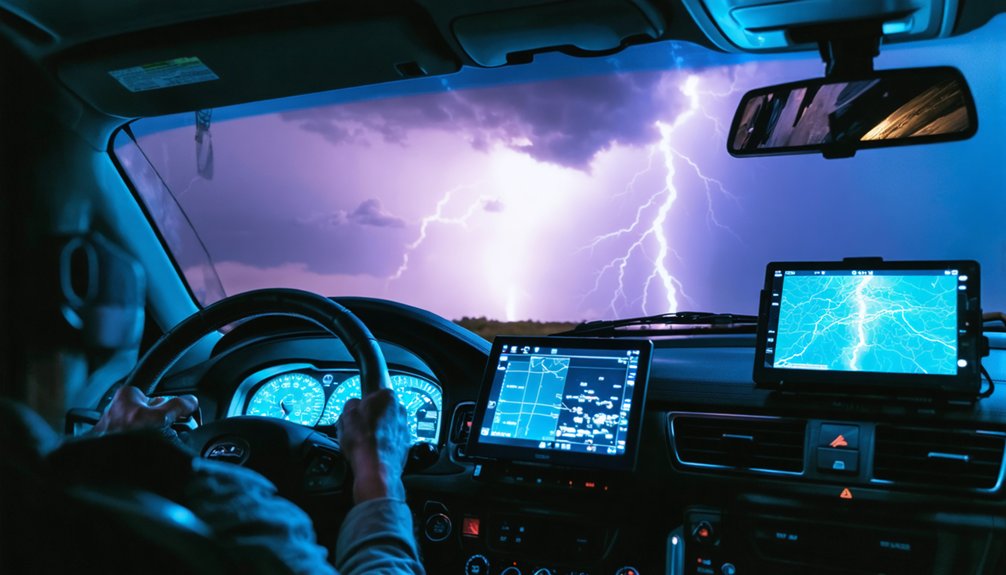
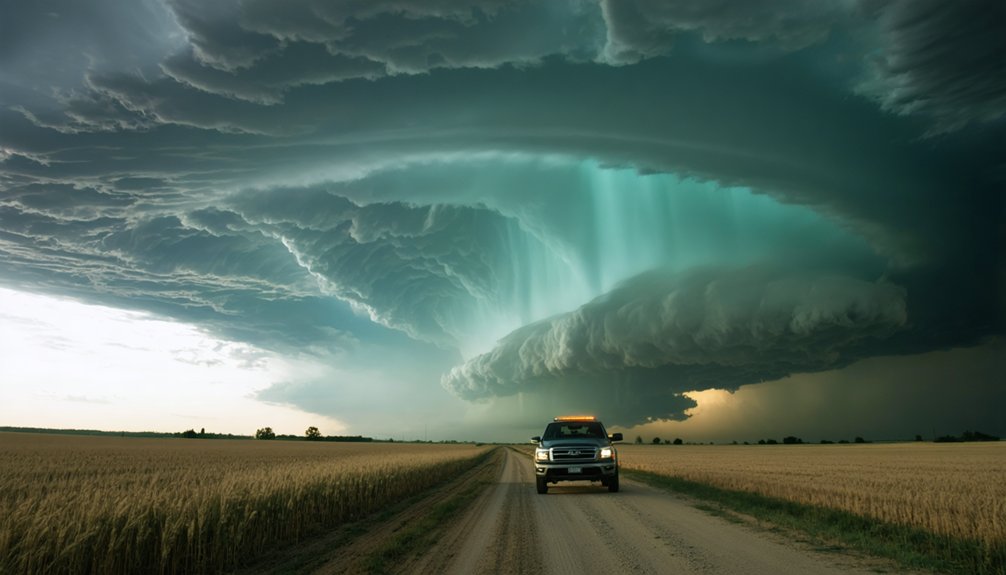
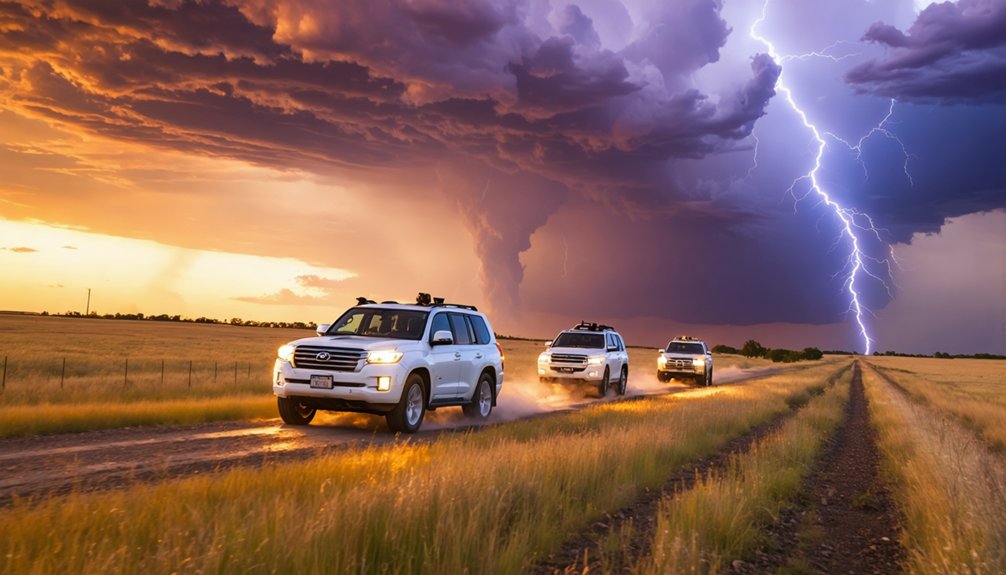
Ethical storm chasing demands rigorous standards at every stage of your operation. You’ll need to plan verified exit routes perpendicular to storm paths, cross-check all data with NOAA and NWS before publishing, and obtain explicit consent before filming survivors or victims. Always secure landowner permission before entering private property, keep your coverage objective using validated classifications, and transform raw footage into actionable public safety education. Each practice builds the credibility and trust your coverage depends on — and there’s considerably more precision involved in executing each one correctly.
Key Takeaways
- Always verify storm data with NOAA and NWS reports before publishing, labeling unconfirmed information clearly until official sources validate it.
- Plan exit routes perpendicular to storm paths, identifying alternate roads and avoiding dead ends to maintain safe escape options.
- Obtain explicit consent before filming storm survivors, stopping immediately if distress occurs or consent is withdrawn.
- Avoid sensationalizing footage by using verified meteorological classifications and measured data instead of exaggerated language or symbolic framing.
- Respect private property boundaries by securing landowner permission before entering, using public roads for documentation when permission isn’t granted.
Know Your Exit Routes Before You Chase
Before you position your vehicle for a shot, you’ve already got to know how you’re getting out. Storm navigation demands pre-chase route analysis, not reactive decisions made under pressure. Study road networks relative to storm motion vectors before you deploy.
If a supercell is tracking northeast at 35 mph, your exit routes must run perpendicular—east or west—not parallel to its path.
Exit planning means identifying paved alternate routes, noting low-water crossings that flood quickly, and flagging dead-end roads that eliminate your escape margin. Muddy or gravel roads reduce vehicle control and cut your options fast.
Keep your situational awareness split between the storm and your position on the grid. Freedom to chase long-term depends on never letting a single positioning decision trap you.
Verify Storm Data With NOAA and NWS Before Publishing
Before you publish any storm data, cross-check your observations against official NOAA and NWS reports to confirm classifications, intensity estimates, and damage assessments.
Don’t repeat unverified social media claims, no matter how compelling the footage looks, because inaccurate information spreads quickly and undermines public trust during active weather events.
If you publish an error, correct it immediately and attribute the accurate information directly to its verified source.
Cross-Check Official Sources
How do you know the tornado you just filmed was truly an EF-3 and not an EF-1? You don’t — not without cross-checking official sources. Before publishing any classification, pull verified data directly from NOAA’s Storm Prediction Center and NWS storm surveys.
Don’t rely on storm prediction algorithms or weather models alone; those tools estimate, they don’t confirm. NWS damage surveys provide the ground-truth ratings you need.
If an official report hasn’t been released yet, label your footage as unconfirmed. Cross-reference multiple official feeds rather than depending on a single data point.
Social media claims spread fast and get it wrong often. Your credibility depends on sourcing what’s verified, not what’s viral.
Precision protects both your audience and your reputation.
Correct Errors Immediately
Even the most disciplined cross-checking process won’t catch every error before it goes live. When mistakes surface — misclassified tornado ratings, inaccurate wind speeds, or data inconsistencies against historical storm patterns — you correct them immediately and transparently.
Don’t bury the correction; publish it prominently with a direct citation to the updated NOAA or NWS source. Label what changed and why. Your credibility depends on this discipline.
Errors compound fast in storm coverage. A misattributed EF rating spreads across social feeds before you’ve finished your equipment maintenance checks. Own the correction aggressively.
Update every platform where the inaccurate data appeared, and timestamp the revision clearly. Audiences who value accurate, unfiltered information will respect the correction far more than they’d respect silence or deflection.
Avoid Unverified Social Media Claims
Social media moves faster than ground truth, and that speed is your biggest verification threat. Before you publish any storm data, cross-reference it against NOAA’s Storm Prediction Center and your local NWS office.
Social media rumors spread within minutes, embedding false damage reports, inflated wind speeds, and misclassified tornado ratings into public consciousness before corrections can catch up.
Your credibility depends on your sourcing discipline. If a viral post claims an EF3 touched down but NWS hasn’t issued a survey confirmation, don’t repeat it. Hold the claim. Tag it as unverified.
Once official data publishes, update your report with direct attribution.
Misinformation correction is harder than prevention. You protect your audience’s freedom to act on accurate information by refusing to amplify unconfirmed reports.
Get Explicit Consent Before Filming Survivors or Victims
Before you point a camera at any survivor or victim, you must ask for their explicit, informed consent—and you should document that agreement whenever possible.
If a person shows signs of distress, withdraws their consent, or simply says no, you stop filming immediately, no exceptions.
Treating consent as a hard boundary rather than a courtesy keeps your coverage legally defensible and ethically sound.
Ask Before You Film
Capturing footage of storm survivors without consent crosses a clear ethical and, in some jurisdictions, legal line. Before you roll on anyone affected by a storm, ask directly and document their agreement. This applies equally to ground-level cameras and drone safety operations overhead — flying a drone above someone’s damaged property without permission compounds the violation.
Weather alerts create urgency, but urgency doesn’t suspend consent requirements. If a subject shows distress, stop filming immediately, regardless of what they previously agreed to.
Minors require stricter controls; a parent or guardian must provide consent. Pressure tactics, implied consent, or ambiguous nods don’t meet the standard. Explicit, informed, and voluntary agreement is the only legally and ethically defensible threshold before you capture anyone’s image or story.
Respect Withdrawal Of Consent
Consent isn’t a one-time checkbox — it’s an ongoing condition that can be revoked at any point during filming. The moment someone signals discomfort, you stop recording immediately — no exceptions.
Your consent acknowledgment process must include active monitoring throughout the interaction, not just at the start. Emotional sensitivity isn’t optional; it’s operational.
Watch for these withdrawal signals:
- A survivor turning their face away mid-interview
- Shaking hands or trembling voice indicating rising distress
- A direct verbal request to stop filming
- Someone walking away or physically retreating
- Eyes scanning for an exit rather than engaging with you
Recognize these cues instantly and lower your camera. Protecting a person’s autonomy in their most vulnerable moment is a non-negotiable standard — not a courtesy.
Handle Footage of Vulnerable People With Editorial Care
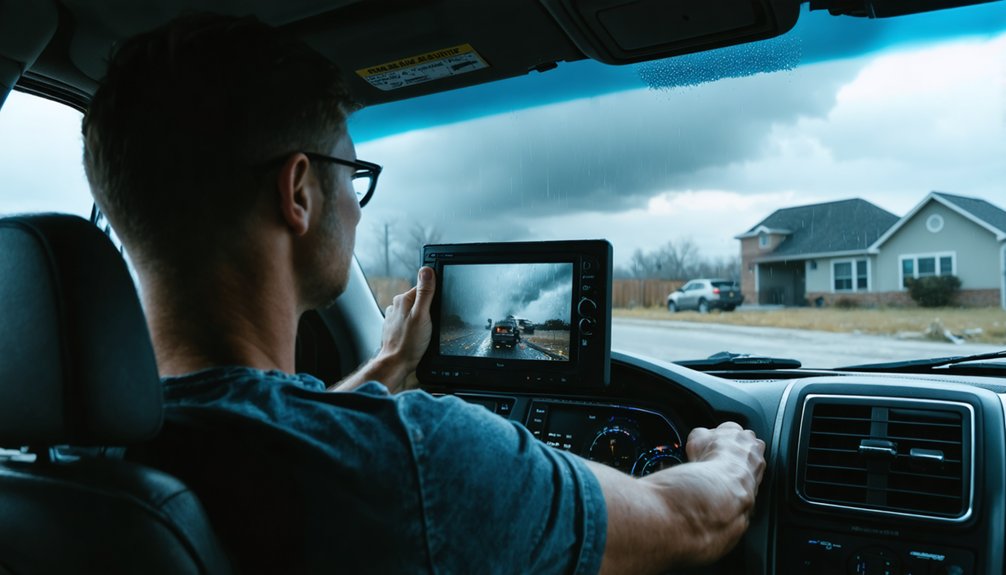
When filming survivors or bystanders in the aftermath of a severe weather event, you must obtain explicit consent before recording faces, capturing personal testimony, or publishing any identifiable footage.
Minors require stricter protections — never film or interview them without parental authorization.
Evaluate every clip’s emotional impact against its actual informational value before deciding to publish.
Ask yourself whether the footage informs the public or simply exploits distress for engagement.
Trauma-impaired individuals may consent under duress, so apply editorial judgment even when permission is technically granted.
Prioritize audience sensitivity by avoiding graphic injury footage unless it serves a clear safety or public awareness function.
Responsible editorial decisions protect your subject’s dignity while maintaining your credibility as a trustworthy source of storm coverage.
Always Get Landowner Permission Before Entering Private Property
Editorial care for vulnerable people protects human dignity on the ground, but your responsibilities don’t stop at the human element — they extend to the physical ground itself. Property boundaries aren’t suggestions — they’re legal lines. Crossing them without permission creates trespassing concerns that damage your credibility and the broader chasing community’s operational freedom.
Property boundaries aren’t suggestions — they’re legal lines that protect your credibility and the entire chasing community’s freedom.
Before entering private land, get explicit landowner permission:
- A locked gate blocking a muddy field road
- Posted “No Trespassing” signs on fence lines
- Active farmland with unharvested crops underfoot
- A debris-covered driveway leading to a damaged home
- Restricted access roads marked with orange cones
Respect those boundaries. Document from public roads when permission isn’t granted. Your footage isn’t worth the legal exposure or the precedent it sets.
Keep Your Storm Coverage Objective, Not Sensational
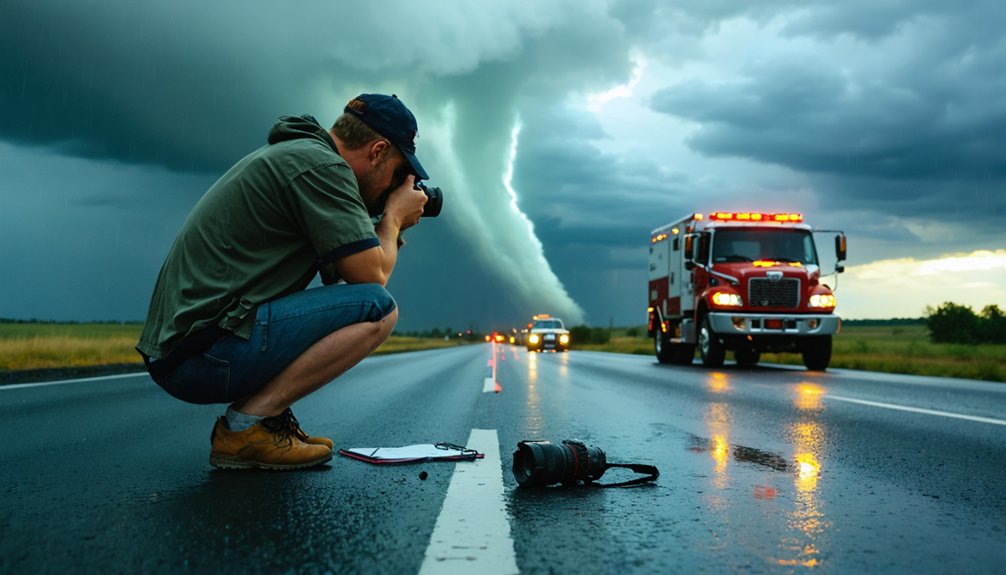
Staying objective separates credible storm coverage from content that misleads the public and erodes trust. When you frame footage around storm symbolism rather than verified meteorological data, you risk amplifying meteorological myths that distort public risk perception.
Stick to confirmed NOAA and NWS classifications, measured wind speeds, and validated damage assessments instead of dramatic language that overstates intensity.
Weigh every piece of graphic footage against its actual informational value before publishing. Fear-based framing doesn’t serve your audience — it undermines preparedness and situational awareness.
You’re not chasing clout; you’re documenting atmospheric events with real consequences for real communities.
Let the data drive your narrative. Precise, verified coverage builds long-term credibility and contributes meaningfully to public safety without distorting what the storm actually was.
Turn Storm Footage Into Public Safety Education
Storm footage carries educational weight that extends well beyond the chase itself. You’ve captured verified data in motion—use it to build storm safety awareness, not just a highlight reel. Footage ethics demand that raw video serve a purpose beyond views.
Pair your clips with:
- Rotation signatures identified against Doppler radar timestamps to illustrate mesocyclone development
- Hail size comparisons using common objects to convey impact risk accurately
- Damage path overlays mapped against NWS storm reports for ground-truth context
- Shelter-timing sequences showing how fast conditions deteriorate to reinforce response urgency
- Safe chase positioning footage demonstrating proper distance and exit route maintenance
Each clip becomes a teachable asset when you annotate it with confirmed meteorological data and direct viewers toward preparedness action.
Frequently Asked Questions
Can Storm Chasers Legally Film From Public Roads Near Private Property?
As storm walls tower overhead, yes, you can legally film from public roads. Respect legal boundaries carefully, though — privacy concerns arise when you zoom into private property, so you’ll want to maintain ethical distance always.
What Equipment Should Ethical Storm Chasers Carry for Personal Safety?
You’ll need these storm safety equipment essentials: a NOAA weather radio, GPS device, first aid kit, emergency beacon, backup power, and a dashcam. They’re critical tools that keep you mobile, informed, and self-reliant in dangerous conditions.
How Should Chasers Handle Encounters With Hostile or Uncooperative Bystanders?
Like a navigator reading rough waters, de-escalate calmly. You’re respecting privacy by stepping back, managing confrontations without argument—document only public spaces, disengage quickly, and prioritize your safety over capturing any shot.
Are There Licensing or Certification Requirements for Professional Storm Chasers?
No universal licensing exists for storm chasers, but you’ll want to secure proper storm chasing permits for restricted zones, meet insurance requirements for your vehicle, and follow NOAA-aligned ethical standards to maintain operational freedom.
How Do Chasers Ethically Coordinate With Other Chasers to Avoid Road Congestion?
Like lanes on a highway, coordinate your storm tracking through shared communication channels, split coverage zones, and equipment sharing networks. You’ll reduce road congestion, preserve escape routes, and keep emergency crews unobstructed while maximizing collective observational data.
References
- https://www.youtube.com/watch?v=PHcQu8L5nMw
- https://en.wikipedia.org/wiki/Storm_chasing
- https://www.reddit.com/r/stormchasing/comments/k89wnc/safety_tips_for_storm_chasing/
- https://crazystormchasers.com/media-ethics-in-storm-chaser-reporting/
- https://crazystormchasers.com/best-practices-storm-chasing-ethics-regulations/
- https://crazystormchasers.com/ensuring-ethical-conduct-while-chasing-storms/
- https://crazystormchasers.com/tips-for-ethical-storm-chasing-decisions/
- https://alllivingisstormchasing.substack.com/p/013-creating-with-care-a-code-of