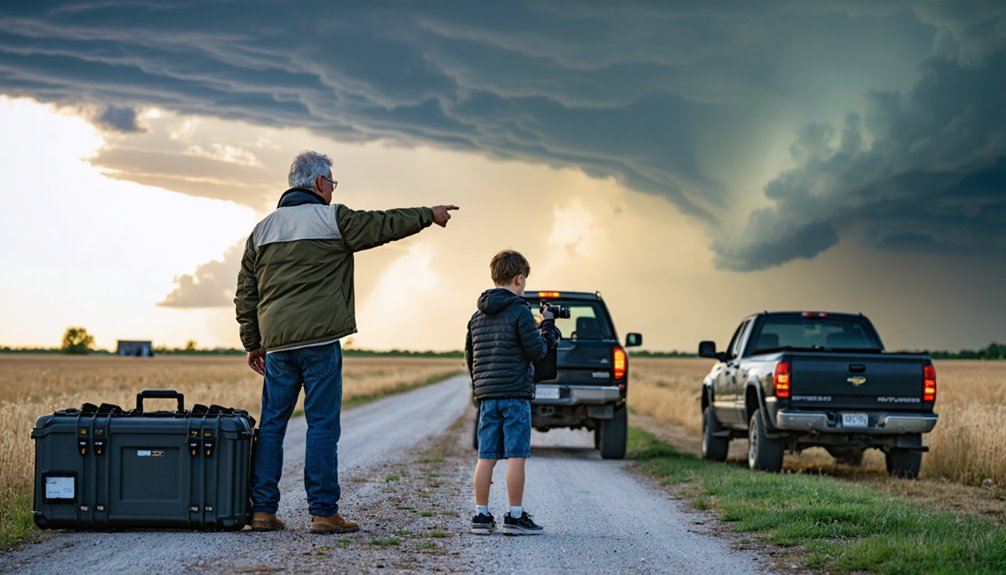
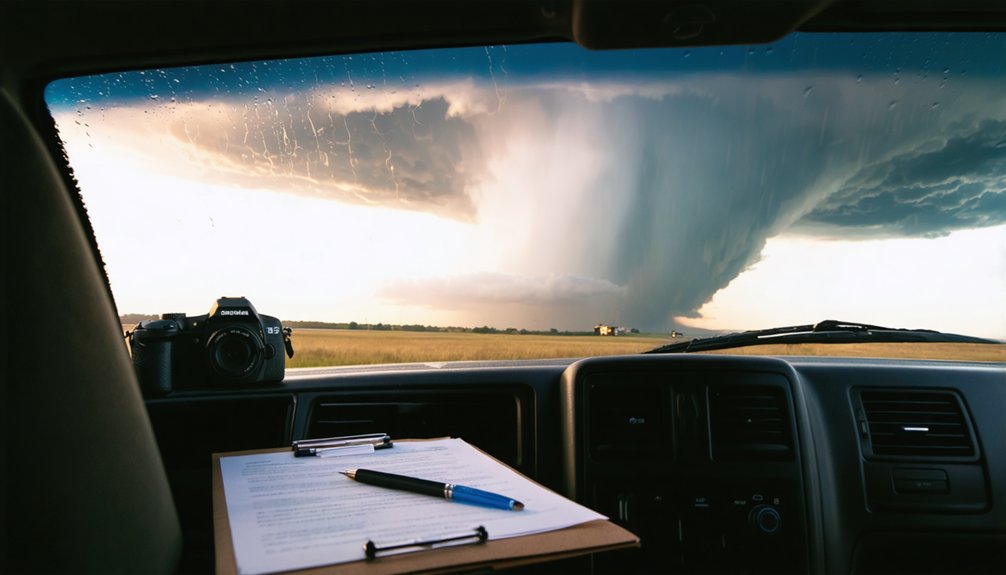
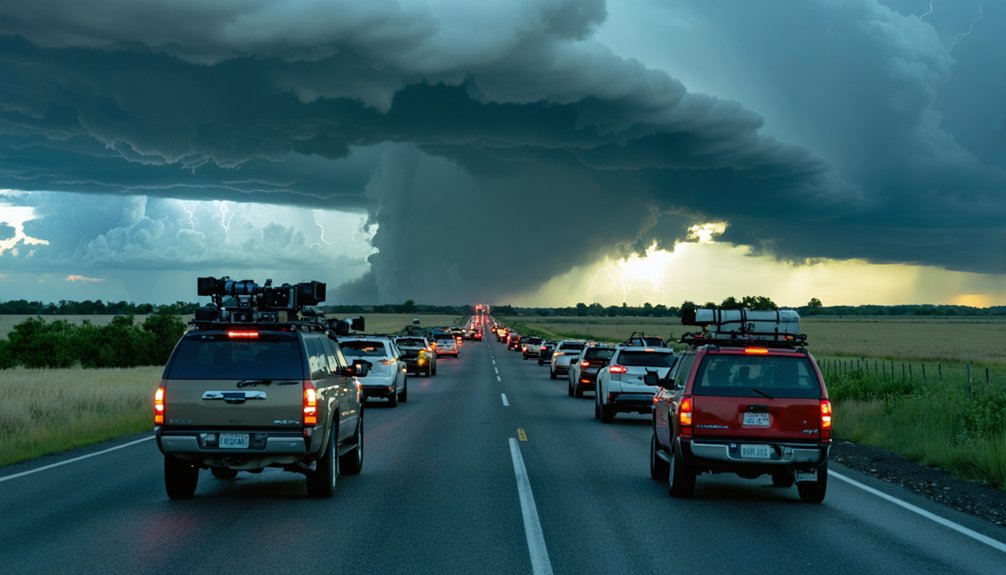
Ethical storm chaser reporting demands that you verify all meteorological data against NOAA and NWS before publishing, secure explicit consent before filming survivors, and never pressure vulnerable individuals into interviews. You should weigh graphic footage carefully, prioritizing public information value over shock impact. Let verified data drive your narrative instead of dramatic visuals, and correct errors immediately with full transparency. The best practices ahead will sharpen every editorial decision you make in the field.
Key Takeaways
- Always verify meteorological data against official sources like NOAA and NWS before broadcasting storm statistics or classifications.
- Secure explicit consent before filming individuals, and stop immediately if consent is withdrawn.
- Weigh public interest against potential harm before sharing graphic footage, applying trauma-informed standards throughout.
- Prioritize verified data over dramatic visuals, and share situational information with local authorities when safe.
- Correct errors immediately, clearly stating what was wrong and providing verified updates from credible meteorological sources.
How to Verify Weather Data Before Publishing Storm Coverage
Before you publish a single frame of storm footage, you’ve got to verify the meteorological data behind it. Cross-reference your readings against official sources like NOAA, the National Weather Service, and regional meteorological agencies.
Data validation isn’t optional — it’s the foundation of credible storm reporting.
Source credibility matters enormously. Social media posts and unverified eyewitness accounts can distort reality fast, especially during high-stakes weather events.
Always attribute statistics to named, accountable sources before they reach your audience.
You’re also responsible for countering the availability heuristic — the tendency to overweight dramatic visuals over factual context.
Striking footage doesn’t justify inaccurate reporting. Verify wind speeds, precipitation totals, and storm classifications independently.
Your audience deserves accuracy, not spectacle.
How Storm Chasers Should Film Disaster Scenes Without Violating Privacy
Verifying your meteorological data gets you halfway to responsible storm reporting — the other half demands that you handle the human element with equal discipline.
When you film disaster scenes, privacy considerations aren’t optional courtesies — they’re binding obligations. Secure explicit consent before capturing faces, damaged property, or personal stories. Don’t film residents without permission, regardless of how compelling the footage appears.
Ethical filming also means protecting the deceased. Withhold names until families receive official notification. Never pressure injured or distressed survivors into granting interviews — their vulnerability doesn’t create your opportunity.
Their vulnerability doesn’t create your opportunity — protect the deceased and never pressure distressed survivors into interviews.
Respect first responder perimeters without hesitation. Your presence inside operational zones endangers lives and compromises rescue efforts.
True journalistic freedom isn’t the freedom to film anything — it’s the discipline to film responsibly.
Getting Explicit Consent: A Protocol for Storm Chaser Reporters
Before you press record, you must secure explicit consent from anyone you intend to film, identifying yourself clearly as a journalist and explaining precisely how the footage will be used.
When interviewing vulnerable individuals — including those in shock, grief, or physical distress — you’re obligated to assess whether they’re truly in a position to give informed, voluntary permission.
Document every granted consent through written releases or recorded verbal agreements, creating a verifiable paper trail that protects both your subjects and your organization’s integrity.
Consent Before Filming
Securing explicit consent before filming is a non-negotiable ethical obligation for storm chaser reporters. You must establish clear consent protocols before pointing any camera at individuals, their property, or their losses.
Don’t assume distress grants you access — it doesn’t.
Approach subjects calmly, identify yourself, explain your purpose, and give them genuine freedom to decline. Ethical considerations demand that you never pressure vulnerable, injured, or grieving individuals into participation. Their autonomy matters more than your footage.
Document consent whenever possible — verbal confirmation on record or written permission strengthens your accountability.
If someone withdraws consent mid-interview, stop immediately. Respecting that boundary isn’t optional.
You represent a profession built on public trust. Violating someone’s privacy for dramatic content destroys that trust and causes measurable harm to real people.
Protecting Vulnerable Interviewees
Consent protocols don’t stop at obtaining permission — they extend into how you handle the people giving it.
When you’re interviewing disaster survivors, you’re often engaging vulnerable populations operating under shock, grief, or physical distress. Ethical storytelling demands you recognize those conditions and adjust accordingly.
Never pressure injured or emotionally overwhelmed individuals into granting interviews. If someone hesitates, respect that boundary immediately.
When minors are involved, secure consent from a parent or guardian — no exceptions.
Protect the identities of deceased victims until their families receive official notification. You don’t get to decide when that information becomes public.
Center your narrative on survivor voices and their resilience, not their suffering.
That distinction separates principled journalism from exploitation — and your audience deserves the former.
Documenting Permission Properly
Verbal agreement isn’t enough — you need a documented record of consent that holds up to scrutiny. Solid documentation techniques protect both you and your subjects. Use clear consent forms that outline filming permissions, intended use, and distribution scope.
Address legal considerations upfront — local privacy protocols vary, and ignorance isn’t a defense.
Follow established ethical guidelines by explaining exactly how footage will appear before anyone signs anything. Your interview strategies should empower subjects, never pressure them. Build trust through genuine community engagement, making people partners in the story rather than passive subjects.
Maintain rigorous data management practices — store signed forms securely, link them to corresponding footage, and retain them long-term.
These reporting standards aren’t bureaucratic formalities; they’re your commitment to freedom, dignity, and journalistic integrity.
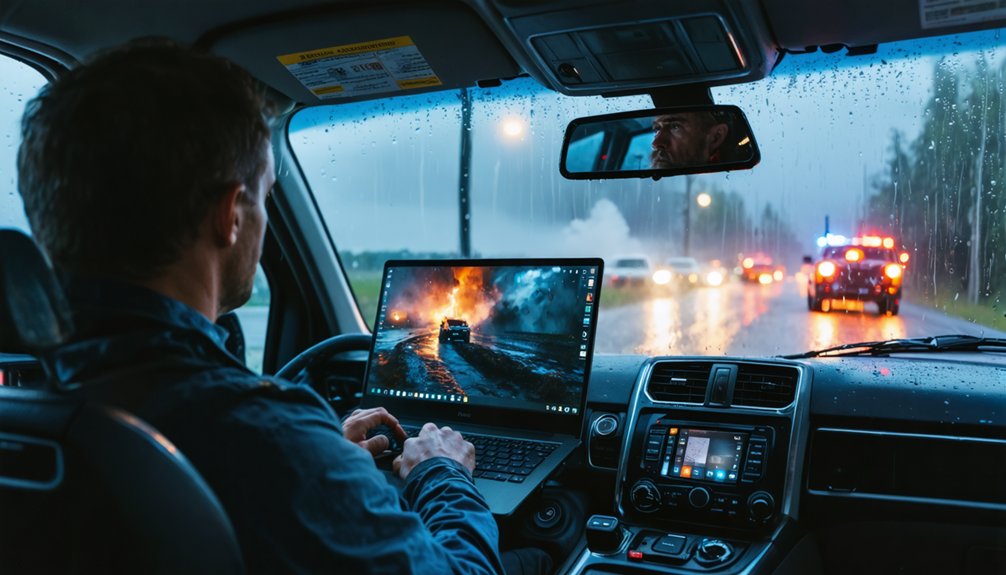
When storm chasers capture graphic footage, they face a critical ethical decision: share it for impact or withhold it to protect survivors’ dignity.
The graphic implications of raw disaster imagery can retraumatize victims, exploit grief, and distort public perception. These ethical dilemmas demand disciplined judgment, not instinct.
You must weigh the public’s right to accurate information against the real harm that graphic content causes vulnerable individuals.
Ask yourself: does this footage inform, or does it simply shock? Sensationalism undermines your credibility and damages survivor trust.
Apply trauma-informed standards before publishing.
Blur identifying features, secure consent where possible, and consult editorial guidelines.
Your responsibility extends beyond capturing the story—it includes protecting the people living it.
How to Report on Survivors Without Making Things Worse
Deciding what footage to share is only part of the ethical equation—how you engage with the people behind that footage matters just as much.
Ethical storytelling demands that you center survivor narratives without exploiting vulnerability.
Ethical storytelling means amplifying survivor voices while safeguarding their dignity at every step of the process.
Follow these principles:
- Ask first, always. Secure explicit consent before recording faces, property damage, or personal stories.
- Let survivors lead. Frame their experiences through their strength, not their suffering.
- Protect minors rigorously. Apply heightened sensitivity when interviewing or filming juveniles.
- Never pressure the distressed. If someone’s injured or overwhelmed, walk away—no story justifies coercion.
You hold real power over how survivors are perceived and remembered.
Wield that power responsibly, and you’ll produce reporting that informs without inflicting additional harm.
How Storm Chasers Can Support Emergency Response in the Field
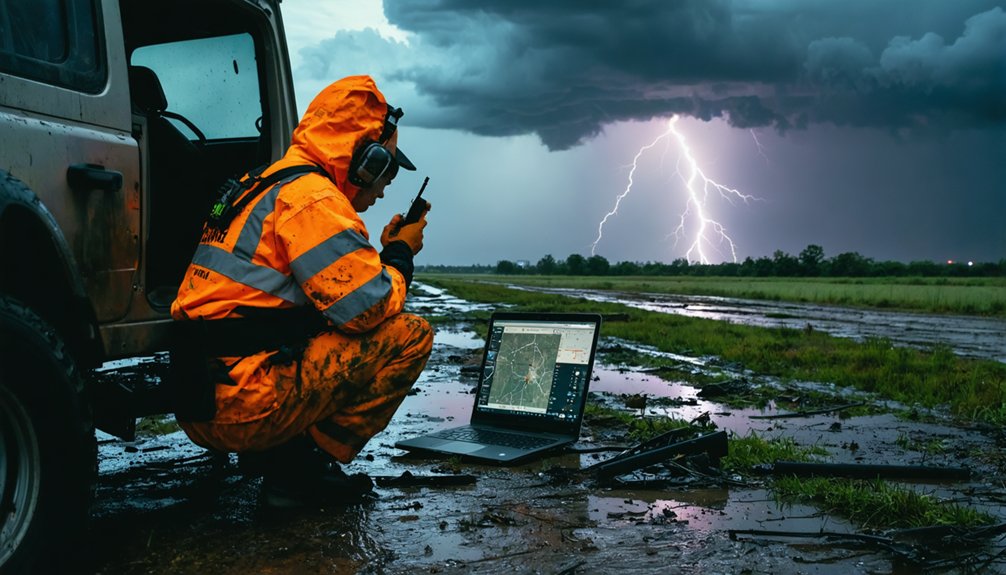
Being in the field during a severe weather event puts you in a position of real responsibility—not just as a journalist, but as someone who can either aid or obstruct emergency response.
Keep your vehicles off emergency routes and away from operational zones—your access shouldn’t cost someone their rescue window.
Effective emergency coordination depends on clear communication channels.
Share verified situational information with local authorities when it’s safe and appropriate to do so.
Don’t become another liability they’re managing.
Use your platform to amplify community resources—shelters, hotlines, and relief organizations need visibility during active disasters.
You’re reaching audiences in real time; that reach carries obligation.
Prioritize public safety messaging alongside your coverage, and treat first responders as partners, not obstacles to your story.
How Storm Chasers Can Explain Severe Weather Without Dramatizing It
When you’re covering severe weather, you must let verified data drive your narrative rather than chasing dramatic visuals that distort reality.
You’ll serve your audience better by contextualizing events accurately — explaining, for instance, how a storm’s wind speeds or precipitation levels compare to historical norms.
Always attribute your meteorological claims to named, credentialed sources, and cross-reference live observations with official reports before you broadcast any statistics.
Prioritizing Data Over Drama
Storm chasing creates a constant temptation to chase spectacle over substance, but you must resist that pull if you want your reporting to hold up under scrutiny.
Data integrity and ethical storytelling aren’t optional—they’re your foundation. Before you publish anything, ground your coverage in verified meteorological facts.
Follow these four practices:
- Cross-reference live footage with official agency reports before drawing conclusions.
- Cite specific measurements—wind speed, pressure readings, storm classification—instead of vague descriptors like “monster storm.”
- Correct errors immediately and attribute corrections prominently to named sources.
- Reject dramatic angles that misrepresent a storm’s actual scale or danger.
Your audience deserves honest information they can act on—not fear-driven content engineered for clicks.
Accuracy protects both your credibility and the public’s safety.
Contextualizing Severe Weather Accurately
Accurate context transforms raw weather data into information your audience can genuinely use. When you’re contextualizing impacts, compare current conditions against historical baselines rather than leaning on alarming language. A tornado rated EF2 means something specific — explain that rating clearly instead of defaulting to superlatives.
Understanding forecasts requires you to translate meteorological probability into practical terms. Tell your audience what a 70% precipitation chance actually represents, and distinguish between a watch and a warning without inflating urgency. Cross-reference official meteorological sources before you broadcast any figures.
You also carry the responsibility of acknowledging expert disagreement when it exists. Don’t flatten complexity into false certainty. Your audience deserves honest, calibrated reporting — not manufactured tension.
Precision earns trust; sensationalism erodes it permanently.
Citing Verified Meteorological Sources
Grounding your reporting in verified meteorological sources is what separates responsible storm coverage from spectacle. Data reliability isn’t optional—it’s your credibility.
When you cite confirmed agencies and cross-reference findings, you protect both your audience and your integrity.
Follow these four practices to maintain verified sources in your storm reporting:
- Cite official agencies like NOAA, NWS, or local meteorological services for all storm statistics.
- Cross-reference social media claims against official meteorological reports before publishing anything.
- Disclose your sources explicitly—transparency reinforces data reliability and audience trust.
- Correct errors immediately and attribute updated information to the correcting source by name.
Your audience deserves accurate information, not amplified fear. Verified sources keep your reporting grounded, honest, and genuinely useful to people making real safety decisions.
What Accurate, Ethical Storm Chaser Reporting Actually Looks Like
When ethical principles and journalistic rigor converge, storm chaser reporting becomes a powerful tool for public safety rather than spectacle. You verify every data point, attribute claims to named meteorological sources, and correct errors immediately.
You prioritize ethical storytelling by centering survivor voices without exploiting their trauma, securing consent before filming, and protecting victim identities until families receive proper notification.
You actively support community engagement by sharing emergency resources, highlighting volunteer efforts, and educating audiences on preparedness. You stay clear of rescue operations, never block emergency routes, and refuse to amplify sensationalized footage that distorts reality.
Ultimately, you balance the public’s right to information against potential harm—making transparent, principled decisions that build trust, serve your audience, and uphold the integrity that responsible storm chaser journalism demands.
How to Correct Errors Quickly During Live Storm Coverage
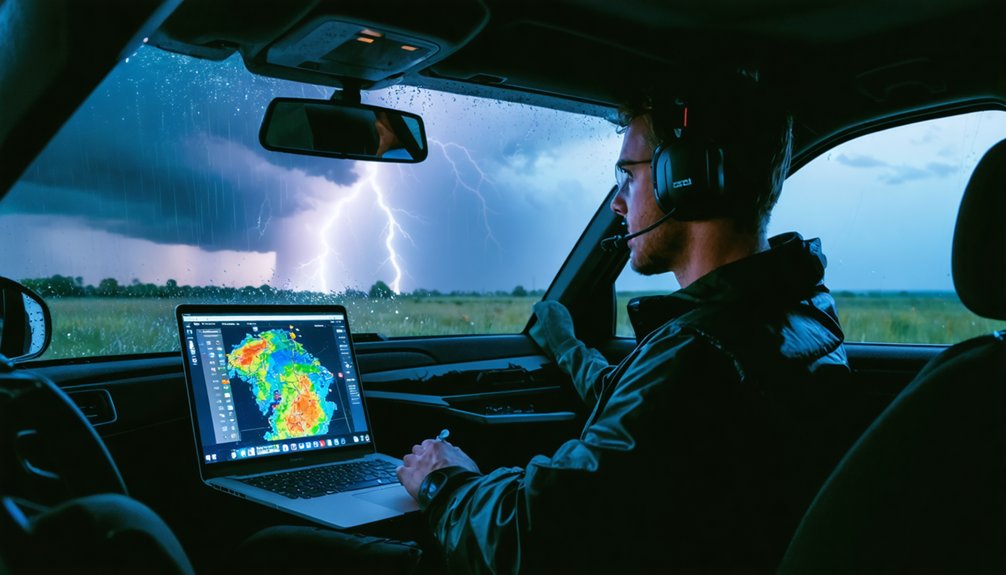
During live storm coverage, errors move fast—and so must your corrections. Your credibility depends on swift corrections and honest error acknowledgment—no exceptions.
During live storm coverage, mistakes are inevitable—but hesitation is not. Own every error instantly.
Follow these four steps when mistakes happen on air:
- Stop the misinformation immediately. Interrupt your broadcast the moment you confirm an error. Don’t wait for a commercial break.
- State exactly what was wrong. Name the incorrect statistic, location, or claim directly—vague retractions don’t serve your audience.
- Provide the verified correction. Cross-reference official meteorological sources before issuing updated information publicly.
- Explain how the error occurred. Briefly tell your audience what went wrong and how you’ll prevent it going forward.
Your audience trusts you with their safety decisions. Protect that trust fiercely by owning every mistake without hesitation.
How Transparency and Follow-Up Coverage Build Long-Term Audience Trust
Transparency doesn’t end when the storm does—it’s the foundation on which lasting audience trust is built. When you commit to follow-up coverage, you demonstrate accountability beyond the headline moment.
Audiences notice when you return to affected communities, update casualty figures, and correct earlier inaccuracies prominently rather than quietly.
The transparency benefits extend beyond credibility—they empower your audience to make informed decisions during future emergencies. Trust building requires consistent honesty, even when updated facts contradict your initial reporting.
Attribute every claim to named sources, explain your editorial choices openly, and acknowledge the limits of your knowledge.
You earn long-term loyalty not by capturing the most dramatic footage, but by proving you prioritize accuracy and community well-being over every competing pressure.
Frequently Asked Questions
How Should Storm Chasers Handle Conflicting Expert Opinions on Weather Causes?
You should present all credible expert consensus transparently, letting your audience weigh differing views. Don’t suppress minority opinions—doing so distorts public perception and undermines the informed, independent thinking your viewers deserve.
What Legal Protections Exist for Storm Chasers Filming on Private Property?
Like a fence marking sacred ground, you’ve got no automatic right to film on private land. Secure filming permissions first—property rights shield owners legally. Without consent, you’re trespassing, regardless of your journalistic mission.
How Do Storm Chasers Maintain Mental Health After Repeated Trauma Exposure?
You build emotional resilience by seeking peer support, professional counseling, and structured debriefs after each deployment. Prioritize trauma coping strategies like mindfulness and boundary-setting—they’re essential tools that protect your well-being and sustain your long-term reporting integrity.
Should Storm Chasers Disclose Financial Relationships With Networks or Sponsors?
Sure, hide your network paycheck behind dramatic tornado footage—nobody’ll notice! You must prioritize sponsorship transparency and ethical disclosures, actively revealing every financial relationship so your audience trusts your reporting isn’t steered by whoever’s signing your checks.
How Can Storm Chasers Ethically Report on Communities With Language Barriers?
You’ll need cultural sensitivity and translation resources to ethically report on language-barrier communities. Secure bilingual interpreters, obtain informed consent in residents’ native languages, verify accuracy with community liaisons, and never exploit linguistic vulnerabilities for dramatic footage.
References
- https://en.wikipedia.org/wiki/Storm_chasing
- https://opensiuc.lib.siu.edu/cgi/viewcontent.cgi?httpsredir=1&article=1895&context=gs_rp
- https://alllivingisstormchasing.substack.com/p/013-creating-with-care-a-code-of
- https://crazystormchasers.com/media-coverage-of-storm-chaser-controversies/
- https://crazystormchasers.com/media-influence-on-storm-chaser-decision-making/
- https://www.youtube.com/watch?v=jcQieWxmnss
- https://www.washingtonpost.com/news/capital-weather-gang/wp/2016/05/19/more-will-die-the-ethics-of-up-close-tornado-chasing/
- https://livestormchasers.com/ethics-standards-and-corrections-policies/
- http://www.stormeyes.org/tornado/media.htm
- https://www.youtube.com/watch?v=MogZEEeYISs