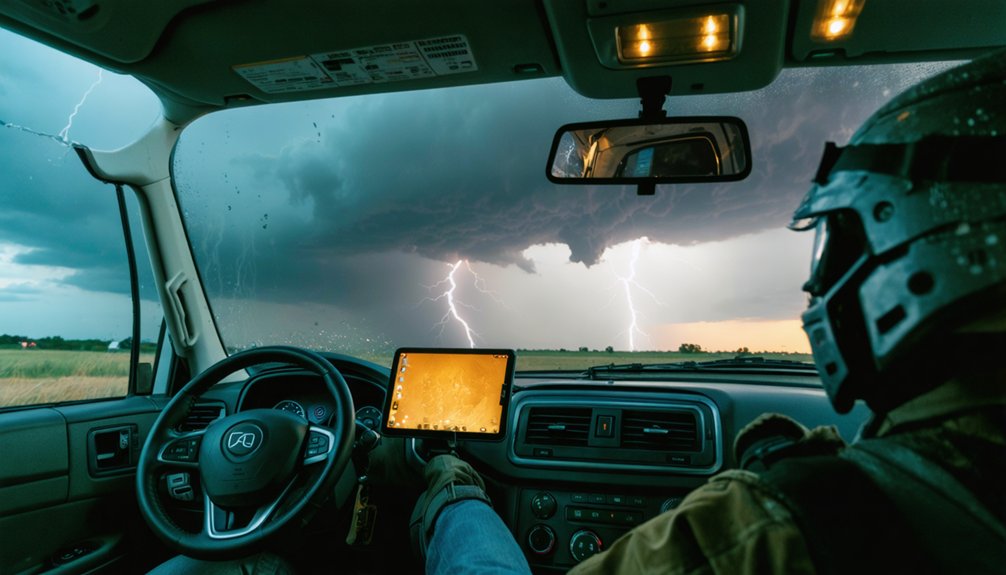
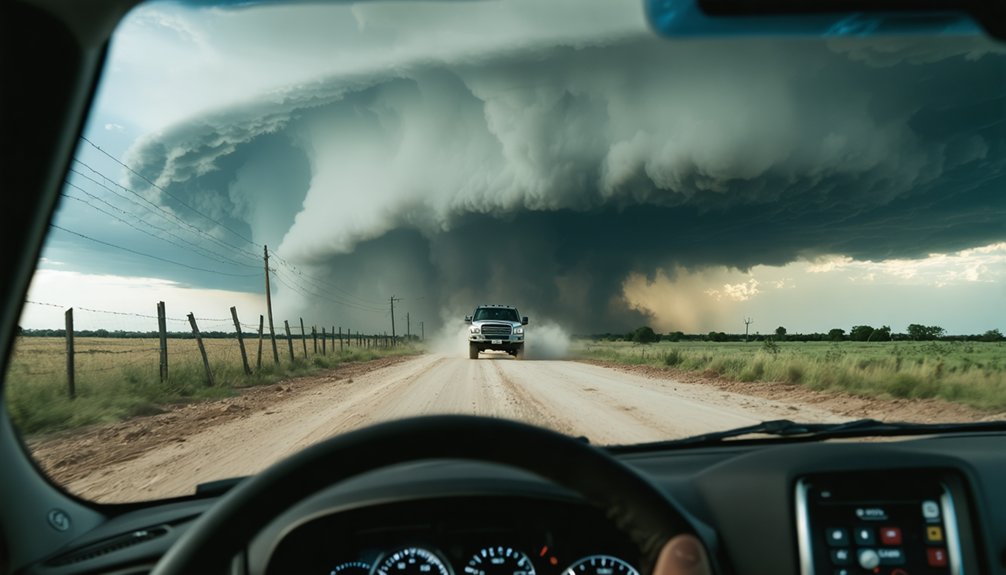
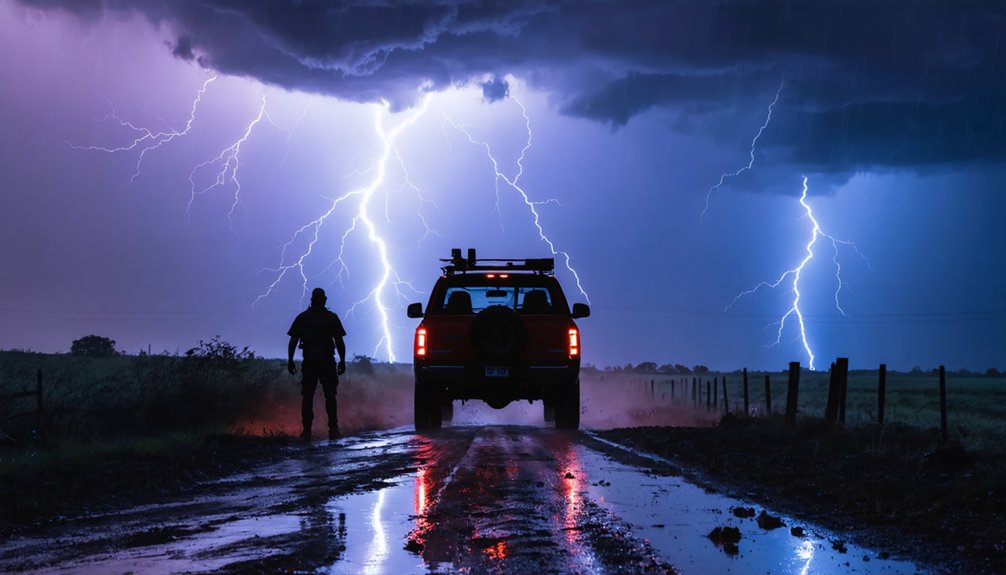
Storm chasing vehicle safety starts with thorough pre-chase inspections covering brakes, battery, tires, and fluid levels. You’ll also need current weather data and mapped backup routes before you deploy. In low visibility, activate headlights and coordinate positions with fellow chasers via radio. Reduce speed in heavy rain, avoid flooded roads, and never shelter under overpasses during a tornado encounter. Each section below breaks down exactly what you need to execute these practices correctly.
Key Takeaways
- Inspect brakes, battery, tires, and fluid levels before deployment to ensure the vehicle can handle demanding storm chasing conditions.
- Use weather apps and the Storm Prediction Center to plan primary and backup routes around dangerous storm cells.
- Activate headlights in low visibility, use parking lights when stationary, and coordinate positions with fellow chasers via radio.
- Reduce speed in heavy rain, avoid flooded roads, and release the gas pedal gently if hydroplaning occurs.
- If a tornado approaches directly, abandon the vehicle, seek a low-lying ditch, and lie flat covering your head.
Inspect These Vehicle Systems Before Storm Chasing Season
Before heading out for storm chasing season, you’ll need to inspect eight critical vehicle systems: brakes, lights, battery, defroster, exhaust, heater, windshield wipers, and cooling system.
Brake maintenance guarantees responsive stopping power on wet, unpredictable roads. A thorough battery check confirms sufficient charge to sustain extended field operations without unexpected failure.
Proper brake and battery maintenance keeps storm chasers operational and safe when field conditions turn unpredictable.
Tire inspection verifies proper tread depth and pressure, since wet road handling varies greatly between vehicles. Checking fluid levels — including coolant, brake fluid, and windshield washer solution — guarantees each system operates within safe parameters.
Neglecting any of these inspections compromises your operational capability and safety when conditions deteriorate rapidly.
Systematic pre-season preparation gives you the mechanical confidence to chase aggressively while maintaining full control of your vehicle.
Plan Your Storm Chasing Route Before You Leave
Mechanical readiness gets you out the door, but route mapping keeps you alive in the field. Before departing, pull current weather forecasting data from the Storm Prediction Center and identify primary and alternate corridors.
- Establish backup routes around storm cells using known area roadways.
- Confirm escape routes that allow rapid repositioning when storm behavior shifts unexpectedly.
- Download real-time weather apps and carry radio communication devices for continuous updates.
- Plan group travel through sparsely populated regions for mutual support.
Complacency kills independence. If you’re locked into one route with no contingency, an unpredictable storm strips your options fast.
Cross-reference your route mapping against live radar, know every exit before you need it, and maintain the tactical flexibility that keeps you in control.
Signal Your Position to Other Chasers and Drivers in Low Visibility
When rain hammers down or dust chokes the air, your vehicle becomes invisible to other drivers unless you take deliberate action. Activate your headlights immediately — not parking lights, but full headlights — to function as primary visibility aids against reduced sight lines.
When you pull off the roadway, switch to parking lights to signal a stationary position without implying forward movement. These communication signals distinguish your vehicle from active traffic, reducing collision risk considerably.
Execute every lane change, stop, and road exit with your turn signal engaged. Don’t assume other drivers see you — assume they don’t.
Coordinate with fellow chasers using radio communication to confirm positions in real time. Staying visible isn’t optional; it’s the tactical difference between maintaining operational freedom and becoming a roadway hazard.
Handle Hydroplaning and Flooded Roads Without Panicking
Keeping other drivers aware of your position addresses only half the hazard equation — the road surface itself becomes an active threat the moment water accumulates.
Mastering hydroplaning tips and recognizing flooded roadways keeps you mobile and in control.
- Reduce speed immediately in heavy rain; traction disappears faster than you’d expect
- Never drive through standing puddles collecting along tire paths — depth is unverifiable
- If hydroplaning occurs, release the gas pedal and steer gently toward your intended direction without braking hard
- Respect every road closure and flooded street warning — water conceals pavement damage, debris, and drop-offs
Your freedom to chase depends on reaching your destination intact.
Panic costs you control; disciplined technique preserves it.
What to Do If a Tornado Is Heading Toward You
Surviving a tornado encounter depends entirely on reading its movement correctly before it closes distance. If the tornado tracks side to side across your field of view, your position is relatively safe — hold it. If it moves directly toward you without lateral drift, tornado safety requires immediate action.
Abandon the vehicle without hesitation. Steel and glass offer zero structural protection against rotational winds. Locate the nearest ditch or low-lying ground and move to it immediately. Ditch protection works by positioning your body below the wind’s primary force vector, reducing debris impact exposure.
Lie flat, cover your head with both arms, and remain still until the rotation passes.
Never shelter under an overpass. Funneled wind accelerates through confined spaces, creating a lethal velocity increase precisely where you’d seek cover.
Frequently Asked Questions
Should Storm Chasers Always Travel in Groups Through Remote Areas?
Yes, you should always travel in groups through remote areas. Group dynamics enhance your safety, and coordinated remote navigation guarantees you’ve got backup if conditions deteriorate or mechanical issues arise unexpectedly.
How Full Should a Storm Chaser’s Gas Tank Be Kept?
Keep your gas tank at least half full to guarantee fuel efficiency and support proper tank maintenance. You’ll need adequate reserves for extended drives and rapid evacuations when unpredictable storm conditions demand immediate repositioning.
What Items Are Essential in a Storm Chaser’s Emergency Roadside Kit?
Your emergency roadside kit must include food, water, batteries, heating packs, matches, and a prepaid charged cellphone for communication devices. Don’t forget your first aid kit and tire sealant for complete preparedness.
How Should Storm Chasers Safely Exit Their Vehicle on Roadsides?
Pull far enough off the roadway to maintain safe distances before opening your doors. Correct vehicle positioning guarantees your doors won’t swing onto traffic, protecting you and passing drivers from dangerous collisions.
Must Storm Chasers Obey Traffic Laws and Follow Emergency Personnel Directions?
Over 40% of storm chasing accidents involve traffic violations. You must obey all traffic laws and follow emergency protocols, as personnel directions typically signal flooding or debris hazards that’ll compromise your freedom to chase safely.
References
- https://www.flame.org/~cdoswell/chasesums/Chase_safety.html
- https://www.kevinchilderslaw.com/7-safety-tips-for-driving-in-heavy-rain-storms/
- https://www.nhtsa.gov/road-safety/driving-in-severe-weather
- https://meetingsmags.com/illinois/il_planning/il_checklist/safety-tips-from-a-storm-chaser/
- https://www.youtube.com/watch?v=1ajzdoCSZaU
- https://www.weather.gov/mqt/cartips
- https://will.illinois.edu/weatherrealness/episode/storm-chasing-can-be-deadly-heres-how-to-stay-safe
- https://www.stormchase.us/Articles/VehiclePrep.html