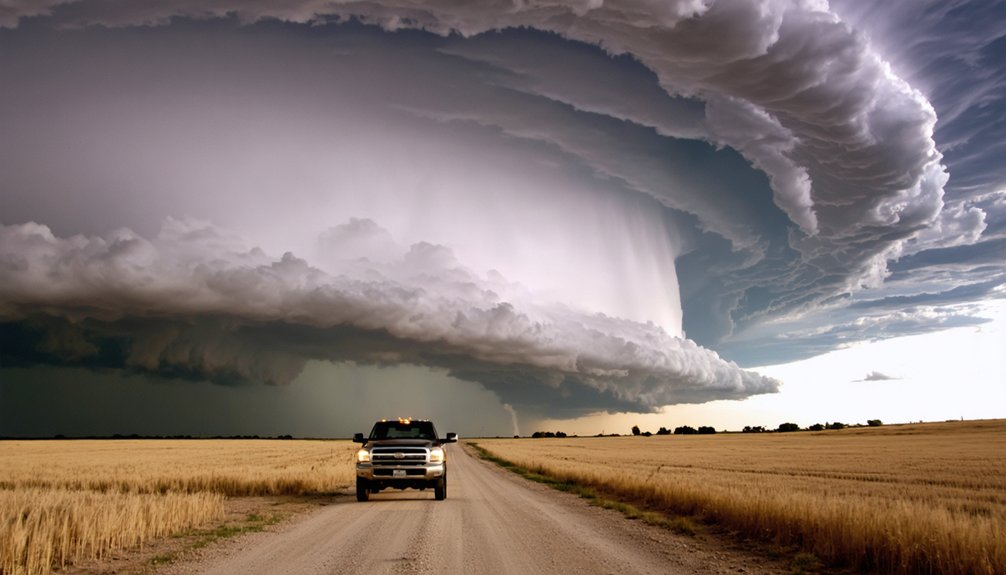
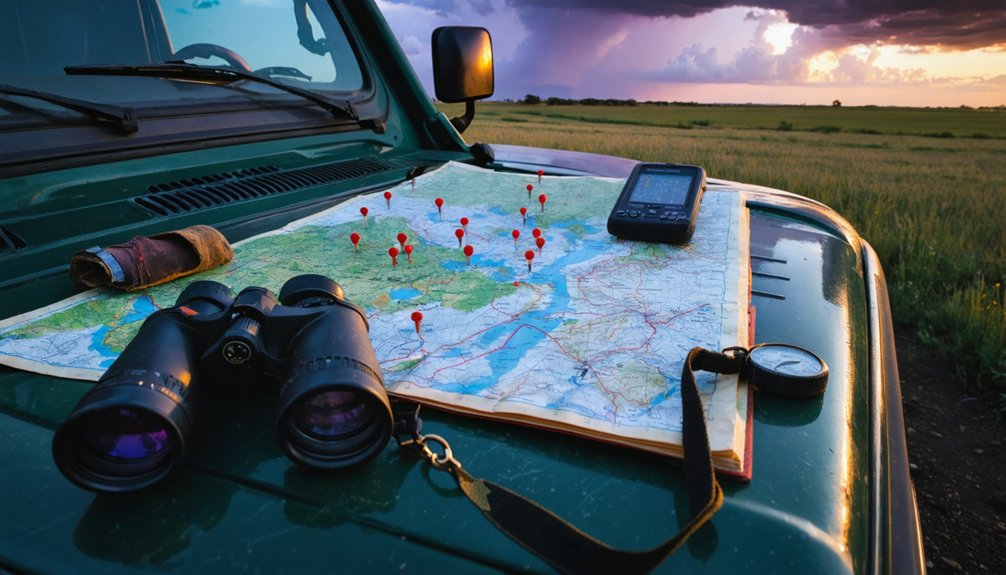
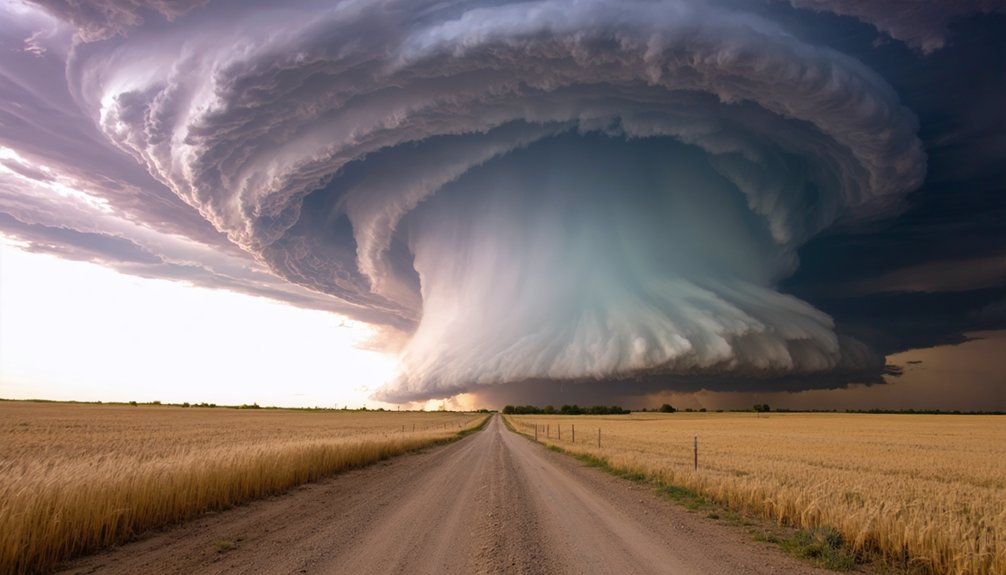
The best storm chasing base camps in Tornado Alley are Oklahoma City, Wichita, Dallas–Fort Worth, and select Nebraska and South Dakota towns like Grand Island and Rapid City. You’ll want centrality, interstate access, and solid infrastructure to minimize deadhead miles and keep operations sustainable across multi-day trips. Your base camp should align with your target zone and active chase window—late April through early June for the southern Plains, mid-June further north. The full breakdown ahead sharpens every decision.
Key Takeaways
- Oklahoma City serves as a premier south-central hub with interstate access covering Oklahoma, Kansas, and north Texas storm corridors efficiently.
- Wichita offers close proximity to central Kansas storm targets, minimizing deadhead miles along active drylines and severe weather boundaries.
- Dallas–Fort Worth anchors southern Tornado Alley, providing strong infrastructure and quick access to north Texas, western Oklahoma, and southern Kansas.
- North Platte and Grand Island optimize Nebraska operations along I-80, offering open terrain and strong sightlines for storm tracking.
- Rapid City, Pierre, Huron, and Brookings strategically support South Dakota chasing, peaking in effectiveness near mid-June storm windows.
Why Centrality, Interstates, and Infrastructure Define a Storm Chasing Base Camp
Selecting a storm chasing base camp isn’t just about picking a convenient hotel — it’s a logistical decision that directly determines how many viable chase days you’ll execute in a given trip. Centrality to target zones cuts deadhead miles, preserving fuel and time for actual intercepts.
Interstate access lets you reposition aggressively as climate patterns shift storm tracks across the Plains. Without it, you’re reacting slowly to fast-moving setups.
Infrastructure matters equally — lodging availability, rental fleets, and equipment maintenance resources keep your operation running across multi-day trips. A mechanical failure means nothing if a qualified shop sits two miles off the highway.
Choose your base analytically: treat it as a mobile operations hub, not just a place to sleep.
Oklahoma City: The Central Plains Storm Chasing Base Camp That Covers Everything
When those base camp factors get applied to a real-world location, Oklahoma City consistently rises to the top. Its position along major interstate corridors gives you immediate access to eastern Texas Panhandle targets, western Oklahoma setups, and southern Kansas corridors without burning hours on deadhead miles.
Historical storm patterns confirm that significant tornado activity clusters within a tight radius of OKC, making it statistically efficient as your staging point. You’ll also benefit from understanding local weather nuances — terrain shifts and moisture boundaries that regularly influence storm initiation across this corridor.
The metro’s infrastructure handles the operational side: rental vehicles, fuel, lodging, and repair options are all readily available. That combination of geographic centrality and logistical depth is what makes Oklahoma City the benchmark base camp for Central Plains chasing.
Wichita as a Storm Chasing Base Camp for Kansas-Focused Chase Days
When your target zone falls across central or southern Kansas, Wichita positions you closer to the action than any southern Plains alternative, cutting deadhead miles and preserving your response time.
You’ll find that the city’s interstate grid—anchored by I-35, I-135, and US-54—lets you push east, west, or north quickly as storm tracks evolve.
Wichita’s lodging inventory, fuel infrastructure, and rental options also mean you can stage efficiently without the logistical drag that smaller regional bases typically introduce.
Kansas Storm Corridor Access
Wichita positions you closer to the heart of Kansas storm country than any other major city on the central Plains, cutting deadhead miles considerably on days when storm targets develop across central and southern Kansas corridors. When your weather forecasting analysis points toward initiation zones along the dryline or outflow boundaries in central Kansas, you’re already staged within striking distance.
Interstate 135 and I-70 give you rapid north-south and east-west repositioning as storm visualization data updates in real time. You’re not burning hours repositioning from Oklahoma City or Dallas when the setup favors Kansas.
That operational efficiency translates directly into more intercept opportunities, better fuel margins, and less fatigue during multi-day trips. Wichita isn’t a compromise — it’s a precision tool for Kansas-focused chase operations.
Rapid Plains Repositioning Advantage
Staging out of Wichita gives you a repositioning edge that becomes obvious the moment a storm setup begins evolving faster than your original forecast suggested. When weather forecasting models shift the target corridor north or south, you’re already centered on Kansas’s interstate grid, cutting deadhead miles considerably.
- I-35 and I-135 give you immediate north-south corridor access without urban delay.
- East-west adjustments along I-70 keep you flexible when storm tracks drift.
- Shorter drives preserve fuel, time, and mental bandwidth for storm safety decisions.
- Centralized lodging keeps gear staged and vehicles ready for rapid deployment.
You’re not burning an hour just reaching the play. Wichita keeps you inside the action zone, where adaptive decisions stay ahead of fast-moving convective developments.
Wichita Staging Logistics
That repositioning edge only holds if your ground logistics are already locked in before the chase day begins. Wichita delivers exactly that for Kansas-focused operations. You’ll find fuel corridors, rental availability, and lodging concentrated near major interchange clusters, cutting your pre-chase overhead markedly.
Stage your vehicle the night before, verify your intercept routes along I-135 and US-54, and you’re mobile before initiation. Wichita’s central position eliminates unnecessary deadhead miles that bleed your schedule dry.
Between setups, the city’s local cuisine scene lets you refuel efficiently without losing time to long detours. Some chasers even coordinate near wildlife conservation corridors in the Flint Hills, where open terrain doubles as both a sightline advantage and a natural buffer for safe storm observation positioning.
Dallas–Fort Worth: The Southern Plains Storm Chasing Base Camp for Texas Targets
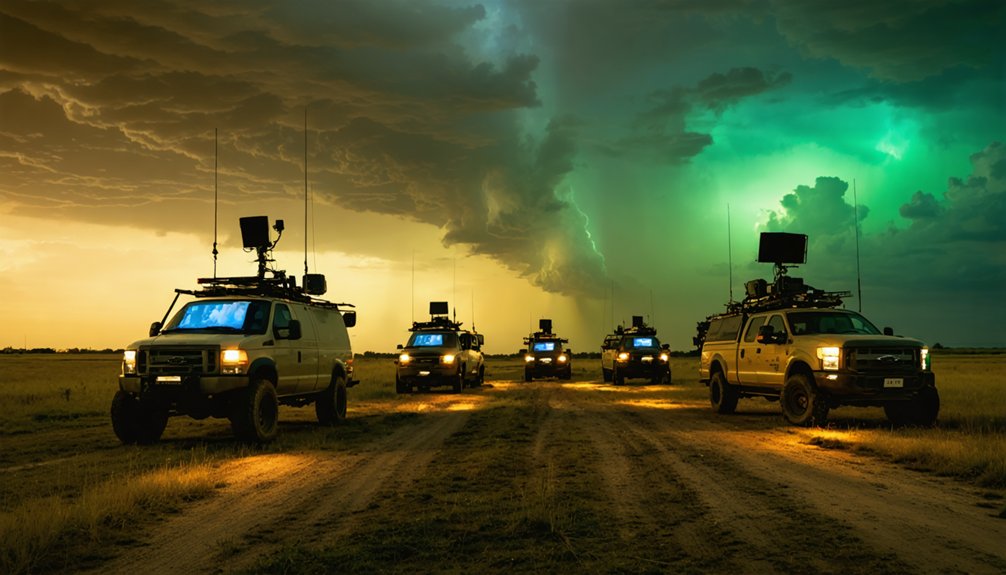
Dallas–Fort Worth anchors the southern edge of Tornado Alley’s core chase corridor, giving you direct interstate access to the Texas Panhandle, North Texas storm days, and western Oklahoma targets.
Local weather patterns across North Texas create frequent severe weather windows, and DFW’s infrastructure eliminates logistical friction fast.
- Large airport and rental networks support rapid mobilization for spontaneous chase deployments
- North-central Texas wildlife habitats and open ranch terrain provide unobstructed storm sightlines
- I-40 and I-27 corridors deliver efficient Panhandle access without excessive deadhead miles
- Southern anchor positioning extends your operational reach into western Oklahoma and southern Kansas
Expect longer drives when northern Plains targets develop. DFW works best when your target zone stays concentrated across Texas and the immediate southern Plains corridor.
Nebraska and South Dakota Storm Chasing Base Camps for Northern Plains Operations
When your target zone shifts north toward Nebraska and the Dakotas, DFW loses its edge fast—and northern Plains base camps become the operationally sound choice. North Platte, Grand Island, and I-80 corridor towns give you tight positioning against Nebraska’s historically active severe weather corridors, where historical storm patterns consistently show concentrated supercell development across the central Plains each spring.
Push further north, and Rapid City, Pierre, Huron, or Brookings anchor your South Dakota operations efficiently. Open terrain across both states supports long sightlines, critical for equipment safety when you’re repositioning ahead of fast-moving cells.
You’ll spend fewer miles deadheading and more time in productive intercept range. Match your base to the storm track, and you’ll keep both your schedule and your equipment intact throughout multi-day operations.
Choosing the Right Storm Chasing Base Camp for Your Target Zone and Chase Window
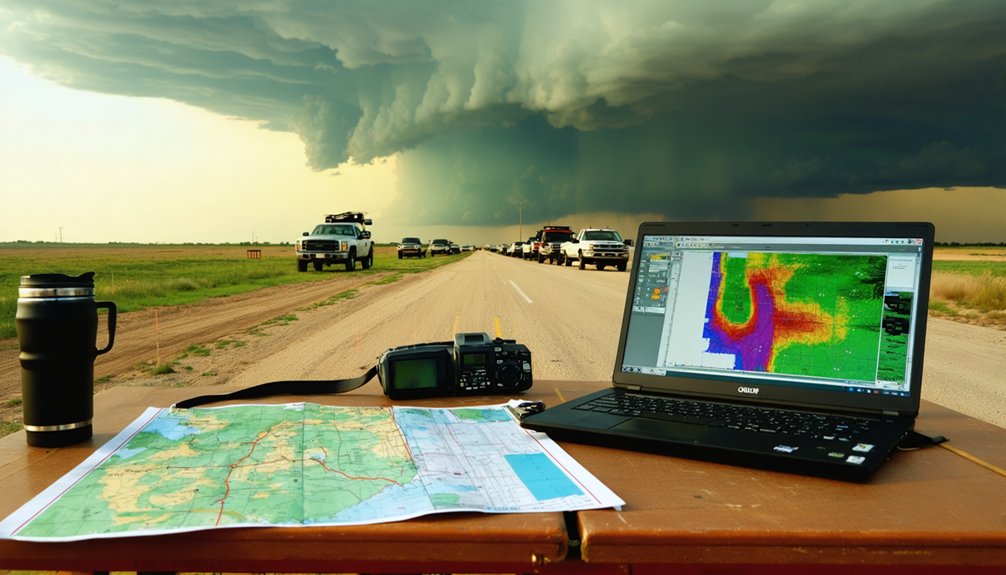
Your base camp selection should directly reflect your target zone’s geography, highway access corridors, and the storm system’s projected timing and track.
If your chase window opens with a Kansas-centered setup, Wichita cuts your deadhead miles considerably compared to launching from Dallas–Fort Worth or North Platte.
Matching your staging city to both the forecast target and your available chase days prevents wasted repositioning drives that erode your intercept opportunities.
Matching Bases To Targets
Picking the right base camp comes down to one core variable: where your target zone sits relative to available highway corridors. Accurate tornado prediction narrows your window fast, so your base needs to eliminate dead miles before storms even fire.
- Oklahoma City anchors south-central setups with flexible interstate reach across Oklahoma, Kansas, and north Texas.
- Wichita cuts repositioning time for Kansas-focused corridors without overextending into southern Plains targets.
- Dallas–Fort Worth locks in north Texas and Texas Panhandle coverage when your storm chasing gear is staged and targets stay south.
- North Platte or Grand Island positions you efficiently across Nebraska’s open corridors for northern Plains setups.
Match your base to your target, not your preference. Every extra mile costs time you won’t get back.
Chase Window Timing Factors
Base selection locks in your geographic position, but chase window timing determines whether that position actually pays off. You’ll need to align your base choice with historical storm trends for the specific weeks you’re operating.
Peak tornado activity across Kansas and Oklahoma typically clusters between late April and early June, while Nebraska and South Dakota corridors heat up closer to mid-June.
Local weather patterns shift those windows annually, so treat climatological averages as a starting framework, not a fixed schedule. Monitor synoptic setups at least 72 hours out before committing to a base.
Repositioning mid-trip costs time and money. If your chase window falls outside a region’s active period, even a well-positioned base delivers diminishing returns. Timing and location must work together.
Frequently Asked Questions
What Months Offer the Highest Storm Chasing Activity Across Tornado Alley?
You’ll find peak storm chasing activity from April through June across Tornado Alley. Prioritize weather forecasting tools and safety gear during these months, as atmospheric instability drives the most frequent and intense severe weather outbreaks.
Do Storm Chasers Need Special Permits or Licenses to Operate Legally?
Like a free bird in open skies, you don’t need special permits requirements or licensing regulations to chase storms legally — you’re simply operating as a private citizen on public roads.
What Vehicle Types Work Best for Storm Chasing Base Camp Operations?
You’ll want SUVs or trucks with strong vehicle durability and off-road capabilities. They handle unpaved roads, debris, and rapid repositioning demands efficiently, giving you the operational freedom and mechanical reliability storm chasing base camp missions require.
How Much Does a Typical Storm Chasing Trip Cost per Day?
Your wallet’s a storm itself—expect to spend $150–$300 daily, covering fuel, lodging, weather forecasting subscriptions, and safety equipment rentals. You’ll burn more chasing distant targets, so budget aggressively and chase smart.
Are Storm Chasing Tours Available for Beginners Without Experience?
Yes, you can join guided tours designed for beginners—experienced guides handle navigation and storm chasing safety while you observe. You’ll need basic beginner storm gear, but operators typically provide structured, hands-on exposure without requiring prior field experience.
References
- https://extremetornadotours.com/
- https://stormtrack.org/threads/storm-chasers-guide-to-navigating-tornado-alley.31471/
- https://www.reddit.com/r/tornado/comments/1rwjiap/best_places_to_chase_a_tornado_excluding_tornado/
- https://crazystormchasers.com/what-are-the-top-storm-chasing-vehicle-rental-locations/
- https://www.reddit.com/r/stormchasing/comments/19088lj/new_to_storm_chasing_tornado_alley_need_some_tips/
- https://extremesportsx.com/2024/03/07/the-best-states-to-visit-for-storm-chasing/
- https://www.youtube.com/watch?v=V_rlMou36TQ
- https://crazystormchasers.com/top-storm-chasing-hotspots/