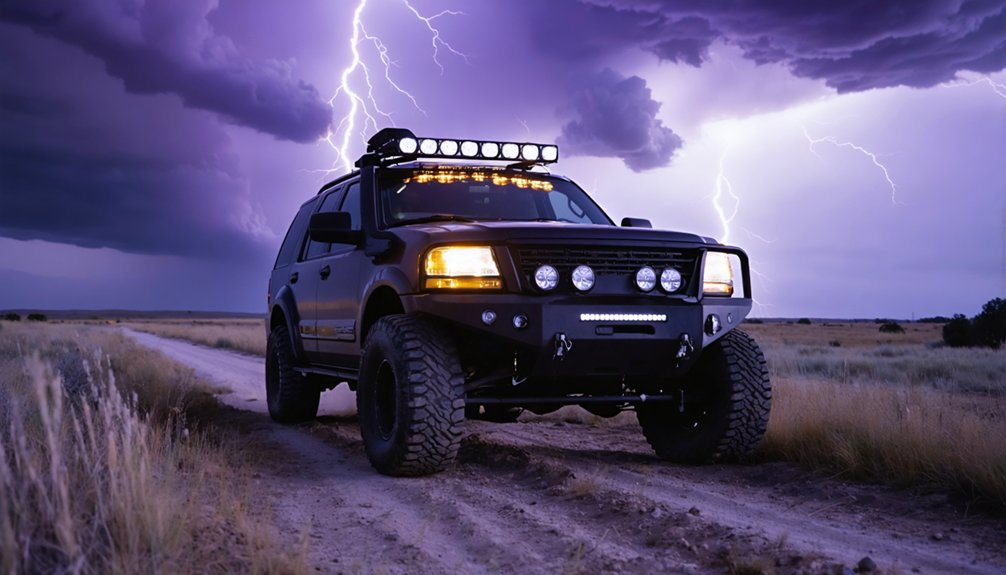
Oklahoma City tops the list as your best storm chasing rental base, offering central access to tornado corridors across Oklahoma, Kansas, and north Texas via major interstates. Wichita minimizes deadhead miles across Kansas, while DFW suits Texas Panhandle targets. Denver covers High Plains dryline setups, and Omaha positions you for northern Plains supercell tracks. Each base requires AWD vehicles with unlimited mileage and full storm damage coverage. Matching your base to the forecast is where smart chasing begins.
Key Takeaways
- Oklahoma City is a top rental base, offering central Plains access, major interstate connections, and AWD vehicle inventory for tornado corridor chasing.
- Wichita minimizes deadhead miles across Kansas and Oklahoma, making it among the fastest bases for reaching tornado alley storm targets.
- DFW serves as an effective rental hub for Texas Panhandle targets and north-to-south storm track repositioning.
- Denver provides strong access to High Plains dryline setups across Colorado, Kansas, and Nebraska for early-season chase operations.
- Omaha suits northern Plains chasing, intercepting supercell tracks extending into Iowa and South Dakota efficiently.
Why Your Starting Location Shapes the Entire Storm Chase
When you rent a storm-chasing vehicle, your pickup location isn’t just a logistical detail—it’s a tactical decision that determines your access windows, repositioning costs, and response time to developing convective setups.
Weather patterns across the Plains shift fast, and a poorly chosen base adds deadhead miles that drain your chase window before storms even initiate.
Starting from the right hub lets you intercept targets efficiently, preserve fuel reserves, and keep equipment maintenance manageable between travel days.
A Wichita base positions you centrally across tornado alley, while Denver launches you eastward into High Plains dryline setups.
Dallas and Oklahoma City anchor your southern routes.
Every mile between you and the target corridor costs time.
Choosing your starting location strategically means you’re chasing smarter, not just harder.
Oklahoma City: The Best Storm Chasing Rental Base in the Southern Plains
Oklahoma City sits at the operational center of the Southern Plains, making it one of the most tactically sound rental bases for spring storm-chasing campaigns. You’re positioned within striking distance of classic tornado corridors across Oklahoma, Kansas, and north Texas, which cuts deadhead driving considerably.
Major interstate access lets you reposition quickly when a setup shifts. You can load your storm chasing gear directly from the rental lot and move without logistical delays slowing your response window.
Rental inventories here are substantial, giving you real options for AWD and high-clearance vehicles suited to wet gravel and rural backroads. Confirm that any vehicle you select includes unlimited mileage and that vehicle maintenance records are current—mechanical failure mid-chase eliminates options fast and wastes positioning time you can’t recover.
How the Other Four Chase Bases Compare to OKC
Each of the four remaining bases—Dallas–Fort Worth, Denver, Wichita, and Omaha—offers a distinct positional advantage, but none replicates OKC’s central access to the full Southern Plains corridor. DFW targets Texas Panhandle and south-to-north routes effectively.
No base matches OKC’s reach across the full Southern Plains corridor—but DFW comes closest for Texas routes.
Denver launches you eastward into High Plains dryline setups across Colorado, Kansas, and Nebraska.
Wichita puts you at the geographic heart of tornado alley, cutting deadhead miles considerably.
Omaha positions you for northern Plains supercell tracks into Iowa and South Dakota.
Your rental booking strategy should reflect which corridor you’re targeting first. Each market varies in vehicle maintenance standards and inventory depth, so confirm AWD availability, unlimited mileage terms, and hail coverage before committing.
Match your base to your forecast target, and you’ll move faster when it counts.
Which Base Puts You in Tornado Alley the Fastest?
If getting into Tornado Alley fast is your priority, Wichita and Oklahoma City give you the clearest advantage. Wichita drops you directly into the Kansas corridor, while OKC puts you on the southern edge of the alley with immediate interstate access to both Oklahoma and Texas storm tracks.
Both bases cut your deadhead driving considerably compared to Denver, Dallas, or Omaha when classic alley setups fire.
Closest Bases To Alley
When minutes matter on a volatile storm day, your rental base location directly determines how quickly you’re wheels-down in active tornado alley corridors. Wichita positions you centrally, cutting deadhead miles across Kansas and Oklahoma simultaneously.
Oklahoma City delivers strong southern corridor access with major interstate arteries supporting rapid repositioning. Dallas–Fort Worth opens direct Panhandle routes for north-tracking chase days.
Each base carries distinct advantages depending on your target zone. You’ll also want to respect local regulations governing road access near protected lands, since wildlife preservation zones occasionally restrict rural route options during active weather events.
Factoring in these access limitations before departure keeps your repositioning efficient. Choose your base against the day’s storm placement, not habit, and you’ll consistently close distance faster.
Fastest Regional Access
Wichita wins on raw proximity—you’re sitting at the geographic center of classic tornado alley, putting Kansas storm corridors within an hour’s drive and Oklahoma target zones reachable before most setups fully mature.
When weather forecasting models break toward a late-afternoon initiation, you’re already positioned to intercept without burning three hours on deadhead miles.
Oklahoma City trails Wichita slightly but compensates with superior southern access when storm tracking points toward Texas boundaries.
Dallas–Fort Worth demands more northward commitment, making it costly if targets shift rapidly.
Denver works only when High Plains setups are confirmed early.
Omaha favors northern targets exclusively.
Your fastest regional access hinges on matching your departure city to the forecasted initiation zone—Wichita simply covers the broadest range of likely targets with the least repositioning.
AWD, High Clearance, and Coverage: What Your Chase Rental Needs
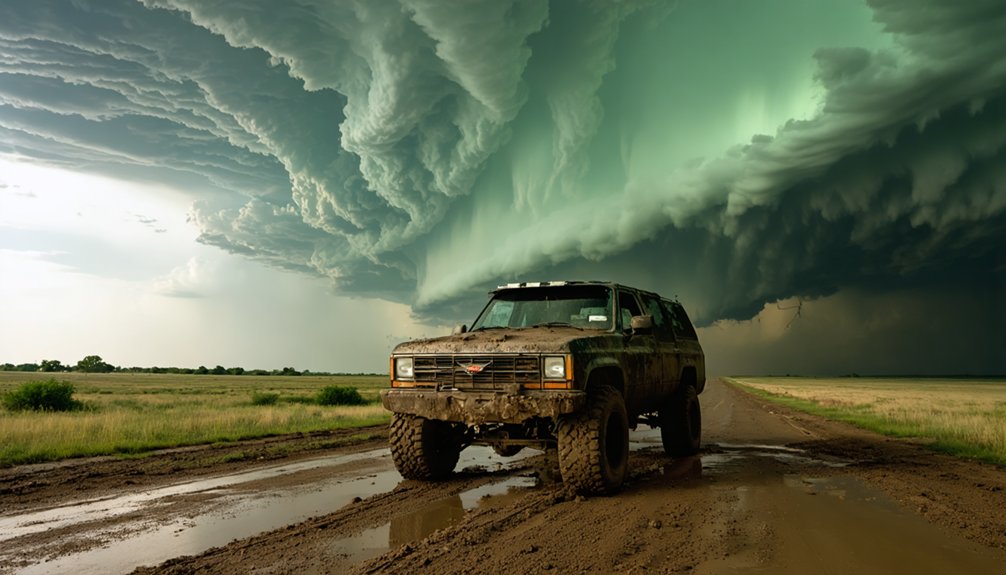
When you’re selecting a chase rental, AWD or 4WD capability isn’t optional—it’s the baseline requirement for handling wet gravel roads, muddy turnouts, and rapid reroutes across rural terrain.
You’ll also want a high-clearance vehicle to navigate flooded low-water crossings and unimproved roads without losing ground clearance at the worst possible moment.
Beyond the vehicle’s physical specs, your rental coverage must explicitly include hail, windshield, and roadside protection, since a standard policy leaves you financially exposed to the exact conditions you’re driving toward.
Terrain-Ready Vehicle Features
Storm chasing demands terrain-ready rentals because rural roads, flooded crossings, and rapid repositioning leave no margin for inadequate vehicles. When your weather forecast shifts and storm tracking redirects you onto unpaved corridors, your rental must perform without hesitation.
Prioritize AWD or 4WD for wet gravel, soft shoulders, and sudden reroutes. High-clearance vehicles handle flood-prone crossings and rutted back roads that standard sedans can’t navigate safely.
You’ll also want unlimited mileage, since aggressive repositioning burns distance fast.
Fuel efficiency matters across extended highway stretches between setups. Don’t overlook insurance—confirm that your policy covers hail damage, windshield strikes, tire failure, and roadside incidents specific to severe-weather environments.
Selecting the right vehicle upfront keeps you mobile, protected, and fully capable of pursuing every viable storm setup.
Essential Rental Coverage Options
Selecting the right rental coverage isn’t optional—it’s a core operational decision that directly affects your ability to chase without costly interruptions. Rental policies vary markedly, so you’ll need to scrutinize what’s actually included before signing.
Prioritize these three vehicle safety and coverage essentials:
- Hail and windshield protection — standard collision coverage won’t cover storm damage; confirm explicit hail coverage in writing
- Tire and roadside coverage — gravel roads and debris-strewn shoulders create high puncture risk during repositioning
- Unlimited mileage terms — capped mileage plans generate unpredictable costs across multi-day, high-distance chase operations
Don’t assume your personal auto policy or credit card coverage fills these gaps. Verify every clause, because a single uncovered hail event can terminate your chase operation financially.
How to Cut Storm Chasing Rental Costs on High-Mileage Days
High-mileage chase days can push rental costs well beyond your initial budget if you haven’t structured your agreement correctly. Always secure unlimited mileage before departure—per-mile fees accumulate fast across repositioning runs through Kansas, Oklahoma, and Texas corridors.
Select fuel-efficient AWD vehicles to manage fuel costs across extended highway stretches, since chase days regularly exceed 500 miles. Confirm that vehicle maintenance responsibilities are clearly defined in your contract; unexpected breakdown charges can exceed storm-day savings.
Book early through major metro locations like Oklahoma City or Wichita, where competitive inventory drives lower base rates. Use membership discounts, loyalty programs, or weekly rate structures instead of daily billing.
These steps protect your operational budget and keep you mobile throughout multi-day severe-weather itineraries.
Frequently Asked Questions
Can I Return a Rental Vehicle to a Different City After Chasing?
Want to chase freely without backtracking? You can return a rental to a different city. Confirm one-way options at vehicle pickup, review rental insurance terms, and expect possible drop fees varying by location.
Are There Age Restrictions for Renting Vehicles at These Chase Locations?
Most rental agencies require you’re 25+ to avoid young-driver surcharges. You’ll want to confirm age policies when booking vehicle upgrades and securing weather insurance, ensuring you’re fully covered before hitting chase corridors.
Do Rental Companies Allow Multiple Drivers During a Storm-Chasing Trip?
Like keys to the open road, most rental companies do allow multiple drivers—you’ll just need to add them officially. Confirm rental insurance covers all drivers and ask about vehicle upgrades when registering additional chasers.
Which Rental Companies Operate in All Five Storm-Chasing Base Locations?
Enterprise, Hertz, and Avis operate across all five bases, so you’ll find reliable pickups for your storm chase gear and weather preparedness needs in Oklahoma City, Dallas, Denver, Wichita, and Omaha.
What Documents Do I Need to Rent a Vehicle at These Locations?
You’ll need a valid driver’s license, major credit card, and proof of rental insurance. Confirm vehicle specifications match chase requirements before signing—some companies require additional documentation for high-clearance or AWD selections.
References
* https://stormchasing.com/