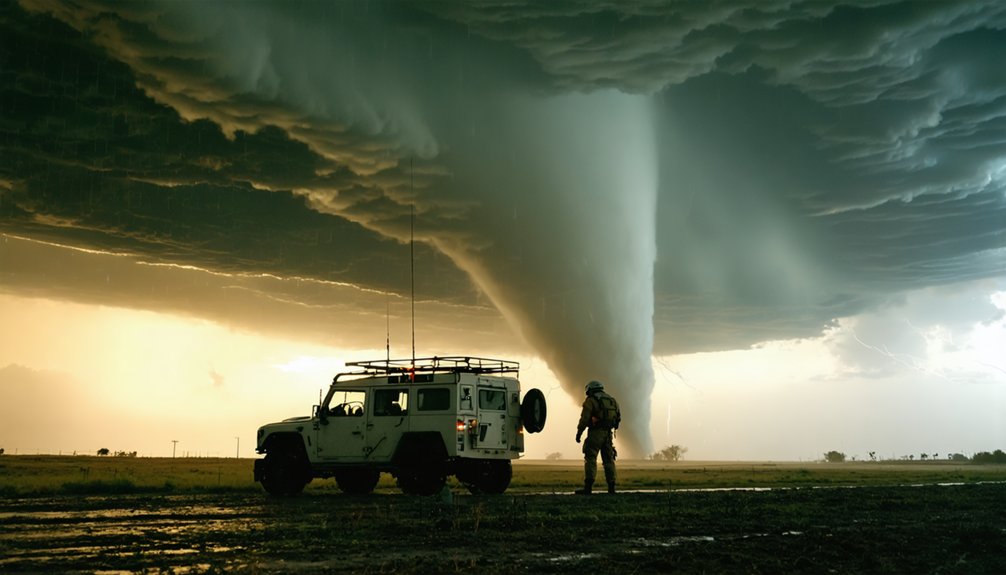
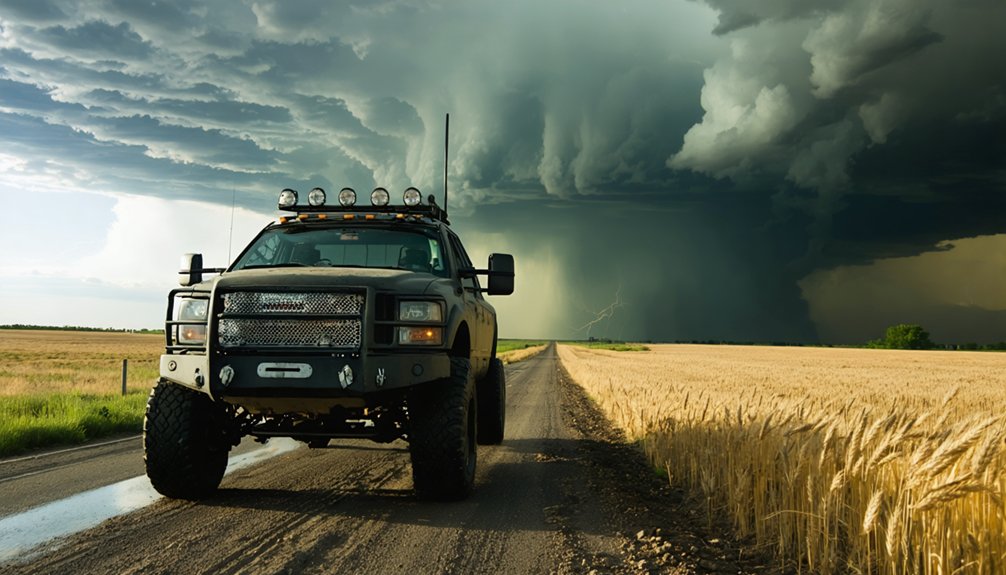
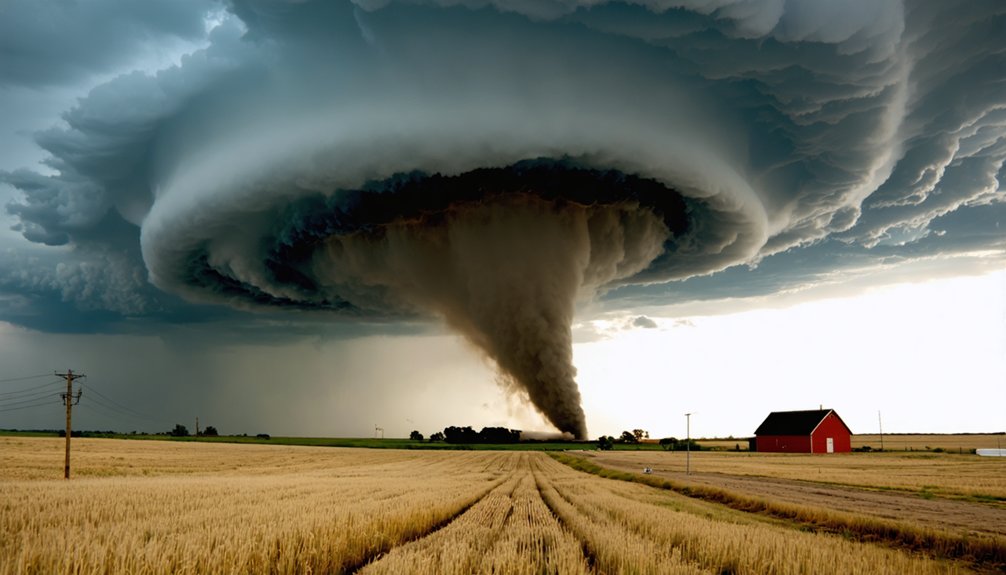
Your best storm chasing hotspots are Oklahoma, Kansas, and Texas, where supercell thunderstorms peak between April and June. These states offer flat terrain, grid-based road networks, and the highest severe storm frequency on Earth. Nebraska and South Dakota extend your options into later-season activity, while Alabama, Mississippi, and Georgia present unique southeastern opportunities with distinct operational challenges. Each region demands a tailored approach—and there’s much more to take into account before you head out.
Key Takeaways
- Oklahoma, Kansas, and Texas are the top storm chasing destinations, offering high severe storm frequency, open terrain, and peak supercell activity from April to June.
- Kansas provides strong highway access and clear sightlines, while Oklahoma features concentrated storm activity corridors ideal for intercepts.
- Nebraska and South Dakota extend chasing into the northern Plains, contributing unique storm patterns and later-season activity.
- Alabama, Mississippi, and Georgia offer significant tornado activity but present challenges like hilly terrain, dense trees, and rain-wrapped tornadoes.
- Flat landscapes with section-line roads every mile, found across core Plains states, maximize storm visibility and intercept efficiency.
Tornado Alley: Why Oklahoma, Kansas, and Texas Lead Storm Chasing
When it comes to storm chasing, Oklahoma, Kansas, and Texas consistently rank as the top destinations due to their high severe storm frequency, open terrain, and ideal spring conditions.
You’ll find supercell thunderstorms peaking between April and June, giving you maximum intercept opportunities across vast, unobstructed landscapes.
Regional weather variability across these three states means you’re rarely locked into one chase scenario. Oklahoma’s corridor delivers concentrated storm activity, Kansas offers clean sightlines with strong highway access, and Texas provides expansive positioning flexibility.
Together, they produce diverse storm patterns ranging from classic supercells to multi-vortex tornadoes.
You can move freely across these states, using satellite imagery and highway networks to position yourself precisely.
This combination of frequency, visibility, and accessibility makes Tornado Alley the definitive storm chasing environment.
The Best States for Storm Chasing Hotspots
While Oklahoma, Kansas, and Texas anchor the core chasing zone, Nebraska and South Dakota extend your viable pursuit corridor well into the northern Plains. Each state delivers distinct advantages tied to storm frequency, terrain, and highway infrastructure.
Oklahoma’s historical storm patterns make it statistically unmatched for supercell intercepts.
Kansas offers grid-based road networks that maximize your repositioning speed.
Texas delivers sheer geographic scale, giving you multiple intercept windows per storm cycle.
Nebraska and South Dakota contribute later-season activity, effectively stretching your operational calendar.
You’ll want to cross-reference local emergency protocols before entering each state, since road closures and emergency broadcasts vary by jurisdiction.
Understanding these variables lets you chase freely while maintaining calculated situational awareness across every corridor you target.
Terrain, Roads, and Storm Frequency: What Makes a Location Worth Chasing
Three core variables determine whether a location earns a spot on your chase calendar: terrain openness, road grid density, and storm frequency. Flat, unobstructed landscapes give you sightlines that hilly, forested regions eliminate entirely. Urban infrastructure compounds visibility problems—dense development blocks storm structures and restricts rapid repositioning.
Road grid density directly controls your intercept efficiency. Oklahoma, Kansas, and Texas deliver section-line roads every mile, letting you track atmospheric dynamics with precision as supercells shift direction. Southeastern states offer neither the grid consistency nor the open terrain, forcing reactive rather than proactive positioning.
Storm frequency anchors every decision. April through June concentrates supercell activity across the Great Plains, maximizing your intercept windows. Chasing low-frequency regions wastes time and resources when high-probability corridors remain accessible.
Southeastern Storm Chasing Hotspots: Alabama, Mississippi, and Georgia
Although the Southeast trails the Great Plains in storm frequency, Alabama, Mississippi, and Georgia generate significant tornado activity that demands a fundamentally different chasing approach.
You’ll encounter hilly terrain that disrupts sightlines and limits storm visibility compared to the flat, open Plains. Dense tree cover compounds this challenge, frequently blocking your view of storm structures entirely.
Southeastern tornadoes often arrive outside peak spring windows, striking in early spring or late fall when you may least expect them. Rain-wrapped tornadoes and nighttime events further elevate your operational risk. You’ll need to rely heavily on radar interpretation rather than visual confirmation.
Highway networks here are less forgiving, so you must prioritize pre-positioning over reactive intercepts to maintain safe, effective storm observation throughout this demanding region.
When to Chase Storms: Peak Seasons Across Every Region
Timing your chase correctly separates productive intercepts from wasted travel days. Historical storm patterns confirm that April through June delivers peak supercell activity across Oklahoma, Kansas, Texas, Nebraska, and South Dakota. You’ll maximize intercept opportunities by targeting this window when atmospheric instability peaks across open terrain.
Seasonal weather variations shift your strategy by region. The Southeast runs earlier, with Alabama, Mississippi, and Georgia seeing elevated tornado risk from late winter through early spring. California’s Central Valley operates on a different timeline entirely, producing storm opportunities outside traditional Tornado Alley cycles.
Nighttime and rain-wrapped events increase dramatically in high-humidity periods, so you’ll want to cross-reference historical frequency data before committing to a target region. Chase the season that matches your region, risk tolerance, and visibility requirements.
Frequently Asked Questions
What Equipment Do Beginner Storm Chasers Need Before Heading Out?
You’ll need these equipment essentials before chasing: weather radio, GPS, dash cam, mobile radar app, and a reliable vehicle. Prioritize storm safety by carrying first aid kits and maintaining real-time communication tools always.
How Do Storm Chasers Coordinate With Local Emergency Services During Events?
You’ll coordinate through emergency communication channels by monitoring local law enforcement frequencies, sharing real-time position data, and reporting hazards directly to NWS offices—ensuring storm safety while you’re actively intercepting severe weather events in the field.
What Insurance Considerations Should Storm Chasers Account for Before Chasing?
Before chasing, you’ll need specialized insurance policies covering high-risk vehicle use and liability coverage protecting you against third-party claims. Standard auto policies won’t cover storm chasing activities, so secure dedicated coverage addressing equipment damage and personal injury risks.
Can Storm Chasing Be Done Safely Without Professional Meteorological Training?
You can’t safely chase without weather forecasting skills. Storm chasing risks escalate rapidly when you’re misreading supercell data, mispositioning on terrain, or misjudging storm movement. Professional meteorological training considerably reduces your exposure to life-threatening decisions in the field.
How Does California Central Valley Storm Chasing Differ From Great Plains?
Like night and day, California weather offers you far fewer severe storms than Great Plains storms. You’ll encounter lower supercell frequency, unique terrain influences, and reduced tornado activity, demanding completely different chasing strategies and positioning techniques.
References
- https://www.tornadotitans.com/p/the-best-places-to-storm-chase
- https://stormhighway.com/tornado_chasing_stats.php
- https://travel.nine.com.au/recommended/worlds-best-storm-chasing-destinations/8a508419-6a9e-4d2d-8c30-92112ec5dc2d
- https://www.reddit.com/r/stormchasing/comments/ms46ax/best_city_to_live_in_for_convenient_chasing/
- https://www.reddit.com/r/stormchasing/comments/1knlcel/best_location_to_chase/
- https://extremesportsx.com/2024/03/07/the-best-states-to-visit-for-storm-chasing/
- https://climatecosmos.com/us-weather-updates/the-best-states-for-storm-chasing-a-guide-for-enthusiasts/
- https://www.ustornadoes.com/2016/03/07/5-underrated-tornado-chasing-areas/
- https://blog.daytripto.com/storm-chasing-101-all-you-need-to-know-about-tornado-hunting-tours/
- https://www.weatheradar.com/article/into-the-vortex-the-high-stakes-world-of-storm-chasing-a14