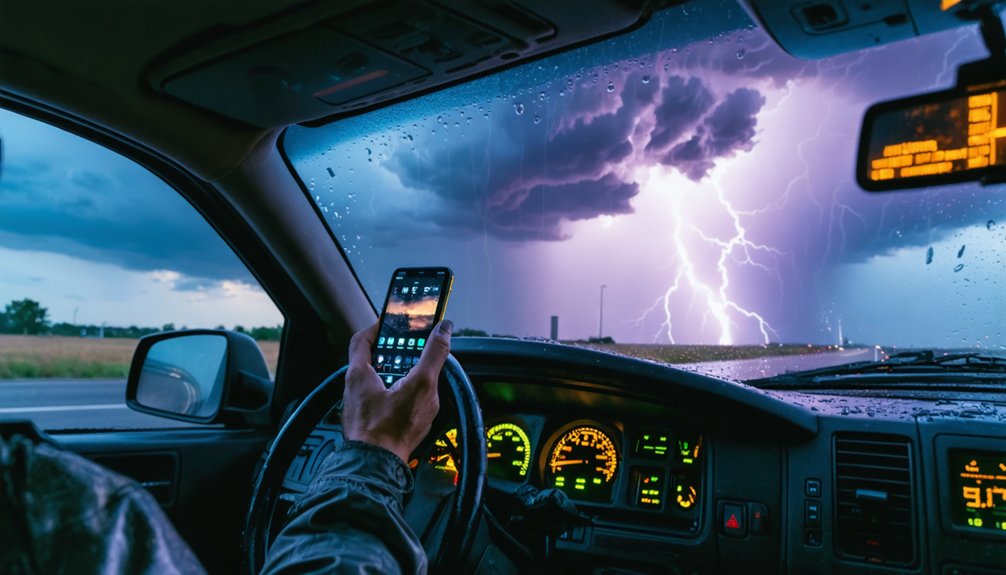
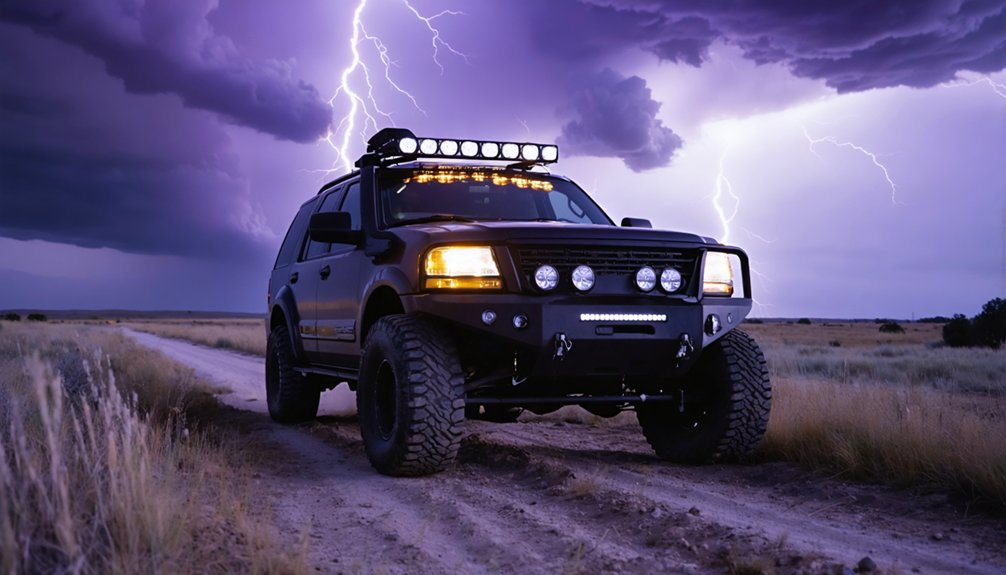
Keeping your chase vehicle mechanically sound starts well before storm season. You’ll need to inspect fluids, tires, brakes, and your electrical system regularly—not just once a year. Check your battery terminals, wiper blades, and tire pressure before every departure. Carry emergency repair supplies, a first aid kit, and backup power for your electronics. Each maintenance step directly reduces your risk during high-speed intercepts, and there’s much more to cover on each critical system.
Key Takeaways
- Inspect oil, coolant, and fuel filters before each chase season, replacing any worn or suspect components immediately.
- Clean battery terminals with baking soda solution and coat with petroleum jelly to ensure reliable electrical performance.
- Verify tire pressure, tread depth, and spare tire inflation before every departure to reduce hydroplaning and blowout risks.
- Keep the fuel tank full at all times, accounting for 20–50 mile gaps between stations in Plains terrain.
- Replace wiper blades every six months and apply rain-repellent windshield treatment for maximum visibility during storms.
Pre-Season Vehicle Checks Before Chase Season Begins
Before the chase season begins, you’ll want to inspect every critical system that sat dormant over the off-season. Storage degrades fluids, corrodes terminals, and weakens belts, so act before your first deployment.
Check oil, coolant, and fuel filter immediately after long idle periods.
After long idle periods, your first priority is oil, coolant, and fuel filter — don’t skip these checks.
Inspect battery terminals for corrosion, clean them with a baking soda and water solution, and protect them with petroleum jelly.
Examine hoses and belts for cracking or wear and replace anything suspect.
Restore wiper blades and headlight lenses to full operational condition.
Touch up vehicle paint where chips or rust have developed to prevent further deterioration in harsh field environments.
Maintain interior cleanliness to keep your workspace functional and gear accessible.
A prepared vehicle gives you the freedom to chase without mechanical limitations holding you back.
Storm Chasing Fluids to Check Before Every Departure
Before every departure, check your oil level to confirm it’s within the safe range, and plan to change it every 3,000 miles to prevent engine wear during high-demand chasing.
Inspect your coolant system for proper fluid level and condition, since extended highway runs and high-load situations raise overheating risk considerably.
Keep your fuel tank as full as possible before heading into storm regions, where gaps between stations can stretch 20–50 miles across the Plains.
Oil Level Check
Every chase day starts with a quick oil check before you leave the driveway. Pull the dipstick, wipe it clean, reinsert it fully, then pull it again. Your oil level should fall between the two marked lines. If it’s low, top it off using the correct oil viscosity specified in your owner’s manual — using the wrong grade compromises engine protection under high-load highway driving.
Beyond the level itself, inspect the oil’s condition. Dark, gritty oil signals it’s past due for a change. Most storm-chasing references recommend changing oil every 3,000 miles.
At each change, replace the oil filter to prevent contaminated flow from circulating through a freshly serviced engine. Don’t skip this check — engine failure on a remote Plains highway ends your chase immediately.
Coolant System Inspection
Coolant does three jobs on a chase day: it pulls heat away from the engine block, prevents overheating during sustained highway runs, and protects internal components from corrosion.
Neglecting your coolant system before departure limits your operational range and risks a breakdown far from the nearest service station.
Before every chase, execute these radiator maintenance checks:
- Verify the coolant reservoir level sits between the MIN and MAX markers when the engine is cold.
- Inspect the coolant color and clarity—discoloration or a milky appearance signals contamination requiring immediate attention.
- Schedule a full coolant flush at 30,000 miles to eliminate degraded fluid that no longer protects against corrosion or extreme temperatures.
Don’t let a preventable fluid failure cut your chase short.
Fuel Tank Monitoring
Once your coolant system checks out, shift your attention to fuel—the resource most likely to strand you if you underestimate demand. Plains chasing routes can stretch 20–50 miles between stations, so a half-full tank isn’t acceptable before departure. Top off whenever you’re below three-quarters.
Verify fuel gauge accuracy before each chase. A faulty sender unit can misread your actual reserve, leaving you confidently driving toward empty. If your gauge has shown inconsistencies, cross-reference it with a known fill calculation.
In extreme cold, consider tank insulation strategies to prevent fuel-line condensation and gelling in diesel vehicles. Keep fuel fresh if the vehicle sits between chase seasons, since stale fuel degrades injector performance. Treat stored fuel with a stabilizer and drain tanks before extended storage.
Tire and Brake Inspection for Wet Roads and Fast Exits
When storm chasing puts you on wet roads with fast-moving targets, your tires and brakes are your primary safety margin. Skipping inspection limits your ability to reposition fast or abort a bad intercept.
Before each chase, verify:
- Tire pressure and tread depth — Low pressure and worn tread increase hydroplaning risk on rain-soaked highways. Schedule tire rotation every 6,000 miles to maintain even wear.
- Brake pad thickness and responsiveness — Thin pads reduce stopping power on gravel and wet asphalt, exactly where you need control most.
- Spare tire inflation and repair supplies — Confirm your spare is road-ready and carry a plug-repair kit for field fixes.
Compromised tires or brakes eliminate your escape options when conditions deteriorate fast.
Battery, Alternator, and Charging Checks for Chase Electronics
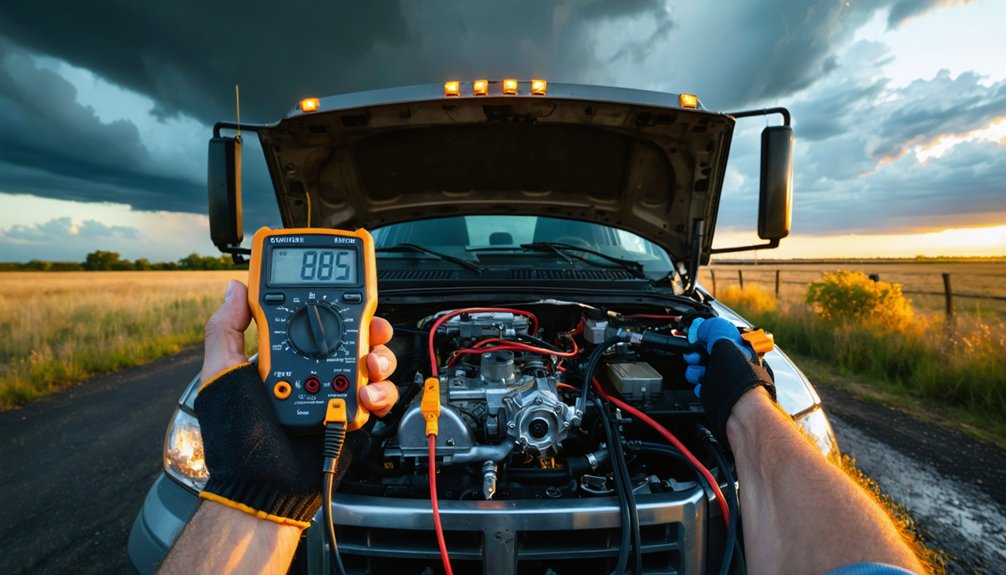
Mechanical readiness keeps you moving, but your electronics keep you informed — and they pull every bit of power from your vehicle’s electrical system. Before each season, inspect terminals for battery corrosion and clean them using a baking soda and water solution. Coat the terminals afterward with petroleum jelly to slow future buildup.
Verify alternator testing results show consistent output under full electronics load — a failing alternator will drain your battery mid-chase. Test every USB port, 12V outlet, and inverter connection for reliable delivery. Run an inverter rated at least 200W if you’re powering multiple devices simultaneously.
Weak charging infrastructure means dead GPS, dead comms, and dead radar — exactly when you need them most. Don’t leave this check until you’re already in the field.
Wipers, Headlights, and Rain Repellent for Storm Visibility
Visibility fails fast in a storm environment, and your wiper blades, headlights, and glass treatment are the first line of defense. Prioritize windshield maintenance and visibility accessories before every chase season to stay ahead of failures.
- Wiper blades — Replace every six months. Degraded rubber streaks water instead of clearing it, reducing reaction time in heavy rain.
- Headlights — Confirm full brightness and functionality. Carry at least one spare bulb since hail and debris can disable lighting mid-chase.
- Rain-repellent treatment — Apply a quality product to windshield glass before departure. It significantly improves water sheeting in downpours, reducing wiper dependency.
Keep your washer-fluid reservoir full at all times.
Combined, these three systems give you the visual control you need to make fast, accurate decisions in the field.
Emergency Kit Essentials Every Chase Vehicle Should Carry
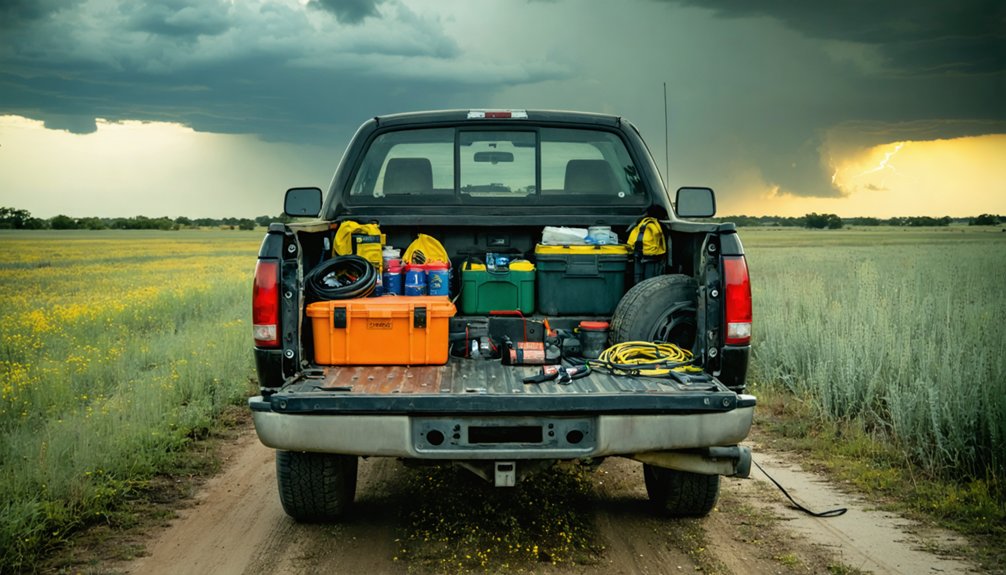
Your emergency kit should include a first aid kit, at least one flashlight, water, food reserves, and a fully charged communication device stocked and verified before each chase.
Pack a flat-repair kit with a plug tool, patches, and fix-a-flat as a minimum, and confirm your spare tire’s pressure before departure.
For power backup, carry an inverter rated at least 200 W along with backup batteries to keep your chase electronics running if your vehicle’s charging system becomes unreliable in the field.
First Aid Kit Basics
Even the most mechanically prepared chase vehicle becomes a liability if you don’t carry the right emergency supplies. First aid training isn’t optional—it’s operational infrastructure. Wound management in remote Plains terrain means you can’t wait for EMS response times that may exceed 30 minutes.
Equip your kit with these three non-negotiables:
- Hemostatic gauze and pressure bandages — controls severe bleeding before professional care reaches you
- Nitrile gloves and antiseptic wipes — prevents contamination during field wound management
- SAM splints and medical tape — stabilizes fractures sustained during rapid vehicle exits or debris impacts
Store the kit in a fixed, accessible location—not buried under gear. Every chase partner should know exactly where it’s and how to use it.
Flat Repair Supplies
Medical readiness keeps you functional after an incident—but a flat tire on a remote Kansas county road can strand you just as effectively as any injury. Stock your chase vehicle with a plug-repair kit, tire irons, and a portable 12V compressor rated for your tire volume. Verify your spare is inflated before every departure—don’t assume it’s ready.
Tire repair in the field moves faster when your tools are organized and accessible, not buried under gear. Carry fix-a-flat as a secondary option for slow leaks when a full plug isn’t practical.
Add emergency signaling equipment—road flares or LED triangles—so approaching traffic sees you during low-visibility conditions. On storm-chase routes, a stranded vehicle without visible warnings creates serious secondary hazards.
Emergency Power Backup
Power loss during a chase can shut down your GPS, radio, and weather apps simultaneously—so backup power isn’t optional equipment. Build a reliable emergency power system before you leave the driveway.
- Inverter capacity: Install an inverter rated at minimum 200W to handle simultaneous device loads without voltage drops.
- Backup batteries: Carry at least one fully charged portable battery bank rated 20,000mAh or higher to independently power phones, tablets, and handheld radios.
- Redundant charging ports: Test every USB port and 12V outlet before departure—dead outlets during active rotation leave you blind.
Verify your alternator handles the combined electrical demand of your chase electronics. Emergency power redundancy keeps your decision-making tools operational when conditions deteriorate fastest and reliable infrastructure disappears completely.
Chase Vehicle Safety Gear and Escape Route Planning
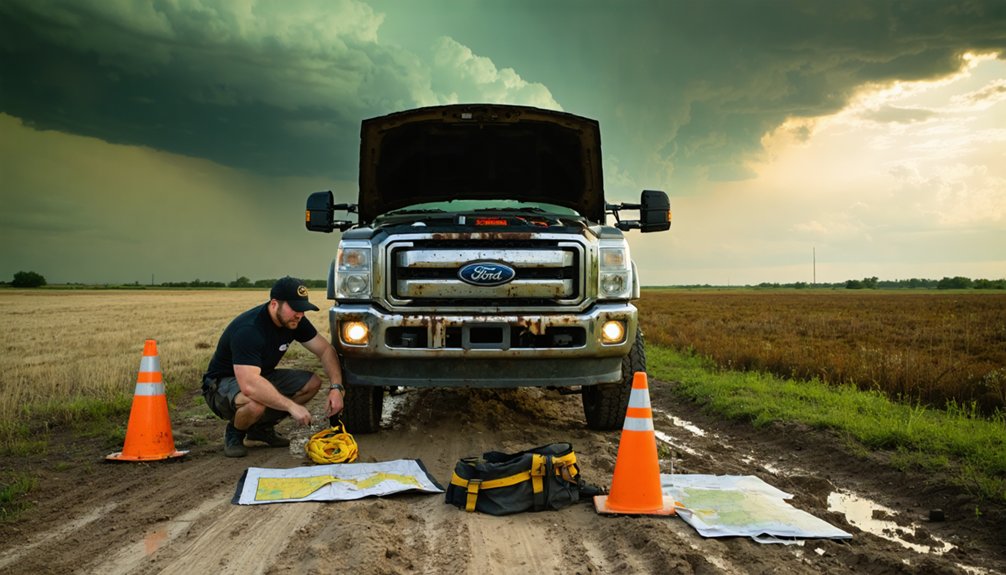
Before you head into the field, stock your chase vehicle with a first aid kit, flashlight, water, food reserves, backup batteries, and a charged communication device. Storm safety depends on preparation before departure, not improvisation in the field.
Maintain at least one to two miles from a confirmed tornado and never compromise that buffer. Vehicle security relies on your ability to exit fast, so identify two escape routes before committing to any position. Prioritize paved roads and intersections that preserve your directional options.
Avoid core punching, positioning near rotating wall clouds, or entering flooded roads. These decisions reduce your margin considerably.
Keep your fuel tank full because gaps between stations can stretch 50 miles across Plains terrain. Plan every position with an exit already confirmed.
Frequently Asked Questions
How Often Should Chase Vehicle Suspension Components Be Inspected or Replaced?
You should inspect suspension wear before every chase season and after rough terrain exposure. Schedule component replacement every 50,000 miles or sooner if you notice pulling, uneven tire wear, or compromised handling on unpaved roads.
What Type of All-Terrain Tires Work Best for Unpaved Storm-Chasing Roads?
“Grip the road or lose it.” You’ll want aggressive, mud-terrain tires with deep tread depth for unpaved chasing. Maintain proper tire pressure and choose reinforced sidewalls to handle rutted, debris-strewn terrain confidently.
Should Storm Chasers Carry a Portable Jump Starter for Remote Locations?
Yes, you should carry a portable jump starter for emergency preparedness in remote locations. It guarantees equipment reliability when you’re miles from help, complements your battery maintenance routine, and keeps you mobile during critical chase moments.
How Does Extreme Hail Impact Vehicle Insurance Coverage for Storm Chasers?
Extreme hail damage can complicate your insurance claims if your policy excludes high-risk storm activity. You’ll want to verify all-encompassing coverage applies during chases, document all damage thoroughly, and confirm your insurer won’t deny claims based on intentional exposure.
What Transmission Maintenance Is Recommended for High-Mileage Chase Vehicles?
“An ounce of prevention is worth a pound of cure”: change your transmission fluid regularly, ensuring proper gear lubrication. You’ll extend your high-mileage chase vehicle’s life, maintaining reliable performance when you’re racing toward freedom on open Plains roads.
References
- https://crazystormchasers.com/top-maintenance-tips-for-storm-chasing-equipment/
- https://stormtrack.org/threads/the-most-important-storm-chasing-tool.5082/
- https://insights.globalspec.com/article/16827/what-does-it-take-to-chase-tornadoes-the-right-car-of-course
- https://www.atms.unca.edu/cgodfrey/courses/swfex/pdf/ChasingSafety.pdf
- https://crazystormchasers.com/best-practices-for-storm-chasing-safety-engagement/
- https://www.youtube.com/watch?v=WxSgtsUhY5c
- https://en.wikipedia.org/wiki/Storm_chasing