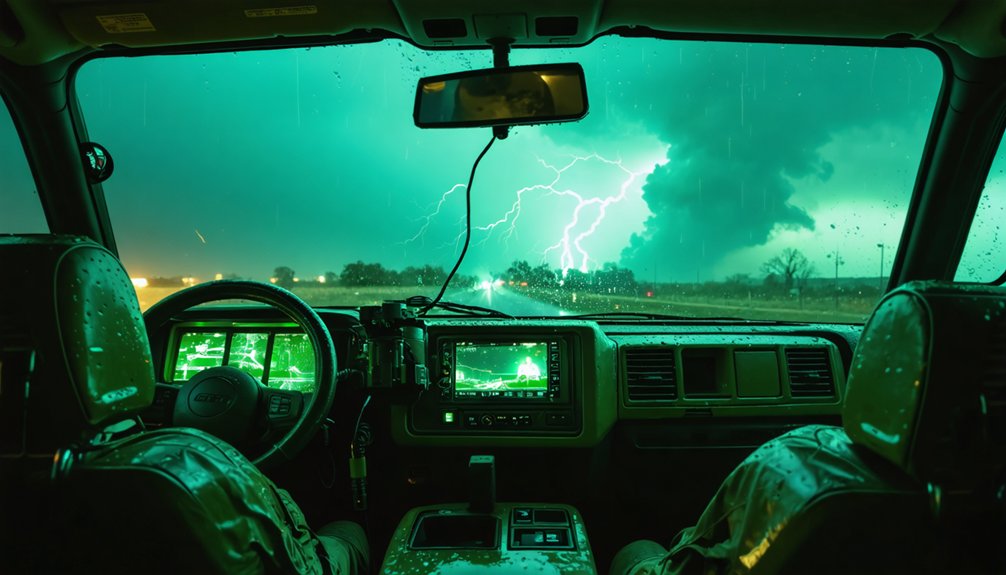
Keeping your storm chasing vehicle chase-ready means staying ahead of every potential failure point. You’ll want to check oil levels, tire pressure, brake fluid, and battery terminals before every chase. Replace your fuel filter and coolant around 30,000 miles, and rotate tires every 6,000 miles. Keep field repair supplies stocked, power systems charged, and communication gear updated. The full breakdown ahead covers everything you need to chase confidently all season long.
Key Takeaways
- Inspect oil level, coolant, fuel filter, and battery terminals regularly to ensure your vehicle remains reliable during storm chases.
- Check tire pressure, tread depth, and brake pad thickness before every chase to maintain safe vehicle handling.
- Replace wiper blades every six months and apply rain-repellent treatments to maximize visibility during heavy precipitation.
- Use portable power stations and signal boosters to keep communication and navigation devices consistently powered and connected.
- Restock first aid kits, carry a flat-repair kit, and verify all equipment functionality before each storm chase season.
Keep Your Engine and Fluids Chase-Ready
Before heading out on any chase, verify your oil level and inspect the air filter to guarantee your engine isn’t fighting unnecessary strain over long highway stretches.
Following proper oil change intervals—every 3,000 miles for older vehicles—keeps internal components protected during demanding pursuit days. Consistent fluid level monitoring covers more than oil; check your antifreeze and coolant regularly, replacing around 30,000 miles to prevent overheating in high-load conditions.
Your fuel filter deserves equal attention. Replacing it near the 30,000-mile mark reduces fuel-delivery failures in remote areas where help isn’t nearby.
Don’t overlook your battery terminals—corrosion restricts power flow. Clean terminals using a baking soda and water solution, then apply a thin petroleum jelly coating to prevent future buildup and keep your electrical system dependable when it matters most.
Tire and Brake Checks Before Every Storm Chase
Every chase begins and ends on your tires, so inspect pressure and tread depth before you leave the driveway. Improper tire pressure accelerates tire wear and compromises handling on wet pavement.
Check tire tread using a depth gauge—worn tread reduces grip during emergency maneuvers. Schedule tire rotation every 6,000 miles to maintain even wear patterns and preserve tire alignment.
Worn tread costs you control when it matters most—rotate tires every 6,000 miles and check depth before every chase.
Don’t neglect your brakes. A thorough brake inspection should confirm adequate brake pad thickness and consistent brake responsiveness across all four wheels.
Check brake fluid levels regularly, since low fluid directly degrades brake performance in high-demand situations. Soft pedal feel signals air in the lines—bleed them immediately.
Rapid stops near precipitation zones are inevitable, so your braking system must perform without hesitation every time.
Protect Your Windshield and Exterior From Storm Damage
Storm chasers take repeated abuse from hail, debris, and driving rain, so maintaining your windshield and exterior isn’t optional—it’s operational.
Replace wiper blades every six months and keep washer fluid topped off, particularly on dusty backroads during warm chase seasons.
Apply rain-repellent treatments like Rain-X for improved windshield protection and forward visibility during active precipitation.
Keep headlights and exterior lenses clean and restored to preserve reliable night operation.
For exterior coatings, consider applying protective film to high-impact areas—hood leading edges, mirror housings, and A-pillars—before each season begins.
If hail or debris breaks glass mid-chase, clear plastic film and tape can temporarily seal the opening and reduce rain intrusion until proper repairs are completed.
Stay ready before conditions force your hand.
Field Repair Supplies Every Storm Chaser Needs
You’ll want a restocked first aid kit, a compact air compressor with flat-repair kit, and extra fuel canisters secured in your vehicle before each chase season.
Keep a fire extinguisher within reach to handle electrical faults, overheating, or fuel-related emergencies that can occur in remote storm environments.
These supplies reduce your dependence on distant service stations and let you resolve critical issues in the field without losing position on a developing storm.
First Aid Kit Essentials
A well-stocked first aid kit ranks among the most critical field repair supplies a storm chaser can carry, yet it’s often the item most neglected during pre-season prep.
Before each season, audit your kit contents systematically. Replace expired medical supplies, restock bandages, and confirm you’ve got tourniquets, antiseptics, trauma dressings, and an emergency blanket.
Injury prevention starts before you’re in the field, so review emergency protocols annually and consider responder training that covers triage techniques specific to storm-related trauma.
Portable equipment should stay organized and immediately accessible, not buried under gear. Seal your kit in a waterproof container, label it clearly, and mount it within reach. A kit you can’t access quickly during an emergency is functionally useless.
Tire And Fuel Backup
Flat tires and empty fuel tanks have ended more chase days than severe weather ever will, so treating both as probable failures rather than remote possibilities changes how you pack.
Carry a portable air compressor, a plug-repair kit, and verify your spare’s inflation before each deployment — tire maintenance isn’t optional when gravel roads are your highway.
Check tread depth and sidewall condition regularly, since compromised rubber fails faster under load and heat.
For fuel efficiency, monitor your consumption patterns across terrain types and carry a certified fuel container sized for your longest anticipated gap between stations.
Remote chase zones offer no margin for miscalculation. Cash reserves guarantee you can fuel up even when card readers fail.
Plan aggressively, pack redundantly, and stay mobile.
Fire Extinguisher Importance
When a vehicle fire ignites in the field, response time determines whether you drive home or watch your equipment burn — so carrying a fire extinguisher isn’t optional. Overheating engines, electrical faults, and fuel leaks all create real fire safety risks during extended chase days.
Mount a dry-chemical ABC-rated extinguisher within arm’s reach of the driver’s seat. Secure it with a proper bracket — loose extinguishers become projectiles during hard stops. Inspect the pressure gauge monthly and replace any unit showing low charge.
Emergency preparedness means knowing how to deploy it instantly, not fumbling with instructions mid-crisis. Pull the pin, aim at the base of the flame, and sweep side to side.
Practice the motion before storm season begins so your response is automatic.
Power Systems That Won’t Die Mid-Chase
Keeping your power systems functional throughout a full chase day requires deliberate preparation before you leave the driveway. Inspect every charging port, accessory outlet, and power inverter before storm season begins.
You’ll want robust backup solutions in place because laptops, radios, cameras, and phones drain capacity fast during extended operations.
Effective power management means prioritizing devices by criticality. Communication gear and navigation tools come first.
Prioritize power by criticality — communication and navigation gear must stay charged above everything else.
Portable power stations with high-capacity lithium-ion batteries handle multi-device loads reliably when grid access disappears for hours. Secure your inverters and power strips firmly to prevent damage from hard braking or sudden directional changes.
Dedicated hotspots, backup chargers, and portable stations together create a layered system that keeps you operational and independent regardless of how long the chase runs.
Maintain Your Storm Chasing Electronics All Season
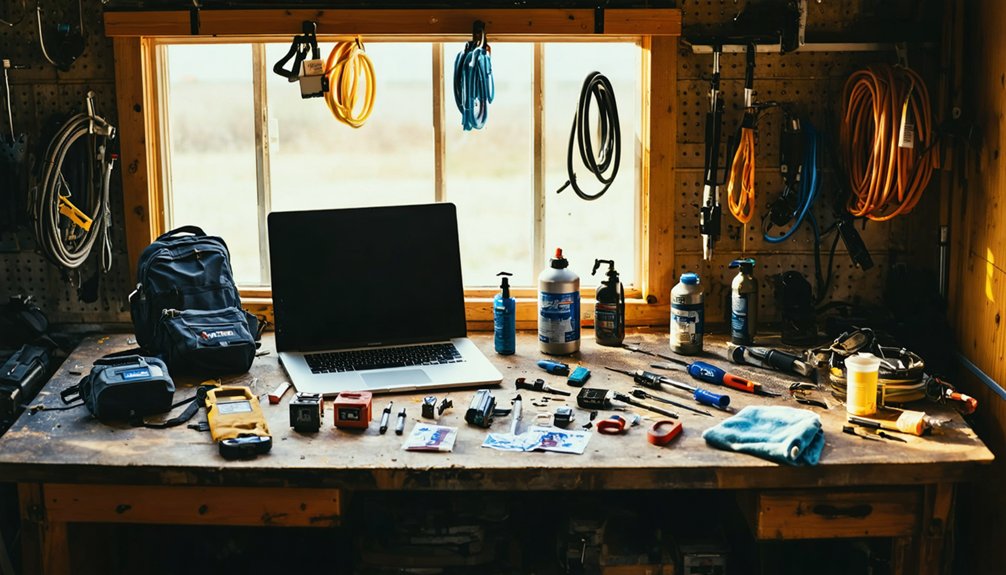
Real-time radar tools, NOAA weather radios, GMRS handhelds, and scanner antennas demand consistent attention throughout the entire chase season, not just during pre-season checks.
Inspect antenna mounts weekly for loosening caused by road vibration. Prioritize software updates for radar and navigation apps before each chase, since outdated builds introduce data gaps at critical moments.
Implement reliable charging solutions by verifying that all USB ports and inverters deliver consistent output. Rotate battery maintenance cycles to prevent capacity degradation across multiple devices.
Deploy signal boosters where carrier coverage weakens, keeping mobile data stable during active pursuit.
Invest in device protection through padded cases and secure mounting brackets. Add communication enhancements and electronic upgrades strategically as technology improves.
Pack portable accessories like compact hubs and backup cables so you’re never left scrambling when gear fails in the field.
Weather Monitoring and Communication Gear That Earns Its Spot
Protecting your electronics means little if the gear feeding you storm data can’t hold up under field conditions. Real-time radar technology and tracking software require stable connections, so inspect dedicated hotspots regularly for firmware updates and signal enhancement capabilities.
Don’t rely solely on carrier networks; GMRS radios and NOAA weather radios provide storm alerts when mobile data fails completely.
Verify device compatibility across all platforms before heading out, ensuring laptops, phones, and radios communicate without conflict. Gear organization matters here — loose antennas and unsecured mounts degrade signal reliability and data reliability under road vibration.
Check every antenna connection for corrosion and tightness. Diversify your communication methods so no single failure leaves you blind. Redundancy isn’t paranoia — it’s the difference between repositioning safely and getting caught in the wrong place.
Your Complete Pre-Season Storm Chasing Checklist
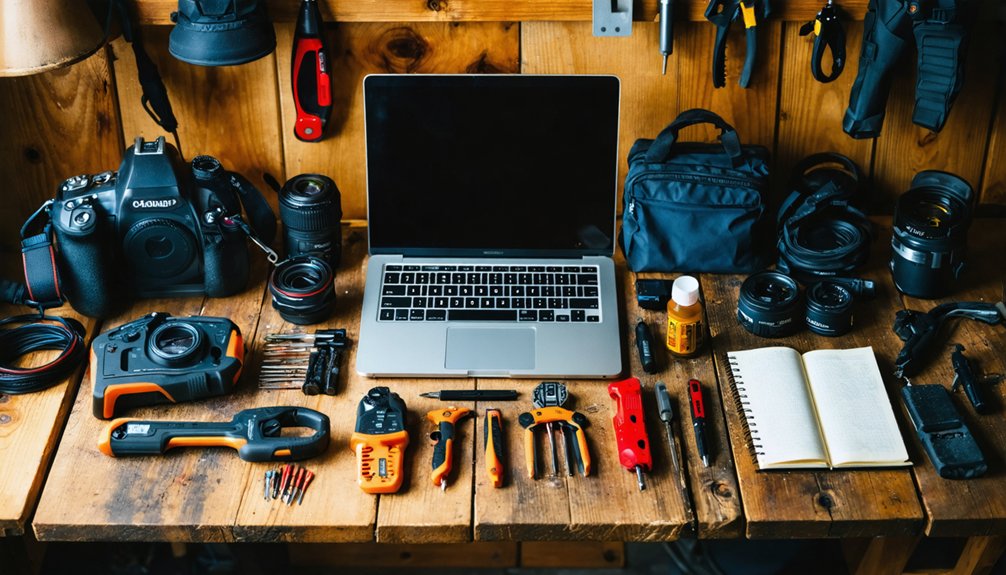
Before your first chase of the season, you’ll need to run through both vehicle readiness checks and gear inspection points with the same discipline you’d apply to any technical pre-mission protocol.
Start with your engine fundamentals — oil level, coolant, fuel filter, and battery terminals — then move outward to tires, brakes, and spare tire condition before you ever load a single piece of electronics.
Once your vehicle systems check out, shift your focus to power solutions, communication equipment, and emergency supplies, verifying that every component is functional, stocked, and secured for extended field operation.
Seasonal Vehicle Readiness Checks
Storm season demands that you complete a thorough vehicle readiness check well ahead of your first chase day.
Pull your vehicle from storage and inspect every critical system before committing to any route. Check oil levels, coolant, and fuel filter condition immediately, since fluids degrade during extended storage periods.
Inspect battery terminals for corrosion and clean them using a baking soda and water solution before applying petroleum jelly.
Use pre-season downtime to execute seasonal upgrades, including fresh wiper blades, restored headlight lenses, and rain-repellent treatments on all glass surfaces.
Verify tire pressure, tread depth, and spare tire inflation before your first departure. Confirm that brakes respond cleanly and that all charging ports and accessory outlets function correctly.
Completing these checks early keeps you mobile and independent throughout the entire chase season.
Essential Gear Inspection Points
A complete pre-season gear inspection covers every system your chase operation depends on, so treat it as a structured checklist rather than a casual walkthrough.
Gear longevity depends entirely on your maintenance frequency and how systematically you approach each category before season launch.
- Power systems: Verify inverters, portable stations, and charging ports function under real load conditions.
- Communication gear: Test GMRS radios, hotspots, and scanner antennas for signal reliability and secure mounting.
- Emergency supplies: Restock first aid kits, confirm fire extinguisher pressure, and check air compressor operation.
- Visibility equipment: Inspect wiper blades, washer fluid levels, and headlight lens clarity for night readiness.
Document every finding, schedule corrections immediately, and don’t chase until each item clears your checklist.
Frequently Asked Questions
How Often Should Storm Chasers Replace Their Vehicle’s Cabin Air Filter?
You should replace your cabin filter every 15,000–25,000 miles. Cabin filter maintenance directly impacts air quality importance inside your vehicle, ensuring you’re breathing clean air during long, dusty storm chasing runs across remote terrain.
Can Storm Chasing Vehicle Insurance Cover Hail or Tornado Damage?
Your insurance policy details determine storm damage coverage eligibility. You’ll need to verify that your extensive plan explicitly covers hail and tornado-related damage, as standard policies often exclude professional storm chasing activities from protection.
What Clothing and Personal Safety Gear Should Storm Chasers Always Carry?
Like armor for a warrior, you’ll need weather appropriate footwear, layered clothing, helmets, and essential first aid kits. Pack gloves, eye protection, and high-visibility gear so you’re always ready when storms strike.
How Should Storm Chasers Safely Store Extra Fuel Inside Their Vehicle?
Store extra fuel in approved, sealed containers secured in your vehicle’s exterior cargo area when possible. Follow fuel storage safety precautions by ensuring proper ventilation, avoiding heat sources, and keeping containers upright to prevent dangerous leaks during travel.
Are There Any Recommended Dash Cam Setups Specifically for Storm Chasing?
Coincidentally, the best dash cam features align perfectly with storm chasing needs. You’ll want wide-angle lenses, GPS logging, and loop recording. For installation tips, mount it securely to avoid vibration interference while capturing intense storm footage clearly.
References
- https://stormtrack.org/threads/the-most-important-storm-chasing-tool.5082/
- https://crazystormchasers.com/storm-chasing-gear-checklist-for-beginners/
- https://store.sirui.com/blogs/guides/essential-equipment-for-storm-chasing-guide-for-2025
- https://stormtrack.org/threads/recommended-chaser-equipment-list.23013/
- https://www.youtube.com/watch?v=IUIhoR0HRGM
- https://www.benholcomb.com/storm-chasing/equipment/
- https://www.youtube.com/watch?v=Sr2lz72ZYwM
- https://svinews.com/2024/featured/97765/things-every-storm-chaser-needs-in-their-truck/
- https://www.facebook.com/groups/1821133111780534/posts/2032104607350049/
- https://www.reddit.com/r/stormchasing/comments/1o53b49/worn_gear_for_storm_chasing/