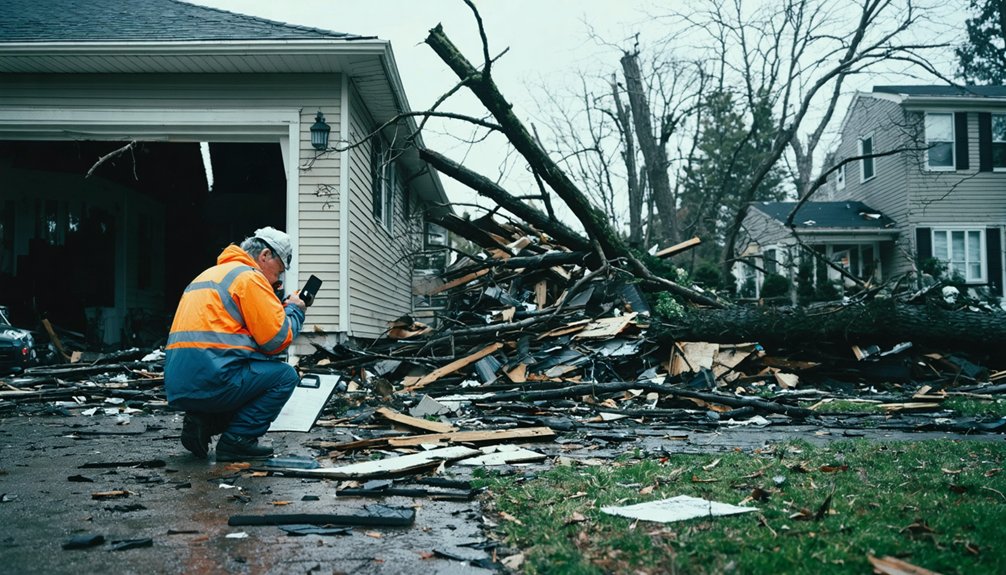
When disaster strikes your community, local authorities are your first line of defense. They deploy police, fire, and medical teams, activate emergency plans, and coordinate resources before state or federal help arrives. They’ll warn you through alerts, manage evacuations, open shelters, and support vulnerable residents. They also coordinate with outside partners and lead long-term recovery efforts. Keep exploring to understand exactly how each part of this process works.
Key Takeaways
- Local authorities serve as first responders, leveraging community knowledge to allocate resources like personnel and equipment effectively during emergencies.
- They develop tailored emergency response plans through ongoing risk assessments, regular training, and community involvement before disasters occur.
- During emergencies, they deploy response teams, establish situational awareness, and communicate alerts and protective guidance to the public.
- Local authorities coordinate evacuation, shelter, and welfare support, prioritizing vulnerable populations such as the elderly and disabled.
- They lead recovery efforts, restoring critical services, managing environmental cleanup, and connecting residents with financial and psychological support.
Why Local Authorities Lead Emergency Response
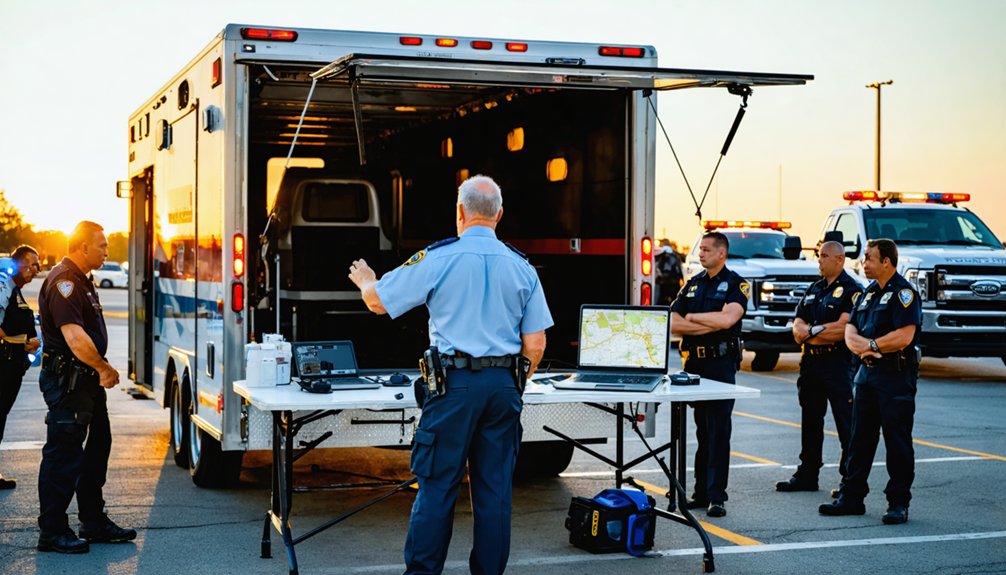
When an emergency strikes, local authorities are the first to respond—and for good reason. They know your community, its risks, and its people better than any distant agency ever could. That local knowledge drives smarter resource allocation—getting the right personnel, equipment, and support where they’re needed most, without delay.
Local authorities also maintain established relationships with police, fire, medical services, and public works teams. When conditions deteriorate fast, those connections matter. They’re not building partnerships from scratch—they’re activating ones that already exist.
Community engagement strengthens this further. Local leaders communicate directly with residents, coordinate protective actions, and sustain public trust during fast-moving situations. You benefit from leadership that’s accountable, accessible, and already embedded in the place you call home.
How Local Authorities Prepare Before Disasters Strike
Before a disaster ever strikes, your local authorities are already working to identify risks and build response plans tailored to your community’s specific hazards.
They conduct regular training and exercises to test those plans, exposing gaps and sharpening coordination across agencies.
You benefit directly from this preparation when an actual emergency demands a fast, organized response.
Risk Assessment And Planning
Effective emergency management starts long before a disaster strikes. Local authorities identify the hazards most likely to affect your area, assess their potential impact, and build plans that reflect your community’s specific risks. This process isn’t bureaucratic box-ticking — it’s the foundation that determines how fast and effectively your community recovers.
Planning integrates emergency finance strategies to guarantee resources are available when they’re needed most, without delays that cost lives. It also depends on community engagement, because plans that don’t reflect local knowledge, values, and vulnerabilities are plans that fail under pressure.
Authorities review and update these plans regularly through training, exercises, and evaluation. You benefit directly when your local government treats risk assessment as an ongoing discipline rather than a one-time document.
Training And Preparedness Exercises
Plans mean nothing if the people responsible for executing them haven’t practiced. That’s why local authorities run regular training programs and preparedness exercises to sharpen response capability before disasters strike.
These exercises test everything — command decisions, resource allocation, interagency coordination, and communication systems. When gaps surface during a drill, officials can fix them without lives on the line. You benefit directly from that discipline.
Community engagement is also central to preparedness. Authorities don’t just train internal teams; they involve residents, businesses, and volunteer organizations so everyone understands their role when conditions deteriorate.
The more people who know what to expect, the faster and more effectively a community responds.
Training isn’t optional — it’s the mechanism that turns written plans into executable action. Without it, even the best emergency framework collapses under pressure.
The First Hours: How Local Authorities Coordinate the Response
When an emergency strikes, local authorities are typically the first level of government to act. They deploy police, fire, emergency medical services, and public works crews while establishing situational awareness across the affected area.
You’ll see them activate emergency operation plans, assign resources, and coordinate actions across multiple agencies simultaneously.
Risk communication becomes critical in these first hours. Authorities push public alerts, issue protective action guidance, and update conditions as they change.
Strong community engagement ensures residents receive accurate information quickly, reducing panic and confusion.
Local leaders maintain command until the situation stabilizes or external support becomes necessary. They track what’s working, adjust deployment as needed, and begin demobilization when conditions improve.
Every decision in those first hours shapes how effectively the broader response unfolds.
How Local Authorities Warn and Inform the Public
When an emergency strikes, you’ll likely receive warnings through public alert systems such as sirens, emergency broadcast messages, text alerts, or social media updates from local authorities. These systems give you critical information fast, helping you understand what’s happening and how serious it is.
Local authorities also issue protective action guidance—telling you whether to evacuate, shelter in place, or take other specific safety measures based on the threat you’re facing.
Types of Public Alerts
During emergencies, local authorities use several types of public alerts to warn and inform affected communities. Knowing these alert types helps you respond quickly and protect yourself.
- Mass notification systems — Authorities send automated calls, texts, and emails directly to residents in affected zones.
- Broadcast alerts — Emergency messages interrupt radio and television programming to deliver urgent, real-time warnings.
- Outdoor warning sirens — Audible signals alert people who are outside or unreachable by digital systems.
Beyond active emergencies, local authorities strengthen awareness through community outreach programs and emergency drills, ensuring you already understand alert signals before a crisis hits.
You won’t have time to research warning systems mid-disaster. Stay informed now, so when alerts activate, you can act immediately and decisively.
Protective Action Guidance
You’re expected to act on this guidance quickly. Delays cost lives.
Local officials don’t issue these directives arbitrarily — they’re built on real-time situational data, coordinated with emergency responders, and designed to protect your ability to make informed, immediate decisions when it matters most.
How Local Authorities Manage Evacuation and Shelter
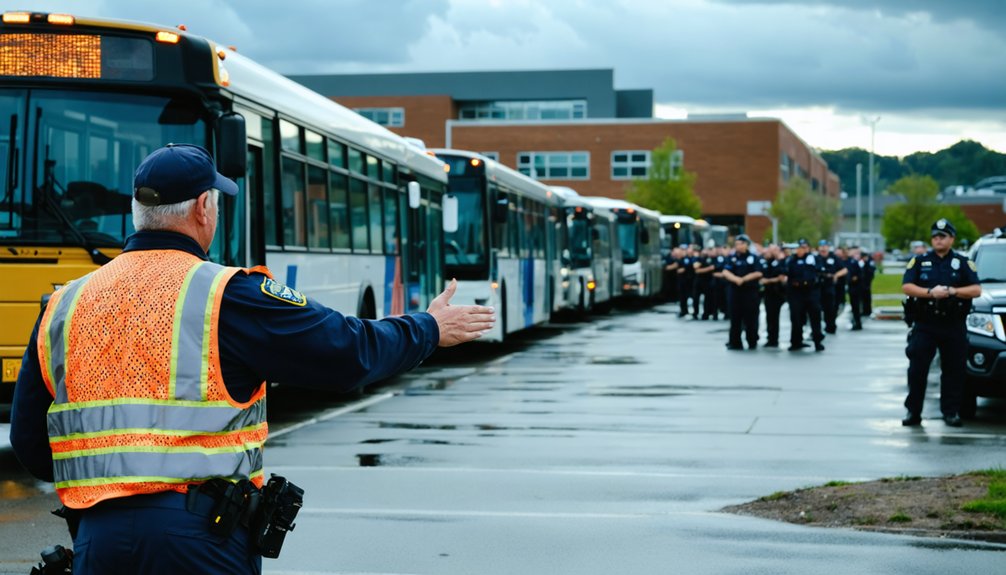
As emergencies unfold, local authorities activate evacuation centers and rest centers to shelter displaced residents. They coordinate evacuation logistics and shelter management to keep you safe and informed throughout the process.
Here’s how they manage it:
Here’s how local authorities take action to keep displaced residents safe, supported, and informed during emergencies.
- Open evacuation centers – Local authorities designate and staff shelter facilities, ensuring you have immediate access to safety when conditions deteriorate.
- Coordinate welfare support – Emergency social workers mobilize to assist individuals, families, and vulnerable populations with food, health services, and psychological support.
- Manage public health needs – Authorities address environmental health concerns, including contamination control, to protect everyone sheltering in place.
You retain the right to know where to go and what to do. Local authorities maintain clear communication so your decisions stay informed and timely.
How Local Authorities Support Vulnerable People
Sheltering displaced residents is only part of the picture — some people need more targeted support before, during, and after an emergency. Local authorities identify vulnerable populations early, using community outreach to locate individuals who may lack the means or capacity to respond independently.
You’ll find that effective resource allocation directs personnel, services, and supplies toward those with the highest need — elderly residents, people with disabilities, and families in crisis. Emergency social workers mobilize quickly to provide psychological support, practical assistance, and referrals to longer-term services.
Local authorities don’t step back once the immediate threat passes. They continue supporting affected individuals through public health recovery, environmental safety measures, and sustained welfare coordination — ensuring no one gets left behind simply because they’d fewer resources to start with.
How Local Authorities Work With Outside Partners
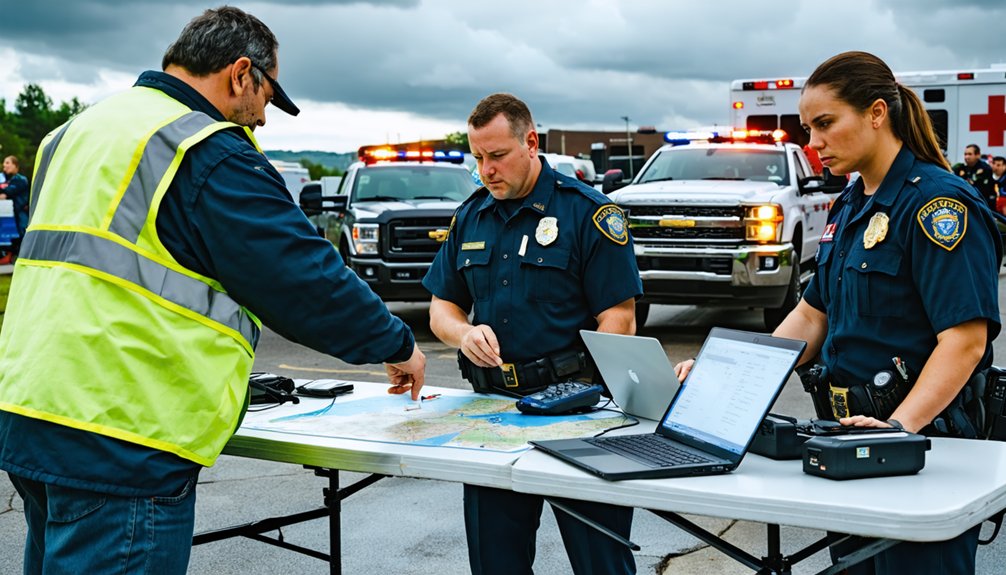
When a crisis exceeds local capacity, authorities don’t manage it alone — they activate formal partnerships with state agencies, federal departments, neighboring jurisdictions, and essential service providers. Community partnerships and resource sharing form the backbone of an effective, scalable response.
Here’s how outside coordination typically works:
- Mutual aid agreements allow neighboring jurisdictions to share personnel, equipment, and expertise quickly.
- State and federal escalation brings additional funding, specialized teams, and command support when local resources fall short.
- Private and voluntary sector integration expands capacity through NGOs, utilities, and community organizations already embedded in your area.
You benefit directly when these relationships are built before disaster strikes — not improvised during one.
When Local Authorities Escalate to Higher Government
Local authorities handle most emergencies independently — but once an incident outpaces available resources, personnel, or expertise, escalating to higher government becomes a necessary and structured step.
Most emergencies start local — but some grow beyond what local resources alone can handle.
You trigger escalation when local resource allocation can no longer meet operational demands. At that point, you formally request support from state or federal agencies, providing clear situational data to justify the need.
Escalation doesn’t mean surrendering control — it means expanding capacity while maintaining local leadership. You continue coordinating community engagement, keeping residents informed and involved throughout the progression.
Higher government agencies bring additional funding, personnel, and specialized equipment, but you remain the primary point of contact for your community.
Effective escalation depends on pre-established protocols, strong communication channels, and documented incident information that external partners can act on immediately.
How Local Authorities Lead Recovery and Rebuilding
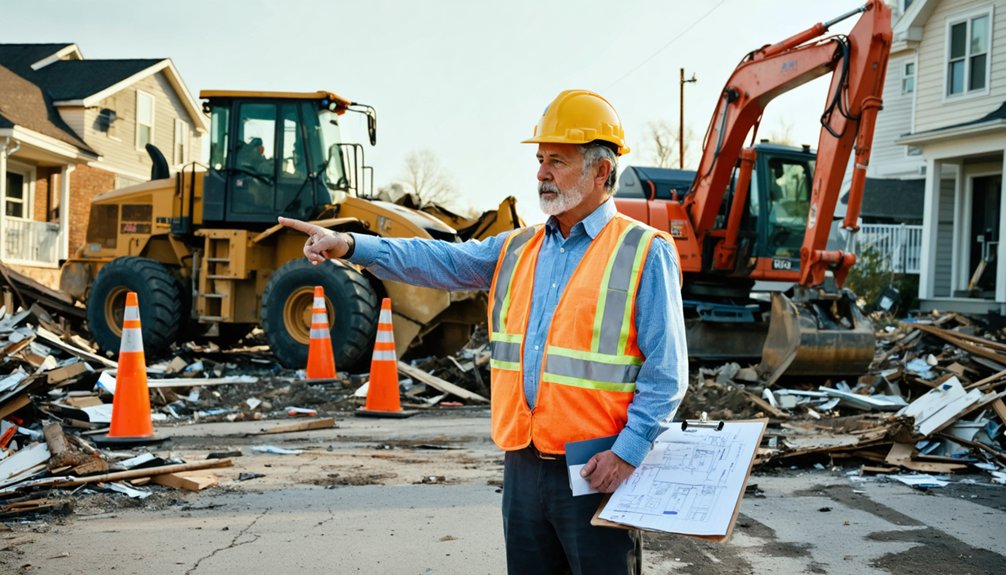
Once the immediate threat subsides, you shift your focus from response operations to recovery — coordinating cleanup, restoring essential services, and stabilizing the community.
Recovery isn’t passive; it demands active leadership to rebuild both community resilience and infrastructure resilience.
Your recovery priorities typically follow this sequence:
- Restore critical services — reopen roads, utilities, and public health systems so residents regain independence quickly.
- Coordinate environmental cleanup — manage contamination control and debris removal to protect public safety.
- Support business and community continuity — help local institutions reopen, reducing long-term economic disruption.
You also connect affected residents with social, psychological, and financial support.
Every decision you make during recovery shapes how well your community withstands the next crisis — so act deliberately, transparently, and without delay.
Frequently Asked Questions
How Are Local Authority Emergency Managers Trained and Professionally Qualified?
Like Caesar’s legions drilling before battle, you’ll pursue emergency training through exercises, simulations, and interagency drills. You earn professional qualifications via accredited programs, certifications, and continuous evaluation—sharpening your skills to lead freely and effectively.
What Legal Powers Do Local Authorities Have During a Declared Emergency?
During a declared emergency, you’ll find local authorities hold legal authority to enforce evacuations, restrict access, commandeer resources, and coordinate responders. These emergency powers let them act swiftly while remaining accountable to the communities they serve.
How Do Local Authorities Fund Emergency Preparedness and Disaster Response Operations?
Like fuel in an engine, budgets power community resilience. You’ll find local authorities fund operations through government allocations, grants, and partnerships. They drive smart resource allocation, ensuring every dollar strengthens preparedness and disaster response capacity.
Can Residents Hold Local Authorities Accountable for Poor Emergency Management Decisions?
Yes, you can hold local authorities accountable by demanding transparency in decision-making, attending public forums, and driving community engagement. Vote, file complaints, and use freedom-of-information requests to scrutinize emergency management decisions that affect your community.
How Do Local Authorities Evaluate Their Performance After an Emergency Ends?
Over 70% of agencies use after-action reviews. You’ll find local authorities evaluate performance by analyzing community engagement, reviewing resource allocation decisions, identifying gaps, conducting debriefs with responders, and updating emergency plans to strengthen future response effectiveness.
References
- https://www.blackberry.com/en/secure-communications/insights/glossary/emergency-management-local-government
- https://www.local.gov.uk/topics/severe-weather/flooding/emergency-planning/roles-and-responsibilities
- https://dlg.colorado.gov/news-article/state-and-local-government-roles-in-emergency-response
- https://www.uncdf.org/article/5543/first-responders-local-governments-in-emergencies-and-crisis-management
- https://www.nlc.org/article/2023/09/01/local-leaders-role-before-during-and-after-disasters/
- https://www.civicplus.com/blog/ps/local-government-emergency-response-and-routine-communications/
- https://www.slideshare.net/slideshow/the-role-of-local-government-in-emergency-response-090107/22764222
- https://assets.publishing.service.gov.uk/government/uploads/system/uploads/attachment_data/file/86391/ha_rolesandresponsibilities.pdf
- https://www.fema.gov/pdf/emergency/nrf/PartnerGuideLocal.pdf