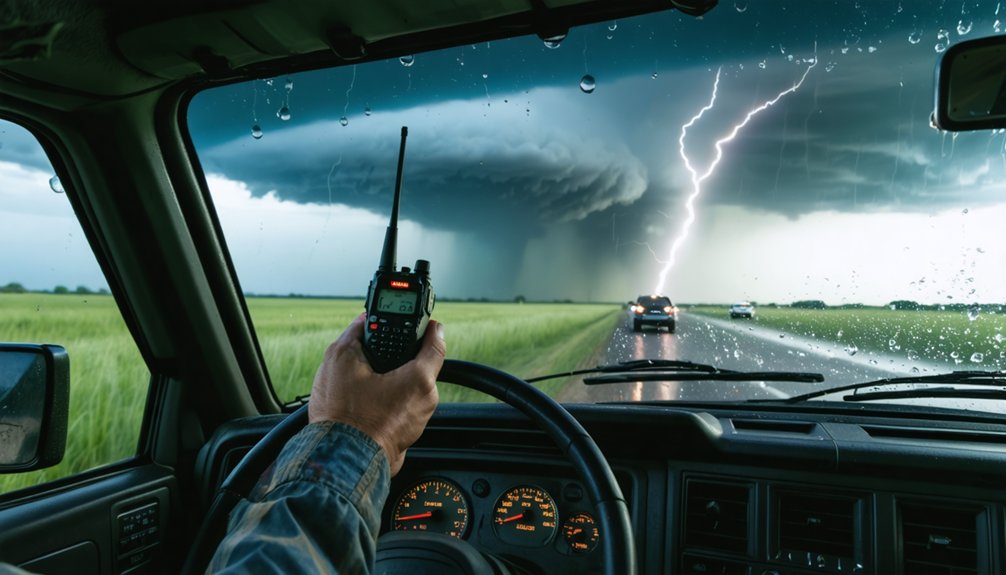
When a tornado threatens your RV, you’ll want to know your five best shelter options: campground concrete structures like bathrooms and clubhouses, public storm shelters found through FEMA’s app, roadside stops like truck stops or hotel lobbies, low-lying ditches when no building is reachable, and reinforced interior spaces within your RV as a last resort. Scout shelter locations before storms develop—your preparation today determines your survival tomorrow, and there’s much more to know about each option.
Key Takeaways
- Campground concrete structures like bathrooms and clubhouses are the safest shelter options, prioritizing interior rooms without windows.
- Download FEMA’s app or check local emergency websites to locate nearby public storm shelters in advance.
- Truck stops, rest stops, and hotel lobbies provide solid roadside shelter when campground facilities are unavailable.
- If no buildings are accessible, abandon the RV and lie flat in a low-lying ditch.
- Inside the RV, retract awnings, shut off propane, and shelter in a central hallway using blankets for debris protection.
Campground Concrete Structures Are Your Best Tornado Shelter
When a tornado warning hits your campground, the concrete structures on-site are your safest immediate option. Concrete durability makes these buildings capable of withstanding violent winds that would destroy your RV instantly. Head directly to the campground’s bathroom facilities, clubhouse, or community building the moment warnings sound.
Once inside, prioritize interior rooms without windows. Basement levels beneath concrete community buildings offer the lowest, most protected position available. If no basement exists, find a windowless interior room, a stairwell, or a solid doorway within the structure. Crouch under heavy concrete tables if the room lacks other cover.
Storm preparedness means you’ve already identified these locations before severe weather arrives. Scout every new campground immediately upon arrival so you’re never scrambling when seconds count.
How to Find Public Storm Shelters Near Any RV Park
Campground concrete structures are your first line of defense, but knowing where public storm shelters sit beyond the campground boundary gives you backup options when you’re traveling between stops or camping somewhere without solid on-site buildings.
Download storm shelter maps through FEMA’s app or your county’s emergency management website before you arrive anywhere new. These public shelter resources identify municipal shelters, school buildings with reinforced interior rooms, and libraries with basement levels within miles of your location.
Before arriving anywhere new, download storm shelter maps through FEMA’s app or your county’s emergency management website.
Truck stops and rest stops along major highways also provide enclosed interior areas when severe weather catches you mid-drive.
Search “storm shelter near me” on Google Maps for real-time results. Locating these options before storms develop keeps you decisive and mobile rather than scrambling for answers when minutes matter most.
Roadside Shelter Options for RV Travelers Caught in a Storm
Getting caught between destinations during a severe storm puts you in one of the most vulnerable positions as an RV traveler. Roadside safety depends on quick, smart decisions when severe weather strikes unexpectedly.
Pull into the nearest truck stop, rest stop, or gas station immediately and seek their enclosed interior spaces. These facilities offer concrete or reinforced structures that provide real protection. Hotel lobbies and restaurant interiors with concrete frameworks are equally solid options worth considering.
If no buildings are accessible, storm preparedness means knowing your last resort: abandon your RV and lie flat in a low-lying ditch or depression far from trees and power lines.
Never shelter under overpasses — wind tunneling dramatically increases danger there. Distance from your vehicle matters more than staying comfortable inside it.
Low-Lying Ground Options When No Building Is Reachable
Sometimes, no building is within reach when severe weather closes in fast, and you’ll need to act on terrain alone. In these situations, ditch safety becomes your priority. Locate the lowest ground available — a roadside ditch, culvert, or natural depressions between hills can reduce your exposure to violent winds considerably.
Abandon your RV immediately if a tornado is confirmed nearby. Lie flat in the lowest point you can find, cover your head with your hands, and stay away from trees, power lines, and standing water. Natural depressions aren’t perfect shelter, but they place you below the wind’s strongest force.
Avoid underpasses entirely — they create dangerous wind tunnels. Flat, open low ground away from debris hazards remains your safest option when structures simply aren’t accessible.
What to Do Inside Your RV If You Can’t Reach Shelter
When no shelter is reachable and a storm is closing in, your RV becomes your last resort — not a safe one, but manageable if you act fast.
Retract your awnings immediately, close every window and vent, and shut off propane and shore power. These steps reduce RV safety risks from surges, pressure buildup, and flying debris.
Move to the interior section with the most structural support — typically a central hallway or bathroom area — and stay low.
Position yourself in the most reinforced area of your RV — a central hallway or bathroom — and stay low.
Keep your emergency supplies within arm’s reach: weather radio, flashlight, first aid kit, and water. Cover yourself with blankets or a mattress to shield against debris.
Never shelter under an overpass or near tall trees. Stay down and stay aware until the storm fully passes.
Frequently Asked Questions
What Should I Pack in an Emergency Bag for Tornado Preparedness?
For your tornado emergency supplies packing checklist, you’ll want a weather radio, first aid kit, flashlight, and water. Don’t forget medications, important documents, and phone chargers. You’re prepared when you’ve packed smart and stay ready to move fast.
How Do I Secure My RV Before a Tornado Warning Is Issued?
Like a turtle retreating into its shell, you’ll want to retract awnings, close vents, shut windows, disconnect shore power, and turn off propane for tornado safety — smart RV insurance starts with preparation before warnings sound.
What Weather Alert Apps Are Best for RV Travelers on the Road?
Download Weather Underground, MyRadar, and Storm Shield for reliable weather radar and storm tracking. You’ll get real-time push notifications, keeping you ahead of severe weather while you’re rolling down the road seeking your next adventure.
How Do I Safely Inspect My RV for Damage After a Tornado?
After a tornado, you’ll want to conduct thorough storm damage safety checks carefully. Wear shoes, avoid downed power lines, and visually inspect your RV’s exterior before entering. Don’t touch damaged structures until you’ve confirmed they’re stable.
Should I Disconnect Shore Power When a Tornado Warning Is Issued?
Over 1,200 tornadoes strike the U.S. yearly. Yes, you should disconnect shore power immediately — it’s a critical RV safety measure. Following tornado preparedness tips, also turn off propane to eliminate dangerous electrical surge and fire hazards.
References
- https://www.reddit.com/r/RVLiving/comments/1j5ts4w/full_time_rv_travelers_where_do_you_go_during/
- https://hi-van.com/how-to-prepare-for-and-deal-with-storms-during-van-life/
- https://www.facebook.com/groups/roadtreking/posts/3401912173301071/
- https://www.rvtravel.com/storm-shelters946/
- https://www.youtube.com/watch?v=MbchDG2TbGQ
- https://www.glrv.com/blog/rv-weather-safety/
- https://www.reddit.com/r/weather/comments/11fbffm/where_to_hide_from_a_tornado_if_full_time_rving/
- https://rvlifestyle.com/tornado-safety-for-rvers/
- https://allseasonsrvcampground.com/assets/uploads/pdfs/All_Seasons_Storm_Plan___Shelter_Map.pdf
- https://rvshare.com/blog/rving-during-tornado-season/