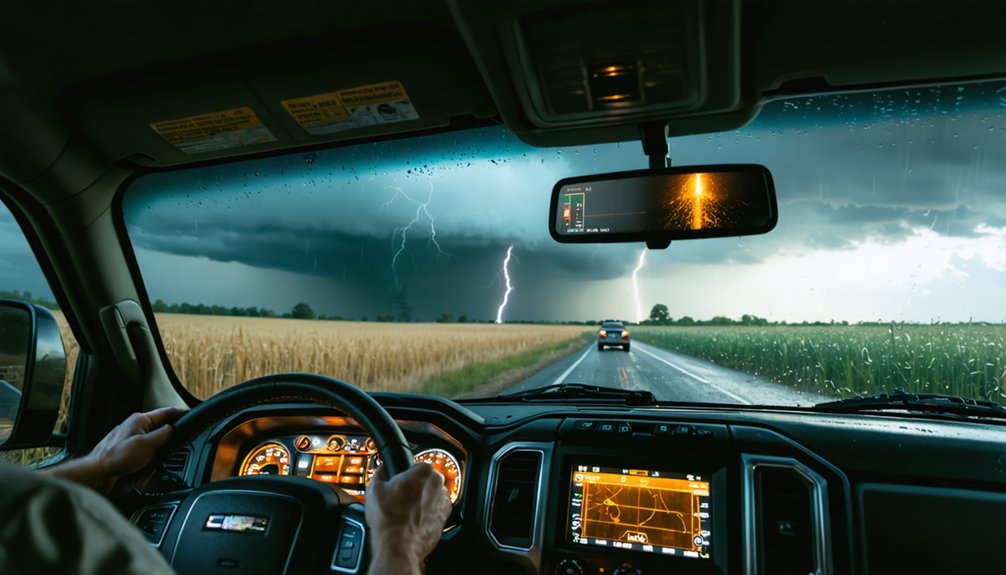
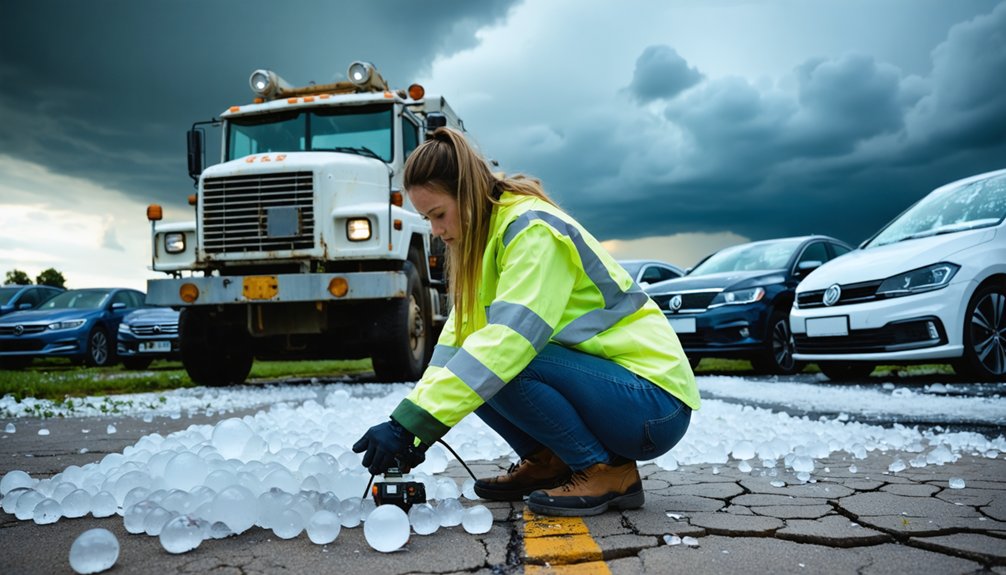
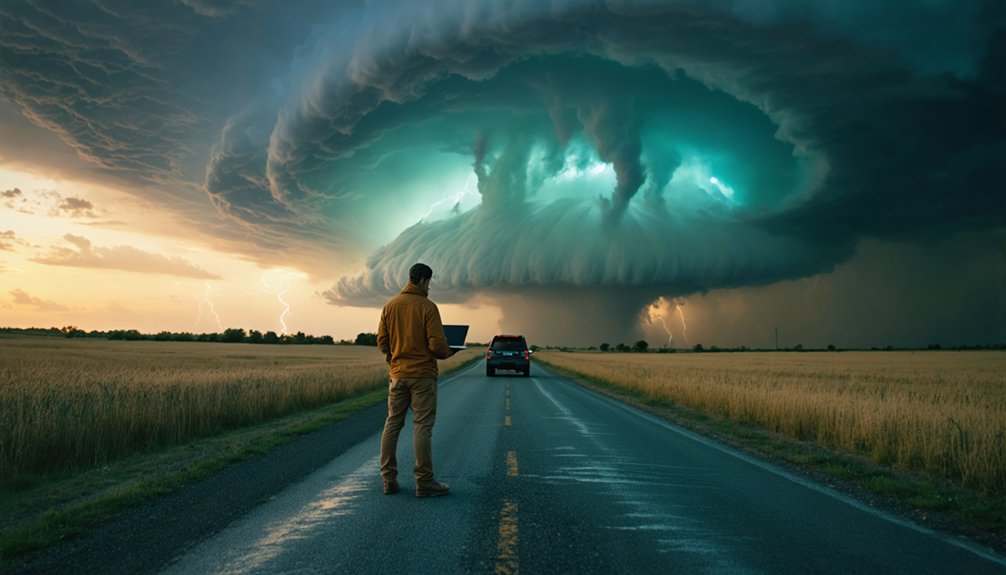
When exploring famous waterspout chasers, you’ll discover pioneers like Joe Golden, whose 1970s NOAA research transformed systematic waterspout documentation into legitimate atmospheric science. Chasers like Scott Olsen and Harald Richner refined techniques and positioning strategies across hotspots like the Florida Keys and Adriatic Sea. They’ve survived near-misses within 100 meters of active spouts, collected critical wind-shear data, and integrated drones and Doppler technology to push meteorological boundaries. The full stories behind their most remarkable chases go even deeper.
Key Takeaways
- Joe Golden, a NOAA scientist, pioneered systematic waterspout research in the 1970s, establishing foundational classification methods still used today.
- Scott Olsen refined chasing techniques by focusing on strategic positioning relative to storm cells for safer, more accurate data collection.
- Historical chases in the Florida Keys during the 1960s–1970s transformed waterspout observation from casual curiosity into legitimate atmospheric science.
- Near-miss encounters, including chasers within 100 meters of active spouts, generated critical safety data on unpredictable waterspout behavior.
- Harald Richner advanced waterspout documentation beyond American waters, expanding the global understanding of waterspout formation and behavior.
Where Waterspouts Form and Why Chasers Go There
Waterspouts typically form over warm, shallow waters where atmospheric instability is highest — places like the Florida Keys, the Gulf of Mexico, the Adriatic Sea, and the Great Lakes. Understanding storm formation helps you predict where and when they’ll appear.
Chasers study weather patterns obsessively, refining chase strategies that balance proximity with safety precautions — getting close enough for sharp photographic techniques without risking capsizing. These locations carry local myths about waterspouts as omens or sea monsters, adding cultural texture to your pursuit.
You’ll also want to take into account environmental impacts; responsible chase ethics mean you’re not disturbing wildlife habitats or coastal ecosystems during observation. The best chasers treat these events as scientific opportunities, not spectacles, documenting data that genuinely advances meteorological understanding.
Who Are the Most Famous Waterspout Chasers?
Knowing where waterspouts form is only part of the story — the people who chase them have shaped how we comprehend these phenomena. When you explore Famous Chaser Profiles, a few names stand out.
Joe Golden, a NOAA scientist, pioneered systematic waterspout research in the Florida Keys during the 1970s, documenting formation patterns you still reference today.
Scott Olsen built on that foundation, refining Chasing Techniques that prioritize positioning relative to storm cells and wind shear zones.
European researcher Harald Richner advanced offshore documentation methods, expanding the field beyond American waters.
These chasers didn’t just observe — they collected measurable data, challenged assumptions, and developed replicable methods. Their work gives you a clearer framework for understanding waterspout behavior, turning personal risk into scientific knowledge that benefits everyone studying severe weather.
The Chases That Put Waterspout Hunting on the Map
A handful of documented chases stand as turning points in how researchers approach waterspout study. When you examine early expeditions in the Florida Keys during the 1960s and 1970s, you’ll notice that improved photographic techniques transformed raw curiosity into measurable science.
Chasers who once relied on basic film cameras began capturing sequential images that revealed how mystery formations developed from funnel cloud to full water contact.
Joseph Golden’s systematic Florida Straits missions in the early 1970s redefined the field entirely. You can trace nearly every modern classification method back to that work.
Joseph Golden’s Florida Straits missions in the early 1970s gave waterspout research its foundation and every classification system that followed.
Those chases proved that disciplined observation, not luck, drives discovery. They gave future chasers a reproducible framework, turning waterspout hunting from an adventurous hobby into a legitimate atmospheric research discipline you could build a career around.
How Waterspout Chasers Actually Hunt Their Targets
Hunting waterspouts isn’t random — you rely on a precise combination of meteorological reading, strategic positioning, and real-time adaptation.
Successful storm chasing demands you understand atmospheric conditions before you ever leave shore. You study instability indices, moisture gradients, and wind shear data to predict where water vortexes will likely form.
Your chase strategies involve positioning upwind, maintaining safe distances, and following strict safety protocols that protect both you and your equipment.
Technology advancements — including Doppler radar apps, drone deployment, and portable weather stations — sharpen your field observations considerably.
You’re simultaneously conducting data collection on meteorological phenomena while tracking environmental impacts these vortexes create on marine ecosystems.
Every chase refines your instincts, turning raw atmospheric data into calculated decisions that keep you free, mobile, and ahead of the storm.
The Gear Waterspout Chasers Swear By
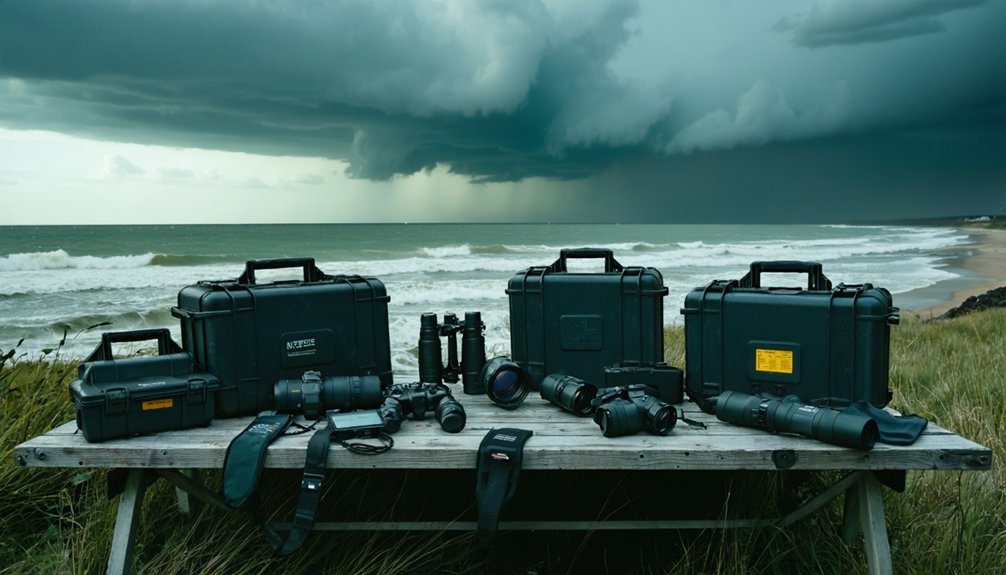
When you’re chasing waterspouts, your gear isn’t optional — it’s your operational backbone. Essential equipment includes ruggedized video equipment, stabilized camera rigs, and drones for aerial footage, giving you angles ground-level shooting can’t deliver.
Apply photography tips like shooting in RAW format and bracketing exposures to capture dynamic contrast.
Your communication tools — satellite phones, weather radios, and encrypted apps — keep you connected when cell networks fail. Integrate real-time weather forecasting apps directly into your chase strategies to anticipate waterspout formation windows.
Gear maintenance isn’t glamorous, but saltwater environments destroy untreated equipment fast. Follow established safety protocols and consult training resources before deploying drones near active spouts.
Use research methods that document environmental impact, ensuring your pursuit advances scientific understanding without unnecessary ecological disruption.
The Most Remarkable Waterspout Footage Ever Filmed
Some of the most remarkable waterspout footage ever captured has redefined what’s scientifically and visually possible in extreme weather documentation.
You’ll find that the most compelling clips emerge from chasers who’ve mastered precise positioning techniques, using stabilized drone rigs and high-frame-rate cameras to document full waterspout lifecycles.
Chaser techniques like triangulated multi-angle shooting have produced footage revealing internal rotation dynamics previously unobservable. Notable captures include simultaneous multiple-waterspout formations over the Florida Keys and rare tornadic waterspouts moving onshore.
You can see in these recordings exactly how pressure differentials create the visible condensation funnel.
This remarkable footage doesn’t just satisfy visual curiosity — it’s actively advancing meteorological research, giving scientists measurable data on formation speed, funnel diameter progression, and dissipation patterns that lab models couldn’t previously predict.
When Waterspout Chasers Got Too Close
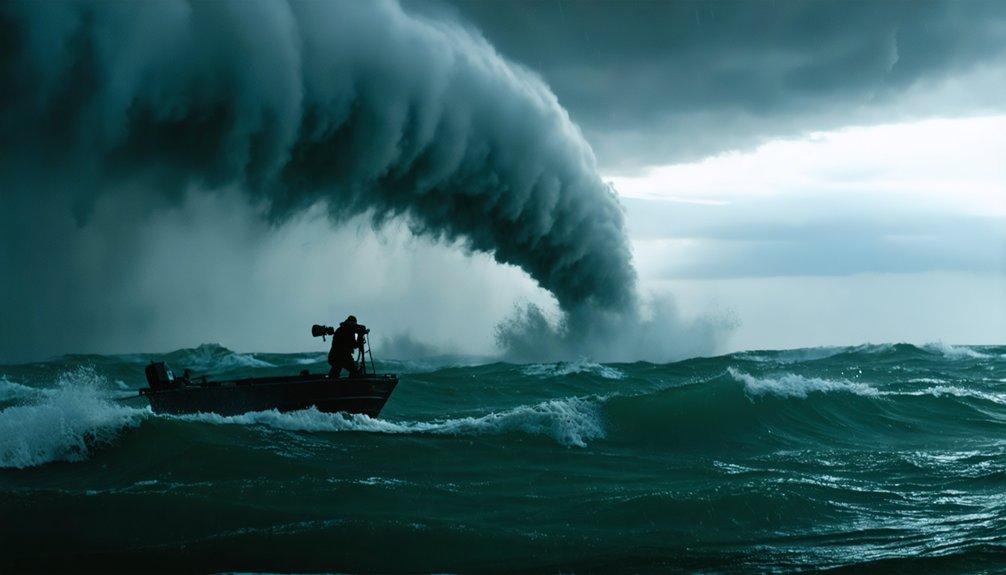
When you study the history of waterspout chasing, you’ll find that some of the most instructive moments came from chasers who misjudged a waterspout’s speed or trajectory and found themselves dangerously inside its path.
These near-miss encounters have produced critical safety data, revealing just how quickly a waterspout can shift direction and trap an unprepared observer on the water.
If you’re analyzing the risk threshold of this pursuit, the survival accounts of chasers like Chris Collura and others offer a sobering benchmark for how close is too close.
Dangerous Close-Range Encounters
Chasing waterspouts carries inherent risks, and even experienced chasers have found themselves dangerously close to these rotating columns of water. You’d think seasoned professionals would maintain safe distances, but unexpected encounters can shift rapidly. When a waterspout changes direction, you’ve got seconds to react.
Documented cases show chasers caught within 100 meters of active spouts, experiencing intense adrenaline rushes while struggling to control watercraft in chaotic conditions. Winds exceeding 60 mph, flying debris, and violent wave action create compounding dangers you can’t fully anticipate.
Florida’s coastal waters produce particularly unpredictable scenarios. Chasers like Jim Leonard have reported boats nearly capsizing during sudden directional shifts.
These close-range encounters remind you that waterspouts command respect—your freedom to chase them depends entirely on your survival.
Near-Miss Survival Stories
Beyond dangerous close-range encounters lies an even more sobering category: the near-miss survival stories that reveal just how quickly a chase can turn fatal.
These near miss encounters expose vulnerabilities even experienced chasers overlook.
Documented survival strategies from actual incidents include:
- Cutting engines immediately when waterspouts shift direction unexpectedly toward your vessel
- Abandoning camera equipment to grab life preservers within seconds of funnel contact
- Diving below deck as rotating debris fields shred everything above the waterline
- Radioing exact coordinates before impact so rescue teams locate you faster
- Deploying anchor lines to prevent capsizing when rotational winds exceed 100 mph
You’ll notice a pattern: survivors acted decisively without hesitation.
Those who froze, documenting rather than reacting, frequently didn’t return to share their accounts.
How Waterspout Chasers Have Advanced Storm Science
Waterspout chasers have done more than capture dramatic footage—they’ve generated field data that meteorologists couldn’t easily obtain through remote sensing alone. By refining chaser techniques and applying strict safety protocols, they’ve positioned themselves close enough to document waterspout formation in real time.
That proximity yields atmospheric pressure readings, humidity shifts, and wind-shear measurements that strengthen storm tracking models. Their research collaborations with universities and weather agencies have accelerated meteorological advancements, turning raw observations into peer-reviewed science.
Technology integration—drones, portable Doppler units, and GPS loggers—lets you gather granular data without compromising safety. Chasers also monitor environmental impact, noting how water temperature and coastal geography influence funnel development.
The result is a richer, more precise understanding of waterspout behavior that benefits forecasters and coastal communities alike.
How to Follow Active Waterspout Chasers Today
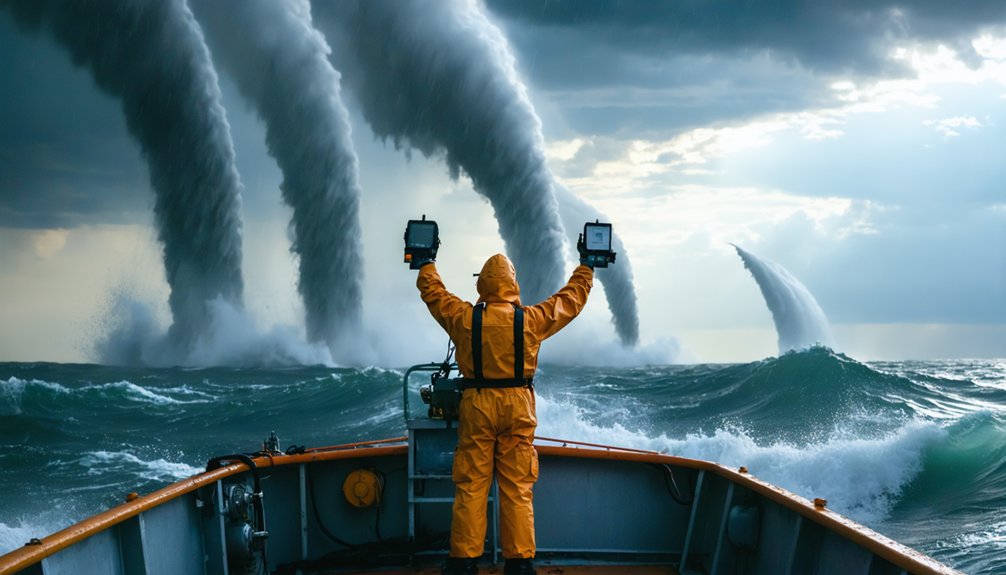
If you want to follow active waterspout chasers today, you’ll find most of them maintaining profiles on platforms like Instagram, YouTube, and X, where they post real-time footage and storm data.
Searching hashtags like #waterspout or #stormchasing will quickly surface the most active contributors in the field.
You’ll also want to enable post notifications for your favorite chasers so you don’t miss live updates during peak storm seasons.
Finding Active Chaser Profiles
Today’s most active waterspout chasers maintain a visible presence across multiple social media platforms, making it easier than ever to follow their work in real time.
Understanding chaser community dynamics helps you identify whose profiles deliver the most value. Use profile engagement strategies like enabling post notifications and joining platform-specific groups.
Look for chasers who consistently share:
- Raw footage captured directly from boats or shorelines
- Real-time GPS coordinates during active storm events
- Detailed meteorological breakdowns following each chase
- Collaborative posts tagging fellow chasers and researchers
- Behind-the-scenes equipment setups and preparation routines
You’ll find the most credible chasers cross-referencing their content with verified weather data.
Follow accounts that prioritize accuracy over sensationalism, giving you reliable, unfiltered access to one of nature’s most dynamic phenomena.
Social Media Tracking Tips
Tracking active waterspout chasers on social media requires a deliberate approach beyond simply hitting “follow.” You’ll get the most value by turning on post notifications for key accounts, subscribing to platform-specific alert features like Instagram’s “Favorites” feed or YouTube’s bell icon, and joining dedicated storm-chasing groups on Facebook and Reddit where chasers frequently post real-time updates.
Refine your social media strategies by using platform search tools with hashtags like #waterspout and #stormpchasing to surface emerging content quickly.
Pair these tactics with tracking technologies such as weather alert apps that sync with chaser activity feeds, giving you layered awareness. Cross-referencing multiple platforms guarantees you won’t miss critical footage or location updates when conditions develop rapidly across coastal and open-water environments.
Frequently Asked Questions
Do Waterspout Chasers Need Special Licenses or Permits to Operate?
You don’t need a special license — lucky you! But you’ll still follow chasing regulations and safety protocols to stay legal and alive. Freedom’s great, yet responsibility’s your real permit when pursuing waterspouts.
How Much Do Professional Waterspout Chasers Typically Earn Annually?
You’ll find salary expectations vary widely in this field. Income variability means you could earn anywhere from $30,000 to $80,000 annually, depending on your experience, media contracts, research grants, and sponsorship deals you’re actively securing.
Are Waterspout Chasers Covered by Standard Insurance Policies?
Standard policies won’t cover you as a waterspout chaser. Insurers conduct strict risk assessment, classifying it as extreme occupational hazard. You’ll need specialized insurance coverage through niche providers who understand and accommodate your high-risk, freedom-driven profession.
Have Any Waterspout Chasers Ever Been Legally Penalized for Chasing?
You’ll find that legal consequences for waterspout chasers remain rare, but you’re not exempt from trespassing or reckless endangerment charges. Chasing ethics matter — breaking laws, ignoring boundaries, and endangering others can all invite serious legal penalties.
Do Waterspout Chasers Experience Long-Term Psychological Effects From Their Work?
Yes, you can develop trauma responses from repeatedly witnessing nature’s violent forces. Experienced chasers actively build coping mechanisms—peer support, mindfulness, and professional counseling—helping you process intense encounters and maintain psychological resilience throughout your waterspout chasing career.
References
- https://www.icwr.ca/top-waterspout-hunters.php
- https://www.youtube.com/watch?v=-FesZtXkZa4
- http://www.youtube.com/watch?v=wpoVakVZonc
- http://www.phenomena.org.uk/tornadoes/page6/page6.html
- https://www.youtube.com/watch?v=Bqx9ZHKu9Z0
- https://www.youtube.com/watch?v=nD2JqfP3Exw
- http://www.youtube.com/watch?v=XcErs5YbYZY
- https://www.stormtours.com/stormchasing/chase-highlights/page/4/
- https://www.reddit.com/r/tornado/comments/1ezkrco/what_are_some_notable_tornadic_waterspouts_from/
- https://skullsinthestars.com/2015/03/06/michael-faraday-and-the-waterspouts-1814/