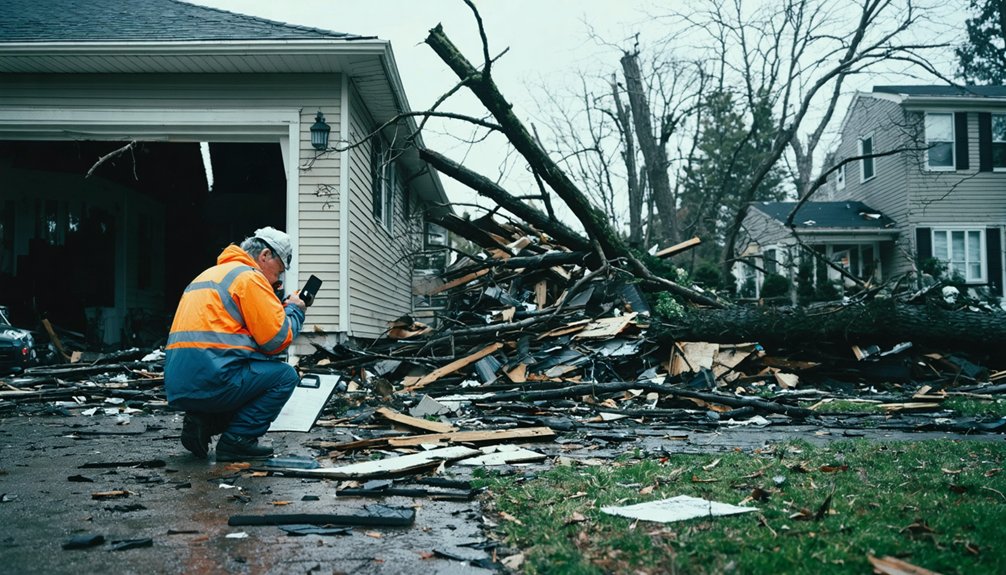
To enhance emergency coordination through community involvement, you’ll need to build local trust before disasters strike, integrate resident knowledge into your emergency plans, and manage volunteers with clear roles and credentials. Designate a single spokesperson to maintain unified messaging and prevent misinformation from spreading. Embed local leaders into operational roles early and develop a deliberate handoff strategy post-crisis. The sections ahead break down exactly how to execute each step.
Key Takeaways
- Building trust with community leaders before disasters ensures faster, more coordinated emergency responses when crises occur.
- Incorporating local knowledge into emergency plans improves risk mapping and strengthens overall operational preparedness.
- Trained, well-organized volunteers with defined roles significantly enhance coordination capacity during emergency response efforts.
- Unified messaging with a single spokesperson prevents contradictions and maintains public trust during crises.
- Embedding local leaders into operational roles early ensures smoother transitions and sustained community engagement post-crisis.
Build Local Trust and Networks Before Disaster Strikes
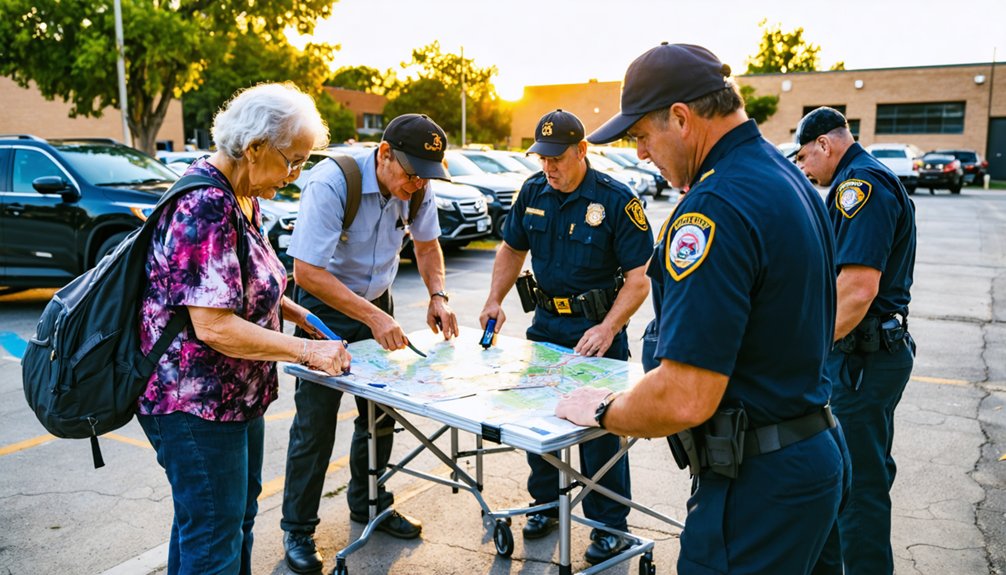
Building trust with your community before disaster strikes is the cornerstone of effective emergency coordination.
Don’t wait for a crisis to establish community relationships—engage residents face-to-face or by phone now. Your proactive outreach must include local leaders in response plan development, ensuring they’re invested stakeholders, not passive recipients.
Local engagement requires you to identify each demographic group’s preferred communication channels and test emergency messages across diverse perspectives.
You’ll strengthen your network further by mapping direct points of contact for rapid crisis access.
Trust building isn’t transactional—it’s structural.
Incorporate neighborhood leaders into planning reviews, respect community self-determination, and leverage existing local networks.
These connections, built deliberately before emergencies occur, transform fragmented response efforts into coordinated, community-driven action when it matters most.
Integrate Community Knowledge Into Your Emergency Plan
Local knowledge is your most underutilized planning asset—leverage it deliberately. You can’t build an effective emergency plan from a desk—you need field visits, direct community input, and structured community mapping to identify vulnerabilities and resources that official databases miss.
Integrate neighborhood structures and local networks directly into your planning framework. Establish local committees to drive risk assessment processes and coordinate mitigation efforts. These groups understand terrain, social dynamics, and resource gaps better than any outside agency.
Local committees don’t just support emergency planning—they drive it, bringing irreplaceable knowledge of terrain, people, and gaps.
Apply community-specific expertise to reduce vulnerability and increase operational preparedness. Map local risks using both technical data and resident knowledge—the combination produces more accurate, actionable plans.
Confirm your policies explicitly support self-determination, giving communities meaningful authority over decisions that affect them. That autonomy strengthens both buy-in and execution when emergencies actually occur.
Manage Volunteers Effectively Before and During a Crisis
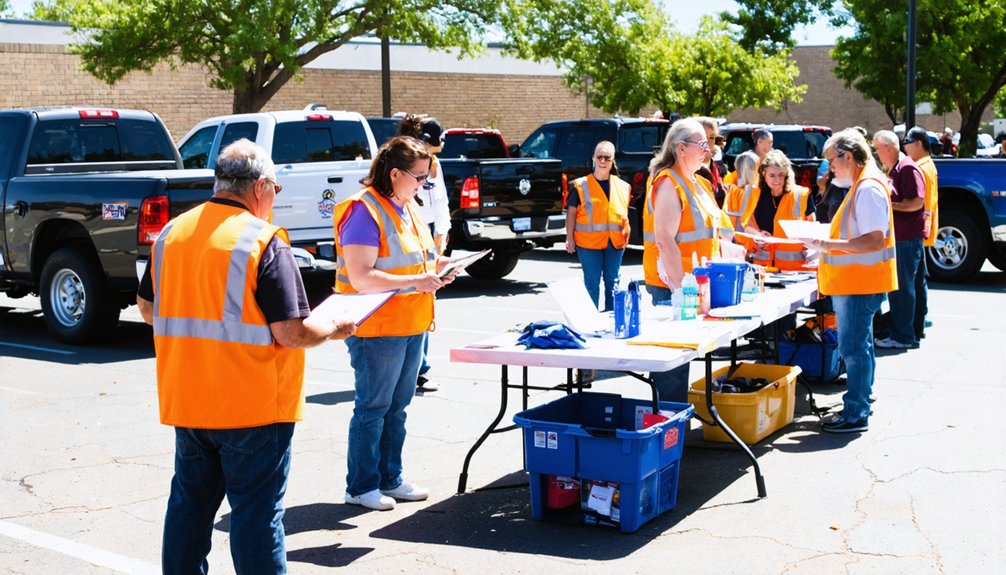
Volunteer mismanagement during a crisis wastes time, creates liability, and undermines response effectiveness. Before disaster strikes, identify the volunteer types and numbers you’ll need for specific scenarios.
Define clear deployment expectations and designate trained managers to organize personnel efficiently—don’t leave coordination to chance.
Invest in volunteer training now to protect both your volunteers and your community later. Verify credentials in advance and register spontaneous volunteers so you’re never caught unprepared.
Provide safety briefings covering PPE requirements, health risks, and necessary immunizations.
Smart resource allocation depends on knowing exactly who’s available and what they’re qualified to do. Build your volunteer registry, maintain it actively, and integrate volunteer management directly into your response plans.
Control your resources—don’t let chaos control you.
Communicate as One Voice When a Crisis Hits
When a crisis hits, fragmented messaging destroys public trust and amplifies confusion. You must establish unified messaging protocols before chaos forces reactive decisions.
Identify each community group by their direct relationship to the emergency, then tailor your crisis communication to address their specific concerns without contradicting other channels.
Designate a single spokesperson to speak on behalf of all responding parties. Coordinate forums where affected communities actively participate in decision-making, not just receive information.
Share data openly, acknowledge uncertainty honestly, and correct misinformation immediately.
Your crisis communication strategy must integrate consistent talking points across all platforms and responders.
When every team member delivers the same accurate message, you preserve credibility, reduce panic, and maintain the community’s trust precisely when they need it most.
Hand Off Responsibilities and Sustain Community Engagement
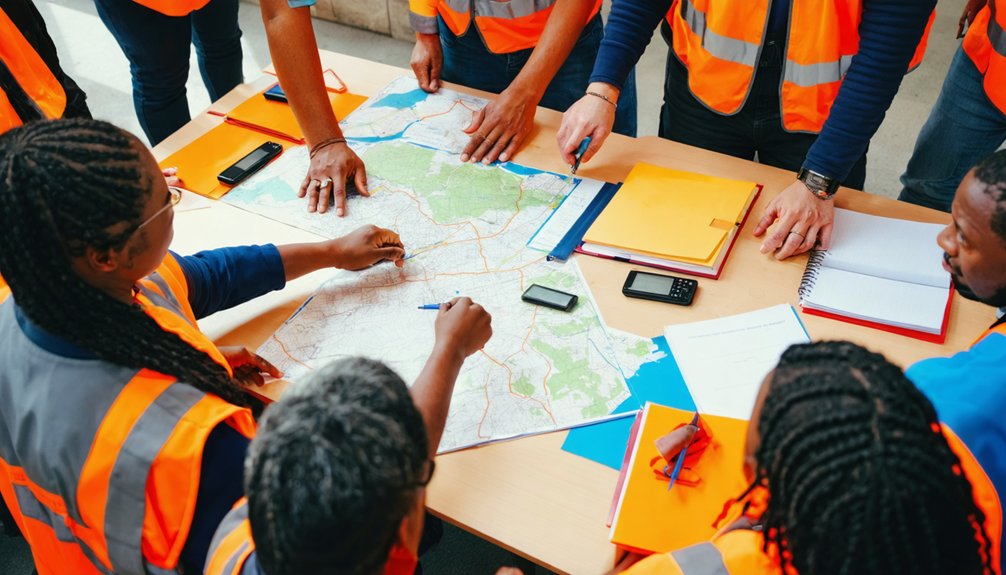
Sustaining community trust doesn’t end when the crisis response winds down—it demands a deliberate handoff strategy that keeps local stakeholders in control long after your teams have demobilized.
Brief all staff and volunteers on accountability principles before you exit, and confirm that ongoing activities align with actual community needs.
Shift responsibilities systematically—don’t abandon them. Build community ownership by embedding local leaders into operational roles early, so they’re managing functions before you withdraw.
Embed local leaders early—they should be running operations before you ever consider walking away.
Integrate engagement indicators directly into response budgets and plans to institutionalize long-term commitment rather than treating it as optional.
Check your delivery methods, solicit honest feedback, and adjust accordingly.
When communities govern their own recovery, they build resilience that outlasts any single emergency response.
Frequently Asked Questions
How Do Participatory Decision-Making Tools Improve Emergency Resource Allocation Outcomes?
You’ll improve resource allocation by using participatory tools like workshops and decision trees, enabling stakeholder engagement and resource mapping to prioritize needs, ensuring communities drive solutions that reflect real vulnerabilities and maximize autonomous, effective emergency response outcomes.
What Criteria Should Communities Use to Prioritize Alternative Emergency Solutions?
You’ll prioritize alternative emergency solutions by applying risk assessment to gauge threat severity and resource mapping to match available assets. Establish decision criteria around community impact, feasibility, equity, and sustainability to drive effective, self-determined emergency action.
How Can Community Forums Identify Conflicting Viewpoints During Emergency Planning?
During Hurricane Katrina, conflicting interests emerged fast. You’ll surface diverse perspectives by facilitating open forums, breaking communication barriers through structured stakeholder engagement, and mapping inconsistent viewpoints using ranking activities that prioritize transparent, community-driven emergency solutions effectively.
How Do Human-Centered Design Workshops Strengthen Participatory Emergency Response Strategies?
You’ll strengthen participatory emergency response strategies by applying human-centered design methodologies that prioritize stakeholder engagement, empowering you to co-create solutions, allocate resources effectively, and guarantee all community groups actively shape response plans on their own terms.
What Ranking Activities Help Communities Prioritize Critical Actions During Emergencies?
You’ll use risk assessment matrices and resource mapping exercises to rank critical actions. Prioritize by impact and urgency, apply decision trees, and let your community’s criteria drive allocation of resources during emergencies autonomously.
References
- https://ihrbenchmark.who.int/document/16b-community-engagement
- https://knowledge.aidr.org.au/resources/handbook-community-engagement-for-disaster-resilience/
- https://www.fema.gov/sites/default/files/2020-07/whole_community_dec2011__2.pdf
- https://www.ruralhealthinfo.org/toolkits/emergency-preparedness/3/community-engagement-volunteer-management
- https://www.fema.gov/emergency-managers/national-preparedness/plan/community-engagement-toolkit/section-1
- https://www.cdc.gov/cerc/media/pdfs/CERC_CommunityEngagement.pdf
- https://iris.who.int/bitstream/handle/10665/42083/9241545194.pdf?sequence=1&isAllowed=y
- https://communityengagementhub.org/wp-content/uploads/sites/2/2023/11/CEA-Guide-Module-5-Emergencies_76-103.pdf
- https://www.nyc.gov/site/em/ready/community-preparedness.page
- https://pmc.ncbi.nlm.nih.gov/articles/PMC5582971/