Female storm chasers have shaped severe weather science more than you might realize. Melanie Metz started chasing in 2000, Jennifer Brindley Ubl has documented some of the fastest tornadoes on record, and Kait McLaughlin became the first female chief aerial reconnaissance weather officer. Jennifer Walton’s *Girls Who Chase* organization is now systematically expanding women’s access to the field. Each of these pioneers has a story that redefines what storm chasing expertise actually looks like.
Key Takeaways
- Melanie Metz began storm chasing in 2000, becoming a pioneer who mentored future chasers and captured critical tornado imagery for decades.
- Jennifer Brindley Ubl started chasing in 2006, specializing in tornado photography and documenting some of the fastest and largest tornadoes recorded.
- Kait McLaughlin became the first female chief aerial reconnaissance weather officer, leading real-time data collection during extreme hurricane conditions.
- NOAA deployed its first all-female hurricane hunting crew during Hurricane Dorian, marking a landmark moment in severe weather operations.
- Jennifer Walton founded *Girls Who Chase*, an organization connecting women with mentorship and resources to increase participation in storm chasing.
Who Were the First Female Storm Chasers?
Storm chasing has long been a male-dominated field—David Hoadley is widely recognized as the first publicly known storm chaser, which signals how late women entered the picture.
Storm chasing has always been a man’s world—and the historical record makes that impossible to ignore.
Early female chasers operated in near-isolation, with Melanie Metz noting that only a handful of women were active when she started in 2000. Their work wasn’t just about documentation; it directly informed weather forecasting models and improved storm preparedness strategies in vulnerable communities.
Helen Hunt’s portrayal of Jo Harding in *Twister* gave mainstream audiences their first real look at a woman leading field research. That visibility mattered. It shifted public perception and attracted new participants.
You can trace a clear line from that cultural moment to the measurable influx of female chasers that followed in subsequent decades.
Helen Hunt’s *Twister* Role and Its Real-World Impact
When *Twister* released in 1996, it did something no scientific journal or news segment had managed: it put a woman at the center of high-stakes tornado research and made that image globally visible. Helen Hunt’s Jo Harding combined field expertise with scientific authority, directly challenging the male-dominated framing of storm chasing.
That gender representation shift carried measurable weight. Women entering meteorology education in the late 1990s and early 2000s frequently cited the film as an early influence. You can’t ignore how cultural visibility accelerates professional interest.
*Twister* didn’t just entertain — it normalized a female scientist operating in extreme conditions without framing her role as exceptional. That normalization created a reference point that real chasers like Melanie Metz later built careers alongside.
Melanie Metz and Peggy Willenberg, the Original Twister Sisters
When you examine the history of women in storm chasing, Melanie Metz stands out as a veteran who began chasing in 2000, a period when only a handful of women were active in the field.
Metz and Peggy Willenberg gained broader recognition through WE tv’s reality series *Twister Sisters*, which gave the public a data-grounded look at how women operate in severe-weather environments.
Their visibility translated into measurable impact, as Metz later partnered with Girls Who Chase to build mentorship pipelines and draw more women into meteorology and storm science.
Early Storm Chasing Beginnings
Before women storm chasers had organized networks or media platforms behind them, Melanie Metz was already in the field — chasing since 2000, at a time when she could count the other women doing the same on one hand. That isolation wasn’t incidental; it reflected structural gaps in gender diversity across severe-weather fieldwork.
Metz didn’t wait for infrastructure to catch up. She documented tornadoes others missed, building a record of observational precision that stood on its own merit. These historical breakthroughs didn’t emerge from institutions — they came from individuals operating in a male-dominated space without roadmaps.
Metz’s early entry into storm chasing established a baseline that later partnerships, platforms, and media coverage would eventually build on, but the groundwork was hers alone to lay.
Twister Sisters Television Series
Metz’s years of solo fieldwork eventually found a public-facing counterpart when she partnered with Peggy Willenberg for *Twister Sisters*, a reality series that aired on WE tv. The show documented two women operating in a field still defined by entrenched gender stereotypes, giving audiences direct exposure to female-led storm documentation.
You can see how the series functioned as both entertainment and evidence — proof that women weren’t novelties but skilled practitioners driving meteorology advancements through real observational work. The visibility *Twister Sisters* generated challenged assumptions about who belongs in severe weather research.
It reframed storm chasing as a discipline defined by competence, not gender. For viewers conditioned to see only male chasers, the series delivered a measurable shift in how female field expertise gets recognized and respected.
Inspiring Women In Meteorology
Beyond the entertainment value of *Twister Sisters*, Metz and Willenberg built a legacy that’s actively reshaping how women enter meteorology. Their fieldwork demonstrated that storm forecasting isn’t confined to laboratory models or institutional frameworks — it’s validated through direct observation and documented data collection.
Metz’s partnership with Girls Who Chase translates that legacy into measurable outreach, connecting aspiring women with real pathways into severe-weather careers. You can trace a direct line from their visibility to the influx of female chasers reported around 2020.
Weather technology has also lowered entry barriers, giving independent chasers access to radar tools and mobile instrumentation once reserved for funded research teams. Metz and Willenberg proved you don’t need institutional permission to contribute meaningfully to storm science — you need skill, preparation, and presence.
Jennifer Brindley Ubl’s Record-Breaking Storm Photography
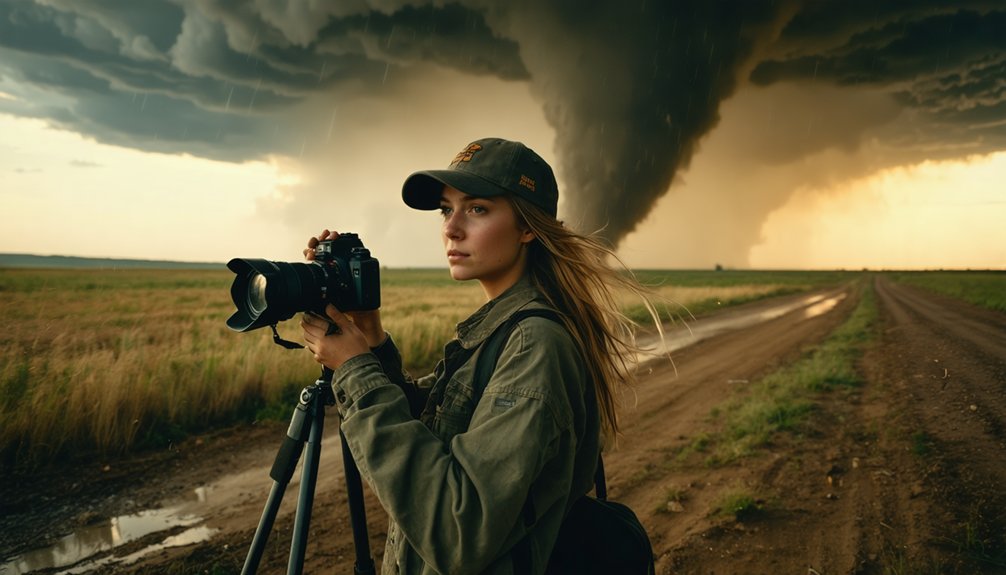
Since beginning her chasing career in 2006, Wisconsin-based storm photographer Jennifer Brindley Ubl has built a record that’s difficult to overlook. NBC News identified her as having captured some of the fastest and largest tornadoes ever documented, a benchmark that reflects both technical precision and consistent field deployment.
Ubl’s work sits at the intersection of meteorological innovation and storm chasing technology, combining photographic documentation with real-time severe weather analysis. She doesn’t just photograph storms — she positions herself strategically, using current forecasting tools and atmospheric data to intercept high-impact events others miss.
Her career trajectory signals a measurable shift in the field. Women like Ubl aren’t entering storm chasing as outliers anymore — they’re setting the performance standards that define modern severe-weather documentation.
Holly LaMontagne and the New Wave of Female Chasers
When NBC News reported an influx of female chasers beginning around 2020, Holly LaMontagne of Michigan emerged as a representative figure of that shift. Her entry into the field traces back to a childhood tornado warning—a formative encounter that redirected her toward storm chasing innovations and hands-on weather visualization work.
What separates LaMontagne’s generation from earlier female chasers is structural support. You’re looking at a cohort that entered the field with established networks, broader media access, and public platforms that predecessors like Melanie Metz never had in 2000. That infrastructure accelerates participation and skill development.
LaMontagne represents a measurable change: storm chasing is no longer defined by a small male-dominated cohort, but by an expanding, technically engaged community where women occupy recognized, data-contributing roles.
Jennifer Walton and the Girls Who Chase Movement
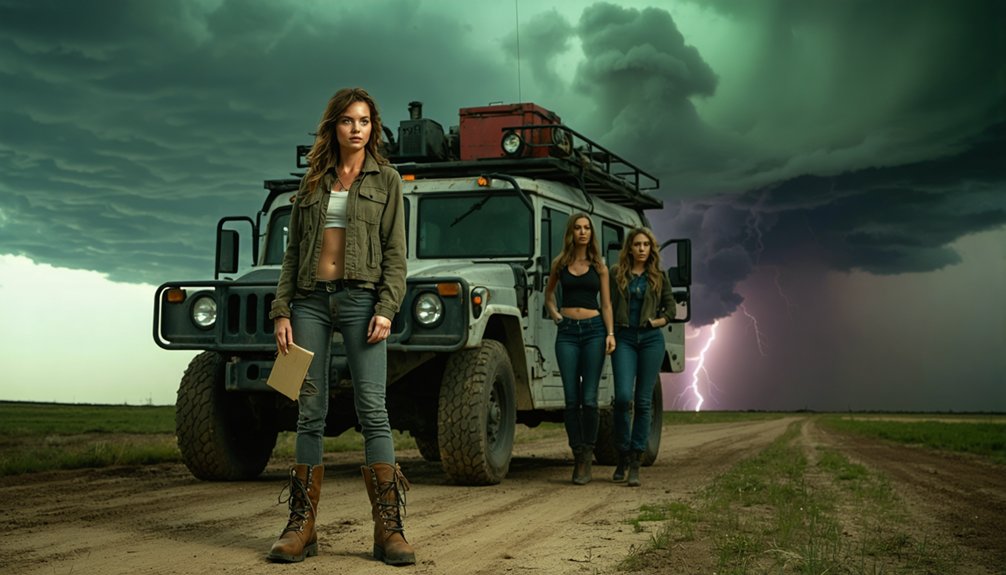
When you examine the structural gaps that kept women underrepresented in storm chasing, Jennifer Walton’s response was direct: she founded Girls Who Chase, an official initiative designed to increase visibility and expand opportunities for women photographers and chasers in the field.
The organization functions as both a support network and a science outreach platform, connecting experienced female chasers with girls pursuing weather and atmospheric science careers.
You can track its measurable impact through partnerships like Melanie Metz’s collaboration with the group, which used her decades of field experience to mentor the next generation of female storm chasers.
Walton’s Vision for Women
Recognizing the structural gap in women’s representation within storm chasing, Jennifer Walton founded Girls Who Chase to directly address visibility and access barriers facing women in the field. You can see how gender stereotypes historically pushed women to the margins of severe-weather fieldwork, limiting their professional credibility and operational access.
Walton’s initiative directly countered that exclusion by building a recognized platform connecting women photographers, chasers, and science communicators.
Media influence played a measurable role in her strategy — increased public coverage of female chasers disrupts the assumption that storm chasing belongs exclusively to men.
Girls Who Chase functions as both a mentorship network and a visibility engine, partnering with figures like Melanie Metz to channel outreach into science education.
Walton’s model demonstrates that structural change requires organized, intentional effort.
Girls Who Chase Mission
Girls Who Chase operationalizes Walton’s structural vision into concrete mechanisms for field access and professional development. The initiative connects you directly with mentorship networks, storm-chasing resources, and meteorology education pipelines that weren’t available to earlier generations.
It’s built to close measurable gaps—not just raise awareness.
The platform integrates technology advancements into its framework, helping you access modern forecasting tools, mobile radar systems, and field documentation equipment that define competitive storm chasing today. Melanie Metz’s partnership with Girls Who Chase reinforces its credibility, linking veteran fieldwork with incoming talent.
Girls Who Chase functions as both a visibility engine and a practical infrastructure. It gives you the professional scaffolding to move from interest to active participation, transforming storm chasing from a male-dominated specialty into an accessible, merit-driven discipline.
Inspiring Future Female Chasers
Three core outcomes define what Jennifer Walton built with Girls Who Chase: visibility, access, and replication. When you study the initiative’s structure, you’ll see it functions as a replicable model for gender representation in weather innovation.
Metz’s partnership with the group confirmed that veteran expertise transfers directly into mentorship pipelines. You’re not looking at a symbolic gesture—you’re looking at a system designed to lower entry barriers for women entering severe-weather fields.
The data point matters: Metz noted only a handful of women were chasing when she started in 2000. Girls Who Chase targets that gap structurally.
If you want the field to reflect the full population capable of doing the work, this initiative demonstrates how organized visibility converts into measurable participation growth.
From Tornadoes to Hurricanes: Women Chasers in the Air
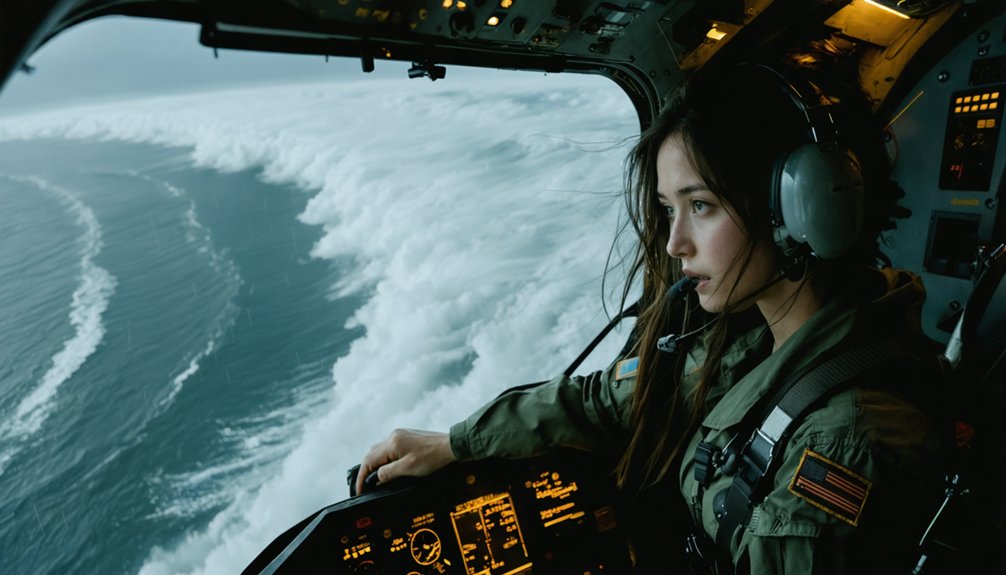
While ground-level tornado chasing draws most public attention, women have also broken significant barriers in airborne hurricane reconnaissance. NOAA’s first all-female hurricane hunting crew—Commander Rebecca Waddington, Lieutenant Lindsey Norman, and Captain Kristie Twining—flew directly into Hurricane Dorian, marking a definitive shift in who operates advanced weather technology during extreme conditions.
You can see this progress extending further when you examine Kait McLaughlin’s role as the first female chief aerial reconnaissance weather officer for the Air Force’s 53rd Weather Reconnaissance Squadron. These women aren’t just passengers—they’re collecting critical meteorological data that directly informs storm safety protocols and public evacuation decisions.
Their work proves that female expertise in severe-weather science operates at every altitude, from Tornado Alley’s open plains to the pressurized cockpits penetrating Category 5 systems.
Kait McLaughlin and the Women Flying Into Hurricanes
Kait McLaughlin’s appointment as the first female chief aerial reconnaissance weather officer for the Air Force’s 53rd Weather Reconnaissance Squadron represents more than a symbolic milestone—it signals a structural shift in who holds technical authority inside hurricane hunter aircraft.
Her role advances storm chasing innovation by placing women at the center of high-stakes weather research collaboration.
Consider what her position actually involves:
- Coordinating real-time atmospheric data collection inside active hurricanes
- Directing instrument deployment during dangerous reconnaissance missions
- Analyzing pressure, wind shear, and moisture readings mid-flight
- Communicating critical findings that shape public safety decisions
You’re watching a field redefine its own leadership. McLaughlin’s authority isn’t ceremonial—it’s operational, technical, and consequential.
Her presence expands what expertise looks like when it matters most.
Women Storm Chasers Who Changed Severe Weather Documentation
When you trace the arc of severe weather documentation, women like Jennifer Brindley Ubl, Melanie Metz, and Peggy Willenberg don’t appear at the margins—they’ve captured data and imagery that reshaped how the field measures and communicates tornado events.
Ubl’s photography has documented some of the fastest and largest tornadoes on record, directly advancing storm safety awareness through visual evidence that weather technology alone can’t replicate.
Metz, chasing since 2000, consistently captured tornado imagery others missed, demonstrating that observational precision remains irreplaceable alongside sensor-based systems.
Her partnership with Willenberg on *Twister Sisters* brought that fieldwork into public view.
Together, these women didn’t just witness severe weather—they produced documentation that strengthened how researchers, emergency managers, and the public understand and respond to extreme atmospheric events.
Frequently Asked Questions
What Education Do Most Professional Female Storm Chasers Typically Pursue?
Since 2020, female chasers have surged in numbers. You’ll typically pursue meteorology or atmospheric science degrees, driving storm chasing history forward and amplifying female meteorologist achievements through hands-on fieldwork, data analysis, and severe weather research.
How Much Do Female Storm Chasers Typically Earn Annually?
The knowledge base doesn’t cover earnings data, but gender diversity’s growth in storm chasing mirrors broader STEM salary ranges. You’ll find career advancement opportunities expanding, with compensation tied to your specialization, employer, and experience level.
What Equipment Do Women Storm Chasers Most Commonly Use in the Field?
Like knights armoring for battle, you’ll equip yourself with storm chasing gear including cameras, weather instruments, and GPS. Women chasers actively prioritize safety precautions, using reinforced vehicles and real-time radar apps to chase with calculated, data-driven precision.
Are There Scholarships Specifically Available for Women Pursuing Storm Chasing Careers?
You’ll find limited scholarships targeting gender diversity in storm chasing specifically, but funding opportunities exist through meteorology programs, AMS grants, and initiatives like Girls Who Chase, which actively connects women with financial and professional resources in severe-weather careers.
How Dangerous Is Storm Chasing Statistically Compared to Other Weather Professions?
You’re dancing with nature’s fury when you chase storms — storm chasing risks dwarf weather profession safety benchmarks. You’ll face statistically higher fatality rates than office-based meteorologists, making it one of weather science’s most hazardous pursuits.
References
- https://www.girlswhochase.com/about
- https://www.cosmopolitan.com/lifestyle/a39895714/storm-chasers-climate-change/
- https://www.nbcnews.com/news/us-news/female-storm-chasers-pursue-passion-as-severe-weather-events-increase-rcna24886
- https://www.huffpost.com/entry/women-storm-chasers-twister-movie_n_6a22caf5e4b0ed55359e5b1f
- https://www.youtube.com/watch?v=tw9J6DVShtA
- https://podcasts.apple.com/us/podcast/girls-who-chase-stories-of-women-in-weather-storm-chasing/id1606077073
- https://www.cbc.ca/news/canada/edmonton/girls-who-chase-1.6959431
- https://newsinteractives.cbc.ca/longform/prairie-storm-chasers/
- https://en.wikipedia.org/wiki/Storm_chasing
- https://www.youtube.com/watch?v=5Skfxrt2Amk