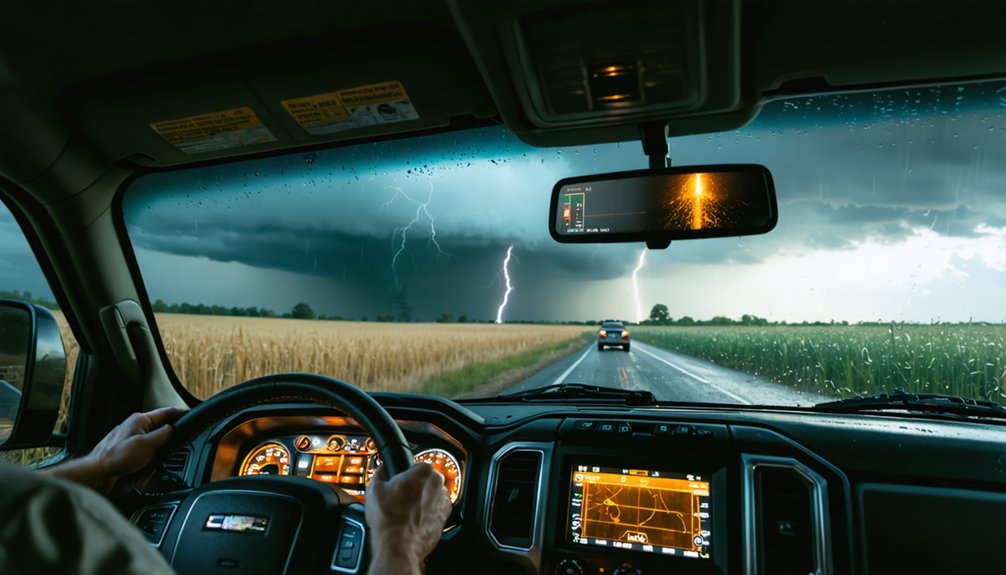
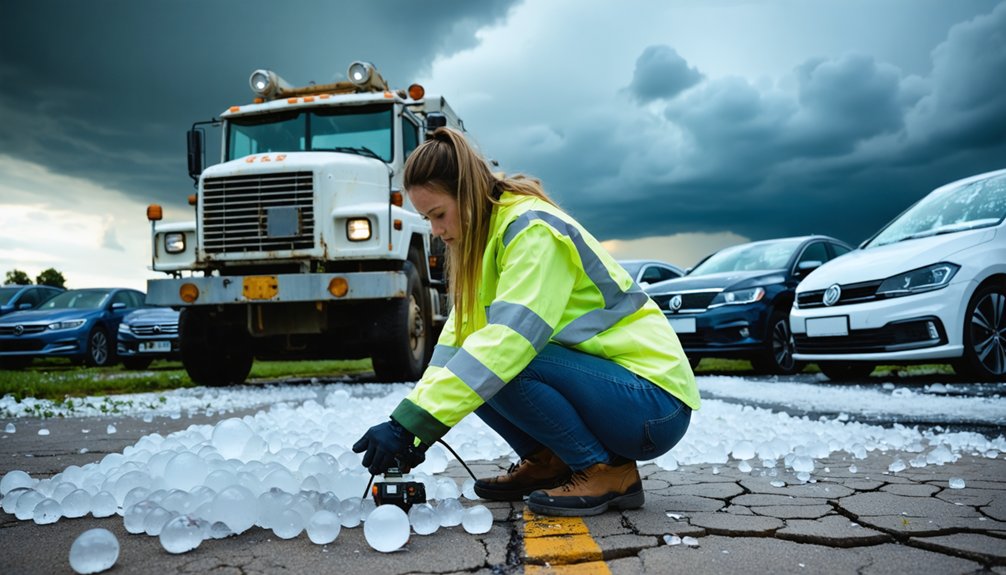
During hailstorm research, you’ll implement layered safety protocols across every phase of the operation. Before storms hit, you conduct vehicle audits, secure equipment with hail guards, and pre-position assets under reinforced structures. During active storms, you shelter in sturdy buildings away from windows, use helmets and padded gear, and maintain communication through waterproof devices. Post-storm, you complete thorough damage assessments before resuming fieldwork. Each protocol layer reveals critical details worth understanding fully.
Key Takeaways
- Researchers use layered monitoring systems integrating Doppler radar, spotter networks, and NOAA alerts to track storms continuously before and during operations.
- Pre-storm audits verify vehicle structural integrity, roof reinforcement, and proper securing of equipment against projected hail risk zones.
- Team members seek shelter in reinforced buildings, staying away from windows, skylights, and exterior doors during active hailstorms.
- Sensitive electronics and research instruments are stored in waterproof, reinforced containers, with non-essential devices unplugged to prevent surge damage.
- Post-storm safety protocols require thorough damage assessments, personnel accountability checks, and halting operations if unresolved safety concerns are identified.
Why Hailstorm Conditions Are Uniquely Dangerous for Field Researchers
Hailstorms present a distinct convergence of hazards that make field research environments considerably more dangerous than standard outdoor conditions. You’re exposed to rapid hailstone formation cycles that produce projectiles ranging from pea-sized to softball-sized masses, each capable of causing serious blunt-force trauma.
Storm intensity escalates unpredictably, compressing your decision-making window to seconds rather than minutes.
Storm intensity doesn’t negotiate. When conditions shift, your decision window collapses — and hesitation fills the gap.
Simultaneously, you’re contending with reduced visibility, lightning strike probability, flash flooding in low-lying zones, and wind-driven debris.
Unlike controlled research settings, the field offers no inherent structural protection. You can’t anticipate every variable, and conditions shift faster than standard safety margins allow.
Recognizing these compounding threat layers isn’t optional — it’s the foundational analytical step that determines whether your research protocol keeps you operational or puts you at critical risk.
How Do Field Teams Monitor Hail Warnings in Real Time?
Real-time hail warning monitoring requires layered systems that feed you continuous, actionable data before and during field operations. Storm prediction models integrate atmospheric pressure, moisture levels, and wind shear data to anticipate hailstone formation well before impact occurs.
You maintain operational autonomy by cross-referencing multiple data streams simultaneously.
Prioritize these four monitoring tools:
- NOAA Weather Radio — delivers uninterrupted regional alerts without internet dependency.
- Doppler radar apps — visualize storm cell movement and rotation in real time.
- Spotter network feeds — provide ground-truth reports confirming hailstone formation onset.
- Waterproof radio communication devices — sustain team contact when power infrastructure fails.
Never rely on a single source. Redundant systems give you decision-making control when conditions deteriorate rapidly and communications become compromised.
How Do You Pre-Position Equipment and Vehicles Before Storm Season?
Before storm season begins, you must audit every vehicle and piece of equipment against projected operational demands and known hail risk zones.
Before storm season arrives, audit every vehicle and piece of equipment against projected demands and known hail risk zones.
Conduct thorough equipment maintenance on all vehicles, verifying structural integrity, roof reinforcement, and window resilience.
Secure air conditioning units with hail guards and repair any existing roof vulnerabilities before exposure increases.
Position vehicles strategically within garages or under reinforced awnings, never under bridges or overhangs that concentrate debris impact.
Integrate weather alerts directly into your pre-positioning workflow, allowing real-time data to trigger repositioning decisions before conditions deteriorate.
Trim surrounding trees to reduce falling branch risk near parked equipment.
Establish clear repositioning protocols so every team member executes protective maneuvers autonomously, without waiting for centralized authorization when weather alerts escalate rapidly toward dangerous thresholds.
Shelter Rules That Could Save Your Life During a Hailstorm
When a hailstorm threatens your research site, you must seek immediate shelter in the nearest sturdy structure before hailstones begin impacting the area. You shouldn’t delay this decision, as even brief exposure to large hail poses serious injury risk.
Equally critical, you must avoid lowland areas, culverts, and drainage channels, which can fill rapidly with floodwater during severe storm events.
Seeking Immediate Sturdy Shelter
Seeking sturdy shelter before hail begins impacting your area is the single most critical action you can take to prevent injury during a hailstorm. Hailstone impact forces can fracture glass, dent metal, and penetrate lightweight roofing, making shelter design a decisive survival factor.
Prioritize these actions immediately:
- Move into a structurally reinforced building before hail reaches your position.
- Avoid lowland areas and culverts where floodwater accumulates rapidly during severe storms.
- Stay away from windows, skylights, and exterior doors to eliminate glass injury risk.
- Position yourself in the lowest interior room to minimize exposure to hailstone impact penetration.
You retain full control over your safety window — don’t waste it hesitating. Act before the storm dictates your options.
Avoiding Dangerous Low Areas
Although hailstorms drive most researchers toward ground-level cover, low-lying areas introduce a lethal secondary hazard: rapid floodwater accumulation. Culverts, ditches, and ravines channel stormwater with dangerous speed, overwhelming unprepared personnel within seconds. You must evaluate terrain before selecting any shelter position.
Prioritize structures incorporating hail resistant materials and engineered wind mitigation systems, as these offer reliable protection against both impact and debris-driven pressure. When no structure is accessible, move laterally across slopes rather than descending toward drainage zones. Floodwater doesn’t announce its arrival — it surges.
Continuously monitor storm progression using waterproof communication equipment, and coordinate your position with team members before conditions deteriorate.
Choosing elevation over convenience isn’t optional during active hailstorms; it’s a calculated, non-negotiable tactical decision that directly determines your survival probability.
The Right Protective Gear for Working in Hailstorm Conditions
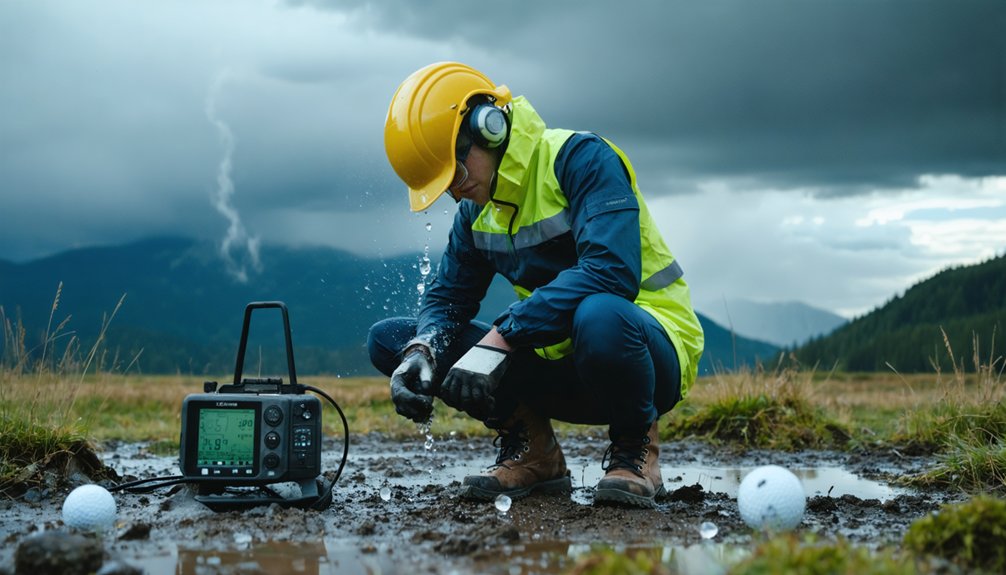
Proper protective gear markedly reduces injury risk when conducting hailstorm field research. You’ll need hail resistant gear that withstands high-velocity impacts while maintaining operational mobility.
Prioritize protective clothing with reinforced padding across vulnerable body zones.
Deploy the following field-essential equipment:
- Helmets or hard hats engineered for high-impact hailstone strikes
- Reinforced safety glasses blocking flying debris and glass fragments
- Heavy padded jackets absorbing direct impact forces across the torso
- Waterproof radio communication devices maintaining team contact during peak storm intensity
You’re responsible for verifying each item’s rating before entering active hail zones.
Substandard gear compromises your safety margin considerably. Cross-check equipment integrity against manufacturer specifications, ensuring every protective layer performs reliably under documented hailstorm field conditions.
How Do You Keep Vehicles and Research Equipment Safe During a Strike?
When a hailstorm strikes during field research, you should immediately stop driving, pull safely onto the shoulder away from falling trees, and avoid parking under bridges or overpasses, which can create dangerous debris funnels.
Position your vehicle in a garage or under an awning whenever possible, and keep your head and face away from windows while placing your arms over your head for added protection.
You’ll also want to secure research equipment under heavy canvas covers or purpose-built hail guards, ensuring all sensitive electronics are housed in waterproof cases to prevent surge damage during power fluctuations.
Vehicle Positioning During Strikes
Keeping vehicles and research equipment intact during a hailstorm requires deliberate positioning and immediate action. You’ll need hail resistant vehicles for extended fieldwork, but positioning still matters considerably.
Prioritize these storm shelter locations and actions:
- Pull immediately onto the shoulder, away from falling trees or debris zones.
- Park under awnings or inside garages — never under bridges or overpasses.
- Stay inside the vehicle until the storm completely stops.
- Cover your eyes with clothing and lay face down on the seat, back toward windows.
You shouldn’t underestimate how quickly conditions escalate.
Keeping your head and face away from windows while placing arms over your head adds crucial protection when you can’t reach a designated shelter position.
Protecting Research Equipment
Securing your research equipment before a hailstorm strikes requires the same deliberate planning as vehicle positioning. Cover sensitive instruments with heavy canvas tarps or padded cases to guarantee effective equipment insulation against high-impact strikes. Secure air conditioning units and external sensors with hail guards to minimize structural damage. Store portable electronics inside reinforced, waterproof containers immediately when warnings activate.
Prioritize data encryption for all digital research files before the storm reaches peak intensity. Encrypted backups on isolated drives protect your collected data if primary systems fail or sustain physical damage. Unplug non-essential electronics to prevent surge damage during power outages.
Account for all field instruments and communication devices before conditions deteriorate. Don’t wait until hail begins falling — proactive equipment management directly determines how much of your research survives intact.
How Do Field Teams Stay Connected When Power Goes Out?
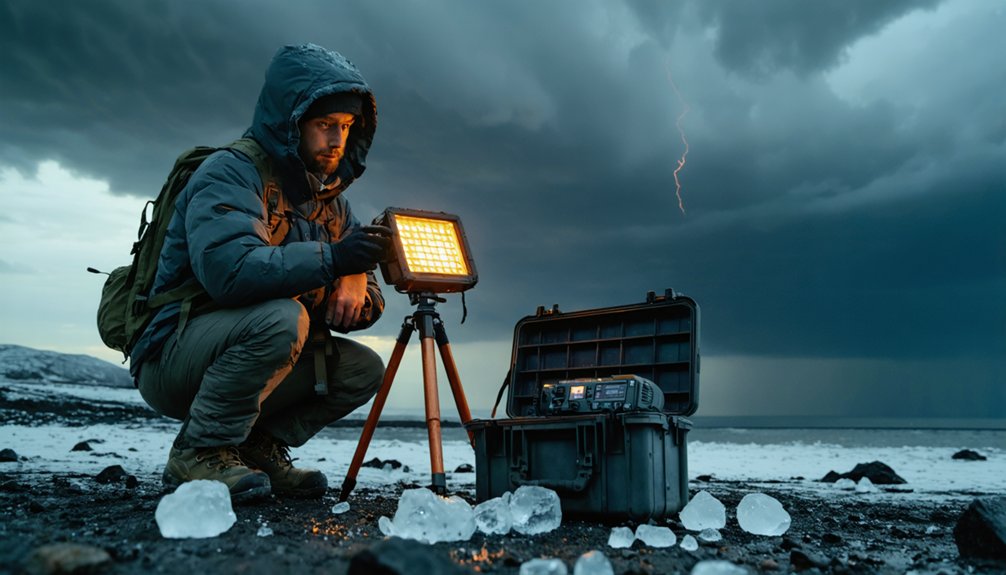
Power outages during hailstorms can sever conventional communication channels, so your team must rely on radio communication devices equipped with waterproof cases to maintain reliable contact.
Hailstorms knock out conventional communication — waterproof radios keep your team connected when it matters most.
Strengthening your communication infrastructure requires deliberate preparation before storms hit. Backup power sources ensure your systems stay operational when the grid fails.
Follow these critical steps:
- Equip every team member with a waterproof two-way radio before deployment.
- Unplug electronics immediately to prevent surge damage during outages.
- Charge all backup power units and portable battery banks prior to fieldwork.
- Avoid corded phones and electrical appliances during active lightning threats.
You maintain operational independence by building redundant systems that don’t depend on vulnerable grid infrastructure, keeping your team coordinated throughout peak storm intensity.
How Do You Track Every Team Member Before Peak Storm Intensity?
Before peak storm intensity strikes, you must account for all team members, pets, and equipment through a structured roll call system.
Designate a primary coordinator who confirms each person’s location and status using radio communication devices secured in waterproof cases.
Cross-reference equipment safety checklists to verify that critical gear is stored or secured before conditions deteriorate.
Don’t wait until storm conditions escalate—execute your accountability protocol the moment hail warnings activate.
Direct every confirmed team member toward the designated storm shelter immediately after verification.
Log each individual’s status systematically, noting their shelter location and physical condition.
If any member remains unaccounted for, dispatch a secondary contact before peak intensity arrives.
Structured accountability eliminates guesswork and keeps your entire team protected when conditions become most dangerous.
What to Do When You’re Caught Outdoors Without Shelter
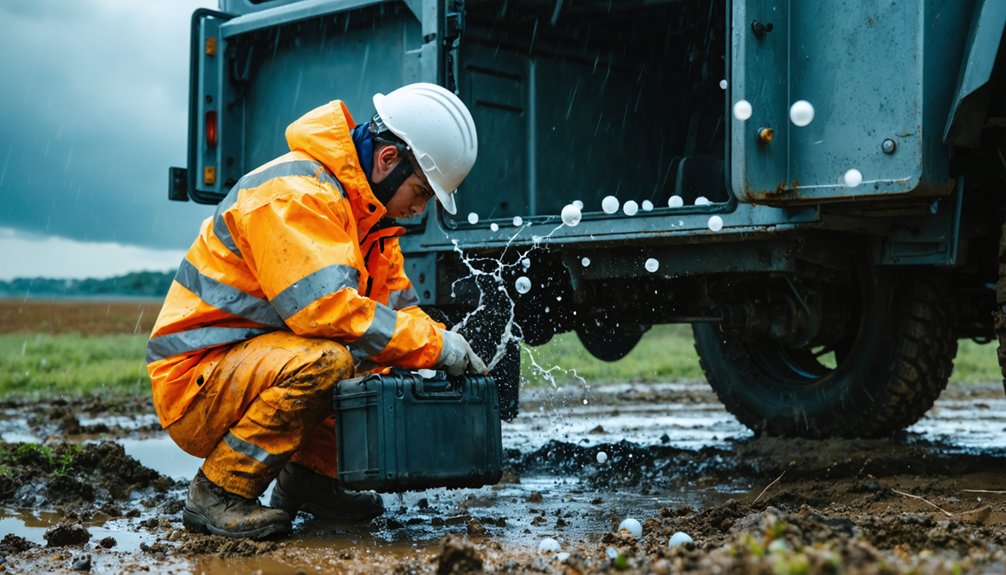
When hailstorms catch you outdoors without cover, seek low areas like ditches or ravines immediately to reduce your exposure to direct hail impact. Outdoor safety depends on quick, deliberate action when shelter options aren’t available.
Follow these crucial steps:
Follow these crucial steps to protect yourself and stay safe when hailstorms strike without warning.
- Cover your head and face with arms, a bag, or an emergency blanket to absorb impact.
- Lie face down to minimize your exposed surface area against incoming hailstones.
- Keep your back toward the storm’s direction to protect essential organs and airways.
- Shield children beneath your body while covering their eyes from flying debris.
Don’t move until the storm fully stops. Staying low, covered, and still gives you the best survivable position when no structural protection exists within reach.
When Is It Safe to Resume Field Research After a Hailstorm?
Before you resume field research, confirm the hailstorm has completely stopped and that conditions are verified safe by official sources or direct observation.
You must assess post-storm field conditions for structural hazards, waterlogged terrain, and debris that could compromise your team’s safety and equipment.
Account for all team members immediately, ensuring everyone is physically unharmed and properly equipped before re-entering the field.
Confirming Storm Completely Stopped
Resuming field research too early after a hailstorm exposes your team to residual hazards that are just as dangerous as the storm itself. Before you exit any structure, verify the storm aftermath systematically:
- Confirm hail has completely stopped falling with no intermittent bursts.
- Monitor official weather channels to validate the storm system has fully passed.
- Inspect exit routes for hail damage, including weakened structures and debris-covered paths.
- Account for every team member and confirm communication devices are operational.
Don’t rely solely on visual cues outside windows—storms can temporarily pause before intensifying.
You must receive an official all-clear from weather monitoring systems before mobilizing. Premature exits compromise your safety and your team’s operational integrity.
Assessing Post-Storm Field Conditions
Once you’ve confirmed the storm has fully stopped and received an official all-clear, your next step is a systematic assessment of field conditions before mobilizing your team.
Document hailstone patterns across the site to identify impact zones, structural damage, and ground saturation levels.
Check for downed power lines, destabilized trees, and flooded culverts that could compromise personnel safety.
Any residual weather anomaly—secondary cells, rotating clouds, or sudden pressure shifts—warrants postponing re-entry until conditions fully stabilize.
Inspect all vehicles for windshield damage and compromised structural integrity before deployment.
Verify communication devices are operational and confirm team accountability.
Only after completing this structured evaluation should you authorize field personnel to resume data collection, ensuring every movable hazard is catalogued and mitigated beforehand.
Accounting For All Team Members
Accounting for all team members is a non-negotiable checkpoint that determines whether field research can safely resume after a hailstorm.
Before exiting any shelter, confirm full team communication and equipment inventory status using these steps:
- Verify each member’s physical condition and location through direct radio contact.
- Confirm all personnel are accounted for before anyone moves outdoors.
- Cross-check equipment inventory against your pre-storm manifest to identify losses or damage.
- Report discrepancies immediately to your team lead before resuming operations.
Don’t proceed into the field if any member remains unaccounted for or if critical equipment is compromised.
You’re responsible for maintaining operational integrity, and skipping this checkpoint exposes your entire team to compounded risks during an already vulnerable post-storm window.
Frequently Asked Questions
How Do Field Researchers Document Hailstorm Data Without Risking Personal Injury?
You’ll document hailstorm data safely by activating hail detection systems remotely, following strict safety protocols, monitoring forecasts continuously, and staying sheltered until conditions clear—letting technology capture critical field data without exposing yourself to direct hailstorm hazards.
What Insurance Coverage Do Field Research Teams Typically Carry During Storm Season?
Over 70% of field teams carry specialized insurance policies. You’ll want coverage options that include equipment loss, liability, and medical protection, ensuring you’re never restricted by financial risk during active storm season research operations.
How Are Hailstorm Research Findings Shared With Emergency Management and Public Agencies?
You’ll share hailstorm data through emergency communication networks, delivering real-time reports directly to public agencies. You transmit findings via secure digital platforms, ensuring emergency management teams access accurate, actionable intelligence to coordinate rapid, independent responses efficiently.
What Psychological Support Is Available for Researchers After Traumatic Storm Exposure?
Like Odysseus returning from harrowing seas, you’re not alone. You can access post-trauma counseling and peer support programs that help you process traumatic storm exposure, rebuild resilience, and reclaim your autonomy after intense field research experiences.
How Do Research Teams Obtain Permits to Operate in Active Storm-Affected Zones?
You’ll typically secure permits through local emergency management agencies, coordinating with authorities on storm safety protocols and risk management plans that demonstrate your team’s preparedness, equipment standards, and contingency strategies before entering active storm-affected zones.
References
- https://www.fs.usda.gov/visit/know-before-you-go/hail
- https://www.unionmutual.com/tips/hail-storm-safety/
- https://www.statefarm.com/simple-insights/residence/staying-safe-in-a-hailstorm
- https://www.ifrc.org/sites/default/files/2021-06/19-HAILSTORMS-HR.pdf
- https://www.economical.com/en/blog/economical-blog/july-2021/before-during-and-after-a-hailstorm
- https://www.chubb.com/us-en/individuals-families/resources/hail-101-whos-at-risk-preventing-damage.html
- https://www.weather.gov/otx/General_Severe_Weather_Safety