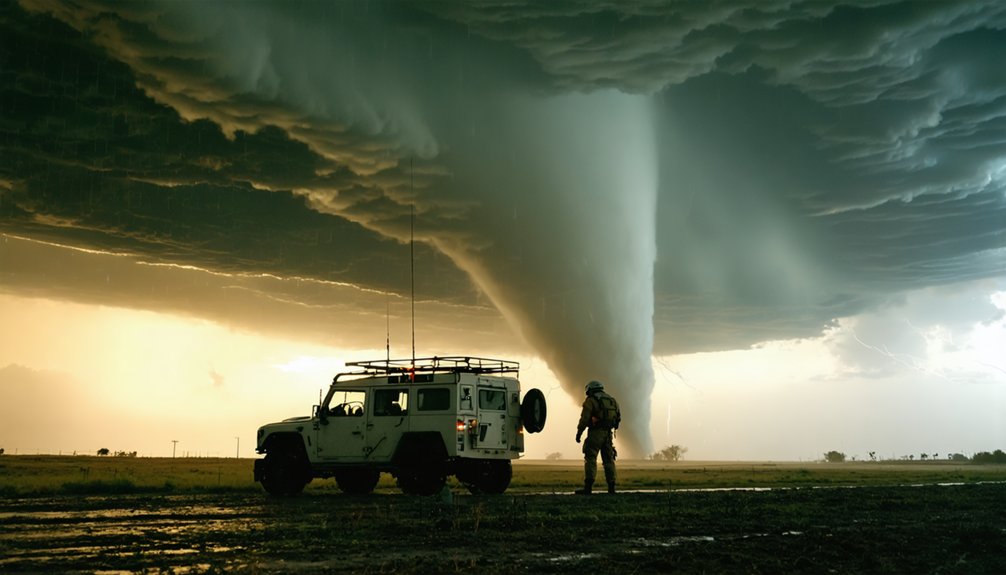
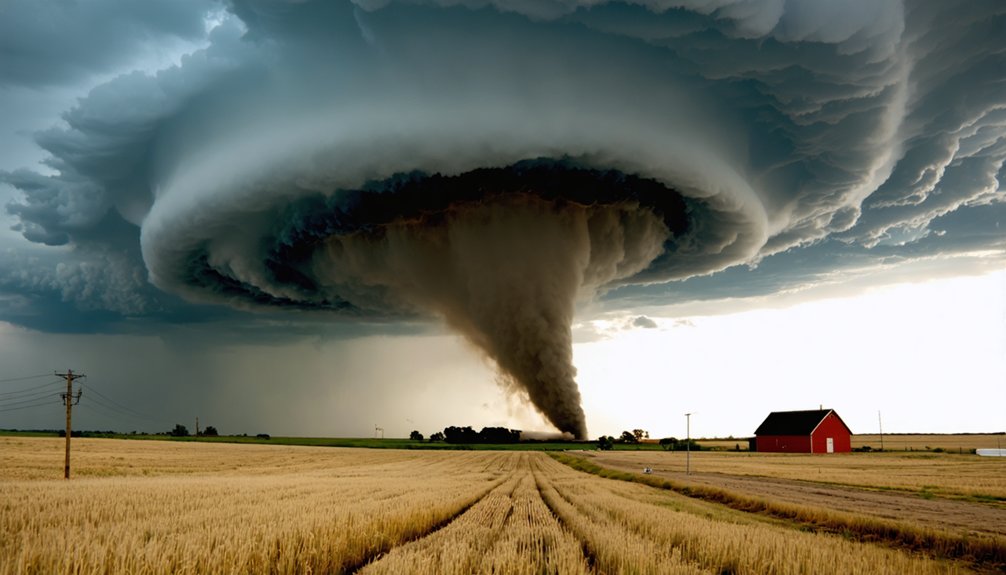
Climate change is actively pushing tornado activity eastward, away from traditional Plains states like Oklahoma and Kansas, into the Southeast and Mid-South. Warmer Gulf moisture, expanding drylines, and shifting jet streams are fueling storm environments farther inland. Data from 1989–2019 confirms a statistically significant eastward shift, with Alabama, Tennessee, Kentucky, and Arkansas now absorbing more outbreak activity. The disaster threat could potentially triple as tornadoes migrate into more populated, less-prepared regions—and the full picture is even more alarming.
Key Takeaways
- Climate change is shifting tornado activity eastward from the traditional Plains states toward the Southeast and Mid-South regions.
- Warmer Gulf waters increase atmospheric instability, reorganizing jet streams that steer storm tracks eastward into more populated areas.
- Traditional Tornado Alley states like Oklahoma and Kansas are seeing declining activity, while Alabama, Tennessee, and Arkansas face rising risks.
- The Southeast lacks adequate warning systems and shelters, making the region significantly more vulnerable to the increasing tornado threat.
- Tornado seasons are becoming less predictable, potentially longer, and outbreaks more clustered, overwhelming emergency response capabilities.
What Is Tornado Alley and Where Has It Traditionally Been?
Tornado Alley has long referred to a broad corridor stretching across Texas, Oklahoma, Kansas, Nebraska, and South Dakota, where atmospheric conditions consistently produce some of the world’s most intense tornado activity.
Historical records show this region generates the highest concentration of violent tornadoes globally, driven by colliding dry polar air from Canada, warm Gulf moisture from the south, and dry air masses pushing east from the Rockies. These intersecting forces create ideal wind shear and instability.
Colliding air masses from Canada, the Gulf, and the Rockies forge the perfect conditions for violent tornado formation.
Tornado patterns across this corridor dominated scientific and emergency management frameworks for decades, shaping infrastructure policy, warning systems, and public preparedness strategies.
You’ll find that this traditional geography defined how researchers, forecasters, and policymakers understood tornado risk — a framework now facing serious reconsideration as atmospheric dynamics continue shifting.
How Climate Change Is Reshaping Tornado Alley’s Path
As climate conditions evolve, atmospheric scientists are identifying a measurable eastward redistribution of U.S. tornado activity — one that’s challenging the traditional Tornado Alley framework built over decades of Plains-centered observation.
Tornado history shows slight declines across Oklahoma and Kansas while frequency rises across Arkansas, Tennessee, and Alabama.
Multiple climate drivers are converging to reshape storm corridors: increased Gulf moisture, expanding drylines from the southwest, and shifting jet stream patterns are collectively altering where tornado-supportive environments form.
A 2018 NOAA-linked study confirmed tornadoes are declining slightly in the Great Plains while increasing eastward.
Analysis of 1989–2019 data reinforces a statistically significant northeastward and southeastward shift.
Climate adaptation demands that you recognize this redistribution isn’t theoretical — it’s documented, accelerating, and carries serious implications for population exposure across the expanding risk zone.
How Gulf Moisture and Jet Streams Are Driving the Shift
Behind the eastward migration of tornado activity are two dominant atmospheric mechanisms: increasing Gulf of Mexico moisture and shifting jet stream patterns. As Gulf moisture pushes farther inland, it’s fueling stronger storm-supporting environments across the Southeast and lower Mississippi Valley.
Warmer sea surface temperatures amplify this effect, delivering more instability to regions that weren’t historically prime tornado territory.
Simultaneously, jet streams are reorganizing under warming conditions, steering storm tracks away from the central Plains and toward the eastern U.S. These shifts aren’t random—they’re consistent across decades of observational data and climate simulations.
When Gulf moisture and displaced jet streams converge over states like Arkansas, Tennessee, and Alabama, you get precisely the atmospheric ingredients that generate significant tornado outbreaks. That combination is becoming more frequent, not less.
How Great Plains Tornado Activity Is Declining
While tornado activity is expanding eastward, the traditional Plains corridor is simultaneously losing its historic dominance. Data shows a measurable redistribution away from the classic storm track, reshaping what you’ve long understood about tornado season risk.
Key shifts analysts have identified:
- Dallas and Austin are recording fewer tornado days per decade.
- Oklahoma’s tornado activity center is shrinking under warming-climate simulations.
- Kansas remains active but shows declining relative dominance compared to eastern zones.
- Great Plains frequency dropped in a landmark 2018 NOAA and Northern Illinois University study.
This isn’t a collapse of Plains tornado activity — it’s a redistribution. The data consistently points toward a storm track migrating eastward, pulling risk away from wide-open spaces and into more densely populated territory.
Why the Southeast Is Becoming the New Tornado Alley
If you’re tracking where tornado risk is heading, the data points squarely at the Southeast. A 2024 study confirms that the greatest tornado threats now cover parts of the eastern U.S.
And a 2018 NOAA and Northern Illinois University analysis found a statistically significant eastward redistribution of tornado activity away from the Great Plains.
What makes this shift especially consequential is that you’re now looking at a more densely populated region, with some expert analyses citing a possible threefold increase in disaster potential as the threat zone continues moving east.
Southeast Tornado Risk Rising
As traditional Tornado Alley loses its grip on the central Plains, the Southeast is emerging as the nation’s most rapidly expanding tornado risk zone. Shifting meteorological patterns are redistributing tornado threats into regions with less preparedness and higher population density, directly challenging urban resilience across multiple states.
Recent data confirms the acceleration:
- A 1989–2019 analysis found a statistically significant eastward and southeastward shift in tornado activity.
- Alabama, Tennessee, and Kentucky are experiencing more frequent large outbreaks.
- Arkansas sits at the center of the emerging risk corridor.
- Experts estimate a 25% greater tornado threat risk for mid-South areas, with disaster potential possibly tripling.
You’re now living in a landscape where the threat boundaries have fundamentally moved—and the data demands your attention.
Population Exposure Increasing Fast
The eastward migration of tornado activity isn’t just a meteorological story—it’s a population exposure crisis unfolding in real time. Historical patterns placed tornado risk over sparsely populated Plains terrain, where infrastructure density was low. That calculus has changed.
The Southeast’s expanding risk corridor now overlaps densely populated cities, suburbs, and counties less structurally prepared for repeated tornado impacts.
Experts warn of a potential threefold increase in disaster potential as activity shifts east. Urban planning in Arkansas, Tennessee, and Alabama hasn’t historically accounted for frequent tornado threats, leaving residents more vulnerable.
One analysis identifies roughly 25% greater tornado threat risk across mid-South regions. You’re now looking at more people, more homes, and more infrastructure directly in the path of a climatologically reshaping hazard zone.
Which States Face the Biggest Rise in Tornado Risk?
While the eastward shift in tornado activity affects a broad swath of the country, certain states are absorbing a disproportionate share of the growing risk.
Historical patterns and meteorological influences point clearly toward an emerging high-risk corridor replacing traditional Tornado Alley:
- Arkansas – Now central to the lower Mississippi Valley risk zone, with measurable increases in tornado-supportive environments.
- Alabama & Tennessee – Large outbreak frequency has risen sharply, driven by increased Gulf moisture and jet stream shifts.
- Mississippi & Louisiana – Expanding Southeast exposure places both states in climate-driven high-risk projections.
- Kentucky & Illinois – Northeastern tracking patterns push tornado activity further into historically underprepared populations.
You’re now living in a reality where tornado risk isn’t confined to the Plains — it’s spreading toward you.
Why Tornadoes in the New Tornado Alley Are More Dangerous
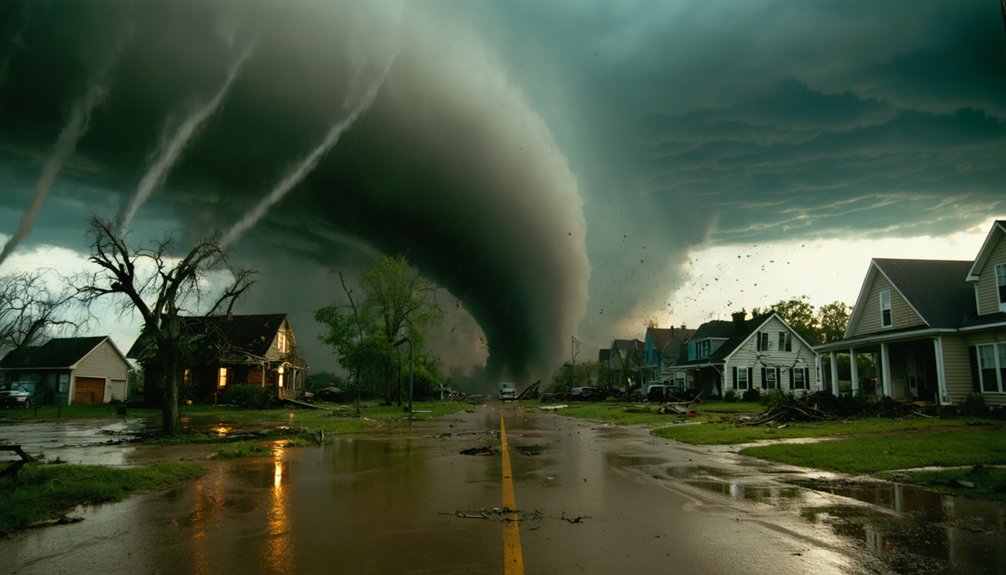
When you look at why the emerging tornado corridor poses a greater threat than the traditional Plains zone, you’ll find that the danger isn’t just about frequency—it’s about vulnerability.
The Southeast’s population centers are denser, less tornado-prepared, and more exposed to the kind of large outbreaks that researchers say are becoming more common.
Scientists estimate the disaster potential could increase threefold as tornado activity shifts into regions where building standards, warning infrastructure, and public preparedness haven’t historically needed to account for repeated, high-intensity tornado events.
Less Preparation, Greater Risk
Shifting tornado activity into the Southeast doesn’t just change the geography of risk — it multiplies the consequences. You’re now looking at a region with markedly less tornado safety infrastructure than the Great Plains. Climate adaptation hasn’t kept pace with the threat.
Here’s what that gap looks like:
- 25% greater tornado threat risk now affects mid-South communities
- Threefold increase in disaster potential as the threat zone moves eastward
- Fewer storm shelters and warning systems exist compared to traditional Tornado Alley
- Denser populations mean more homes, lives, and infrastructure directly in the path
The Plains built its defenses over decades. The Southeast hasn’t had that runway. That disparity — not just the storms themselves — is what makes this shift genuinely dangerous.
Denser Populations Face Threats
The geography of tornado risk isn’t changing in a vacuum — it’s colliding with human density. Tornado climatology shows the eastward shift places activity over cities and suburbs that weren’t historically built with tornado resilience in mind. Unlike the sparse Plains, the Southeast packs more people, homes, and infrastructure into the expanding risk corridor.
The math is stark. Experts project a potential threefold increase in disaster potential as wind shear-driven storms intensify over more populated terrain. Areas across the mid-South already face roughly 25% greater tornado threat exposure.
You’re looking at a redistribution of risk onto communities that lack the storm shelters, warning culture, and institutional preparation that Plains residents developed over generations. Greater density means every tornado carries heavier consequences.
Outbreak Frequency Is Increasing
Large tornado outbreaks — not isolated twisters — are driving the danger spike in the new risk corridor. Tornado climatology confirms that multi-tornado events are concentrating in the Southeast, where storm dynamics produce clustered, fast-moving systems. You’re no longer dealing with a single funnel — you’re facing coordinated outbreak sequences.
Key data points you need to understand:
- Large outbreaks have increased measurably across Alabama, Tennessee, and Kentucky.
- A 2024 study confirmed the greatest tornado threats now target eastern U.S. corridors.
- Storm dynamics in the Southeast generate faster, more erratic tornado paths.
- Total U.S. tornado counts remain stable — but outbreak clustering is intensifying.
That redistribution matters. Concentrated outbreaks overwhelm emergency infrastructure faster than scattered events, compressing your response window considerably.
What the Data Says About Shifting Tornado Alley Trends
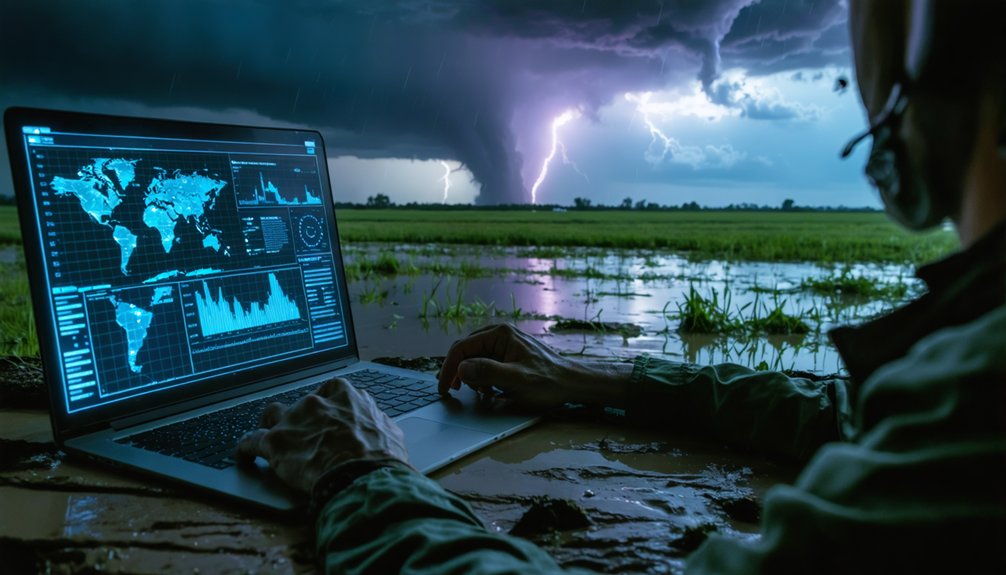
While total U.S. tornado counts haven’t risen sharply, the data reveals a clear redistribution in where tornadoes occur. A 2018 NOAA and Northern Illinois University study confirmed tornadoes slightly declining in the Great Plains while increasing in the East.
Analysis of 1989–2019 data shows a statistically significant eastward, northeastward, and southeastward shift in activity patterns.
Historical climate variability alone doesn’t explain these trends. A 2024 study identified the greatest tornado threats now covering parts of the eastern U.S., where urban infrastructure remains far less prepared than Plains communities.
Large outbreaks are becoming more concentrated in Alabama, Tennessee, Kentucky, and Arkansas.
You’re looking at a measurable redistribution, not random noise. The data consistently points east, and that trajectory carries serious implications for population exposure and disaster readiness.
How Much Worse Could the Tornado Alley Shift Get?
If current climate trajectories hold, you’re looking at a Southeast that absorbs a markedly larger share of U.S. tornado risk in the coming decades.
Experts warn that disaster potential could increase threefold as tornado activity pushes into more densely populated regions that lack the preparedness infrastructure of the traditional Plains corridor.
You should also factor in that areas across the mid-South already face roughly 25% greater tornado threat risk, a figure that’s likely to climb as warming-driven atmospheric shifts continue redistributing storm activity eastward.
Projections for Future Risk
As climate conditions continue evolving, projections suggest the Southeast’s share of U.S. tornado risk will keep growing. Historical records from 1989–2019 already confirm a statistically significant eastward shift. Here’s what the data projects ahead:
- Tornado outbreaks will likely increase in Alabama, Tennessee, Kentucky, and Arkansas as Gulf moisture expands northward.
- Disaster potential could triple if tornado activity continues migrating into densely populated southeastern corridors.
- Urban planning must account for a 25% greater tornado threat risk now documented across mid-South regions.
- Great Plains dominance will continue weakening, with Oklahoma and Kansas losing relative tornado frequency to eastern states.
You’re no longer looking at a distant risk—the threat zone is actively redistributing toward where more people live.
Population Exposure Concerns
How much worse could this get? The data suggest considerably.
Unlike the sparsely populated Plains where historical patterns shaped communities around tornado risk, the expanding eastern corridor runs through denser cities and suburbs.
Rural resilience—the deeply embedded preparedness culture of traditional Tornado Alley—doesn’t exist at the same level in the Southeast or mid-South.
Experts warn you’re looking at a possible threefold increase in disaster potential as the threat zone continues eastward.
One analysis puts the mid-South’s tornado threat risk roughly 25% higher than historical baselines.
More people, homes, and infrastructure now sit directly in the crosshairs.
When a tornado hits a prepared rural community, the outcome differs sharply from when it strikes an unprepared metropolitan area.
That gap in readiness is where the real danger compounds.
What the Expanding Tornado Alley Risk Zone Means for Residents
The eastward shift in tornado activity carries direct consequences for millions of residents who live outside the traditional Plains corridor but now fall within an expanding risk zone. Data shows a 25% greater tornado threat risk in mid-South communities. You need to act on that reality now.
Key actions driven by current research:
- Invest in tornado forecasting tools — monitor NOAA alerts and local warning systems actively.
- Build emergency preparedness plans — identify shelter locations before severe weather seasons.
- Understand your specific risk — Arkansas, Tennessee, Kentucky, and Mississippi face measurably higher exposure.
- Secure your property — reinforced safe rooms reduce casualty risk markedly.
Your freedom to protect yourself depends on informed, decisive action before the next outbreak reaches your community.
Frequently Asked Questions
Does Homeowner’s Insurance Typically Cover Tornado Damage in Newly Affected States?
Yes, your standard homeowner’s insurance typically covers tornado damage, but you’ll want to review coverage limitations carefully. As risk zones shift east, insurers may adjust insurance claims processes, deductibles, or availability in newly affected states.
How Do Meteorologists Officially Classify and Name Tornado Outbreak Events?
Like generals naming battles, meteorologists handle tornado classification by rating twisters EF0–EF5 via damage surveys. For outbreak naming, you’ll find they don’t officially name events — agencies instead document them by date, location, and storm reports.
Are Mobile Homes Banned or Restricted in High-Risk Tornado Zones?
No federal ban exists, but you’ll find that local tornado zone regulations vary widely. Some counties enforce mobile home restrictions, requiring anchoring systems or designated shelters, especially as shifting tornado risk now threatens more densely populated southeastern communities.
How Quickly Can a Tornado Form Before Residents Receive Warning Alerts?
Like a thief in the night, tornado formation can outpace warning alert timing drastically — you’ve got as little as 13 minutes average lead time, meaning you must act on sirens instantly, without hesitation.
Do Schools in the Southeast Currently Conduct Regular Tornado Safety Drills?
Many Southeast schools don’t conduct tornado drills as consistently as Plains states. You’ll find gaps in school safety and emergency preparedness protocols, which is concerning given the region’s rising tornado risk and growing population exposure.
References
- https://kentuckylantern.com/2025/05/19/traditional-tornado-alley-shifts-eastward-as-climate-changes-says-meteorologist-studying-trend/
- https://abcnews.com/US/tornado-alley-shifting-due-climate-change-scientists-explain/story?id=98347077
- https://www.nationalgeographic.com/environment/article/tornado-alley-shift-east
- https://corescholar.libraries.wright.edu/biw/vol8/iss1/6/
- https://www.reddit.com/r/askscience/comments/1kuh7wc/are_tornadoforming_regions_shifting_eastward_in/
- https://vitalsigns.edf.org/story/tornado-alley-move
- https://www.accuweather.com/en/severe-weather/is-tornado-alley-shifting-east/1162839
- https://www.bbc.com/future/article/20230616-how-tornado-alley-is-changing
- https://www.osti.gov/pages/servlets/purl/1853125
- https://www.cbsnews.com/news/tornado-alley-may-be-moving-to-southeast-climate-change-noaa-national-severe-storms-laboratory-oklahoma-study/