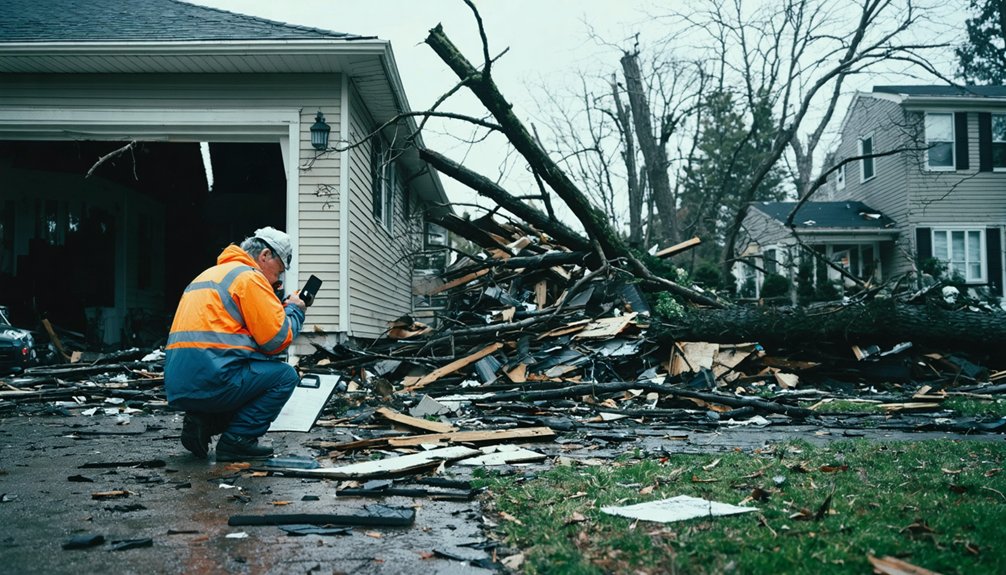
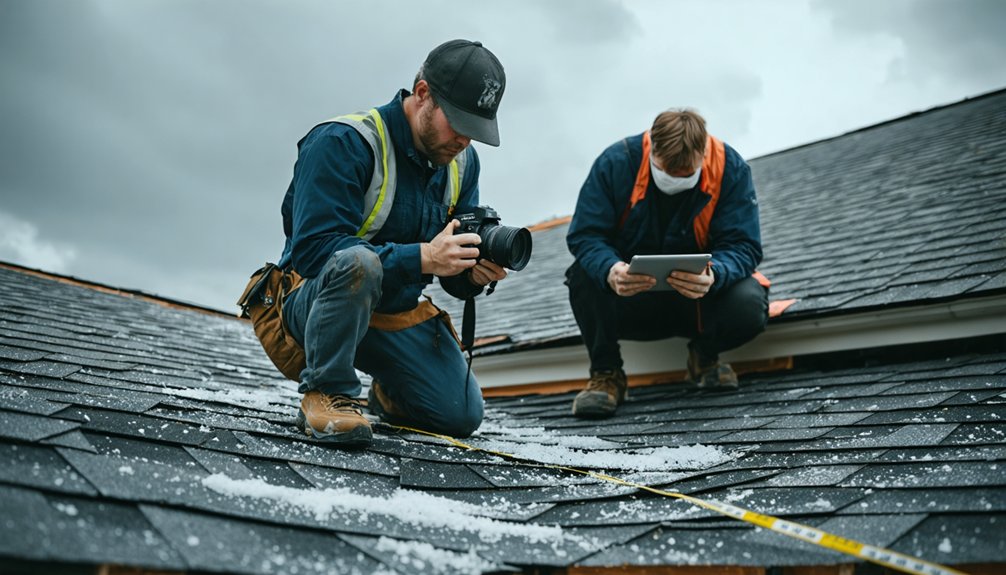
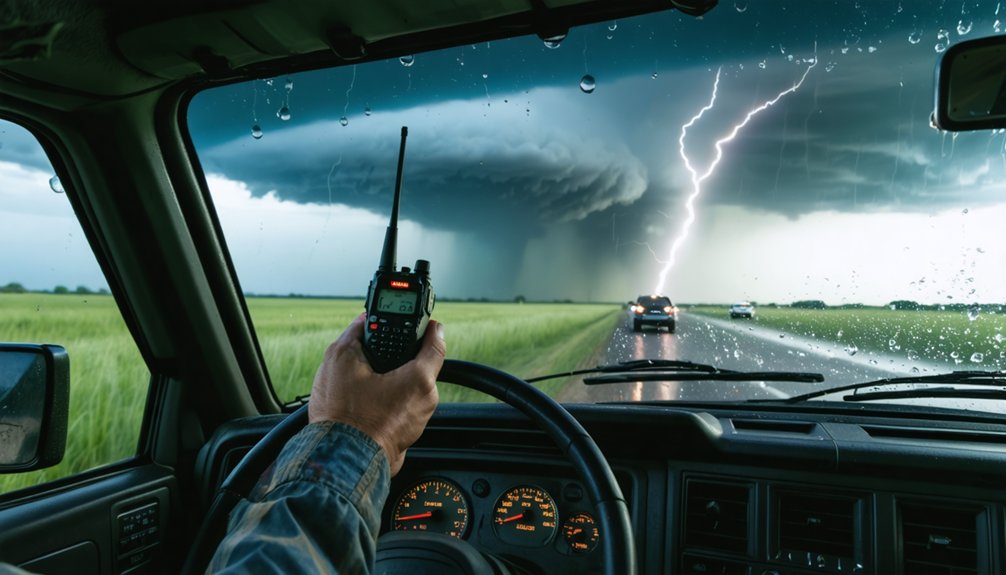
When a tornado strikes, storm chasers give emergency services something radar can’t—verified, ground-level intelligence in real time. They relay touchdown coordinates, damage extent, blocked roads, and injured civilians directly to emergency managers before EMS even arrives. Their GPS-tagged reports help responders prioritize high-casualty zones and reroute around debris. Trained spotters convert raw observations into actionable data, accelerating deployment decisions and improving outcomes. There’s much more to how this coordinated system actually works.
Key Takeaways
- Storm chasers provide real-time ground-level observations—tornado touchdowns, storm paths, and damage extent—before radar confirmation reaches emergency managers.
- Trained SKYWARN spotters relay GPS-tagged reports directly to the National Weather Service, accelerating tornado warnings and siren activations.
- Chasers arriving before EMS can perform early triage, report injuries, and flag road obstructions for efficient responder rerouting.
- Verified damage locations from chasers help emergency teams prioritize high-casualty zones and deploy search and rescue resources effectively.
- Credentialed spotters using standardized protocols reduce misinformation, improve coordination, and prevent uncoordinated chaser activity from hindering emergency operations.
What Storm Chasers Actually Do When a Tornado Strikes
When a tornado strikes, storm chasers shift roles depending on their training, proximity, and whether civilians are in the path of impact. Trained spotters move from weather visualization and tornado forecasting support into active ground-truth reporting, relaying storm structure, path, and damage data directly to emergency managers.
If you’re trained and equipped, you can bridge the gap between radar data and real-world conditions faster than distant responders can. Chasers near impact zones often deliver the first damage extent reports, identifying blocked roads and affected neighborhoods.
Some trained chasers provide immediate medical stabilization before EMS arrives. Your most effective contribution depends on following public-safety protocols, keeping response routes clear, and communicating precise, actionable field observations to officials coordinating search, rescue, and resource deployment decisions.
How Storm Chasers Give Emergency Services an Early Warning Edge
Before radar algorithms can confirm rotation or issue a tornado warning, your ground-level observations can already be in the hands of emergency managers. As a trained spotter, you deliver meteorological insights that remote sensing simply can’t replicate — wall cloud development, inflow intensity, debris signatures, and exact touchdown coordinates.
SKYWARN’s volunteer coordination framework routes your reports directly into National Weather Service operations, cutting the lag between atmospheric event and public warning. That window matters. Every minute gained can trigger sirens, activate shelter protocols, and redirect emergency resources before impact.
Your position in the field gives you resolution that no algorithm produces — precise, real-time, human-verified data. When you report accurately and promptly, you don’t just support the warning system. You functionally accelerate it.
When Storm Chasers Arrive Before EMS Does
The minutes immediately following a tornado strike are statistically the most critical for survivability — and you may already be on scene while EMS units are still routing around debris fields. Storm chaser safety protocols determine whether your presence helps or compounds the crisis.
When you arrive first, prioritize:
- Triage visible casualties and report injury counts to 911 immediately
- Flag road obstructions so responders can reroute efficiently
- Stabilize conscious victims using basic first-aid if you’re trained
- Maintain radio contact with volunteer coordination networks like SKYWARN
Your ground-level data reaches emergency managers faster than aerial assessment allows. That operational advantage only holds if you’re acting within a coordinated framework — uncoordinated presence creates obstacles, not solutions.
How Chaser Traffic Blocks Roads and Delays Emergency Response
Heavy chaser convergence on post-strike corridors creates bottlenecks that directly delay EMS, fire, and rescue units from reaching victims in those critical first minutes.
When chasers flood post-strike corridors, bottlenecks form — and every second EMS loses is a second victims don’t have.
Chaser congestion compounds an already chaotic environment — narrow rural roads and debris-strewn streets can’t absorb the volume of uncoordinated vehicles simultaneously pushing toward impact zones.
Road blockages force responders to reroute, burning time that directly costs lives.
Emergency officials have documented cases where clustered chaser vehicles slowed debris clearing and blocked resident welfare checks.
You’re operating in a shared space with legal emergency authority, and that distinction matters operationally.
Maintaining your freedom to chase means demonstrating responsible field discipline.
Yield immediately to lights and sirens, stage vehicles off primary access corridors, and treat every response route as a protected lane.
How Real-Time Chaser Reports Help Responders Prioritize Faster
When you receive real-time ground reports from chasers, you gain verified damage locations before radar analysis or aerial reconnaissance can confirm them. This compresses the time between impact and informed decision-making.
You can use that field data to direct search-and-rescue teams, medical units, and equipment to the hardest-hit areas first rather than deploying resources across a broad, unconfirmed damage footprint.
Each update a chaser transmits—road status, structural collapse, injury reports—feeds directly into your operational picture and sharpens how efficiently you allocate a response that’s always working against the clock.
Ground Reports Enable Faster Decisions
During a major tornado outbreak, emergency managers can’t rely solely on radar returns and automated alerts—they need eyes on the ground. Ground-level weather pattern analysis and active storm tracking give responders data that radar simply can’t deliver.
When you’re coordinating response assets, real-time chaser reports let you:
- Identify damage corridors before aerial surveys confirm them
- Redirect EMS units away from blocked roads toward viable access routes
- Confirm tornado touchdowns that radar signatures only suggest
- Prioritize high-casualty zones over areas with minimal structural impact
Each data point narrows your decision window. Instead of waiting on conflicting remote-sensing interpretations, you’re acting on verified field observations. That’s a measurable operational advantage—faster deployment, smarter resource allocation, and ultimately better outcomes for affected communities.
Damage Location Guides Resource Deployment
Real-time chaser reports compress the lag between storm impact and resource deployment by giving emergency managers verified damage locations before aerial or satellite assessments are available.
When you’re coordinating response operations, that ground-truth data feeds directly into damage mapping, letting you prioritize high-casualty zones over lightly affected areas without waiting on delayed reconnaissance.
Chasers reporting road blockages, structural collapses, and injury clusters give you actionable coordinates rather than estimated impact zones.
That precision tightens resource allocation decisions, reducing the risk of dispatching crews to secondary areas while primary strike zones remain unaddressed.
You’re not guessing where to send ambulances or rescue teams—you’re routing them based on confirmed field observations.
Faster, accurate deployment reduces response lag and maximizes coverage during the critical window immediately following impact.
Real-Time Updates Improve Response Efficiency
As chaser reports feed into your operations center in real time, they compress the decision cycle that typically separates impact from coordinated response. Technology integration makes this possible—GPS-tagged video, structured field reports, and amateur-radio relays deliver ground-truth data before aerial assessment clears.
Community engagement amplifies coverage across multiple simultaneous storm tracks.
Prioritize these four operational gains from real-time chaser input:
- Triage sequencing — identify which damaged sectors need immediate medical deployment
- Route intelligence — confirm passable corridors before committing response vehicles
- Threat tracking — monitor active storm movement threatening additional populated areas
- Resource staging — position assets closer to projected impact zones earlier
Each data point shortens your reaction window, letting you allocate finite emergency resources with measurable precision rather than assumption.
Why Trained Storm Spotters Outperform Casual Chasers in a Crisis
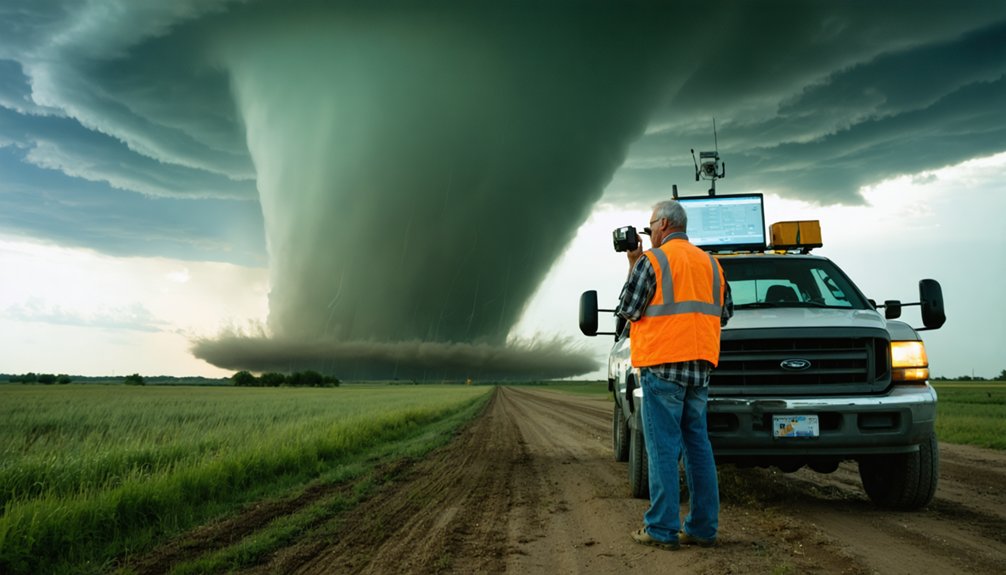
When a tornado touches down in a populated area, the difference between trained storm spotters and casual chasers becomes operationally significant. Credential standards separate spotters who’ve completed formal SKYWARN training from uncoordinated observers operating without protocol.
Trained spotters integrate into volunteer coordination frameworks tied directly to county emergency management systems, enabling structured data relay rather than fragmented social media posts.
You need to understand what that distinction produces under pressure. Trained spotters report using standardized terminology, positioning themselves at pre-designated observation points, and maintaining communication discipline on designated frequencies.
Casual chasers often cluster on primary response routes, creating traffic hazards that delay EMS and debris-clearing crews.
The operational advantage isn’t enthusiasm — it’s protocol adherence. Structured participation converts field observation into actionable intelligence that emergency managers can actually deploy.
Frequently Asked Questions
Can Storm Chasers Legally Enter Restricted Areas After a Tornado Strikes?
You can’t just bulldoze through absolute legal restrictions after a tornado—access permissions are iron-clad. You must respect official barriers, yield to emergency crews, and await authorized clearance before entering restricted zones.
Do Storm Chasers Carry Specialized Equipment Specifically for Tornado Disaster Zones?
Yes, you’ll often carry tornado sensors, weather monitoring tools, drones, first-aid kits, amateur radios, and backup power systems—equipment that’s analytically valuable for real-time data collection, damage assessment, and communication support in active disaster zones.
Are Storm Chasers Ever Compensated by Emergency Agencies for Their Assistance?
Like unpaid soldiers on the frontlines, you typically won’t receive monetary compensation. Most agencies offer volunteer recognition instead. Insurance coverage varies by program, but SKYWARN and similar networks rarely provide direct financial payment for your contributions.
How Do Storm Chasers Coordinate With Each Other to Avoid Duplicating Efforts?
You’ll coordinate through communication protocols like radio nets and apps, sharing real-time position data and resource sharing agreements to avoid overlapping coverage zones, maximizing observational efficiency across storm tracks without redundant deployment of personnel or equipment.
What Liability Do Storm Chasers Face When Assisting Tornado Victims Directly?
Before you act, know this: your legal responsibilities vary by state. Good Samaritan laws may shield you, but you’ll want insurance coverage confirmed beforehand—gaps exist, and acting without preparation could expose you unexpectedly.
References
- https://www.weather.gov/skywarn/
- https://www.ksnt.com/news/local-news/marshall-county-calls-for-statewide-storm-chaser-safety-discussion/
- http://www.caps.ou.edu/~kbrews/spothelp.html
- https://www.youtube.com/watch?v=SB-KxGeARVc
- https://en.wikipedia.org/wiki/Storm_chasing
- https://crazystormchasers.com/should-storm-chasers-help-tornado-victims-or-keep-chasing/
- https://forums.firehouse.com/forum/meet-and-greet/meet-and-greet-aa/2101905-storm-chasers-as-first-responders
- https://www.youtube.com/watch?v=I9O_D5SI8sg
- https://www.reddit.com/r/tornado/comments/1t62wli/support_the_chasers_who_did_sar_today_in/