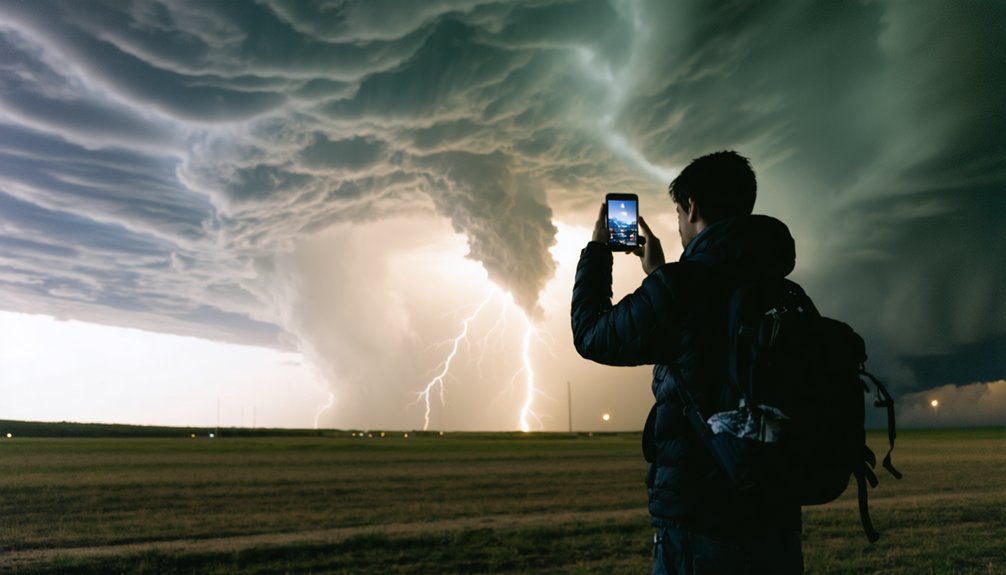
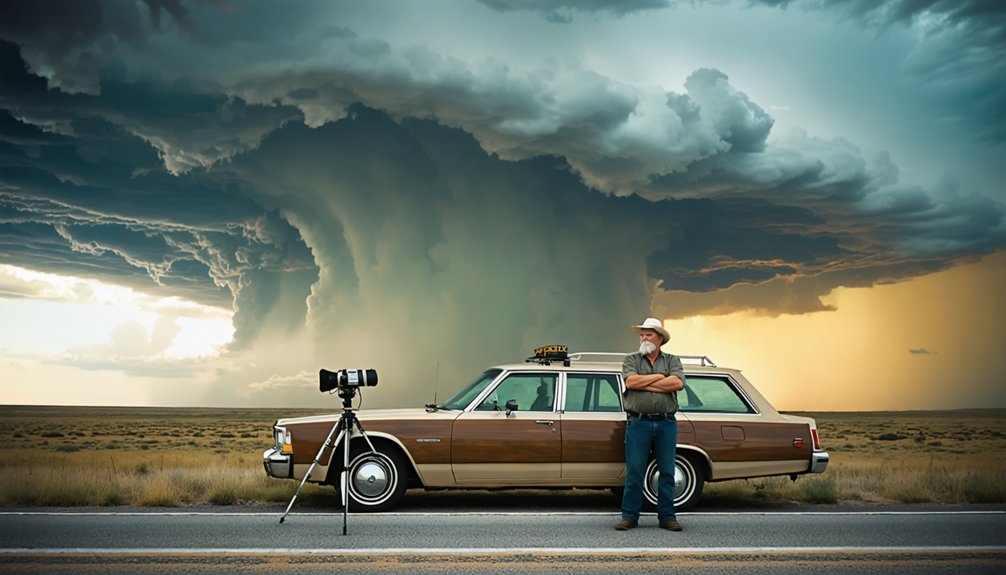
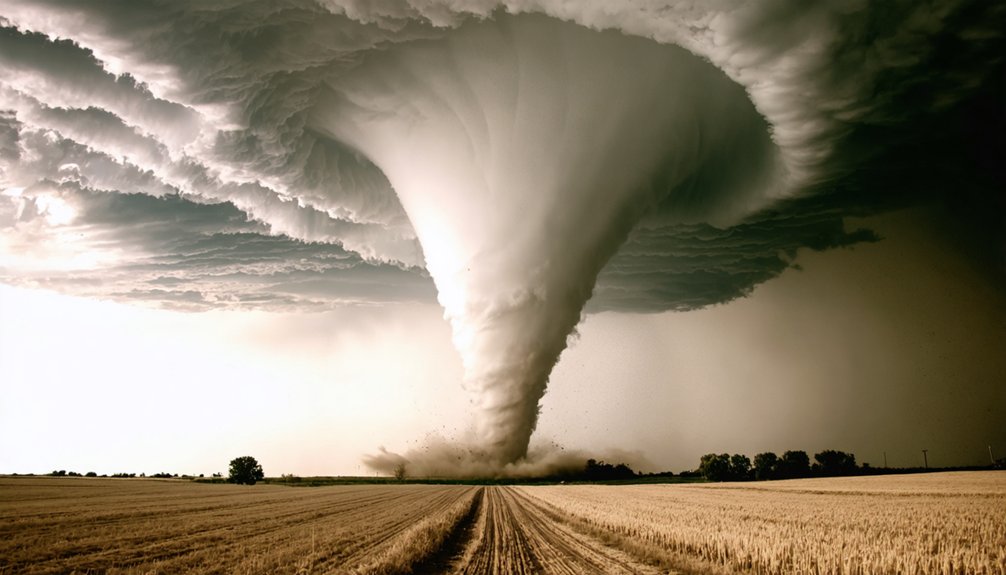
Discovery Channel’s *Storm Chasers* didn’t just document tornado pursuit — it reframed it as something you could aspire to. Before 2007, storm chasing belonged almost entirely to scientists and researchers. The show blended real danger with accessible expertise, transforming specialized meteorological knowledge into mainstream fascination. It arrived at reality television’s cultural peak, amplifying public curiosity about severe weather rather than manufacturing it. If you want to understand its full legacy, there’s considerably more to unpack.
Key Takeaways
- Discovery Channel’s *Storm Chasers*, premiering in 2007, transformed tornado chasing from a scientific discipline into an exciting, aspirational pursuit for mainstream audiences.
- The show blended authentic danger with real expertise, reshaping public assumptions about what storm chasing actually involves.
- By framing tornado pursuit as achievable and thrilling, the show inspired a surge in public participation within chase communities.
- Newcomers motivated by the show actively engaged with meteorology, joining online forums and local weather groups in greater numbers.
- The show’s success created lasting demand for storm-chasing content, inspiring spinoffs, documentaries, and a global severe weather tracking community.
Storm Chasing Before the Cameras Arrived
Before storm chasing became a televised spectacle, it developed quietly as a scientific discipline rooted in academic research. The University of Oklahoma and the National Severe Storms Laboratory launched organized storm chasing in 1972 through the Tornado Intercept Project.
These early pioneers treated severe weather pursuit as rigorous fieldwork, not entertainment. The 1973 Union City tornado became a defining research event, demonstrating what systematic observation could reveal about supercell behavior. You won’t find dramatic camera crews in this era — just scientists with instruments and determination.
PBS’s *Nova*, select magazine features, and limited television coverage offered modest public exposure through the 1980s. By the 1990s, VHS footage, news media, and the internet began widening storm chasing’s audience, quietly preparing the culture for what television would later amplify.
How Discovery Channel’s *Storm Chasers* Differed From Earlier Documentaries
The tradeoff mattered. Scientific depth thinned out as entertainment value climbed.
Discovery understood its audience wanted access and adrenaline, not methodology. That distinction separates *Storm Chasers* from its predecessors and explains why it reached so far beyond the severe-weather community.
How the Show Changed What People Thought Storm Chasing Was?
That framing drove a cultural transformation.
You weren’t watching lab researchers anymore — you were watching teams making split-second decisions on open highways. The show made pursuit feel accessible, aspirational, and urgent.
It blended danger with expertise in a way that restructured public assumptions entirely. Storm chasing stopped being a fringe activity and became something you could recognize, follow, and even imagine yourself doing.
Why *Storm Chasers* Hit at Exactly the Right Cultural Moment
When *Storm Chasers* premiered in 2007, you were already living through reality television’s peak expansion, a moment when audiences had normalized watching real people navigate high-stakes environments in real time.
The show didn’t create that appetite — it fed it, slotting tornado pursuit directly into a format viewers already trusted and consumed heavily.
At the same time, broader public curiosity about extreme weather was growing, giving the series a culturally primed audience ready to treat storm chasing as both entertainment and legitimate science.
Reality TV’s Rising Popularity
By the time *Storm Chasers* premiered on Discovery Channel in 2007, reality television had already reshaped what American audiences expected from entertainment.
Shows like *Survivor* and *Deadliest Catch* had proven that real people in high-stakes environments drove strong viewer engagement.
*Storm Chasers* arrived fully aligned with these reality trends, offering authentic danger, specialized expertise, and unpredictable outcomes — elements audiences had already been conditioned to seek.
You weren’t watching scripted drama; you were watching professionals pursue actual tornadoes in real time.
Discovery recognized the format fit and positioned the series accordingly.
The cultural appetite for unscripted, high-risk content wasn’t accidental — it was a measurable shift in what you and millions of other viewers demanded from television by the mid-2000s.
Expanding Mainstream Weather Curiosity
Reality TV’s appetite for risk set the stage, but *Storm Chasers* tapped into something more specific: a growing public fascination with extreme weather that extended well beyond television formats.
The internet, VHS footage, and news coverage had already primed audiences throughout the 1990s. Discovery Channel’s broad reach then converted that passive curiosity into active public engagement.
You weren’t just watching tornadoes—you were watching real teams, real radar, and real decisions unfold. That distinction matters.
The show’s media influence didn’t manufacture interest; it amplified what already existed and gave it a structured, repeatable format.
Storm chasing moved from niche subculture to recognizable American phenomenon not because Discovery invented demand, but because it arrived precisely when audiences were ready to pay serious attention.
Did *Storm Chasers* Inspire a New Generation of Storm Chasers?
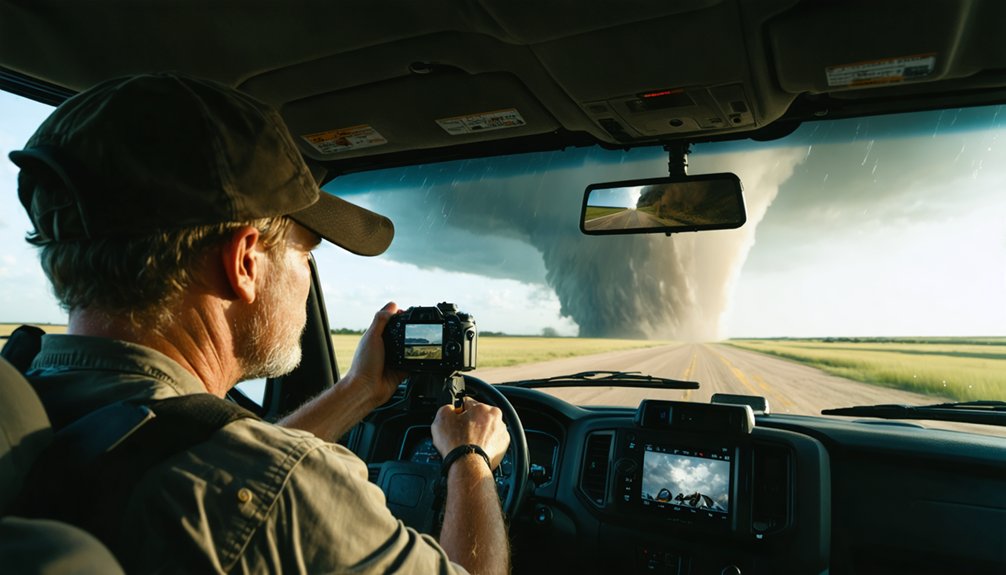
If you watched *Storm Chasers* during its 2007–2011 run, you likely encountered a version of tornado pursuit that looked achievable—real teams, real vehicles, real intercepts.
That accessibility wasn’t incidental; the show actively constructed storm chasing as something you could aspire to, not just observe.
The result was a measurable surge in public interest that pushed many viewers from their couches toward chase communities, weather forums, and eventually the field itself.
Inspiring New Chaser Enthusiasts
You could watch a team close in on a rotating supercell and immediately understand the appeal. That accessibility fueled the chaser community’s expansion, drawing in enthusiasts who’d never previously considered severe-weather pursuit.
The show cultivated an adrenaline culture around tornado chasing, framing it as both achievable and thrilling. Evidence of this shift appeared in growing online communities, chase tour bookings, and amateur chasers entering the field with cameras and basic weather apps.
Building the Next Generation
Storm education benefited too. Viewers who’d never considered meteorology began asking sharper questions about supercells, hook echoes, and atmospheric dynamics.
Community engagement followed naturally, with online forums, chase teams, and local weather groups absorbing curious newcomers inspired partly by what they’d watched on Discovery.
You can’t credit a television show with building an entire subculture, but *Storm Chasers* clearly lowered the psychological barrier to entry.
For many, it transformed a distant fascination into a concrete, actionable pursuit.
What Storm-Chasing Shows and Media Came After *Storm Chasers*?
After *Storm Chasers* ended in 2011, the appetite it built didn’t disappear — it fed a wave of successor content across television and digital media.
Discovery’s own spinoff, *In the Eye of the Storm: Chasers*, reflected sustained demand rooted in tornado chasing trends the original series established.
Storm chaser documentaries multiplied across streaming platforms, and self-shot footage from independent chasers gained massive traction on YouTube and social media.
These formats gave you direct access to raw, unfiltered intercepts without network gatekeeping.
The show’s success proved a commercial model that others replicated. Advanced weather technology, higher-risk encounters, and personal storytelling became standard ingredients.
What *Storm Chasers* started, digital media scaled — turning a cable audience into a global, always-on community tracking severe weather in real time.
Frequently Asked Questions
How Many Seasons Did the Discovery Channel’s *Storm Chasers* Run?
You’ll find that *Storm Chasers* ran for five seasons from 2007 to 2011. Each season’s episode breakdown reveals distinct season highlights, documenting real tornado intercepts that critically shaped how you’d perceive storm chasing’s cultural and scientific legitimacy.
Who Were the Most Well-Known Storm Chasers Featured on the Show?
With over 1 million viewers per episode, you’d recognize Tim Samaras and Sean Casey as the show’s standout chasers—their cutting-edge technology, fearless intercepts, and distinct personalities made them fan favorites who defined storm chasing’s cultural identity.
Did Any Cast Members of *Storm Chasers* Die Chasing Tornadoes?
The knowledge base doesn’t confirm cast safety outcomes or storm mortality data for *Storm Chasers* cast members. You’d need verified external sources to critically assess whether any cast members died chasing tornadoes during or after the show.
How Much Does It Typically Cost to Go on a Storm Chase?
You’ll typically spend $500–$1,500 on storm chase expenses for a week-long self-guided trip. Budgeting tips include factoring in fuel, lodging, radar subscriptions, and vehicle wear—costs that quickly add up chasing across open plains.
Were the Dangerous Moments on *Storm Chasers* Staged or Real?
With 2007’s debut pulling millions of viewers, the dangerous moments weren’t staged scenes — they’re real. You’ll notice genuine safety concerns drove production decisions, as crews actively pursued live tornadoes using actual radar technology and field expertise.
References
- https://en.wikipedia.org/wiki/Storm_chasing
- https://press.wbd.com/us/media-release/discovery-channel/new-docu-series-spinoff-eye-storm-chasers-brings-viewers-pulsing-heart-natures-most
- https://www.vulture.com/article/twisters-a-real-storm-chaser-answers-all-our-questions.html
- https://www.reddit.com/r/tornado/comments/1mgpxcn/storm_chasers_show/
- https://www.facebook.com/Discovery/videos/would-you-chase-the-stormor-run-from-it–the-new-spinoff-series-in-the-eye-of-t/1538499757810206/
- https://go.discovery.com/show/storm-chasers-discovery
- https://www.youtube.com/watch?v=Xe-2ytC4XbE
- https://www.imdb.com/title/tt2949316/
- https://www.facebook.com/reedtimmer2.0/posts/you-should-definitely-watch-the-series-into-the-eye-of-the-storm-on-discovery-it/1374863543996333/
- https://www.youtube.com/watch?v=pco24Yjmc68