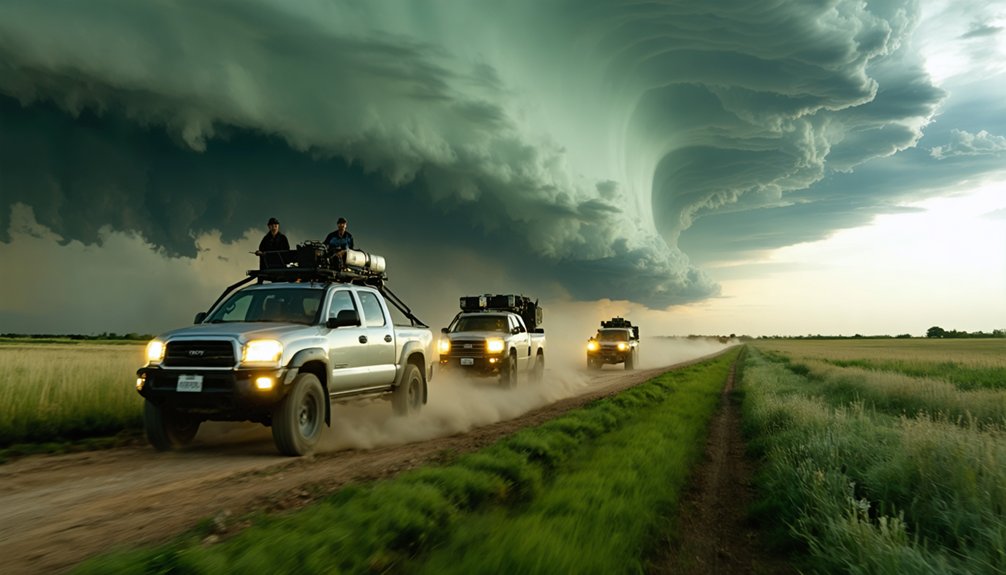
When severe weather threatens your area, storm spotter networks save lives by providing the National Weather Service with real-time, ground-verified reports that radar simply can’t confirm alone. Trained volunteers identify tornado touchdowns, large hail, damaging winds, and flash flooding as they happen—giving forecasters the confidence to issue faster, more accurate warnings. Each additional warning minute expands your options for reaching safety. The details behind how this system works will change how you think about severe weather preparedness.
Key Takeaways
- Storm spotters provide real-time ground-truth reports that radar cannot, confirming tornado touchdowns, large hail, and dangerous wind damage at the surface.
- Each additional warning minute gives residents more time to reach shelter, directly reducing casualties during severe weather events.
- Verified spotter reports enable forecasters to issue faster, more accurate warnings, reducing unnecessary alerts and improving public trust.
- Communities with active spotter networks experience fewer severe weather casualties due to enhanced warning lead times.
- Approximately 350,000–400,000 trained SKYWARN volunteers nationwide continuously close critical gaps between radar data and actual surface conditions.
What Is the SKYWARN Storm Spotter Network?
The SKYWARN program is a National Weather Service volunteer initiative that trains civilians to identify and report severe weather in real time. Launched in the 1970s, it now includes between 350,000 and 400,000 trained spotters nationwide. The NWS considers these spotters the nation’s first line of defense against severe weather.
Community engagement drives the program’s effectiveness. Fire personnel, police officers, amateur radio operators, and everyday citizens all participate, strengthening local response capacity without government dependency.
Technology integration amplifies each spotter’s impact. The Spotter Network uses GPS-based tracking to map real-time positions and reports, giving emergency managers and NWS forecasters accurate ground-truth data alongside radar and satellite systems.
You don’t need special credentials to join—only a commitment to public safety and a willingness to train.
Why More Storm Spotter Warning Time Means More Lives Saved
When severe weather threatens, every minute you gain through early warning directly increases your chances of reaching shelter and protecting your property.
The National Weather Service reports that strong spotter networks help communities gain critical minutes of warning time that radar alone can’t always provide.
You benefit from that expanded window because storm spotters confirm ground-truth conditions in real time, giving forecasters the confidence to issue faster, more accurate warnings.
Minutes Matter in Emergencies
How much can a few extra minutes mean when a tornado is bearing down on a neighborhood? The answer, historically, is everything. Before advances in meteorological technology, warning times were dangerously short, leaving communities with little opportunity to act.
When you receive an early warning, you can move to shelter, secure your family, and make informed decisions before conditions deteriorate.
Historical weather records confirm that communities with stronger spotter networks consistently achieve better outcomes during severe weather events.
SKYWARN spotters provide ground-truth reports that accelerate NWS warning decisions. Every minute gained between detection and impact directly expands your options.
Radar can suggest a threat, but a trained spotter confirming rotation on the ground compresses the time between identification and the warning you depend on to survive.
Early Warnings Protect Communities
Warning time directly determines survival outcomes. When you and your community receive earlier alerts, you gain critical seconds to reach shelter, secure property, and protect vulnerable individuals.
Meteorological history consistently demonstrates that communities with active spotter networks experience fewer casualties during severe weather events.
Community engagement strengthens this protective framework markedly. When trained spotters submit ground-truth reports confirming tornado development, damaging winds, or flash flooding, forecasters issue warnings faster and with greater precision.
That accuracy directly translates into actionable time for you and your neighbors.
The National Weather Service identifies strong spotter networks as producing more timely, credible warnings. Every confirmed spotter report bridges the gap between radar indications and actual surface conditions, giving your community the advantage it needs to respond before severe weather causes irreversible harm.
Why Radar Alone Can’t Confirm What’s on the Ground
When you rely solely on radar, you’re working with reflected energy interpreted at altitude—not confirmed conditions at the surface.
Radar can suggest rotation, heavy precipitation, or large hail, but it can’t tell you what’s actually touching the ground.
Spotters fill that gap by delivering real-time surface observations that give forecasters the ground truth radar simply can’t provide.
Radar Limitations Explained
Doppler radar is a powerful tool, but it can’t tell you what’s actually happening at the ground. It detects precipitation, velocity, and rotation signatures, but those readings don’t confirm surface conditions.
Satellite imagery adds broader atmospheric context, and weather modeling helps forecasters anticipate storm behavior, yet neither source verifies what’s physically occurring beneath the clouds.
Radar beams angle upward as they travel outward, creating gaps in low-level coverage. Beam overshooting, ground clutter, and signal blockage all distort what forecasters see.
A strong rotation signature might indicate a tornado, or it might not. Without ground-truth reports, you’re left interpreting probabilities rather than confirmed events.
That gap between radar indication and surface reality is exactly where trained storm spotters provide irreplaceable value to warning operations.
Ground Truth Fills Gaps
Ground-truth reports fill the critical gap that radar simply can’t close on its own. When you report conditions directly from the surface, you’re completing the meteorological teamwork that makes warnings credible and actionable.
Radar identifies signatures. You confirm reality. That volunteer coordination turns raw data into verified intelligence forecasters can act on immediately.
Here’s what your ground-truth reports directly provide:
- Tornado confirmation when rotation signatures appear on radar
- Actual hail size at the surface versus estimated radar values
- Wind damage verification that radar can’t measure directly
- Flash flood onset in real time before gauges respond
- Funnel cloud or wall cloud development forecasters can’t visually observe
Your report transforms a radar suggestion into a confirmed severe weather event—giving forecasters the certainty needed to issue life-saving warnings without hesitation.
Spotters Confirm Surface Conditions
Radar scanning the atmosphere from thousands of feet above the surface can’t confirm what’s actually happening on the ground. It shows you a weather pattern, identifies rotation, and detects precipitation intensity — but it can’t verify whether a tornado has touched down or whether hail is actually striking homes below.
That’s where you come in as a trained spotter. Your direct observation confirms surface conditions that radar can only suggest. When you report a touchdown, wall cloud, or large hail, you give forecasters the ground truth they need to issue accurate, timely warnings.
That confirmation directly strengthens emergency preparedness at the community level. Without spotters relaying real-time surface conditions, forecasters issue warnings based on incomplete information — and that gap costs communities critical minutes when severe weather strikes.
How Storm Spotters Provide Critical Ground Truth to the NWS
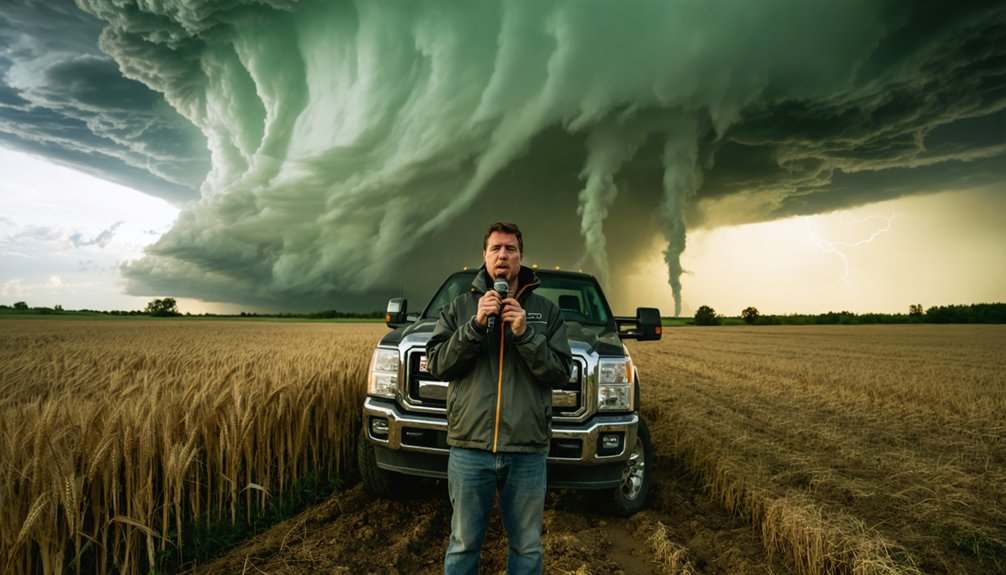
While radar systems can detect rotation and precipitation signatures aloft, they can’t confirm what’s actually happening at the surface. That’s where you come in. As a trained SKYWARN spotter, you provide the NWS with ground truth—direct, real-time confirmation of surface conditions that radar simply can’t deliver alone.
Radar sees the storm. You see the ground. That difference saves lives.
Following established communication protocols strengthens weather safety and helps forecasters issue accurate, timely warnings. Your reports matter most when you observe:
- Tornado touchdown or development
- Hail size and ground accumulation
- Wind damage to structures or trees
- Flash flooding across roadways or low-lying areas
- Funnel clouds or rotating wall clouds
Each observation you submit helps forecasters confirm whether to issue or withhold warnings, directly protecting lives and property in your community.
What Storm Spotters Are Trained to Report
Training prepares you to recognize and report a specific set of hazardous conditions the NWS relies on to make warning decisions. Your reports cover tornadoes, funnel clouds, rotating wall clouds, hail, damaging winds, flash flooding, heavy rain, waterspouts, downed power lines, and wind-damaged trees.
Meteorological terminology matters here. You’ll learn to estimate hail size accurately, since the NWS specifically needs the largest hailstone measurement to assess damage potential. You’ll also report wind speeds, tornado development stages, and precise location and timing data.
Community engagement strengthens this system. The more accurately trained spotters you have operating across a region, the more complete the ground-truth picture becomes. Your observations directly support storm-based warning decisions that protect lives and property during active severe weather events.
Who Makes Up a Local Storm Spotter Network?
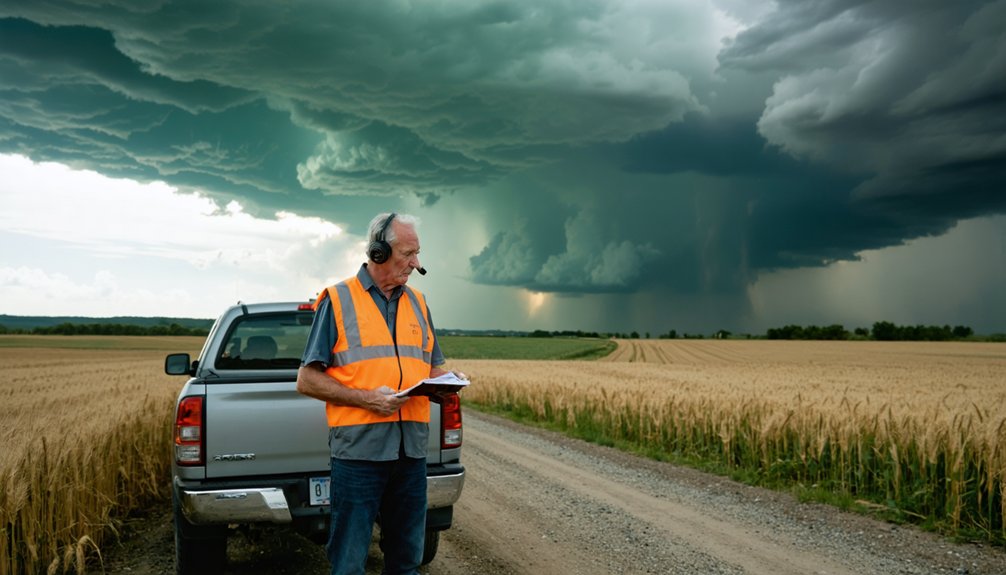
Local storm spotter networks draw from a broad cross-section of the community. Through volunteer training, the NWS equips everyday citizens to serve as critical observers during severe weather. Community engagement strengthens these networks by pulling in people from multiple backgrounds and roles.
Common spotter network participants include:
- Fire personnel responding to storm-related emergencies
- Law enforcement officers patrolling affected areas
- Amateur radio operators maintaining communication when infrastructure fails
- Emergency managers coordinating protective actions
- Ordinary citizens committed to public safety
You don’t need a meteorology degree to contribute. If you’re willing to complete SKYWARN training and report accurately, you qualify.
Diverse participation across these groups guarantees wider geographic coverage and faster ground-truth confirmation during dangerous weather events.
How Storm Spotter Reports Trigger Faster, More Accurate Warnings
When a severe thunderstorm develops, radar can detect rotation and precipitation intensity—but it can’t confirm what’s actually happening on the ground. That’s where your report changes everything.
When you relay ground-truth data—hail size, confirmed rotation, wind damage—forecasters gain the verification they need to act decisively. That direct confirmation sharpens weather forecasting by bridging the gap between radar signatures and surface conditions.
It lets the National Weather Service issue warnings faster, withhold them when unnecessary, and strengthen their credibility when issued.
Timely, accurate reports translate directly into minutes of additional warning time for your community. Those minutes drive evacuations, shelter decisions, and emergency responses.
Your participation isn’t passive—it actively builds community resilience by ensuring that the people responsible for public safety have the ground-level intelligence required to protect lives.
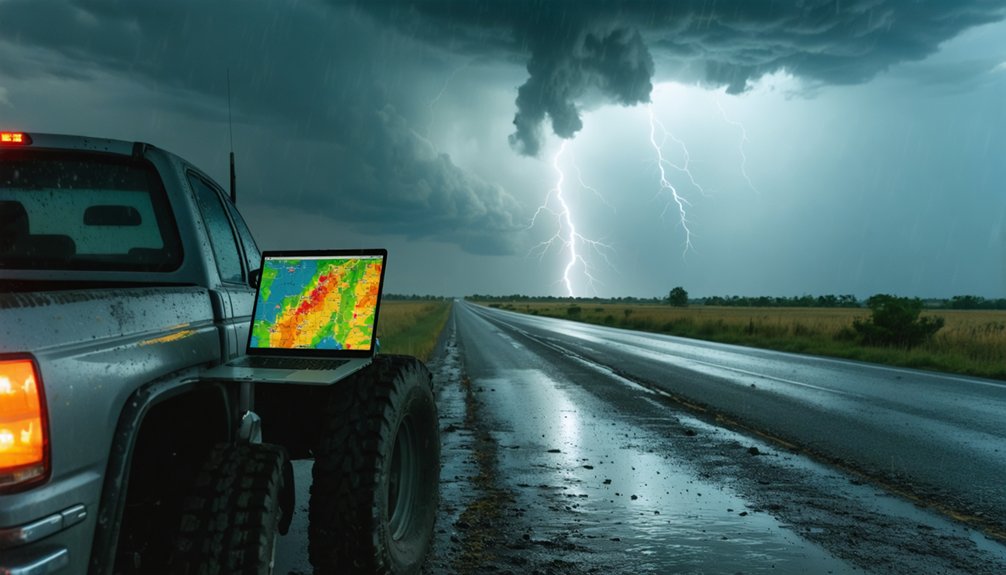
Behind every ground-truth report you submit is a coordinated infrastructure designed to move storm data instantly across agencies and networks. The Spotter Network uses GPS-based tracking to map your position and reports in real time, giving emergency managers and NWS forecasters an operational picture they can’t get from radar alone. Weather safety and storm preparedness depend on this shared data flow working without delay.
The system connects:
- Storm spotters and chasers submitting live field observations
- GPS location tracking providing accurate spotter positioning
- Emergency managers receiving ground-truth data for response decisions
- SKYWARN coordinators integrating reports into local warning operations
- National Weather Service offices using submissions to verify hazardous conditions
You’re not reporting in isolation—your data moves through a network built to protect lives.
How to Become a Storm Spotter in Your Community
Joining SKYWARN doesn’t require a meteorology degree—it requires commitment to public service and a willingness to train. The National Weather Service offers free training that equips you with the skills needed for accurate weather observation and responsible reporting.
No meteorology degree required—just a commitment to serve and the willingness to learn.
You’ll learn to identify severe weather signatures, estimate hail size, and relay ground-truth data to forecasters who depend on it.
Volunteer coordination happens through local NWS offices, emergency management agencies, and amateur radio groups. Contact your nearest NWS office to find scheduled training sessions in your area.
Once trained, you can register with the Spotter Network to share real-time position data and submit reports during active events. Your observations directly support warning decisions that protect lives—making your role as a community spotter both practical and consequential.
Frequently Asked Questions
How Long Does SKYWARN Spotter Training Typically Take to Complete?
The knowledge base doesn’t specify SKYWARN’s training duration. However, you’ll typically complete the certification process in a few hours. Training duration varies by local NWS office, so contact yours directly for precise scheduling details.
Can Storm Spotters Report Observations Anonymously to the National Weather Service?
The knowledge base doesn’t confirm anonymous reporting exists — you’d typically identify yourself when submitting observations. Privacy considerations matter, but the NWS coordinates spotter data directly, meaning anonymous reporting isn’t a standard feature of SKYWARN’s ground-truth network.
Do Storm Spotters Receive Any Compensation or Recognition for Their Service?
You don’t receive financial compensation as a SKYWARN spotter—it’s purely voluntary. However, volunteer recognition programs within local SKYWARN groups and emergency management communities acknowledge your critical contributions to public safety and severe weather defense.
How Often Are Storm Spotters Expected to Actively Report During Severe Weather?
You’re not tied to a schedule—you report whenever severe weather demands it. During active storms, volunteer coordination means you’ll submit real-time observations as conditions evolve, supporting weather pattern analysis whenever hazards like tornadoes or hail actually occur.
Are There Age Requirements for Joining a Local SKYWARN Spotter Network?
The knowledge base doesn’t specify age restrictions for SKYWARN. However, the NWS welcomes anyone interested in public service, so you’ll want to contact your local NWS office directly to clarify youth involvement eligibility requirements.
References
- https://www.weather.gov/skywarn/
- https://www.spotternetwork.org/
- https://www.weather.gov/ind/spotter
- https://www.youtube.com/watch?v=SOKso1okWBo
- https://en.wikipedia.org/wiki/Storm_spotting
- https://en.wikipedia.org/wiki/Spotter_Network
- https://www.weather.gov/arx/startspot
- https://www.weather.gov/chs/skywarn
- https://ams.confex.com/ams/93Annual/webprogram/Handout/Paper216429/AMS_SN_2013_Keynote.pdf