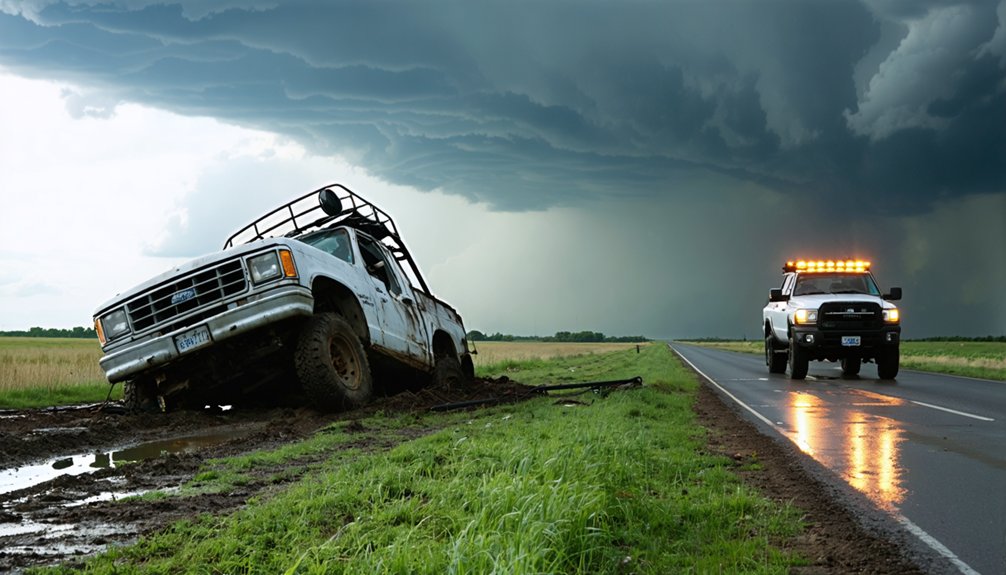
Most storm chasing fatalities don’t involve tornadoes — they happen inside vehicles during repositioning, retreat, or transit. Over 60 years of data shows 14 vehicular deaths versus just 5 tornado-related fatalities. You’re far more likely to hydroplane, drive fatigued, or get trapped by flooding than to get swallowed by a wedge tornado. Control your escape routes, manage traction, and eliminate driver distraction before you ever approach a storm. The details ahead could change how you chase forever.
Key Takeaways
- Most storm chasing fatalities involve vehicles, not tornadoes, so prioritizing road safety is more critical than avoiding the storm itself.
- Always identify two perpendicular escape routes before approaching a storm, adjusting them as conditions change.
- Slow down on wet roads, maintain proper tire pressure, and avoid sharp steering to prevent hydroplaning.
- Assign dedicated roles—driver, navigator, data monitor—and never change responsibilities mid-chase to reduce dangerous distractions.
- Combat fatigue by scheduling breaks before exhaustion hits, avoiding night chasing when possible, and recognizing high-risk circadian low periods.
Why Most Storm Chasers Die Behind the Wheel
When most people picture storm chasing fatalities, they imagine a violent tornado swallowing a vehicle whole — but the data tells a different story. Driving kills storm chasers far more often than tornadoes do. One analysis counted 14 vehicular deaths against just 5 tornado-related fatalities.
Driving kills storm chasers far more often than tornadoes — 14 vehicular deaths compared to just 5 tornado-related fatalities.
For nearly 60 years, every known chaser death involved a vehicle, not a vortex.
Meteorological training sharpens your ability to read storms, but it won’t protect you from a stop-sign violation at a rural intersection or hydroplaning on a rain-soaked highway at 70 mph. Storm chase ethics demand you respect road conditions as seriously as atmospheric ones.
The storm isn’t your primary threat — your steering wheel is. Recognize that reality before you ever leave the driveway.
Keep a Storm Chase Escape Route Open at All Times
Before you position yourself near any storm, you need a clear exit — and you need to know exactly where it leads. Tornadoes shift. Roads flood. What looked like a clean escape becomes a dead end fast.
Map your route before intercept, not during it. Identify at least two perpendicular escape corridors moving away from the storm’s direction of travel. Never let terrain, traffic, or poor vehicle maintenance decisions strand you in a box with no options.
Weather adaptation means reading conditions continuously and adjusting your position accordingly. If your exit degrades, move before you’re forced to.
Chasers who get caught aren’t always reckless — sometimes they simply committed too early and planned too late. Your escape route isn’t optional. It’s foundational.
Master Speed and Traction on Storm-Chase Roads
Hydroplaning kills storm chasers — not tornadoes. Rain-soaked asphalt, standing water, and hail-covered roads destroy traction faster than most chasers anticipate. Slow down before you lose control, not after. Maintain correct tire pressure before every chase — underinflated tires dramatically increase hydroplaning risk on wet surfaces. When you hit standing water, ease off the throttle and avoid sharp steering inputs.
Road signage isn’t decoration. Flooded-road warnings, reduced-speed zones, and rural intersection signs demand your full attention, especially when radar, radio, and storm structure are competing for your focus. Chasers die on ordinary highways after intercepts, not just near tornadoes.
Treat every wet road as a threat. Speed management and traction awareness aren’t restrictions on your freedom — they’re what keep you operational for the next chase.
Manage Fatigue and Distraction Before They Kill You
Fatigue kills storm chasers the same way it kills truck drivers — silently, incrementally, and without warning. Driver fatigue contributes to 31% of fatal crashes, and your circadian rhythm creates dangerous low points between 2–4 AM and 2–4 PM. You don’t get to negotiate with biology.
Distraction management isn’t optional when you’re simultaneously monitoring radar, scanning for rotation, and navigating rural intersections at speed. Assign a dedicated driver who does nothing but drive. Passengers handle navigation, radio traffic, and photography.
Take mindful breaks before exhaustion announces itself. Stopping for 20 minutes costs you nothing compared to what a microsleep at highway speed costs you. Night chasing compounds every risk — reduced visibility, slower reaction time, and diminished judgment. Respect those compounding factors or pay the permanent price.
Pre-Chase Checklists and Team Protocols That Reduce Fatal Errors
Discipline doesn’t stop when you’ve rested and buckled in — it starts hours before you leave the driveway. Run a pre-chase checklist covering fuel, tire condition, communications gear, and escape routes.
Assign roles before departure — one driver, one navigator, one data monitor — and don’t renegotiate those roles mid-chase. Communication protocols should include check-in intervals, abort triggers, and fallback rally points your entire team knows cold.
Conduct a risk assessment of target area roads: identify flood-prone low-water crossings, narrow rural intersections, and limited-visibility stretches before you’re racing toward a wedge tornado.
Shared situational awareness isn’t optional — it’s a force multiplier against fatal errors. When everyone knows the plan, you spend less time making dangerous decisions at dangerous speeds in dangerous weather.
Frequently Asked Questions
Does Storm Chasing Experience Actually Lower Your Personal Fatality Risk Over Time?
Experience helps, but it won’t fully protect you. Better weather forecasting skills and quality storm chasing gear reduce exposure, yet fatigue, distraction, and overconfidence can still kill you — stay disciplined regardless of your experience level.
What Vehicle Types or Modifications Genuinely Improve Storm Chaser Survival Odds?
You’ll improve your odds with low-profile, all-terrain storm proof vehicles featuring reinforced frames and quality tires. Don’t overlook communication upgrades—redundant GPS, radio, and weather data systems keep you informed and free to react fast.
How Does Lightning Risk Compare to Other Storm Chasing Hazards Statistically?
Congrats—you’re more likely to crash your truck than get zapped! Lightning safety matters, but storm hazard statistics confirm driving kills you first. Respect both, yet keep your eyes on that rain-soaked road.
Should Solo Chasers Follow Different Safety Rules Than Teams Do?
Yes—solo safety demands stricter personal limits than team protocols require. You can’t split navigation, driving, and monitoring duties, so you must slow down, simplify decisions, and maintain escape routes obsessively. Nobody’s watching your back but you.
Are Certain Geographic Regions or Road Networks Deadlier for Storm Chasers?
Rural intersections kill 14 chasers through crashes versus 5 via tornadoes. You’ll face deadlier odds where regional weather patterns meet poor road infrastructure safety — particularly Oklahoma’s narrow county roads, where hydroplaning and blind intersections compound every chase decision.
References
- https://en.wikipedia.org/wiki/Storm_chasing
- https://www.reddit.com/r/stormchasing/comments/1q0jufg/hey_nonchaser_here_what_is_the_reason_people_are/
- https://ultratechlife.com/blog/is-storm-chasing-out-of-control/
- https://crazystormchasers.com/storm-chaser-vehicle-accidents-and-safety-improvements/
- https://crazystormchasers.com/striking-a-balance-storm-chasing-thrills-and-safety/
- https://stormhighway.com/tornadoes_dangerous_storm_chasing_myth.php
- https://www.youtube.com/watch?v=uCLaE6ELFik