To pursue a career in storm chasing, you’ll need a strong foundation in meteorology, radar interpretation, and atmospheric analysis. A bachelor’s degree in meteorology or atmospheric sciences is preferred, though hands-on experience as a storm spotter can substitute formal education. You’ll also need essential equipment like radar software, a capable vehicle, and a camera with a zoom lens. The average salary sits at $90,210, with 9.3% projected job growth. Keep exploring to uncover exactly what it takes to break in professionally.
Key Takeaways
- A bachelor’s degree in meteorology or atmospheric sciences is preferred, though hands-on storm spotter experience can also build a strong foundation.
- Essential equipment includes weather radios, radar software, a capable vehicle, and a zoom-lens camera for real-time tracking and documentation.
- Joining organizations like the Texas Severe Storms Association or National Storm Chasers Association provides mentorship, networking, and certification opportunities.
- Storm chasers analyze radar data, satellite imagery, and atmospheric conditions to track, document, and report severe weather events accurately.
- The average storm chaser salary is $90,210, with a 9.3% projected job growth rate across research and contractor roles.
What Does a Storm Chaser Actually Do?
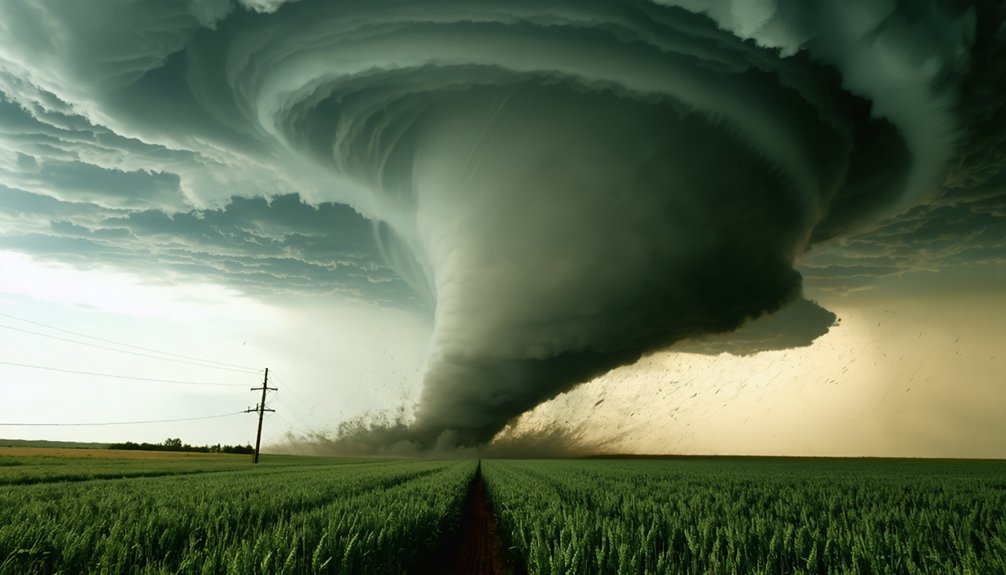
Storm chasers track and document severe weather events—primarily tornadoes, supercells, and other high-impact atmospheric phenomena—by positioning themselves in close proximity to active storm systems.
Your storm chaser duties extend beyond simply witnessing storms; you’re actively analyzing radar data, satellite imagery, and atmospheric conditions to predict storm behavior and intercept targets precisely.
Your daily responsibilities include pre-chase forecasting, strategic route planning, real-time data collection, and photographic documentation.
You’ll interpret surface conditions, monitor storm structure, and relay critical observations to meteorological agencies or research institutions.
You’re also managing vehicle positioning to maintain safe distances from hail cores and dangerous precipitation.
Operationally, you function as both a field scientist and a logistics coordinator—balancing analytical decision-making with rapid navigation across unpredictable terrain during high-stakes meteorological events.
What Degree Do Storm Chasers Actually Need?
If you’re serious about storm chasing, a bachelor’s degree in meteorology or atmospheric sciences is your strongest entry point, equipping you with the forecasting and analytical skills most employers expect.
Research-focused roles at institutions like NSSL demand a master’s or PhD, where ties to physics or electrical engineering sharpen your technical edge.
That said, a formal degree isn’t strictly mandatory — starting as a storm spotter, joining associations like the Texas Severe Storms Association, and chasing alongside experienced meteorologists can build a competitive skill set outside the classroom.
Recommended Degree Programs
Meteorology and atmospheric sciences stand out as the most practical degree paths for aspiring storm chasers, equipping you with the forecasting skills and scientific foundation the field demands. Related degree specialties in physics and electrical engineering also strengthen your candidacy, particularly for NSSL research projects.
Explore program formats ranging from traditional campus study to flexible online coursework that lets you chase storms regionally while earning credentials.
Consider these high-impact degree directions:
- Meteorology or Atmospheric Sciences – Directly builds forecasting and radar analysis competency
- Physics – Deepens your understanding of atmospheric dynamics and storm mechanics
- Electrical Engineering – Opens doors to instrument development and cutting-edge research roles
Your degree choice ultimately determines which career doors swing open—choose deliberately, and chase freely.
Advanced Degrees For Research
While a bachelor’s degree opens entry-level doors, you’ll need a master’s or PhD to break into research roles at government agencies like NOAA or the National Severe Storms Laboratory. These positions demand fluency in advanced research methodologies, including atmospheric modeling, radar analysis, and computational data interpretation.
Your graduate work should ideally intersect meteorology, physics, or electrical engineering, since NSSL projects frequently require interdisciplinary collaboration across scientific domains. A PhD specifically positions you to lead independent studies, secure federal funding, and publish findings that directly shape forecasting standards.
Think of advanced degrees as operational tools, not just credentials. They provide access to restricted datasets, specialized instrumentation, and professional networks that independent chasers simply can’t reach.
If research-driven storm science is your target, graduate education isn’t optional — it’s your entry point.
Alternatives To Formal Education
Advanced degrees clearly serve research-oriented paths, but they’re not the universal entry requirement many assume. Independent pathways exist that build equally competitive skill sets:
- Leverage accessible resources — Online courses, self-study resources, and community workshops develop core meteorological knowledge without tuition debt.
- Build real experience — Weather internships, volunteer programs, and skill-building exercises provide documented field credentials employers and collaborators actually respect.
- Cultivate human connections — Informal mentorships and networking opportunities with organizations like the Texas Severe Storms Association accelerate your learning curve exponentially.
You’re not locked into a classroom. Many successful chasers built careers through disciplined self-direction, choosing freedom over institutional pathways.
What matters operationally is your forecasting accuracy, equipment proficiency, and field judgment — credentials no diploma exclusively guarantees.
Start as a Storm Spotter to Build Real Experience
Before pursuing full-scale storm chasing, starting as a storm spotter builds the foundational field experience that classroom instruction alone can’t provide.
Storm spotting connects you to local involvement networks, particularly through emergency management agencies and the National Weather Service, where you’ll sharpen observational skills tracking live weather events.
You’ll gain direct exposure to risk assessment protocols while contributing meaningful data during active severe weather situations.
Educational workshops hosted by SKYWARN and similar programs accelerate your technical understanding of storm structure and reporting procedures.
These entry-level roles also create networking opportunities with professional meteorologists who can mentor your progression.
You’ll develop the disciplined, analytical mindset that storm chasing demands—learning to document accurately, communicate clearly, and prioritize safety through community outreach efforts that keep your skills sharp between major storm seasons.
Essential Skills Every Storm Chaser Needs
To excel as a storm chaser, you’ll need a deep foundation in meteorology, atmospheric dynamics, and accurate forecasting—skills that directly determine your ability to position yourself safely and effectively relative to a storm’s path.
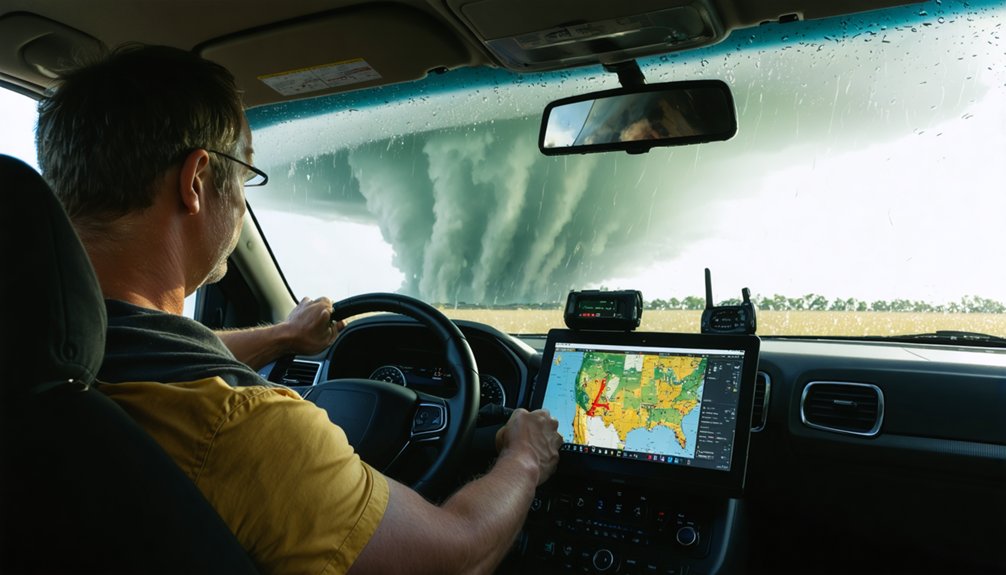
You must also develop proficiency in reading radar scans and satellite imagery, as these tools provide the critical, real-time data you’ll rely on to anticipate a storm’s behavior and intensity.
Mastering this equipment isn’t optional; it’s what separates informed, strategic chasers from those operating on guesswork.
Weather Knowledge And Forecasting
Weather knowledge and forecasting form the backbone of effective storm chasing, and you’ll need to master both before stepping into the field. Understanding storm patterns and advanced forecasting techniques separates successful chasers from reckless ones.
Develop these critical competencies:
- Atmospheric analysis — Interpret radar scans, satellite imagery, and surface conditions to predict storm trajectory with precision.
- Forecasting techniques — Study mesoscale convective systems, supercell development, and wind shear data to anticipate dangerous shifts before they happen.
- Storm pattern recognition — Identify structural warning signs like wall clouds and hook echoes that signal tornado formation.
Your freedom to chase effectively depends entirely on your analytical foundation. Without sharp forecasting skills, you’re not chasing storms — you’re gambling with your life on open highways.
Radar And Equipment Proficiency
Sharp forecasting skills mean nothing without the tools to act on them. As a storm chaser, you’ll need proficiency in radar technology to interpret storm structure, rotation signatures, and precipitation intensity in real time. Doppler radar scans and satellite imagery aren’t optional—they’re your operational backbone.
Beyond radar, you’ll manage cameras with zoom lenses, tripods, weather radios, and mobile internet systems. Each piece of equipment demands consistent equipment maintenance; a failing camera or corrupted data feed during a critical intercept costs you irreplaceable documentation and situational awareness.
You’ll also develop sharp analytical instincts for reading surface conditions and atmospheric instability simultaneously. The field rewards precision—not guesswork.
Master your instruments, keep them field-ready, and you’ll operate independently with the confidence that serious storm chasing demands.
Must-Have Equipment for Storm Chasing
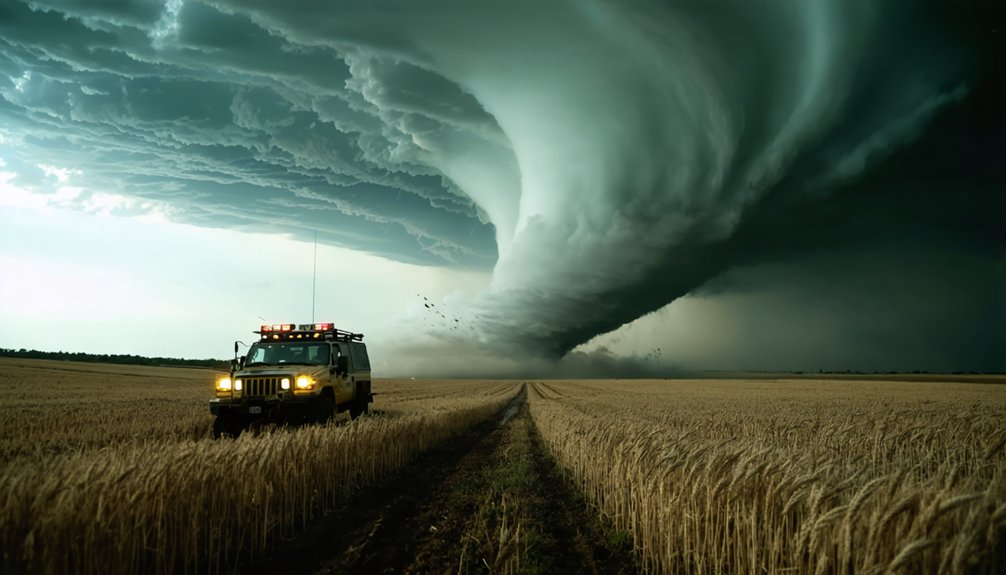
Storm chasers rely on a core set of tools that directly determine their ability to forecast, document, and survive severe weather events.
Your gear defines your operational capacity in the field. Prioritize these essentials:
- Weather radio and internet-connected computer — enables real-time storm tracking and rapid data analysis before and during intercepts.
- Camera with zoom lens and tripod — captures high-resolution documentation that supports research and independent income streams.
- Radar and satellite imagery software — delivers atmospheric data critical for reading storm structure and making split-second decisions.
Your vehicle must handle extreme terrain and conditions.
CPR certification through the Red Cross prepares you for lightning emergencies.
Don’t underestimate your equipment — it’s your lifeline when you’re operating miles from backup.
Training Alongside Experienced Storm Chasers
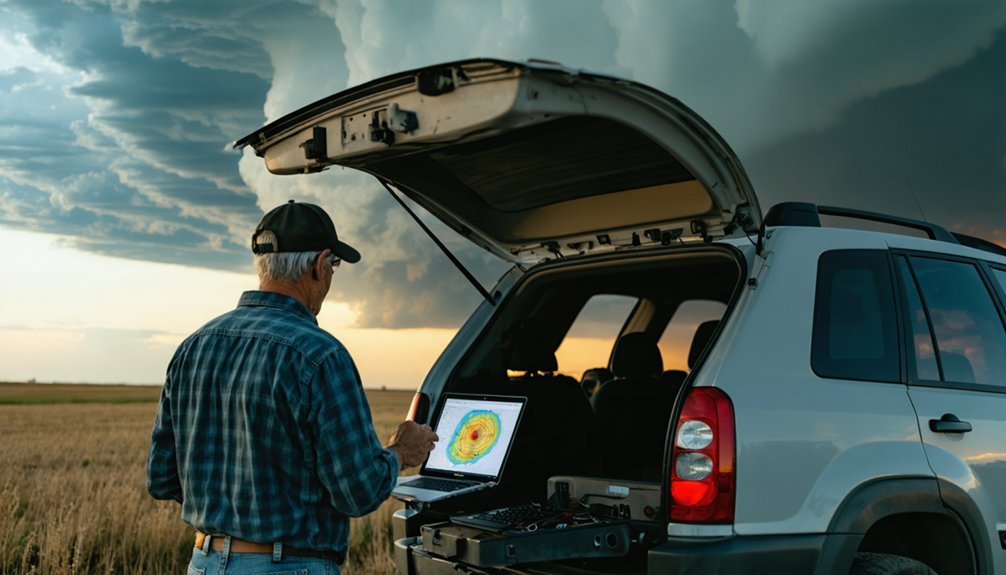
To launch your storm chasing career, you’ll need to seek out experienced meteorologists who can provide hands-on mentorship in real field conditions.
You can connect with seasoned chasers through organizations like the Texas Severe Storms Association, which links aspiring chasers with professionals who understand radar interpretation, intercept logistics, and storm structure analysis.
Field training alongside these experts sharpens your forecasting accuracy, situational awareness, and decision-making under pressure — critical competencies that no classroom setting can fully replicate.
Finding Experienced Mentors
Finding a seasoned mentor is one of the most effective ways to accelerate your development as a storm chaser. Mentor networking opens doors to real-world field experience that no classroom can replicate.
Finding guidance from professionals who’ve logged thousands of chase miles compresses your learning curve considerably.
Consider these critical steps:
- Join the Texas Severe Storms Association to connect directly with active chasers who value knowledge-sharing.
- Attend meteorology conferences where research meteorologists discuss atmospheric data, radar interpretation, and intercept logistics.
- Volunteer on research projects through organizations like NSSL, positioning yourself alongside scientists who collect live storm data.
A strong mentor relationship gives you unfiltered access to decision-making under pressure — exactly the competency that separates safe, effective chasers from reckless ones.
Practical Field Training
Once you’ve identified a mentor, the next step is converting that relationship into structured field time — because reading radar from a moving vehicle in a live supercell are categorically different skills.
Request ride-alongs during active chase days, prioritizing high-probability setups in tornado-favorable environments. Your focus during these sessions should be split between observing your mentor’s decision making process — target selection, intercept geometry, escape route calculation — and internalizing field safety protocols governing vehicle positioning and storm proximity.
Track how they interpret real-time radar scans, satellite imagery, and surface observations simultaneously. Log every chase with timestamped notes on storm structure, positioning choices, and outcome. That structured data becomes your personal performance baseline.
Each intercept compounds your pattern recognition, ultimately shortening the gap between raw meteorological data and accurate, fast tactical judgment.
Storm Chasing Groups and Associations to Join Now
Joining storm chasing groups and associations accelerates your development by connecting you with experienced chasers, field-tested equipment knowledge, and real-time forecasting networks.
Storm chasing organizations provide structured community engagement that transforms isolated pursuit into collaborative science.
Consider these three associations that’ll sharpen your skills:
- Texas Severe Storms Association (TESSA) — connects you directly with veteran chasers traversing the most active tornado corridors in America.
- National Storm Chasers Association — offers certification pathways and mentorship programs that validate your field competency.
- Spotter Network — integrates your real-time observations into official meteorological databases, giving your data professional relevance.
Each organization expands your operational freedom by providing verified contacts, shared intercept routes, and collaborative forecasting resources that independent chasers rarely access alone.
Storm Chasing Salary and Job Outlook
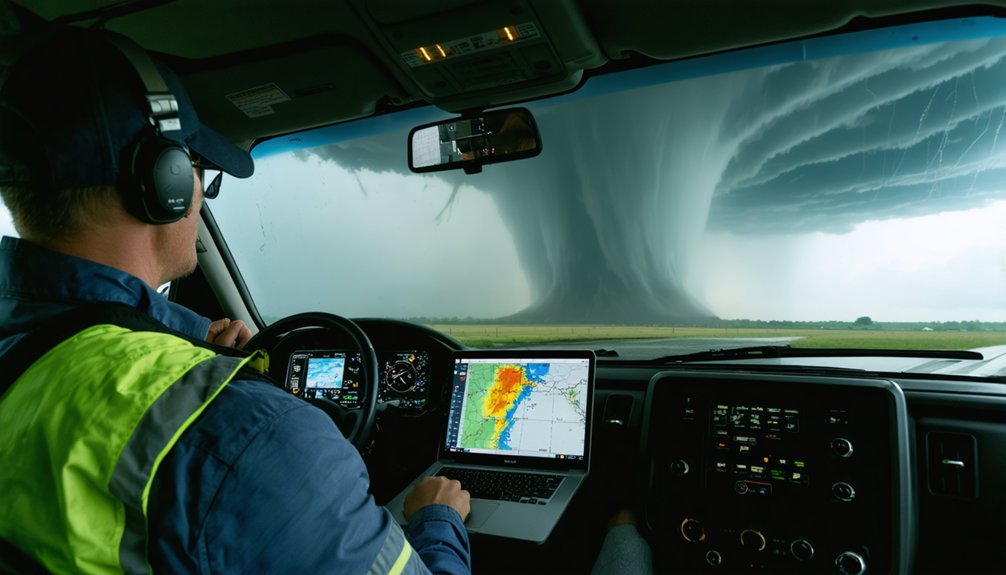
Storm chasing’s financial reality demands careful analysis before you commit to the career path. The average salary sits at $90,210, with a 9.3% job growth rate strengthening future salary expectations.
Storm chasing offers promising financial rewards, but demands careful planning before committing to this dynamic career path.
However, you’ll likely need supplemental income, as independent chasing rarely sustains full financial independence.
Your job opportunities typically fall into two categories: research meteorologist positions at agencies like NSSL or independent contractor roles.
Research positions offer stability, while independent work delivers the freedom you’re seeking but carries financial unpredictability.
The field skews heavily male, with only 2% women, and averages 35 years old across practitioners aged 18-65.
Nationwide travel defines your career trajectory, meaning you’ll trade geographic stability for professional mobility.
Factor these variables carefully before pursuing this path.
Real Risks Storm Chasers Face on the Road
Contrary to popular belief, driving in rain poses your greatest safety threat—not the storms themselves.
Storm chaser safety depends heavily on managing driving hazards, not just avoiding tornadoes. Understanding these risks keeps you alive and free to chase another day.
Here are three critical risks you’ll face:
- Rain-soaked highways create deadly hydroplaning conditions, especially during high-speed repositioning maneuvers.
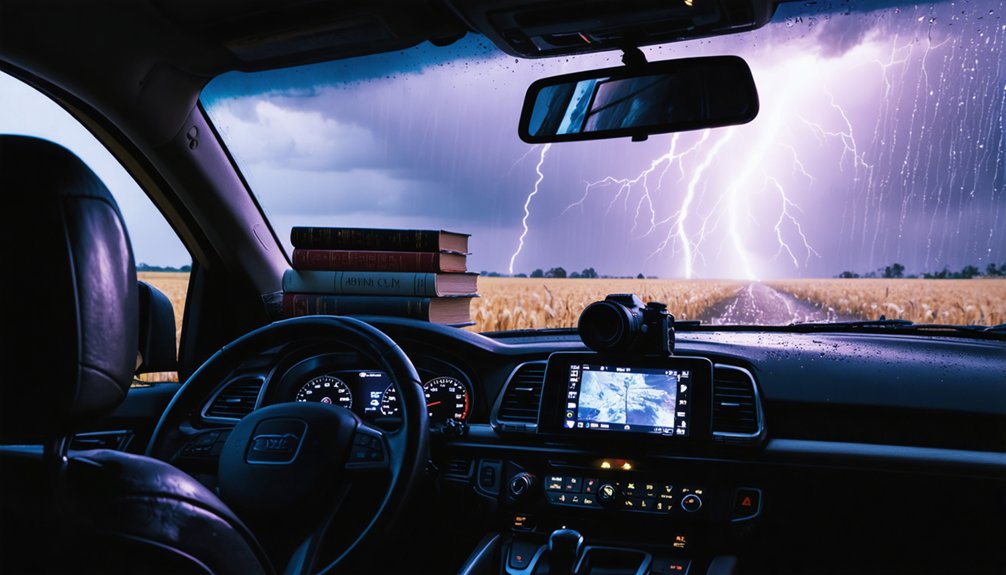
- Lightning strikes demand CPR preparedness—get certified through the Red Cross before your first chase.
- Forecasting errors can redirect you onto non-existent roads, trapping you in dangerous terrain.
Maintain a discreet distance from hail cores and heavy rain bands.
No documented storm-related deaths exist among chasers, but highway accidents remain your most lethal adversary.
Breaking Into Storm Chasing Professionally
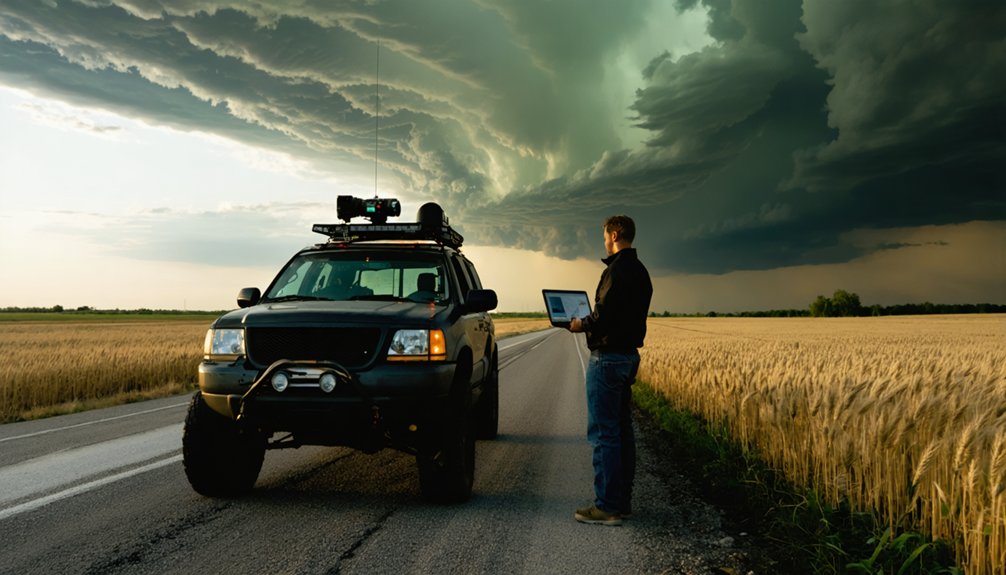
Once you’ve accounted for the road hazards that end careers before they start, you can focus on building the professional foundation that launches one.
Start as a storm spotter with local weather services during high school, logging observations and developing weather radar technology proficiency early. Chase alongside experienced meteorologists to compress your learning curve.
Join organizations like the Texas Severe Storms Association to access networks that open doors. A bachelor’s degree in meteorology or atmospheric sciences positions you competitively, while research roles demand a master’s or PhD.
Independent chasers supplement income through media contracts or weather firms. Storm chasing ethics—maintaining safe distances, accurate reporting, and responsible data collection—directly affects your professional reputation.
The field averages $90,210 annually with 9.3% growth, rewarding those who combine technical discipline with strategic career moves.
Frequently Asked Questions
Can Storm Chasers Work Part-Time While Maintaining Another Career Simultaneously?
Yes, you can pursue part-time opportunities in storm chasing while maintaining another career, achieving work-life balance. Data shows most chasers need a second job, making dual careers a practical, freedom-enabling strategy.
Are There Age Restrictions for Becoming a Professional Storm Chaser?
Surprisingly, no age police patrol storm chasing! You can pursue it from 18-65, but you’ll need solid storm chasing education and safety training first. Data shows the average chaser’s 35, proving experience trumps youth.
How Does Storm Chasing Differ Across Various Regions of the United States?
Regional differences shape your storm chasing strategy considerably. Climate impacts drive tornado frequency variations, demanding adaptive storm forecasting techniques. You’ll adjust safety protocols and equipment needs based on terrain, weather patterns, and regional atmospheric conditions across diverse U.S. landscapes.
Do Storm Chasers Need Special Vehicle Insurance for Extreme Weather Conditions?
Like armor on a knight, specialized coverage shields you. You’ll need vehicle modifications and tailored insurance types to protect against extreme weather, ensuring your storm-chasing freedom remains uncompromised and financially secure on hazardous roads.
Can Women Successfully Build Long-Term Careers in Storm Chasing Today?
You can absolutely build a long-term storm chasing career as a woman. Though women represent only 2%, you’ll find growing female role models and mentorship opportunities that’ll help you navigate this data-driven, technically demanding field successfully.
References
- https://www.onlinedegree.com/careers/life-physical-science/storm-chaser/
- https://secure.ruready.nd.gov/Career_Planning/Career_Profile/Career_Profile.aspx?id=JPdLmXAP2BPAXSRqQAxw8oleqa76wXAP3DPAXXAP3DPAX&screen=9
- https://www.okcollegestart.org/Career_Planning/Career_Profile/Career_Profile.aspx?id=JPdLmXAP2BPAXSRqQAxw8oleqa76wXAP3DPAXXAP3DPAX&screen=1
- https://www.careervillage.org/questions/1138348/how-to-be-a-storm-chaser
- https://www.indeed.com/q-storm-chasing-jobs.html
- https://www.nssl.noaa.gov/people/jobs/