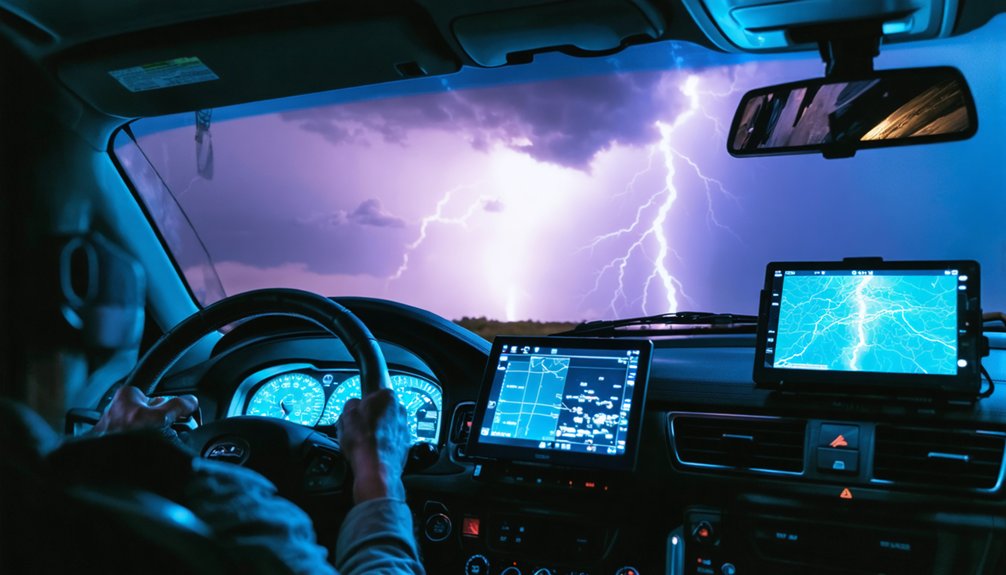
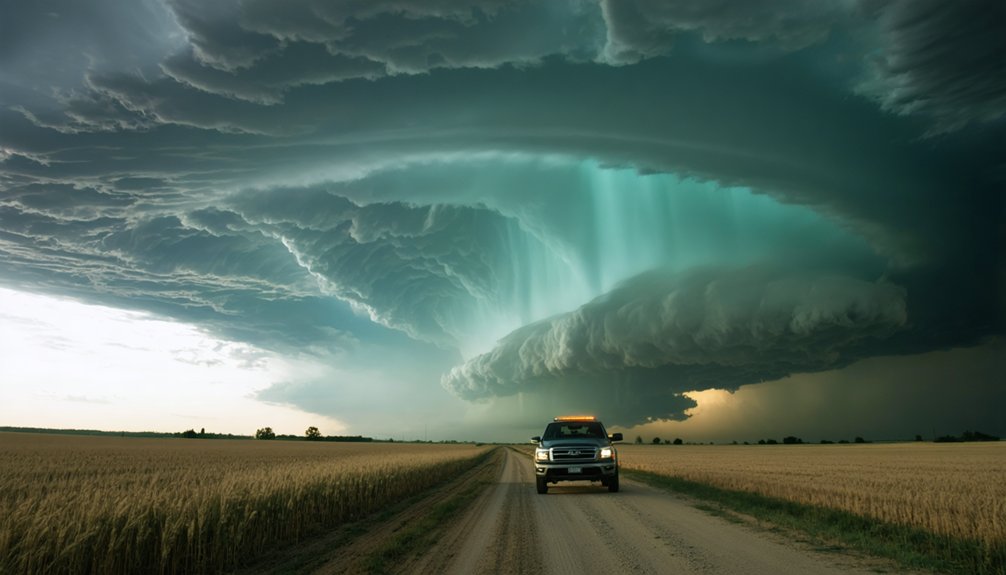
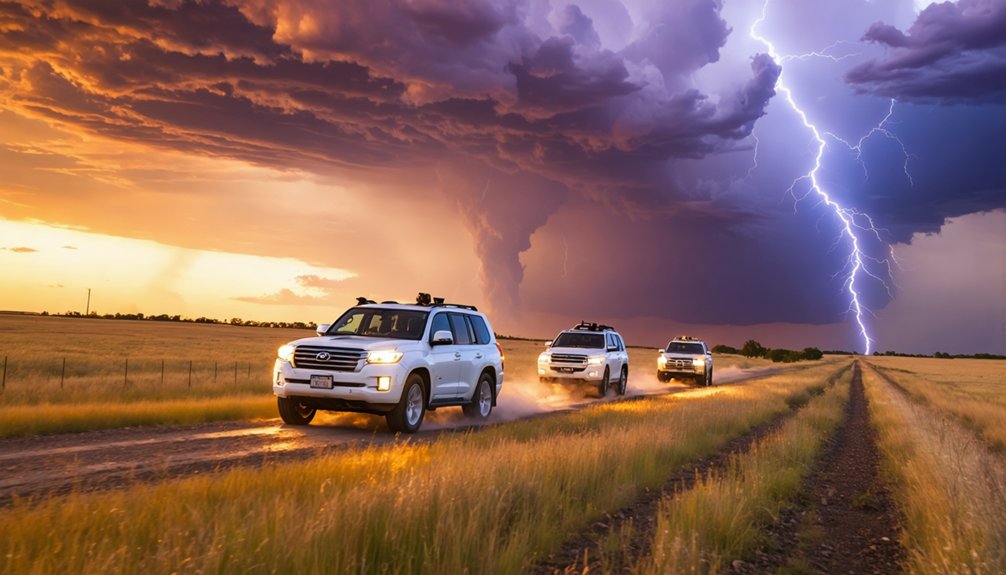
When you watch TV’s top storm chasers, you’re only seeing part of the story. Reed Timmer chases for dramatic close-range footage, Josh Wurman collects precise scientific radar data, and Sean Casey drives a 16,000-pound armored vehicle to film inside actual tornadoes. Each chaser uses radically different gear, methods, and risk strategies that have genuinely advanced tornado warning systems nationwide. Their insider interviews reveal a world far more complex, dangerous, and scientifically significant than what makes the final broadcast cut.
Key Takeaways
- Reed Timmer prioritizes close-range tornado footage for media outlets, often accepting greater personal risk to capture dramatic, high-impact storm visuals.
- Josh Wurman uses Doppler on Wheels radar systems and ground probes, focusing on precise scientific data rather than cinematic documentation.
- Sean Casey operates a 16,000-pound Tornado Intercept Vehicle designed to film IMAX-quality footage from directly inside tornado structures.
- Tim Samaras made significant research contributions alongside his son Paul and Carl Young before their tragic deaths during a tornado chase.
- Storm chasers collectively improved national tornado warning systems by providing real-time radar analysis and ground-level atmospheric pressure readings.
Who Are TV’s Most Famous Storm Chasers?
Josh Wurman deployed radar systems and ground probes to capture critical meteorological data.
Reed Timmer chased close-up tornado footage for media distribution, while Sean Casey operated his 16,000-pound Tornado Intercept Vehicle to film from inside tornado structures.
Veteran chaser Tim Samaras, alongside son Paul Samaras and Carl Young, contributed invaluable field research before their tragic deaths.
Each chaser brought distinct goals, equipment, and expertise.
Their combined efforts didn’t just make compelling television — they advanced national tornado warning systems and deepened humanity’s understanding of severe weather.
How Do Reed Timmer, Josh Wurman, and Sean Casey Differ?
When you look closely at Reed Timmer, Josh Wurman, and Sean Casey, you’ll find three storm chasers with sharply different goals, tools, and methods.
Timmer chases tornadoes for close-up media footage he sells to news outlets, while Wurman focuses on gathering scientific radar and probe-based data.
Casey drives a 16,000-pound Tornado Intercept Vehicle to capture IMAX-quality film from inside tornado structures.
Each chaser’s unique objective directly shapes the equipment they use and the data they collect in the field.
Distinct Storm Chasing Goals
While all three chasers pursue tornadoes, their motivations and methods couldn’t be more different. Their distinct strategies reflect their varying motivations for entering the field.
Josh Wurman prioritizes scientific data collection, deploying radar systems and ground-based probes to advance tornado research and improve national warning systems. His work directly benefits public safety.
Reed Timmer focuses on close-range filming, capturing dramatic footage he sells to media outlets. His approach is aggressive and commercially driven, pushing physical boundaries for maximum visual impact.
Sean Casey operates the 16,000-pound Tornado Intercept Vehicle, engineered specifically to penetrate tornado interiors for IMAX-quality cinematography. His goal is immersive documentation from within the storm itself.
You’ll notice each chaser defines success differently — whether through data, broadcast footage, or cinematic achievement.
Unique Equipment And Vehicles
Each chaser’s equipment directly mirrors their mission. Reed Timmer’s vehicles prioritize close-range storm interception, using armored designs that push him within feet of rotating walls.
Josh Wurman deploys the Doppler on Wheels, a truck-mounted radar system built for precise data analysis of tornado wind fields and internal structures. You’ll notice his approach favors advanced technology over proximity.
Sean Casey operates the 16,000-pound Tornado Intercept Vehicle, engineered specifically to penetrate extreme weather and capture IMAX-quality footage from inside tornado structures.
Each piece of equipment reflects a deliberate philosophy. Timmer chases sensation, Wurman chases science, and Casey chases cinematic history.
Understanding their tools helps you appreciate why storm chasing isn’t a single pursuit — it’s three distinct disciplines operating simultaneously in the same dangerous sky.
Individual Data Collection Methods
Their data collection methods are as distinct as their personalities.
Josh Wurman deploys Doppler radar systems and ground-based probes, feeding raw atmospheric measurements directly into data analysis pipelines that reveal storm patterns invisible to standard instruments. You’re looking at hard science — precise, repeatable, publishable.
Reed Timmer positions his armored vehicles for close-range visual capture, selling high-impact footage to media outlets. His method prioritizes proximity over instrumentation, trading radar readings for dramatic documentation that reaches millions.
Sean Casey takes a different approach entirely. His 16,000-pound Tornado Intercept Vehicle pushes directly into tornado structures, capturing IMAX-quality interior footage that no lightweight vehicle could survive.
You won’t find spreadsheets in Casey’s workflow — you’ll find cinematic evidence of nature’s most violent moments, frame by frame.
What Do Storm Chasers Actually Say About Chasing Tornadoes?
When you hear storm chasers speak firsthand, you get an unfiltered look at what it truly means to pursue tornadoes up close.
They’re candid about the life-threatening risks they accept every time they deploy into the field, from flying debris to rapidly shifting storm paths.
Beyond the adrenaline, their interviews reveal a disciplined scientific process driving every decision they make in the field.
Chasing Tornadoes Up Close
Storm chasers don’t just talk about tornadoes in abstract terms — they describe them with a visceral, first-hand intensity that no weather report can replicate. When you hear Reed Timmer or Sean Casey describe positioning their vehicles for tornado tracking, you realize these aren’t reckless thrill-seekers.
They’re disciplined professionals reading atmospheric data in real time. Storm forecasting gets you close, but intuition built from years in the field keeps you alive.
Chasers describe the eerie silence before a tornado drops, the sudden pressure shifts, the roar that overwhelms every other sense. Casey’s 16,000-pound Tornado Intercept Vehicle wasn’t built for comfort — it was built so you could survive being inside a tornado’s core and bring back footage that actually advances scientific understanding.
Risks Storm Chasers Face
Chasers like Reed Timmer and Sean Casey emphasized that strict safety protocols aren’t optional — they’re survival requirements.
Casey’s 16,000-pound Tornado Intercept Vehicle existed precisely because standard vehicles offer zero protection against direct tornado contact.
Tim Samaras, a veteran featured in the original series, died in 2013 during a tornado intercept — a sobering reminder that experience doesn’t guarantee safety.
You learn quickly watching these professionals: calculated risk management separates disciplined storm chasers from those who don’t make it home.
Science Behind The Chase
Beyond the adrenaline, storm chasing is fundamentally a data-driven science — and the chasers themselves are clear about that distinction.
When you watch teams like Josh Wurman’s deploy probes directly into tornado paths, you’re witnessing real-time atmospheric analysis at its most precise. Every instrument placement, every radar reading, every GPS coordinate feeds critical research aimed at improving national warning systems.
Reed Timmer and Sean Casey weren’t just chasing thrills — they were capturing storm behavior data from angles no fixed instrument can reach.
Casey’s 16,000-pound Tornado Intercept Vehicle allowed footage collection from inside tornado structures, giving researchers unprecedented ground-level measurements.
The science you see on screen directly impacts how quickly communities receive life-saving warnings.
That’s the mission driving every calculated decision these chasers make in the field.
Inside the TIV: Storm Chasers’ Most Extreme Chase Vehicle
Among the most iconic pieces of equipment featured on Discovery Channel’s *Storm Chasers*, the Tornado Intercept Vehicle (TIV) stood apart as an engineering marvel built for one purpose: getting inside a tornado. Weighing 16,000 pounds, Sean Casey’s TIV redefined Tornado Interception Techniques by placing a camera crew directly within a tornado’s structure.
You’re looking at a vehicle engineered around Extreme Weather Safety without compromising mission objectives. Steel armor, hydraulic ground anchors, and a reinforced chassis allowed Casey to pursue IMAX-quality footage from positions no conventional vehicle could survive.
The TIV didn’t just chase tornadoes — it intercepted them deliberately and strategically. Every design decision prioritized crew survival while maximizing data capture, making it the most purpose-built storm chasing vehicle ever deployed in the field.
What Gear Keeps Storm Chasers Alive on Camera?
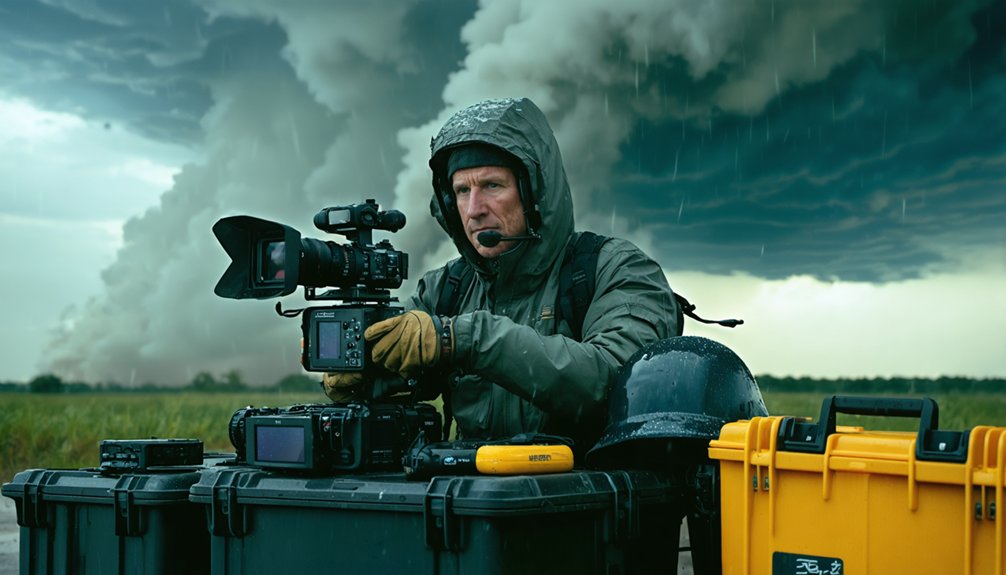
The TIV represents the extreme end of storm chasing protection, but most chasers in the field rely on a layered system of gear that doesn’t weigh 16,000 pounds. Your gear safety depends on multiple redundancies working together. Doppler radar systems, real-time GPS tracking, and mobile weather stations give you situational awareness before a tornado closes in.
Storm technology keeps you informed and alive. Chasers like Reed Timmer and Josh Wurman used specialized vehicles equipped with probe deployment systems, armored panels, and reinforced glass to withstand flying debris.
Helmets, harnesses, and communication headsets complete the personal protection layer.
You’re not just surviving extreme weather — you’re collecting data that improves national warning systems. Every piece of equipment serves a dual purpose: protecting your life and advancing atmospheric science.
Which Storm Chaser Took the Most Dangerous Risks?
When you study the Storm Chasers cast, Reed Timmer stands out as the chaser who consistently pushed closest to active tornadoes, prioritizing close-up footage for media sales over cautious data collection. His risky ventures redefined what storm chasing looked like on television, placing him repeatedly within devastating range of violent rotations.
Reed Timmer chased tornadoes closer than anyone, trading caution for cameras and transforming storm chasing into televised spectacle.
Sean Casey also embraced thrilling encounters, driving his 16,000-pound Tornado Intercept Vehicle directly into tornado structures to capture IMAX-quality interior footage. Both men accepted extreme personal danger as part of their mission.
Meanwhile, Tim Samaras pursued scientific probe deployment with disciplined precision, yet still operated dangerously close to violent storms.
Ultimately, Timmer’s consistent pattern of aggressive interception, driven by media objectives rather than pure research, earns him recognition as the show’s most risk-tolerant chaser.
What Storm Chasers Revealed About Real Tornado Science
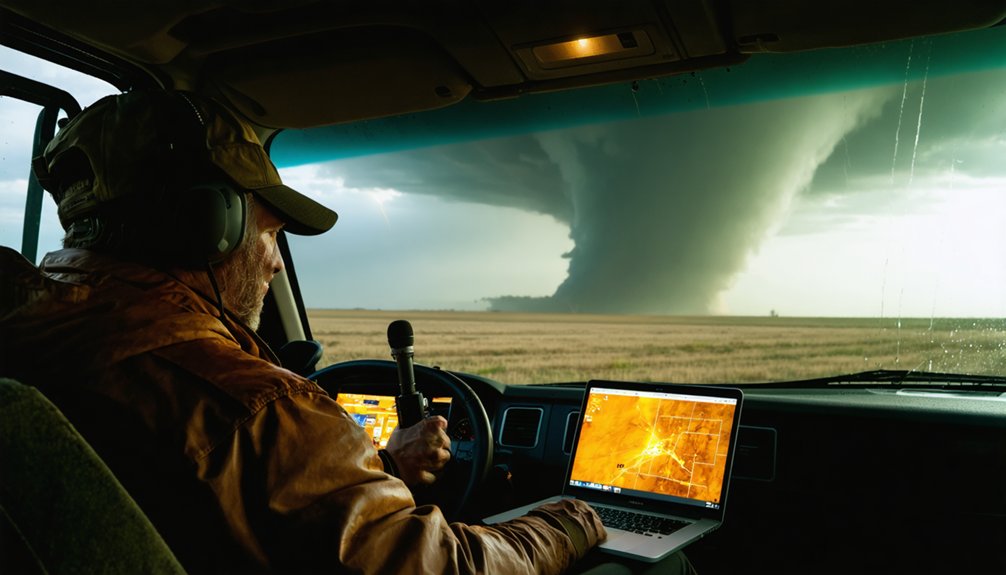
Beyond the dramatic footage and close calls, Storm Chasers delivered genuine scientific contributions that reshaped how researchers understand tornado behavior.
The chasers you watched risked everything to collect storm data that improved national warning systems and expanded knowledge of tornado patterns.
Their field work revealed critical insights:
- Ground-level pressure readings exposed previously unmeasured forces inside active tornadoes
- Probe-based instruments captured data from the lowest 100 feet of tornado formations
- Real-time radar analysis refined how meteorologists predict tornado movement and intensity
- Video documentation provided researchers with visual evidence supporting atmospheric studies
This wasn’t entertainment disguised as science.
Josh Wurman’s radar systems and Tim Samaras’s probes generated legitimate meteorological breakthroughs.
You’re seeing the direct result every time a tornado warning reaches you faster than it once would have.
Frequently Asked Questions
How Did Storm Chasers Differ From Other Discovery Channel Reality Shows?
Unlike typical reality TV, Storm Chasers gripped you with real danger — you’d witness authentic storm chasing techniques, cutting-edge science, and raw reality show authenticity that prioritized meteorological research over drama, making every tornado intercept genuinely life-or-death.
Which Storm Chasers From the Original Series Have Since Passed Away?
You’ll find that Tim Samaras, Paul Samaras, and Carl Young have all passed away, leaving behind a powerful legacy impact and deeply personal stories that forever shaped storm chasing history.
Did Storm Chasers Episodes Contribute to Improving National Tornado Warning Systems?
Like seeds planted in storm-swept fields, yes, *Storm Chasers* episodes fueled real scientific progress. You’ll find their probe-based data directly sharpened tornado forecasting and boosted warning accuracy, ultimately helping protect lives across vulnerable communities.
Where Can Viewers Stream Full Episodes of the Original Storm Chasers Series?
You can explore streaming options on Discovery’s official platforms and YouTube, where episode availability includes full installments of the original *Storm Chasers* series, giving you unrestricted access to every thrilling tornado-chasing adventure anytime.
What Years Did the Discovery Channel’s Storm Chasers Series Originally Air?
You’ll find that Discovery Channel’s Storm Chasers’ air dates spanned from 2007 to 2011, delivering four compelling seasons. The series’ impact transformed public understanding of tornado science and advanced meteorological research considerably.
References
- https://en.wikipedia.org/wiki/Storm_Chasers_(TV_series)
- https://www.imdb.com/title/tt0907833/
- https://www.dailymotion.com/video/x93776g
- https://www.imdb.com/title/tt0907833/news/
- https://www.youtube.com/watch?v=G2C4CeRbcTw
- https://www.youtube.com/watch?v=XmG3uUmUU6k
- https://www.youtube.com/watch?v=iFdYaBBn0ME
- https://www.youtube.com/watch?v=lsYAFV0ui8o
- https://www.youtube.com/watch?v=EEtb_DmjRa4
- https://www.imdb.com/title/tt0907833/fullcredits/