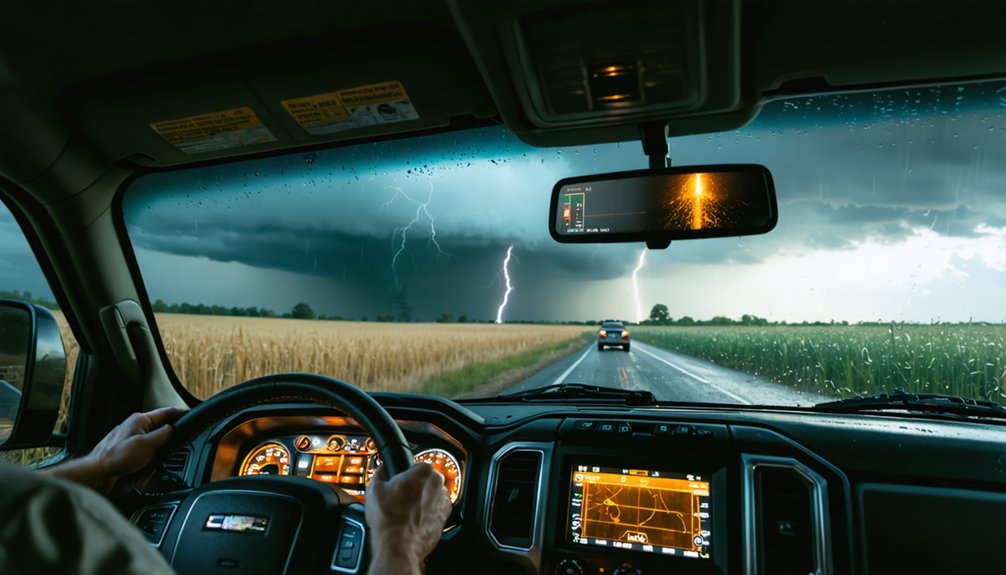
Mastering hailstorm chasing means combining sharp sky-reading skills with smart radar interpretation and rock-solid escape planning. You’ll need to spot overshooting tops, recognize a greenish tint signaling large hail, and trust visual cues over delayed radar data. Keep your vehicle pointed toward an exit, know at least two escape routes, and never let a shifting storm catch you flat-footed. The tips ahead will sharpen every instinct you need to chase smarter and safer.
Key Takeaways
- Use live radar and satellite feeds to build target areas, comparing your forecasts with expert outlooks to identify reasoning gaps.
- Recognize visual hail indicators like overshooting tops, greenish tints beneath storm bases, and rapid cloud-base lowering for early repositioning.
- Spot the Three-Body Scatter Spike (TBSS) radar artifact and overshooting tops to gain critical minutes before hail core intensification.
- Trust real-time visual cues like cloud churning over delayed radar data, keeping phone alerts accessible for rapid storm reaction.
- Park southeast of the hail core with two escape routes planned, engine running, and move immediately when storm dynamics shift.
Simulate Hailstorm Chases at Home Before the Real Thing
Before you ever set foot near a real hailstorm, you can sharpen your instincts from your living room. Pull up live radar, satellite feeds, and forecast models, then build your own target area before watching the storm unfold. That’s how you build forecast accuracy without risking your life.
Compare your call against expert outlooks and identify every gap in your reasoning. Did you miss the capping strength? Overlook wind shear? Fix it now, not in the field.
Virtual chasing also trains your storm safety instincts. Practice repositioning using real-time data, simulate escape routes, and mentally rehearse abort decisions. You’re building the decision-making muscle that keeps you alive when hail the size of baseballs is hammering your windshield at seventy miles per hour.
Read the Sky for Signs a Storm Is Producing Large Hail
Virtual reps sharpen your forecast instincts, but once you’re out in the field, your eyes become your most powerful instrument. Cloud formation recognition separates confident chasers from reckless ones. Watch for overshooting tops punching above the anvil — that’s explosive updraft energy driving hailstones upward.
A cauliflower-textured tower with sharp, crisp edges signals vigorous growth and large hail potential.
Weather pattern analysis primes your expectations, but the sky confirms them in real time. Look for a greenish tint beneath the storm’s base — suspended large hailstones scatter light differently.
Notice rapid cloud-base lowering and intense inflow winds pulling toward the updraft. These visual cues demand immediate repositioning. Don’t wait for radar confirmation. The storm’s already ahead of the data — trust what you’re seeing.
Spot Overshooting Tops and TBSS Before Hail Cores Form

Catching a storm before it matures is where elite chasers separate themselves from the pack. Watch for overshooting tops punching above the anvil — that violent cloud formation signals explosive updrafts capable of lofting baseball-sized hail.
Strong wind shear tilts the storm’s structure, stretching the anvil downwind while the overshooting top repeatedly surges upward. That’s your early warning.
Next, scan radar for the Three-Body Scatter Spike, or TBSS — a ghostly artifact extending away from the reflectivity core. When you spot that spike, a significant hail core is already organizing.
Don’t wait. Reposition now, southeast of the updraft base, before the core consolidates. These two cues give you precious minutes to establish an aggressive, safe viewing angle before the storm *unleashes* its worst.
Read Hail Cores on Radar Without Losing Your Eyes on the Sky
Once the hail core locks in, radar becomes your lifeline — but staring at it too long gets you killed. You’ve got to master quick radar interpretation, absorbing storm dynamics in seconds before your eyes return to the sky.
Glance at reflectivity gradients, note the BWER’s position, then look up. That’s your rhythm. The radar’s always running minutes behind reality, so what you’re seeing overhead is already ahead of what the screen shows.
Trust your eyes when clouds churn violently or inflow strengthens suddenly. Those visual cues beat any delayed scan.
Keep your phone mounted at eye level, minimize swipe time, and set alerts to notify you of velocity changes. Read fast, react faster, and never let the screen own your attention.
Position Your Vehicle to Escape Large Hail Fast
When a hail core shifts fast, your escape window shrinks faster — so your vehicle position isn’t just a preference, it’s survival math. Park southeast of the core with your nose pointed toward your exit route. Never let the storm box you in against dead-end roads or flooded crossings.
Vehicle safety demands you treat every stop like a tactical decision. Study road networks before you’re anywhere near the hail shaft. Know two exits minimum — cores accelerate unpredictably, and hesitation costs you paint, glass, or worse.
Emergency preparedness means your engine stays running, always. The moment hail size escalates or the core veers your direction, you move immediately. No second-guessing. Freedom on the road means staying ahead of the storm — not scrambling beneath it.
Frequently Asked Questions
What Certifications Should I Get Before Chasing Hailstorms Professionally?
You’ll want to get storm spotter certified before you chase professionally. It’s urgent—master storm forecasting fundamentals, gear up with proper safety equipment, and absorb meteorological knowledge for months before you’re truly ready to pursue hailstorms freely.
How Do I Safely Chase Hailstorms Without a Partner?
Like a lone wolf, you’re at greater risk solo—so prioritize storm preparedness by keeping your engine running, maintaining emergency communication tools, monitoring escape routes, and never driving into rising waters without knowing the depth.
Should I Obey Traffic Laws When Escaping a Dangerous Hail Core?
Yes, you must obey traffic laws even escaping a dangerous hail core. Speeding tickets and accidents aren’t worth it. Emergency protocols exist for a reason—slow down, keep headlights on, and maintain control; your survival depends on disciplined, calculated movement.
How Do I Manage Pressure and Anxiety During My First Chase?
Calm skies shatter into chaos—but you’re ready. Build mental resilience through storm preparedness: chase small storms first, study forecasts for months, and you’ll transform anxiety into confident, calculated action when it truly matters.
Which Regions Should Beginner Hailstorm Chasers Completely Avoid Starting In?
Avoid Dixie Alley and the Shawnee Hills when you’re starting out! These low-visibility regions’ll compromise your hailstorm forecasting and emergency preparedness. You’ll build sharper instincts chasing smaller, open-terrain storms first before tackling those unforgiving, complex environments.
References
- https://www.youtube.com/watch?v=FJWWHDFBRLI
- https://www.reddit.com/r/stormchasing/comments/1ooimws/does_anyone_have_tips_for_a_storm_chasing/
- https://www.youtube.com/watch?v=fABwvj0rP_A
- https://www.flame.org/~cdoswell/chasesums/Chase_safety.html
- https://www.reddit.com/r/stormchasing/comments/1ditn4z/if_there_was_one_tip_you_could_give_about_storm/