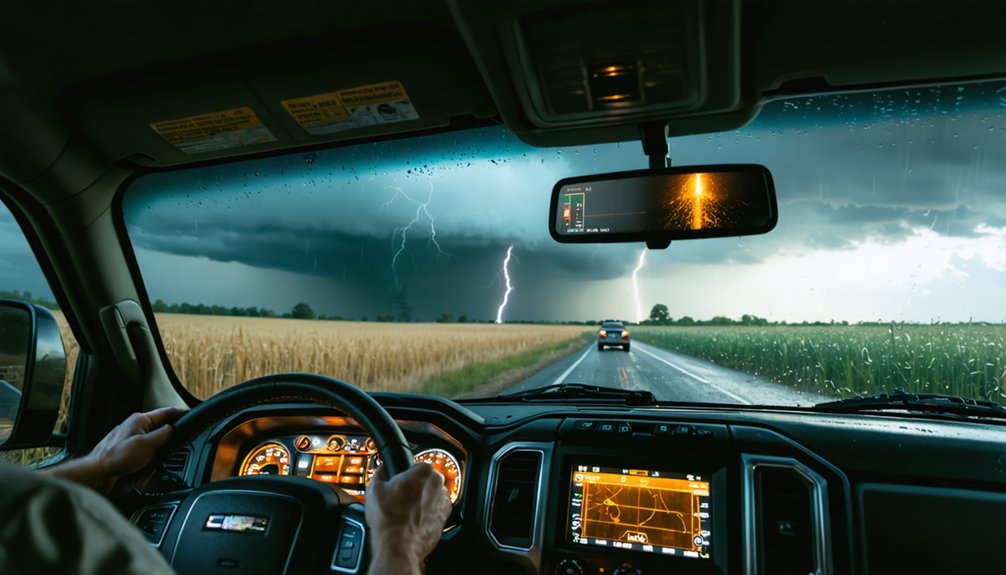
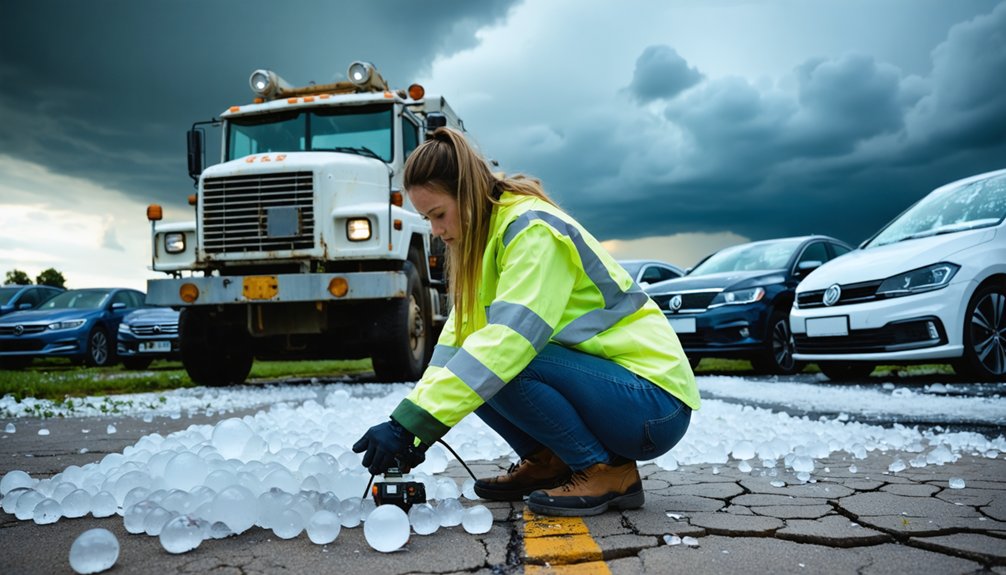
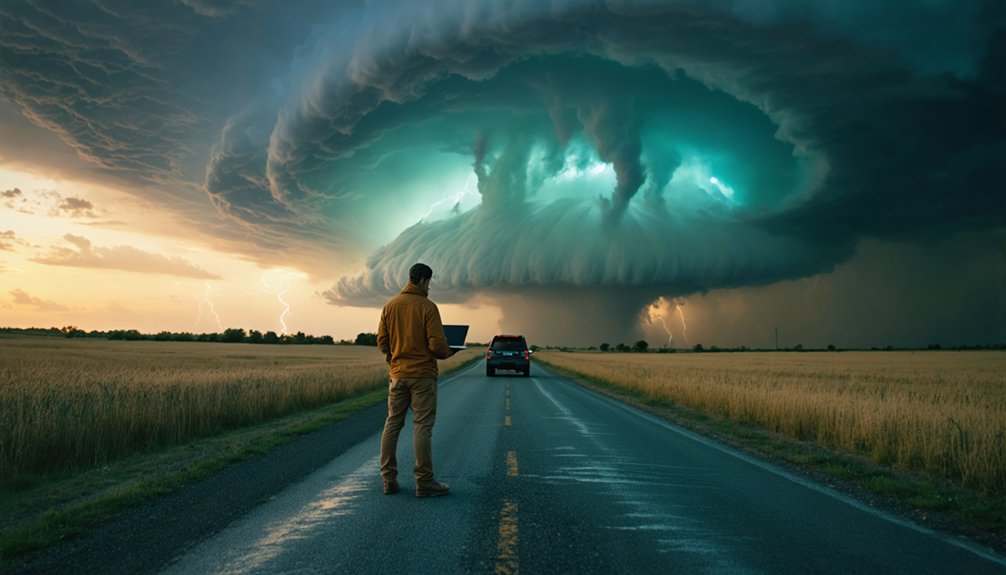
If you chase storms, you’re deliberately entering environments that can rewire your nervous system through cumulative trauma. Each high-intensity event registers as a genuine threat, gradually increasing your vulnerability to anxiety, PTSD, and depression. Repeated exposure doesn’t build immunity—it can erode it. Protective factors include consistent self-care, peer support, and recognizing when professional help is necessary. Understanding the full psychological landscape of storm chasing could fundamentally change how you protect yourself out there.
Key Takeaways
- Storm chasers face unique mental health risks, as repeated exposure to catastrophic events can trigger PTSD, anxiety, and depression over time.
- Cumulative trauma rewires stress responses, meaning repeated storm exposure doesn’t build immunity and can increase psychological reactivity.
- Consistent self-care practices—sleep, exercise, and active relaxation—are essential for maintaining mental stability during and between chasing seasons.
- Peer communities provide critical emotional support, normalize trauma responses, and reduce isolation through shared experiences and mentorship.
- Professional help should be sought when anxiety, intrusive memories, emotional numbness, or substance use begins impairing daily functioning.
Why Storm Chasers Are Uniquely Vulnerable to Mental Health Struggles
Storm chasers occupy a psychological space that few professions can match—deliberately pursuing the same catastrophic events that leave survivors with PTSD, anxiety, and depression. You’re voluntarily entering environments that trigger mental health disorders in previously healthy individuals, which creates a paradox that demands serious psychological awareness.
Storm chasing means voluntarily entering the same catastrophic events that leave survivors psychologically shattered.
Your vulnerability isn’t random. Genetic predispositions influence why you’re drawn to high-risk environments, while maturity development shapes how effectively you process the emotional aftermath.
Exposure to severe storms correlates directly with generalized anxiety disorder, depression, and PTSD—conditions that don’t discriminate between survivors and those who chose to be present.
What makes your situation uniquely complex is that the same event can simultaneously produce exhilaration and trauma. Recognizing this duality isn’t weakness—it’s the foundation of maintaining your psychological resilience long-term.
How Repeated Storm Exposure Drives Anxiety and PTSD in Chasers
Each time you enter a high-intensity storm environment, your nervous system registers the threat—and repeated exposure doesn’t necessarily build immunity. Over time, cumulative storm trauma can rewire your stress response, making anxiety triggers more reactive, not less.
Research confirms that severe weather exposure increases the risk of generalized anxiety disorder and PTSD—even among those who chose to be there. Your brain doesn’t always distinguish between voluntary and involuntary danger.
Sleep disturbances, hypervigilance, and intrusive memories can emerge gradually, compounding after each chase season.
Recognizing these patterns early matters. If you’re noticing that anxiety lingers well after the storm dissipates, or that specific weather cues provoke disproportionate distress, those are signals worth taking seriously—not suppressing.
Your psychological autonomy depends on addressing them directly.
Self-Care Habits That Keep Storm Chasers Mentally Grounded
Maintaining mental stability as a storm chaser requires deliberate, consistent self-care—not occasional recovery efforts after burnout has already set in. You can’t sustain emotional resilience without building routines that protect your psychological foundation before, during, and after high-intensity chasing periods.
Resilience isn’t built in recovery—it’s built in the routines you maintain before the storm ever arrives.
Prioritize sleep, exercise, and structured downtime as non-negotiable commitments. Stress management isn’t passive—you actively practice relaxation techniques, set boundaries on your energy expenditure, and engage hobbies that restore rather than deplete you. These habits create a buffer against the emotional volatility that extreme weather exposure generates.
Connecting with peers who understand your unique challenges reinforces your sense of stability. When professional support becomes necessary, pursue it without hesitation.
Tailored therapeutic strategies, including mindfulness-based approaches, equip you with precision tools that sustain long-term mental health across demanding seasons.
Peer Communities That Provide Real Support for Storm Chasers
When the emotional weight of storm chasing becomes difficult to carry alone, peer communities offer something professional support often can’t—shared experience. Connecting with others who’ve faced the same intensity normalizes your emotional responses and reduces isolation.
Community bonding within storm chasing networks creates genuine psychological safety. You’re not explaining yourself to someone unfamiliar with the lifestyle—you’re speaking with people who understand it viscerally. That validation matters clinically and personally.
Peer mentorship adds another layer of support. Experienced chasers who’ve navigated trauma, burnout, or anxiety can model effective coping without judgment. Online communities and dedicated support groups extend this access regardless of geography.
Building these connections isn’t optional for long-term mental health—it’s strategic. Your peers don’t replace professional help, but they reinforce it in ways only shared experience can.
Signs a Storm Chaser Needs Professional Mental Health Help
Peer support builds resilience, but it has limits—and recognizing those limits is part of protecting your mental health. If you’re experiencing persistent anxiety, intrusive memories, or emotional numbness that interferes with daily functioning, professional help isn’t optional—it’s necessary.
Watch for these warning signs:
- Disrupted sleep or recurring nightmares following high-intensity chases
- Impaired risk assessment in the field, where judgment feels clouded or reckless
- Emotional resilience that’s visibly deteriorating between seasons
- Increased substance use as a coping mechanism
- Withdrawal from relationships or activities you previously valued
Therapists trained in trauma-informed care and modalities like EMDR can provide targeted strategies unavailable through peer networks.
Seeking help isn’t weakness—it’s the clearest indicator that you understand the real risks this lifestyle carries.
Frequently Asked Questions
Can Genetics Determine if Someone Is Likely to Become a Storm Chaser?
Genetic predispositions likely influence your storm-chasing tendencies, but they don’t determine your path alone. Your personality traits, learned behaviors, and life experiences all actively shape whether you’ll pursue this high-risk lifestyle.
How Do Childhood Experiences Influence a Person’s Storm Chasing Tendencies?
Your entire storm chasing identity’s rooted in childhood! Childhood trauma and emotional resilience you’ve developed shape your learned behaviors, directly influencing your thrill-seeking tendencies. Your upbringing’s fundamentally written the blueprint for how you chase storms.
What Therapeutic Techniques Like EMDR Help Storm Chasers Recover From Trauma?
You can use EMDR for trauma processing, helping you reframe distressing storm memories. It builds emotional resilience by reducing PTSD symptoms. Combining EMDR with mindfulness and relaxation techniques strengthens your recovery and restores your sense of control.
Can Severe Storms Trigger Mental Health Disorders in Previously Healthy Individuals?
Like a clear sky torn apart by lightning, severe storms can shatter your mental health. You’re not immune—hurricanes and violent weather trigger storm anxiety, weather phobia, PTSD, and depression, even if you’ve never struggled before.
Do Storm Chasers With Substance-Use Disorders Face Higher Relapse Risks After Storms?
If you’ve got a substance-use disorder, you’re at higher risk for substance relapse after intense storm impact. Severe weather can trigger increased consumption or derail your recovery, so proactive mental health support’s essential.
References
- https://www.facebook.com/groups/LowellSkywarn/posts/4318711441699950/
- https://medicalxpress.com/news/2013-05-storm-chasers-born-wild.html
- https://crazystormchasers.com/storm-chaser-mental-health-support-coverage/
- https://www.ncei.noaa.gov/news/hurricanes-take-heavy-toll-mental-health-survivors
- https://klcjournal.com/with-tornado-risk-high-in-kansas-be-aware-of-storm-trauma/