When you watch storm chasing documentaries, you’re witnessing real scientists deploy anemometers and pressure sensors inside active tornadoes and hurricanes. These films convert raw atmospheric data into visceral visual experiences, showing you exactly how pressure drops signal rotation and why wind speeds crossing 74 mph transform tropical storms into hurricanes. Unlike Hollywood productions, authentic documentaries feature genuine field measurements that satellites can’t replicate. Stick around, and you’ll uncover far more about what separates real storm science from dramatic fiction.
Key Takeaways
- Storm chasing documentaries combine real-time scientific data collection with emotional storytelling, creating authentic narratives about chasers risking their lives for knowledge.
- Technology evolved from primitive paper maps and 16mm footage to 4K drones, mobile Doppler units, and live satellite uplinks.
- Chasers function as mobile laboratories, deploying anemometers and pressure sensors to collect ground-truth data that often contradicts satellite readings.
- Indie documentaries like *Touching the Sky* preserve six decades of storm chasing culture with unscripted footage and genuine field experiences.
- Real interception techniques demonstrated by professionals like Reed Timmer validate documentaries’ scientific credibility over Hollywood fictional dramatizations.
What Makes Storm Chasing Documentaries So Compelling?
Storm chasing documentaries pull you into a world where science meets survival, capturing the raw power of tornadoes and hurricanes through real-time field observations that no satellite feed can replicate. You’re watching chasers deploy anemometers while winds exceed 74 miles per hour, collecting data that directly shapes meteorological understanding.
What hooks you isn’t just the spectacle — it’s the emotional storytelling woven through every intercept. You feel the tension as teams navigate Tornado Alley, making split-second decisions backed by radar readings and instinct.
Visual storytelling transforms raw atmospheric data into something viscerally human, showing you the relationship between scientific precision and physical risk. These films don’t just document weather; they document people who’ve chosen knowledge over safety, and that choice demands your attention.
How Storm Chasing Documentaries Evolved Over Six Decades
From grainy 16mm footage shot in 1956 to 4K drone captures of wedge tornadoes, storm chasing documentaries have tracked six decades of technological and cultural transformation. The historical context matters: early chasers had primitive anemometers, paper maps, and gut instinct. You’d watch them drive blind into rotating supercells with zero real-time radar support.
From primitive paper maps to 4K drone footage — six decades of storm chasing transformed by technology and sheer human instinct.
Technological advancements changed everything. Digital cameras, mobile Doppler units, and satellite uplinks transformed how filmmakers captured and communicated storm data. By 2012, series like *Tornado Chasers* were streaming live intercepts directly to audiences.
The 2024 success of *Twisters* reflects how far both the science and storytelling have come.
You’re witnessing a discipline that’s evolved from raw survival documentation into a sophisticated blend of meteorological fieldwork and cinematic craft.
The Science Storm Chasing Documentaries Actually Teach You
When you watch a storm chasing documentary, you’re absorbing real meteorological science—how a tropical storm intensifies into a hurricane the moment wind speeds hit 74 miles per hour, or how atmospheric pressure drops signal a tornado’s approach.
You’ll see chasers deploy anemometers in the field, capturing live wind velocity data that ground-verifies what radar systems detect from a distance.
That real-time data collection, pulled directly from the storm’s environment, gives you a ground-level education in atmospheric dynamics that no classroom diagram can replicate.
Storm Formation Science Explained
Documentaries on storm chasing don’t just capture the spectacle — they break down the atmospheric mechanics driving it. You’ll watch cloud formation unfold in real time, seeing moisture and heat collide into rotating supercells. Shifting atmospheric pressure gradients become visible through field instruments, revealing how calm skies transform into violent systems within hours.
These films show you what textbooks can’t — the raw, unfilding truth of storm science:
- Watching a funnel cloud drop makes you feel the terrifying power of pressure differentials
- Seeing chasers measure wind velocity live connects data to visceral, human stakes
- Witnessing tropical storms cross the 74 mph threshold into hurricanes reminds you how thin the line between manageable and catastrophic truly is
Real-Time Data Collection
Here’s what storm chasing documentaries actually show you about data collection — chasers aren’t just spectators. They’re mobile laboratories driving directly into storm systems, deploying anemometers and pressure sensors that demand precise sensor calibration before every intercept.
You’ll watch them pull real-time readings on wind velocity, temperature, and atmospheric pressure — data that radar satellites simply can’t deliver without delay. That ground-level information fills critical gaps in meteorological modeling.
What makes these documentaries visually compelling is the data visualization component. You see raw numbers transform into dynamic storm maps, helping you understand intensity shifts as they happen.
Chasers aren’t guessing — they’re verifying. Every reading they collect supplements existing radar feeds, giving meteorologists an immediate, unfiltered picture of what’s actually occurring inside the storm’s core.
Wind Measurement Tools
Among the instruments you’ll spot most often in storm chasing footage, the anemometer stands out — a rotating cup device that translates wind force into measurable speed data. These wind instruments give chasers real-time readings that radar simply can’t deliver alone.
When winds hit 74 mph, you’re watching a tropical storm cross into hurricane territory — a threshold measurement techniques make visible.
Here’s what these tools actually capture for you:
- The exact moment a storm intensifies beyond survivable exposure limits
- Raw wind velocity data that confirms or contradicts satellite readings
- Ground-truth numbers that shape evacuation decisions affecting thousands of lives
You’re not just watching spinning cups on screen — you’re seeing science protect people in real time.
Best Storm Chasing Documentaries Worth Watching
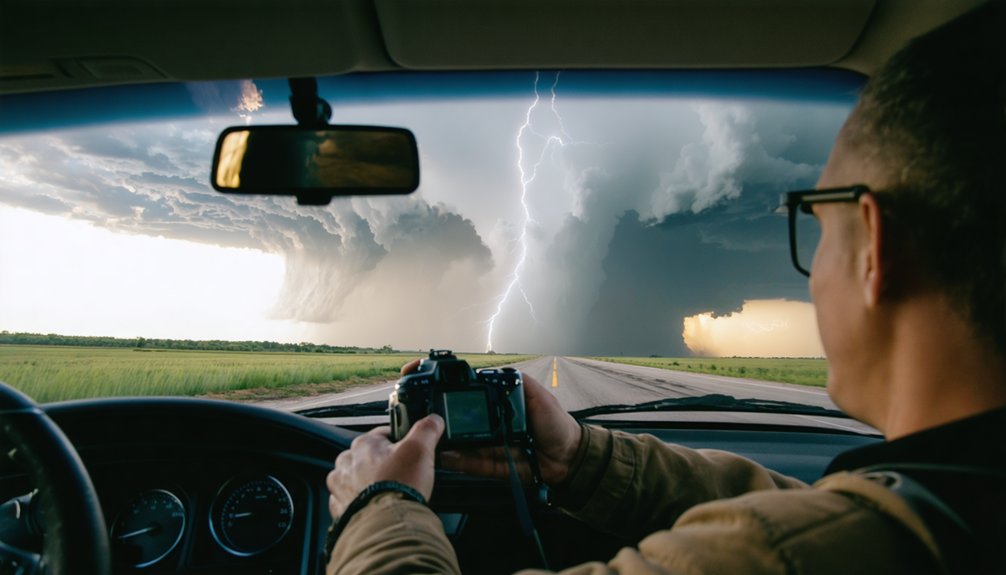
Several storm chasing documentaries stand out for their ability to blend scientific rigor with raw, on-the-ground footage. If you’re ready to explore the genre, start with Martin Lisius’ *Twisters*, which chronicles real storm chasers using cutting-edge storm chasing technology to document tornado behavior and refine weather forecasting models.
Martin Lisius’ *Twisters* blends scientific rigor with gripping footage, documenting tornado behavior through cutting-edge storm chasing technology.
*The Chasers of Tornado Alley: Touching the Sky* puts you directly inside the pursuit, showcasing authentic chaser culture across Tornado Alley’s volatile corridors.
The TV series *Tornado Chasers*, featuring Reed Timmer’s team, delivers real-time interception footage that’s both visceral and educational.
Each documentary offers you a front-row perspective on atmospheric science, ground verification methods, and the calculated risks professionals accept. These films don’t just entertain — they expand your understanding of extreme weather systems.
Real Chasers vs. Hollywood: Which Storm Chasing Documentaries Are Accurate?
You’ll notice the difference immediately when authentic chasers speak:
- Real chasers risk their lives collecting pressure and wind velocity data — not Hollywood stunts
- Documentaries show tornadoes accurately transforming atmospheric conditions, while fiction inflates destruction for drama
- Reed Timmer’s team demonstrates genuine interception techniques that Hollywood consistently misrepresents
Choosing documentaries over blockbusters gives you unfiltered truth — the raw, dangerous, scientifically grounded reality of chasing severe weather across Tornado Alley.
How Real Field Data Makes Documentary Footage More Credible
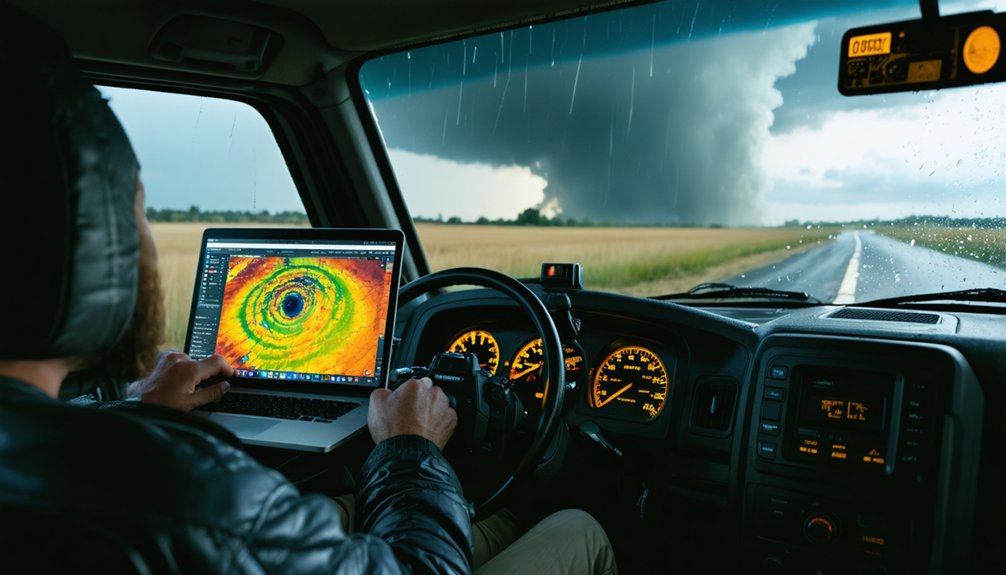
When storm chasers deploy anemometers in the field, they capture real-time wind velocity readings that ground-truth what radar and satellite data only estimate. You’re watching footage backed by actual sensor accuracy, not approximations.
Every pressure drop, temperature shift, and gust measurement represents atmospheric variables collected at the storm’s core, giving documentary footage an empirical foundation that Hollywood recreations simply can’t replicate.
Real field data transforms raw visual drama into verifiable science. When you see a chaser’s instruments spiking as a tornado tightens, those readings cross-reference directly against meteorological models. That correlation builds credibility.
You’re not just witnessing spectacle — you’re seeing documented evidence. Documentaries that integrate authentic field measurements don’t just entertain; they preserve scientifically significant records of extreme weather behavior for researchers and future storm chasers alike.
Why Indie Storm Chasing Documentaries Outperform the Mainstream
When you watch an indie storm chasing documentary, you’re experiencing something mainstream productions rarely deliver: authentic narratives told by real chasers who’ve stood inside the storm’s margin.
Raw footage, unscripted reactions, and first-person accounts replace polished dramatizations, giving you a scientifically grounded picture of what interception actually looks like.
Martin Lisius’ *Twisters* and *The Chasers of Tornado Alley: Touching the Sky* demonstrate how indie filmmakers capture the culture’s reality with a precision and honesty that big-budget productions consistently miss.
Authentic Chaser Narratives
Indie storm chasing documentaries capture what mainstream productions often sanitize: the raw, unfiltered culture of chasers who’ve spent decades reading skies, calibrating anemometers, and intercepting tornadoes across Alley corridors stretching from Texas to Canada.
You’ll find authentic narratives embedded in weather folklore and storm symbolism—stories mainstream budgets routinely flatten into spectacle.
These documentaries let you experience what chasers actually live:
- The silence before rotation begins, when pressure drops and every instrument confirms what instinct already knew
- Real-time ground verification moments, where field data contradicts satellite feeds and decisions carry life-or-death weight
- Cultural continuity spanning six decades, preserving chasing traditions that shaped modern meteorological fieldwork
Indie productions like *Twisters* and *Touching the Sky* trust you with complexity, delivering science and humanity simultaneously—uncompromised.
Raw Documentary Storytelling
Raw documentary storytelling strips away the artificial tension that mainstream productions inject into storm chasing narratives. When you watch indie storm chasing films, you’re seeing visual authenticity that Hollywood budgets actively work against.
Real chasers don’t perform for cameras — they calculate, adapt, and react.
Emotional storytelling in indie productions emerges organically from genuine risk. Martin Lisius’ *Twisters* demonstrates this precisely — no manufactured drama, just atmospheric data, human decision-making, and raw footage captured at the moment of interception.
Mainstream productions compress complex meteorological realities into digestible entertainment.
Indie filmmakers preserve the actual tension of reading wind speed data, repositioning vehicles, and waiting. You experience storm chasing as practitioners live it — scientifically rigorous, visually unfiltered, and completely unscripted.
That authenticity is exactly what separates meaningful documentation from spectacle.
Indie Films Capture Reality
Indie filmmakers embed themselves in the field, capturing:
- Raw anemometer readings during active tornado intercepts, delivering ground-verified wind data mainstream productions skip
- Unfiltered human tension as teams push into Tornado Alley, where every decision carries genuine consequence
- Authentic visual documentation of storms transforming from tropical disturbances into hurricanes at 74 mph thresholds
These films preserve chasing culture’s true history. You’re not just watching weather — you’re witnessing freedom, science, and courage converging in real time.
Frequently Asked Questions
What Career Paths Can Storm Chasing Documentaries Inspire for Young Viewers?
Over 10,000 trained storm spotters exist in the U.S. alone! You can pursue storm spotter training, meteorological research, documentary filmmaking, or atmospheric science careers — storm chasing documentaries ignite your passion for understanding nature’s most powerful forces.
How Do Storm Chasers Obtain Legal Permission to Film on Private Land?
You’ll need to follow private land access protocols by directly contacting landowners before filming. Storm chasers use permission protocols like signed releases, maintaining respectful communication, and sometimes offering compensation to secure legal, ethical access to private properties.
What Insurance Considerations Do Documentary Film Crews Face During Storm Chasing?
When you’re chasing storms, you’ll face significant insurance coverage challenges and liability concerns. You must secure specialized policies protecting your crew, equipment, and third parties against unpredictable, violent weather conditions that standard film production insurance doesn’t adequately cover.
How Are Storm Chasing Documentary Crews Psychologically Prepared for Traumatic Events?
You’re standing in the fury of swirling darkness—documentary crews build emotional resilience through pre-deployment psychological briefings, peer debriefing sessions, and risk management protocols that sharpen your mental armor against witnessing nature’s most traumatic, violent spectacles firsthand.
What Ethical Responsibilities Do Filmmakers Have When Documenting Storm Disaster Victims?
When filming disaster victims, you’ve got to prioritize consent importance by obtaining permission before capturing footage. Respect privacy concerns by avoiding exploitative imagery, ensuring your documentary ethically balances authentic storytelling with victims’ dignity and emotional vulnerability.
References
- https://www.imdb.com/title/tt3863472/
- https://www.youtube.com/watch?v=5BuDAY-L7mE
- https://en.wikipedia.org/wiki/Tornado_Chasers_(TV_series)
- https://www.dailymotion.com/video/x93776g
- https://filmthreat.com/reviews/the-chasers-of-tornado-alley-touching-the-sky/