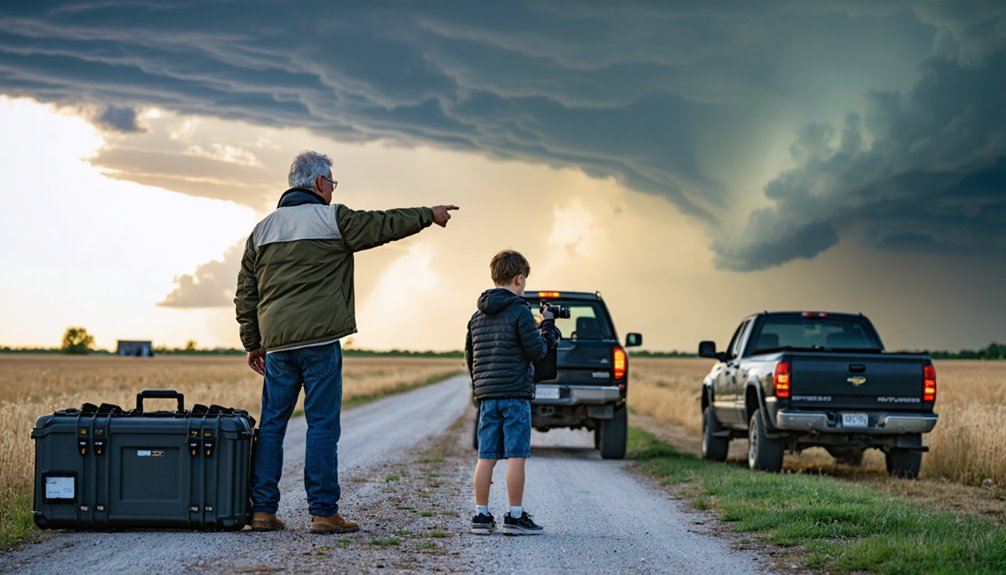
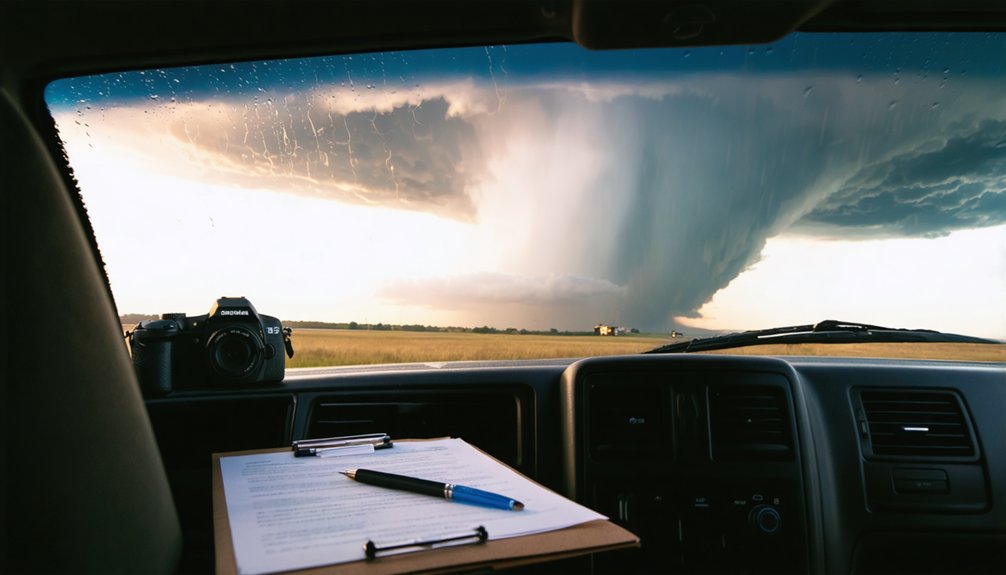
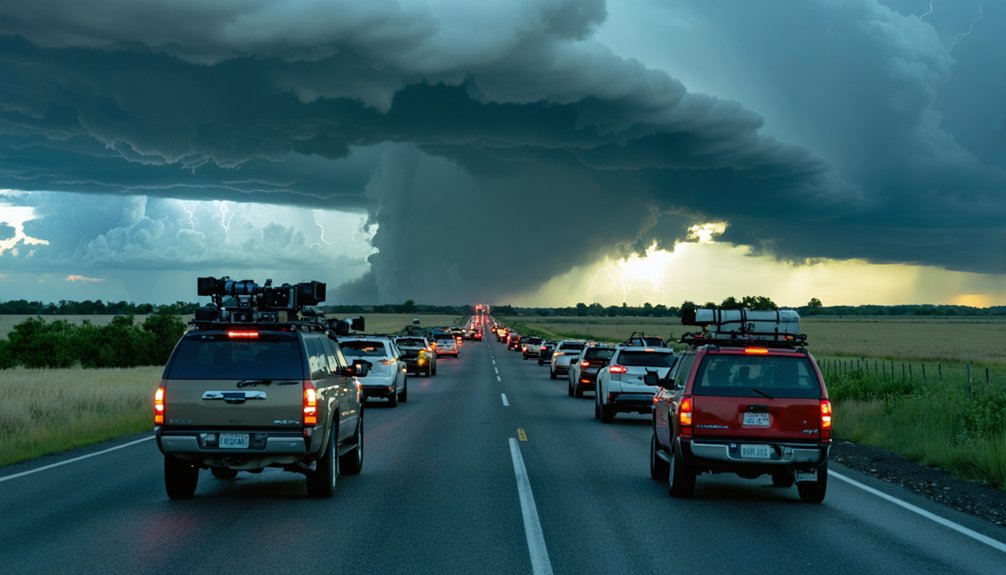
When steering storm chasing ethics, you’ll need to take into account three key areas: preparation, behavior, and respect. You should complete all safety planning before leaving home — not in the field. You’ve got to recognize when adrenaline is pushing you toward reckless decisions, like core-punching or bypassing roadblocks. You must also respect communities, private property, and disaster victims at all times. Responsible conduct protects both your safety and the chaser community’s reputation — and there’s much more to unpack ahead.
Key Takeaways
- Respect private property by avoiding trespassing on fields or restricted areas, as such actions damage community trust and chaser credibility.
- Never bypass law enforcement roadblocks, as doing so endangers lives and undermines the legitimacy of storm chasing.
- Stay out of disaster zones to protect victims’ privacy, dignity, and safety during vulnerable moments.
- Prioritize safety and scientific purpose over adrenaline-driven decisions, avoiding reckless behaviors like core-punching or ignoring escape routes.
- Responsible chasing conduct preserves the reputation of the entire storm chasing community and reflects its true purpose.
Storm Chasing Safety Starts Before You Leave the Driveway
Before you ever start your engine, the groundwork for a safe chase is already being laid. Storm preparedness isn’t optional — it’s the foundation of every responsible decision you’ll make in the field. Study the forecast ingredients: moisture, instability, lift, and wind shear. Know your escape routes before you need them.
Safety isn’t built in the field — it’s built the night before, over maps and forecasts.
Equipment maintenance matters just as much. Faulty gear, unreliable vehicles, or dead batteries don’t just inconvenience you — they create dangerous situations when conditions deteriorate fast. Check everything before departure.
You’re also responsible for understanding storm structure, tornado dynamics, and the risks of hail, lightning, and microbursts. Chasing isn’t about reacting — it’s about anticipating.
The freedom to pursue severe weather carries real weight, and that weight starts the moment you begin planning your chase.
How Do You Know When Storm Chasing Becomes Reckless?
Preparation gets you to the field safely — but once you’re out there, the line between disciplined chasing and reckless behavior can blur fast. Overconfidence is often the first warning sign. When you stop questioning your decisions because you’ve “done this before,” risky behaviors follow — excessive speeds, core-punching, ignoring escape routes, or pushing past law enforcement roadblocks.
Ask yourself honestly: are you chasing to learn, or just to get closer? If your choices prioritize the shot over your safety and others’, you’ve crossed the line.
Reckless chasing isn’t always dramatic — sometimes it’s subtle, like speeding through a small town or blocking a rural road. Stay self-aware, reassess conditions continuously, and let purpose — not adrenaline — drive every decision you make in the field.
Ethical Storm Chasing Means Respecting Roads, Laws, and Victims
Chasing responsibly means more than managing your own risk — it means recognizing that your decisions affect roads, communities, and people already dealing with loss. Don’t trespass on private roads or drive through fields — road trespassing damages property, undermines your credibility, and poisons the chaser community’s reputation.
Pull completely off main roads, keep tripods clear of traffic, and never speed through towns. Respect law enforcement roadblocks without attempting to bypass them.
Victim privacy matters equally. Disaster areas aren’t destinations. Showing up where people have lost homes or loved ones isn’t chasing — it’s intrusion. Ethical chasers stay out of those zones entirely.
You’re free to pursue storms, but that freedom carries real responsibility. How you conduct yourself on the road defines what storm chasing stands for.
Frequently Asked Questions
What Educational Resources Help Beginners Develop Storm Chasing Knowledge and Skills?
Want to chase safely? You’ll sharpen your skills through National Weather Service storm spotting classes and local meteorologist broadcasts. Both build essential weather forecasting knowledge and reinforce safety protocols that’ll keep you confident and protected in the field.
How Should Chasers Evaluate the Success of a Storm Chasing Trip?
You should evaluate your trip by what you’ve learned, not tornadoes seen. Prioritize risk assessment over spectacle, respect ethical boundaries, and ask yourself whether your observations contributed meaningfully to understanding storm forecasting and dynamics.
What Defines a Responsible and Purposeful Objective for Storm Chasing?
As dark clouds churn overhead, you’re chasing to learn—not for thrills. A responsible objective prioritizes scientific observation, respects ethical boundaries, and keeps storm safety central, ensuring every chase expands your knowledge purposefully.
How Can Chasers Contribute Meaningfully to the Broader Scientific Community?
You’ll contribute meaningfully through ethical data collection and storm chasing collaboration—share observations with NWS meteorologists, document storm structure accurately, and prioritize scientific insight over spectacle. Your firsthand data genuinely advances forecasting and saves lives.
Why Is Self-Policing Important for Maintaining Storm Chasing Community Standards?
You’re responsible for upholding ethical guidelines because no formal authority governs storm chasing. Community accountability depends on your choices—reckless behavior damages everyone’s reputation, restricts access, and endangers lives. Self-policing guarantees the hobby’s freedom survives.
References
- https://www.youtube.com/watch?v=MogZEEeYISs
- http://www.cimms.ou.edu/~stumpf/cethics.html
- https://en.wikipedia.org/wiki/Storm_chasing
- https://www.atms.unca.edu/cgodfrey/courses/swfex/pdf/ChasingSafety.pdf
- https://www.youtube.com/watch?v=jcQieWxmnss
- https://www.washingtonpost.com/news/capital-weather-gang/wp/2016/05/19/more-will-die-the-ethics-of-up-close-tornado-chasing/
- https://www.youtube.com/watch?v=9AUQ45syXjI
- http://www.stormeyes.org/tornado/chasing/FAQ/