Reinforcing your vehicle against hail starts with protecting glass components first — fold your mirrors in, cover your windshield and sunroof with floor mats, and layer blankets over the roof and hood. Tuck edges into door frames and secure everything with bungee cords to resist wind displacement. Add corrugated cardboard beneath blankets for extra impact absorption. Finding covered parking before the storm hits remains your strongest defense, and there’s much more to contemplate.
Key Takeaways
- Fold side mirrors inward immediately to reduce exposure and prioritize protecting glass surfaces like windshields and sunroofs with layered coverings.
- Layer blankets or moving pads over the roof and hood, tucking edges into door frames to prevent wind displacement.
- Stack multiple corrugated cardboard sheets over vulnerable surfaces, securing them with bungee cords attached to door handles.
- Weave bungee cords through tarp grommets and tie-down straps to the undercarriage, maintaining tension against dynamic wind forces.
- Seek covered parking in garages or carports beforehand, and consider specialized hail covers tested against at least 1.5-inch hailstones.
Why Hail Dents Cost More to Repair Than Most Drivers Expect
Hail damage looks deceptively minor from a distance, but repair costs routinely climb into the thousands because modern vehicles use complex aluminum and high-strength steel panels that require specialized paintless dent repair (PDR) techniques rather than conventional body filler.
A single storm can generate dozens of individual impact dent repair points across your hood, roof, and trunk, with each dent billed separately by technicians. Without adequate hail damage insurance, you’ll absorb those costs entirely out-of-pocket.
Extensive coverage typically covers hail events, but deductibles, depreciation clauses, and coverage gaps can still leave you financially exposed. Understanding repair cost structures motivates proactive protection rather than reactive claims.
Taking preventative steps before a storm costs markedly less than funding multiple PDR sessions afterward.
Find Covered Parking Before the Storm Hits
When severe weather forecasts predict hail, your first tactical move is securing covered parking before the storm arrives. Garage safety remains your strongest defense—park inside a personal garage, carport, or multi-level parking deck immediately once alerts activate.
When hail threatens, act immediately—secure covered parking before the first drop falls.
Evaluate your covered parking options systematically. Gas station canopies, parking structures, and commercial building overhangs all provide viable short-term shelter. If you’re away from home, identify the nearest sturdy overhead structure and position your vehicle beneath it before conditions deteriorate.
When no dedicated shelter exists, park adjacent to tall buildings on the side opposite the storm’s approach direction. This positioning creates partial wind and hail deflection.
Never stop under overpasses—wind acceleration and collision risks outweigh any protection they appear to offer.
Protect Your Windshield, Mirrors, and Sunroof First
When reinforcing your vehicle against hail, you’ll want to address the most structurally vulnerable components first—your windshield, side mirrors, and sunroof.
Fold your mirrors inward immediately to reduce their exposure profile and minimize direct impact risk.
Then layer floor mats, windshield covers, or specialized hail blankets over your windshield and sunroof, prioritizing glass surfaces before moving on to hood and roof reinforcement.
Prioritize Vulnerable Glass Components
Glass components rank among the most structurally vulnerable parts of your vehicle during a hail event, so you’ll want to address them before reinforcing any other surface. Windshields, sunroofs, rear windows, and side mirrors fracture under direct impact far more readily than sheet metal.
Fold your mirrors inward immediately to reduce exposure and improve wind resistance during high-velocity gusts.
For glass reinforcement, layer floor mats carpet-side down against the windshield and rear window, positioning the rubberized surface outward to absorb kinetic impact. Use dedicated windshield covers or rear window protectors when available.
Don’t neglect the sunroof—it’s a direct overhead target. Securing glass-specific coverage first establishes your primary defensive layer, giving you a structurally sound baseline before you extend protection across the roof, hood, and body panels.
Fold Mirrors Inward First
With your primary glass surfaces identified as priority targets, the first physical action you should take is folding your side mirrors inward. Most modern vehicles support inward folding either manually or via a dashboard control, reducing each mirror’s exposure profile significantly.
Mirror protection through this single adjustment eliminates one of the most vulnerable external components without requiring any materials or tools. Exposed mirrors present a perpendicular surface that hail strikes at full impact force, shattering housings and lenses instantly.
Inward folding positions the mirror glass behind the door panel’s edge, creating a natural deflection barrier. Execute this step before retrieving any blankets or coverings, since it costs zero time and delivers immediate structural protection.
Don’t overlook this fast, tool-free defensive measure when every second before impact counts.
Layer Windshield Protection Effectively
After securing your mirrors, shift your attention immediately to the windshield, which presents the largest unprotected glass surface on your vehicle. Layering materials strategically maximizes impact resistance without compromising paint protection on surrounding panels.
- Place floor mats carpet-side down directly against the glass, positioning rubber sides outward to absorb impact force.
- Stack windshield covers or hail blankets over the mats, extending coverage beyond the glass edges.
- Secure edges using paint-safe tape, tucking excess material into door frames to prevent wind displacement.
- Extend rear coverage to the back window using identical layering methods.
Don’t neglect tire reinforcement when anchoring tie-down straps—wrapping straps around tires provides stable anchor points that hold coverings firmly against high winds without damaging your vehicle’s exterior finish.
Layer Blankets and Mats Over Your Car for Hail Protection
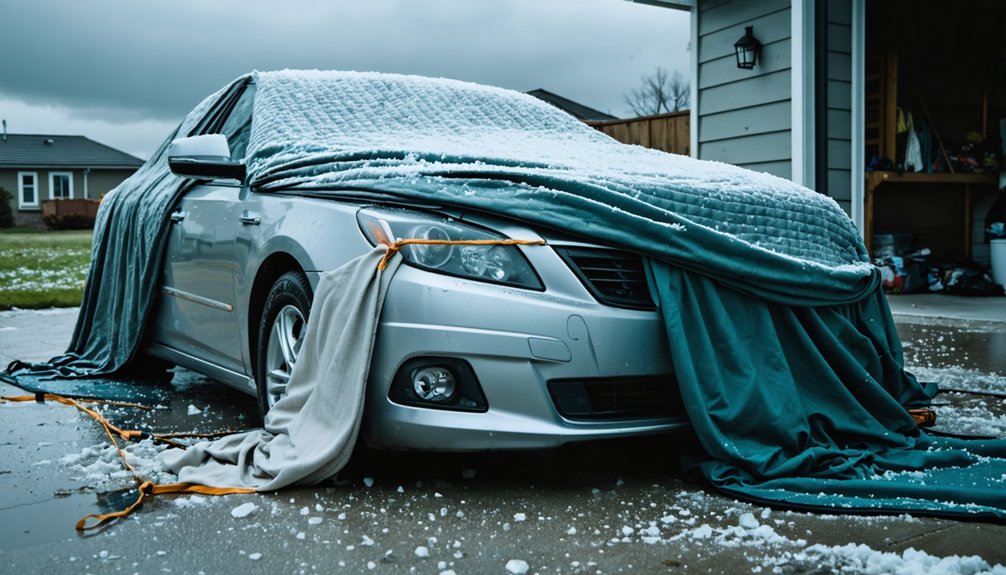
When hail strikes without warning, layering blankets and floor mats over your car gives you a fast, low-cost method to absorb impact and reduce body panel damage. Pull floor mats from your vehicle interior and position their softer carpeted sides against glass surfaces, with rubberized sides facing outward to deflect strikes.
Fold moving blankets in half to double their thickness before draping them across the roof and hood. Tuck blanket ends firmly into door frames and under the hood to prevent wind displacement.
Comforters, sleeping bags, and yoga mats also serve as effective padding layers. Strong emergency preparedness means keeping these materials accessible so you can deploy them rapidly before a storm intensifies, protecting your vehicle without relying on specialized equipment.
Stack Cardboard Shields Over Your Roof and Hood
Cardboard acts as a surprisingly effective hail shield when layered correctly over your vehicle’s most vulnerable flat surfaces. For solid emergency preparedness, source thick corrugated boxes and flatten them completely before deployment.
Follow this efficient stacking protocol:
- Select sturdy corrugated cardboard thick enough to resist impact without immediate compression failure.
- Stack multiple layers over the roof and hood, maximizing impact-absorption depth across flat panels.
- Secure sheets using bungee cords attached to door handles, preventing wind displacement during the storm.
- Replace wet cardboard immediately, since saturated material loses structural integrity and stops protecting your vehicle interior from damage.
Combining cardboard with blankets amplifies your shielding effectiveness significantly. You’re building a layered defense system using accessible materials — that’s smart, independent storm response.
Lock Down Your Coverings So Wind Can’t Lift Them
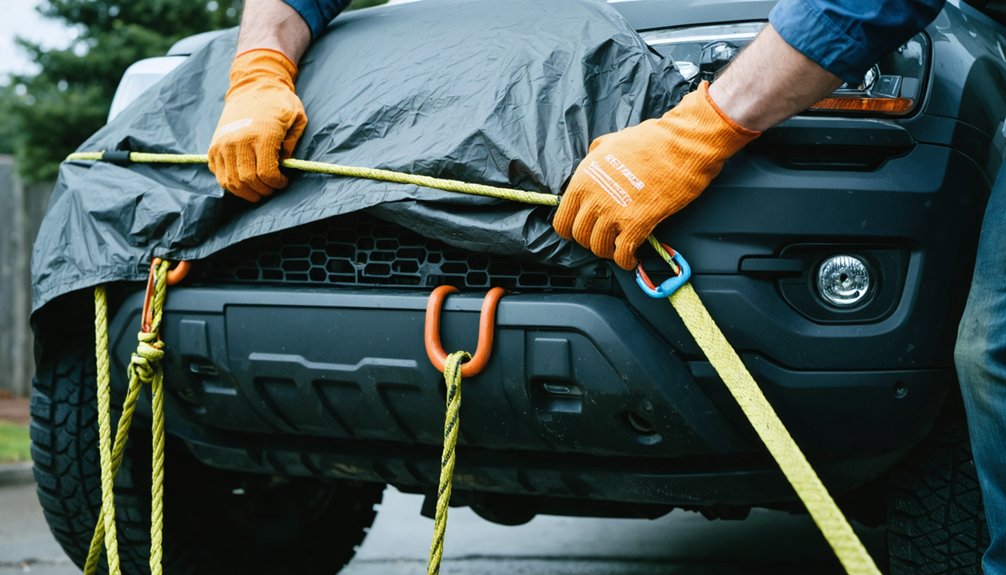
Once your blankets and cardboard are positioned, you’ll need to anchor them against wind displacement or they’ll shift and expose your vehicle mid-storm.
Tuck blanket ends tightly into door frames, under the hood lip, and inside the trunk lid to create mechanical resistance against lift.
Then run bungee cords or tie-down straps through tarp grommets and attach them to your tires or undercarriage points to lock the entire coverage system in place.
Anchoring Covers Against Wind
Hail storms that are severe enough to damage your vehicle almost always bring strong wind gusts, and those gusts will peel back any cover that isn’t properly anchored. Portable shelters and wind anchors give you real control over your protection system.
Use these four anchoring methods:
- Tuck blanket ends into door frames, under the hood, and inside the trunk lid to eliminate loose edges.
- Weave bungee cords through tarp grommets and hook them to door handles for cross-roof tension.
- Attach tie-down straps directly to tires as stable low anchor points.
- Apply paint-safe tape along blanket borders where bungee cords can’t reach.
Each method compounds the others, creating layered wind resistance that keeps your coverings locked down throughout the storm.
Securing Straps And Cords
Anchoring your blankets and tarps through tucking and taping handles the static load, but straps and cords are what handle dynamic wind pressure once a storm intensifies. Run bungee cords through tarp grommets and hook them directly to your tires or undercarriage points, keeping tension consistent across all four corners.
Tie-down straps offer greater load control than bungee cords when gusts spike unpredictably. For vehicle paint preservation, thread straps only through designated anchor points or wrap contact edges with cloth before cinching.
Weave rope through multiple door handles to distribute force laterally across the roof. When you’re relying on emergency shelter options like gas station canopies, secure your coverings before repositioning under overhead structures.
Consistent strap tension eliminates billowing, which is the primary failure point under sustained wind.
Which Specialized Hail Covers Are Worth Buying?
When budget and storm frequency justify the investment, purpose-built hail covers deliver measurably better protection than improvised blanket systems. Hail resistant materials like multi-layered EVA foam and reinforced polyester outperform household alternatives markedly.
Custom cover options sized precisely to your vehicle eliminate wind gaps that defeat generic fits.
Evaluate purchases using these four criteria:
- Impact absorption rating — confirm tested protection against at least 1.5-inch hailstones
- Secure fastening system — look for integrated tie-down straps connecting beneath the chassis
- Waterproof outer shell — prevents moisture saturation that collapses padding under sustained impact
- Storage portability — compressed bag systems fit your trunk for emergency deployment anywhere
Inflatable covers add an air-cushion buffer layer, while mobile car tents suit drivers in chronically hail-prone regions requiring permanent flexible solutions.
How Comprehensive Coverage Pays for Hail Damage Repairs
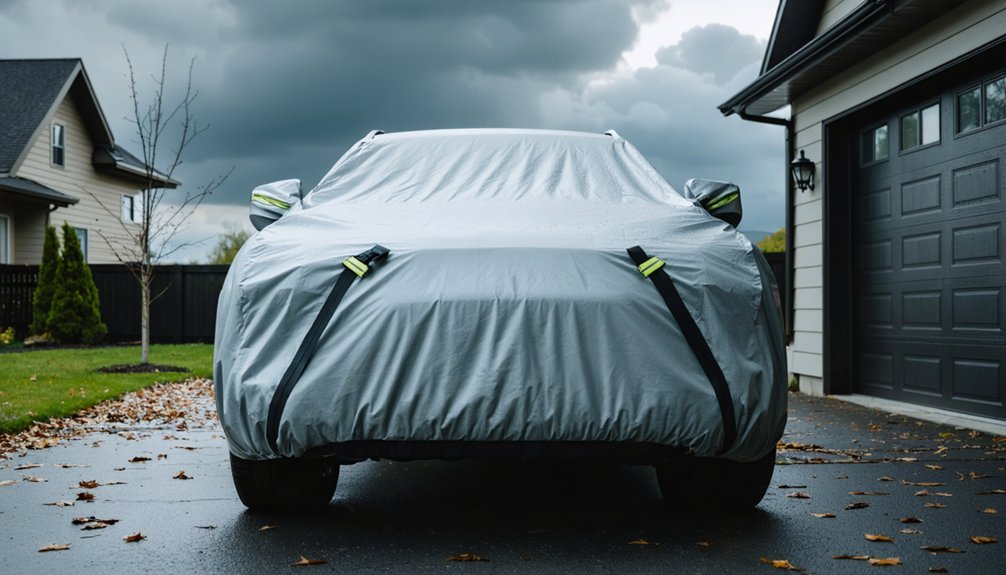
Extensive auto insurance coverage functions as your financial backstop once physical protections fail against severe hail events. All-encompassing coverage specifically handles non-collision damage, meaning hail qualifies directly under standard policy terms.
When you file insurance claims, your insurer dispatches an adjuster to document dent patterns, glass fractures, and panel deformation. Repair costs vary considerably based on damage severity, vehicle type, and regional labor rates. Paintless dent repair runs cheaper than full panel replacement, so adjusters typically authorize the least expensive viable method.
Your deductible subtracts directly from the approved repair amount, so selecting a lower deductible reduces your out-of-pocket exposure during storm season. Maintaining broad coverage gives you financial autonomy, letting you restore your vehicle without absorbing catastrophic repair costs independently.
Frequently Asked Questions
Can Hail Damage Affect a Vehicle’s Resale Value Significantly?
Yes, hail damage greatly impacts your vehicle’s resale depreciation. Unrepaired dents lower buyer confidence and market value. Filing insurance claims promptly guarantees you’re restoring structural integrity, protecting your financial freedom and maximizing resale returns effectively.
How Large Does Hail Need to Be to Dent Metal?
Like tiny hammers, hail size of one inch or larger can begin metal denting your vehicle. You’ll find that faster-falling stones accelerate damage, so don’t underestimate even marginally smaller hailstones hitting vulnerable panels repeatedly.
Does Hail Damage Impact a Vehicle’s Structural Safety or Integrity?
Hail typically won’t compromise structural safety, but it’ll degrade paint protection, accelerating corrosion over time. Repeated strikes can threaten windshield integrity, creating micro-fractures that weaken visibility and safety. You should address damage promptly to maintain full vehicle performance.
How Quickly Should Hail Damage Be Repaired After a Storm?
Over 1.8 million hail claims are filed annually—you shouldn’t delay your repair timeline beyond 30 days. File your hail insurance claim immediately, as prolonged exposure accelerates rust, compromising structural integrity and potentially voiding coverage protections you’ve earned.
Can Repeated Hail Exposure Cause Rust or Long-Term Corrosion?
Yes, repeated hail exposure accelerates paint deterioration, exposing bare metal to moisture and oxygen, triggering rust and long-term corrosion. You’ll also risk interior damage if seals weaken, letting water infiltrate critical structural components over time.
References
- https://www.mccarthycollisioncenters.com/blogs/7622/12-tips-to-protect-your-car-from-hail-damage
- https://www.youtube.com/watch?v=Rg68_QTrm68
- https://www.kbb.com/car-advice/how-to-prevent-hail-damage/
- https://www.foremost.com/learning-center/how-to-protect-your-car-from-hail.asp
- https://www.progressive.com/answers/how-to-protect-car-from-hail/
- https://agworkers.com/2025/03/14/7-effective-ways-to-protect-your-vehicle-from-hail-damage/
- https://sparkcarwash.com/blog/how-to-protect-car-from-hail/
- https://www.squareone.ca/resource-centres/vehicle-owner/preventing-hail-damage
- https://www.youtube.com/watch?v=ekPm3ZFlmKk
- https://id-protection.ca/how-to-save-your-car-from-hail-essential-protection-guide-for-storm-season/