RadarScope gives you direct access to raw NEXRAD data with near-zero latency, making it one of the most precise radar apps available for storm chasers. You’ll get dual-polarization tools, accurate Doppler wind readings, and reliable hail detection without algorithmic smoothing that distorts data in consumer apps. At a one-time cost of $9.99, it’s a serious tool built for serious users. Stick around to see exactly how it stacks up where it matters most.
Key Takeaways
- RadarScope delivers raw, unsmoothed NEXRAD data, making it ideal for storm chasers who need precise, professional-grade radar information.
- Dual-polarization tools like correlation coefficient and differential reflectivity help confirm tornado ground contact and accurately identify hail size.
- Near real-time data rendering minimizes latency, allowing storm chasers to track rapidly evolving storm structures without dangerous blind spots.
- At a one-time cost of $9.99, RadarScope offers professional-quality radar data without recurring subscription fees.
- RadarScope consistently outperforms competitors like WeatherWise and RadarOmega, cementing its reputation among storm chasers and meteorologists.
What Is RadarScope and Who Actually Uses It?
RadarScope isn’t your typical weather app — it’s a dedicated radar viewer that pulls raw data directly from the NEXRAD network, the same system meteorologists, storm chasers, and government agencies rely on for severe weather monitoring.
RadarScope skips the fluff — raw NEXRAD data, straight to you, just like the pros use it.
Unlike forecast apps that interpret data for you, RadarScope hands you the raw feed and lets you analyze it yourself.
The user demographics skew heavily toward serious enthusiasts — storm chasers, emergency managers, and weather professionals who demand precision over convenience.
Application features include reflectivity, velocity, and dual-polarization data products, giving you direct access to storm structure in near real-time.
You’re not getting a simplified weather summary; you’re getting the same data professionals use to make critical decisions.
If you want control over your weather intelligence, RadarScope delivers it.
How RadarScope Uses NEXRAD Data Differently Than Other Apps
While most weather apps filter and interpret NEXRAD data before it reaches you, RadarScope delivers the raw feed directly — no algorithmic smoothing, no simplified overlays. That distinction matters when you’re tracking a rapidly developing storm cell.
The NEXRAD advantages here are measurable. RadarScope’s data visualization tools let you interact with unprocessed radar returns, giving you full control over what you analyze.
- Access dual-polarization products unavailable in consumer-grade apps
- Measure wind velocities directly within storm cells using raw velocity data
- Identify hail signatures through reflectivity patterns without algorithmic interpretation
Other apps translate NEXRAD data into digestible graphics optimized for casual users. RadarScope skips that translation layer entirely.
You’re working with the same data feed meteorologists and emergency management teams use — unfiltered, uncompromised, and immediately actionable.
How Accurate Is RadarScope for Wind, Hail, and Rain?
Accuracy here isn’t a matter of interpretation — it’s a function of data source. RadarScope pulls directly from the NEXRAD network, the same infrastructure federal agencies rely on. That foundation gives you precise wind speed readings through Doppler velocity products, letting you identify rotation signatures and shear zones within a storm cell.
Accuracy isn’t interpretation — it’s infrastructure. RadarScope draws from the same NEXRAD network federal agencies depend on.
Hail detection works through dual-polarization data, which distinguishes precipitation types by analyzing how radar energy reflects off hydrometeors. You’re not getting an algorithm’s best guess — you’re reading raw polarimetric signatures yourself.
Rainfall accumulation layers let you track totals over defined intervals with measurable precision. No smoothing, no interpolation artifacts from third-party processing. What you see reflects actual sensor output.
For serious storm analysis, that direct data access makes RadarScope functionally superior to consumer-grade alternatives.
Dual-Polarization Tools Storm Chasers Actually Use
Dual-polarization data gives you more than a confirmation that precipitation exists — it tells you what that precipitation is doing structurally.
Storm tracking techniques sharpen considerably when you’re pulling correlation coefficient, differential reflectivity, and specific differential phase from live NEXRAD feeds. These dual polarization benefits aren’t theoretical — they’re operational.
RadarScope surfaces these products directly, letting you identify:
- Debris signatures confirming tornado ground contact through low correlation coefficient values
- Hail size differentiation using ZDR and reflectivity comparisons within a cell
- Rain rate precision derived from KDP for accurate QPE without gauge dependency
You’re not interpreting smoothed, consumer-grade data.
You’re reading the same polarimetric output emergency managers and NWS meteorologists use — raw, unfiltered, and actionable during rapid storm development.
RadarScope Pricing: Is $9.99 Worth It?
The $9.99 one-time purchase gets you direct access to the same NEXRAD data pipeline that NWS meteorologists and emergency management teams rely on — raw dual-polarization products, near real-time updates, and cross-platform consistency across iOS, Android, and macOS.
In any honest pricing comparison, that’s a hard value proposition to dismiss.
You’re not paying for a polished forecast summary — you’re paying for unfiltered radar intelligence. User testimonials across storm chasing communities consistently reinforce this distinction, citing professional-grade data quality as the primary justification for the cost.
Two subscription tiers grant additional premium features if your operational needs go deeper.
But for most serious trackers, the base purchase delivers everything required to analyze storm dynamics independently, without compromise, and without recurring fees draining your resources.
RadarScope vs. WeatherWise and RadarOmega for Storm Tracking
When storm chasers stack RadarScope against WeatherWise and RadarOmega, RadarScope consistently dominates community rankings — and the data explains why.
RadarScope features direct NEXRAD access, dual-polarization data, and near real-time rendering that WeatherWise limitations simply can’t match.
RadarScope’s direct NEXRAD access, dual-polarization data, and near real-time rendering leave WeatherWise far behind.
RadarOmega comparisons reveal a closer race, but user experience ultimately tips the scales — RadarScope’s cross-platform consistency and precision measurement tools outperform both competitors.
Here’s what separates RadarScope from the competition:
- NEXRAD data fidelity — you’re viewing the same feed meteorologists and emergency agencies use
- Dual-polarization products — hail detection and wind velocity measurements WeatherWise can’t provide
- Measurement tools — calculate rainfall totals and wind speeds directly within the app
If you’re serious about storm tracking, RadarScope isn’t just better — it’s the standard.
Does RadarScope Work as Well on Android as iPhone?
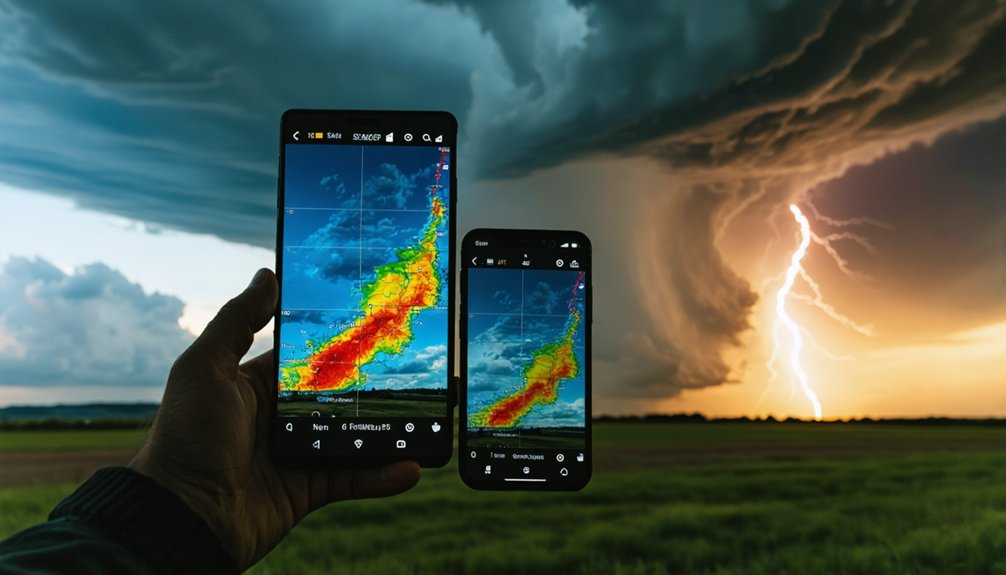
Cross-platform performance is a legitimate concern — here’s what the data shows.
RadarScope delivers consistent functionality across both Android and iPhone, maintaining the same core user interface, radar products, and measurement tools regardless of your device ecosystem. You’re not sacrificing dual-polarization data, velocity products, or near real-time updates by choosing Android over iOS.
Android performance mirrors iOS in rendering speed and data accuracy, since both platforms pull from the identical NEXRAD network.
The user interface maintains structural consistency across both systems, meaning your workflow won’t shift dramatically between devices.
One practical distinction: certain version updates historically hit iOS first before reaching Android. However, core functionality remains equivalent.
If you’re tracking severe weather professionally, Android won’t limit your analytical capabilities compared to iPhone.
Is RadarScope the Best Radar App for Storm Chasers?
If you’re serious about storm chasing, RadarScope consistently ranks as the top choice among professional storm chasers and enthusiasts alike.
You’ll get access to the same NEXRAD data that meteorologists and government agencies rely on, ensuring the real-time accuracy you need when tracking rapidly developing storm cells.
Communities dedicated to storm chasing frequently recommend it over competitors like WeatherWise and RadarOmega for precisely this reason.
Professional Storm Chaser Preference
Among serious storm chasers, RadarScope consistently ranks as the top-rated radar application, outperforming competitors like WeatherWise and RadarOmega.
Professional preferences lean heavily toward RadarScope because it delivers the same NEXRAD data meteorologists rely on, giving you unfiltered access to storm tracking intelligence without compromise.
Here’s why professionals choose it:
- Raw NEXRAD data access — You’re viewing the same feed government agencies and emergency management teams use for severe weather decisions.
- Dual-polarization products — You can analyze reflectivity, velocity, and hail signatures with precision tools built for serious analysis.
- Minimal latency updates — Storm structure evolves rapidly, and RadarScope keeps you current with near real-time rendering when every second matters.
If you’re chasing professionally, RadarScope isn’t just preferred — it’s the standard.
Real-Time Data Accuracy
When storm structure shifts in minutes, data latency isn’t a minor inconvenience — it’s the difference between accurate tracking and dangerous blind spots. RadarScope pulls directly from the NEXRAD network, delivering near real-time tracking with minimal delay between radar sweep and screen rendering.
You’re not viewing processed, interpolated estimates — you’re accessing the same raw data meteorologists and emergency management agencies depend on. That distinction matters when you’re analyzing rapid storm development.
The data visualization tools let you measure wind speeds, calculate rainfall accumulation, and identify hail signatures without switching platforms. Every measurement derives from unfiltered NEXRAD inputs, maintaining precision across dual-polarization products.
For storm chasers who demand accuracy over convenience, RadarScope’s low-latency pipeline and professional-grade data source give you the situational awareness that cheaper apps simply can’t match.
Frequently Asked Questions
Does Radarscope Offer a Free Version With Limited Features?
Want full control without commitment? Yes, RadarScope does offer a free version with limited features, giving you a basic user experience. You’ll access restricted functionality, but it lets you explore the app’s core radar capabilities freely.
Can Radarscope Be Used on iPad and macOS Devices?
You can run RadarScope across iPadOS for iPad compatibility and macOS performance without restrictions. It delivers consistent NEXRAD data, dual-polarization products, and real-time storm tracking across all platforms, giving you complete meteorological freedom anywhere.
Do Government Agencies Use the Same Radar Data as Radarscope?
Yes, you’re accessing the same NEXRAD radar technology that government agencies and emergency management teams rely on. This shared data accuracy guarantees you’re analyzing professional-grade storm information without restrictions, giving you true meteorological freedom.
How Many Subscription Tiers Does Radarscope Currently Offer Users?
You’ll find RadarScope offers two subscription tiers, each delivering distinct subscription benefits that enhance your user experiences. These tiers grant access to near real-time radar data and advanced measurement tools, giving you professional-grade storm tracking freedom and precision.
Can Radarscope Calculate Rainfall Accumulation Totals Over Time?
Yes, you can calculate rainfall accumulation totals over time using RadarScope’s built-in metrics. The app’s rainfall estimates update in near real-time, giving you precise, data-driven insights that enhance your storm tracking capabilities without needing external software.
References
- https://apps.apple.com/us/app/radarscope/id288419283
- https://www.reddit.com/r/stormchasing/comments/60siae/10_nexrad_app_called_radar_scope_is_it_worth_the/
- https://forecastfan.com/reviews/radarscope-review-radar-app-pretty-great/
- https://www.reddit.com/r/tornado/comments/1of2tc3/which_radar_app_is_superior_for_storm_chasing/nl61nrs/
- https://www.reddit.com/r/stormchasing/comments/1qa9hh6/what_radar_app_do_storm_chasers_usually_use/
- https://www.youtube.com/watch?v=kGPMEqGLW4Y
- https://www.facebook.com/WMstormchaserDB/posts/weatherwise-radar-scope-and-radar-omega-are-the-three-main-radar-apps-i-use-when/122247535256173894/
- https://stormchasingfever.com/blog/viewblog.php?Title=RadarScope+App+|+iPhone+Review&date=10-11-2011&id=36
- https://www.stansweather.net/review-radarscope-iphone/
- https://www.reddit.com/r/Radarscope/comments/1d87nrx/recommend_to_radar_scope_overview/