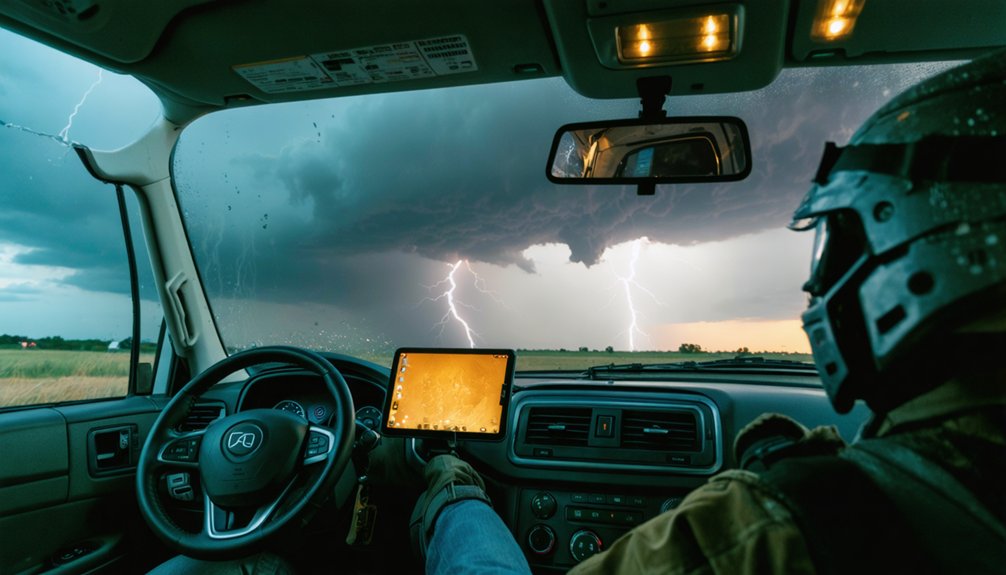
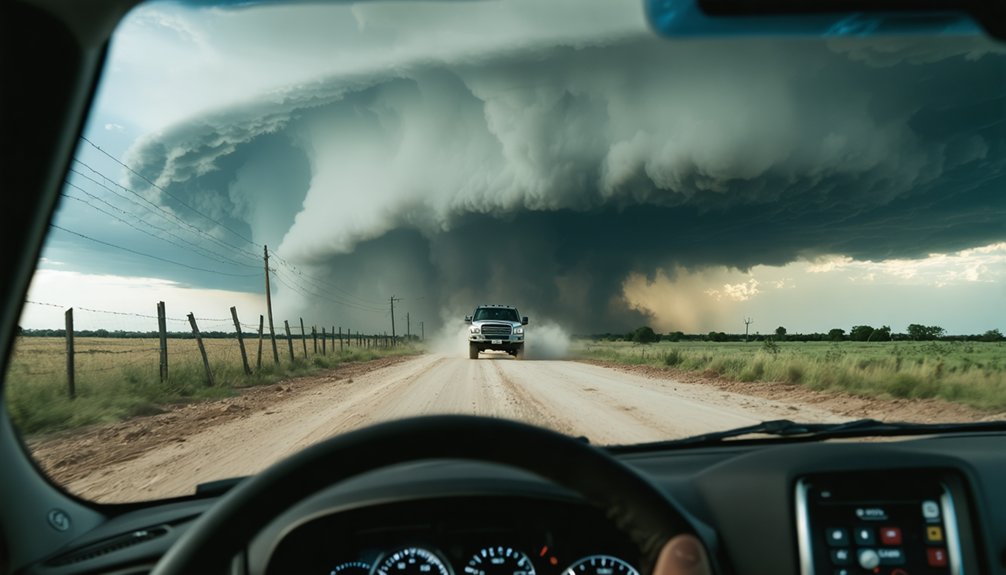
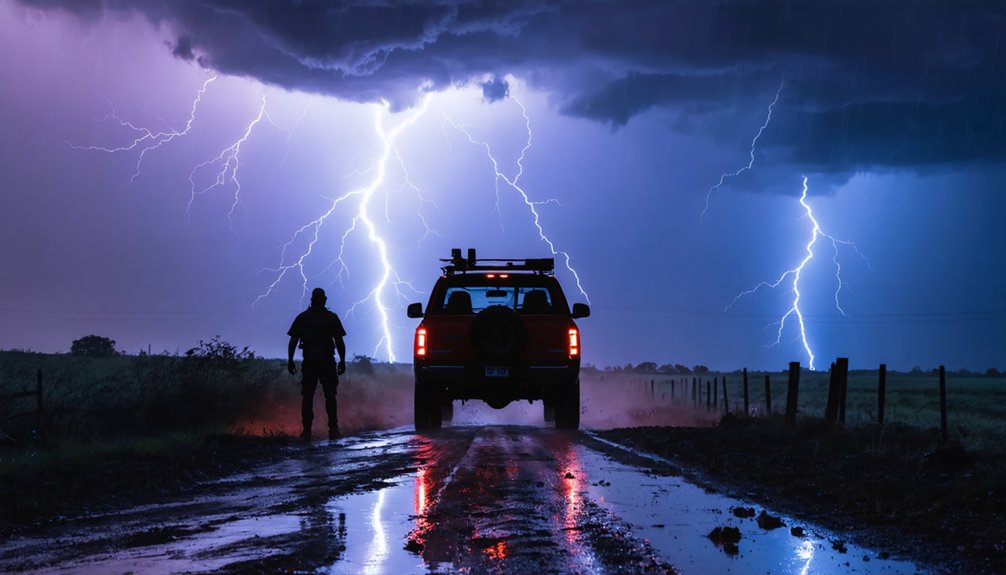
Fatigue silently undermines your reaction time, situational awareness, and decision-making long before you realize it’s happened. You should take your first rest break within two hours of driving, then every 90 minutes afterward. Watch for heavy eyelids, missed turns, or difficulty tracking radar updates — these are warnings you can’t ignore. A rested crew executes escape routes sharper and reads storm shifts faster. The strategies ahead will sharpen how you build rest into every chase plan.
Key Takeaways
- Plan the first rest break within two hours of driving, then every 90 minutes to two hours throughout the chase.
- Recognize fatigue warning signs early, including heavy eyelids, missed turns, and difficulty tracking radar updates.
- Two-person crews should rotate driving duties, allowing genuine rest and reducing cognitive overload during extended chases.
- Choose rest stops with clear visibility, shelter access, and safe distance from lightning exposure.
- Rest breaks are operational requirements, preserving reaction time, situational awareness, and critical decision-making during storm chasing.
Why Fatigue Is Dangerous During Storm Chases
Fatigue doesn’t just make you tired — it directly degrades the cognitive functions you depend on most during a storm chase. Your reaction time slows, your situational awareness narrows, and your decision quality drops precisely when conditions demand peak performance.
Weather monitoring requires sustained focus; a fatigued mind misreads radar trends and misses critical storm structure changes. Crew coordination suffers too — communication breaks down, roles blur, and errors compound under pressure.
Long driving shifts amplify these risks, particularly during night chasing or low-visibility conditions like rain and blowing dust. You can’t outrun a tornado or identify a safe escape route if your brain is operating at a deficit.
Rest isn’t optional — it’s a core operational requirement that protects your judgment and your life.
Warning Signs You Need a Rest Break Now
Recognizing the point at which fatigue has already degraded your performance is harder than it sounds — by the time you feel impaired, your judgment about your own impairment is compromised. Watch for these concrete warning signs: missed turns, delayed reactions to traffic, difficulty tracking weather forecasting updates, or repeated re-reading of the same radar data.
Physical indicators include heavy eyelids, neck stiffness, and yawning clusters. Cognitive signs include forgetting recent equipment maintenance checks you just performed or losing track of your escape route. If your co-chaser notices errors before you do, that’s a critical signal.
Don’t negotiate with these symptoms — pull off, rest, and reset before re-engaging. Your ability to make sound decisions depends entirely on the mental clarity you protect now.
When to Schedule Rest Breaks on a Chase Day
Scheduling rest breaks before fatigue sets in — not after — is the operational standard that separates disciplined chase teams from reactive ones. Plan pauses during natural handover points: while repositioning between storm cells, refueling, or completing vehicle maintenance checks. These windows align rest with operational necessity without sacrificing storm weather coverage.
Schedule your first break within the initial two hours of driving, regardless of how alert you feel. After that, build in stops every 90 minutes to two hours. If storm weather accelerates your pace or extends your chase beyond eight hours, mandatory rest becomes non-negotiable.
You retain decision-making authority on the road — but fatigue strips that freedom fast. Proactive scheduling keeps you sharp, your vehicle maintained, and your escape route assessments reliable when conditions shift rapidly.
How to Rest Without Missing the Storm
How you rest matters as much as when you rest. Choose your rest area selection carefully — pull into a position that keeps your vehicle visible, off unpaved surfaces, and away from isolated trees or power lines. You’re not abandoning the chase; you’re preserving your ability to execute it.
Assign one crew member to monitor radar during the break while another rests. Equipment readiness should be confirmed before you stop — cameras charged, GPS updated, escape routes identified. That way, you’re not scrambling when conditions shift.
Keep breaks short and deliberate. Set a timer, stay near the vehicle, and avoid outdoor exposure if lightning risk is climbing. Resting smart means you re-enter the chase alert, positioned correctly, and capable of making sound decisions when the storm demands them.
How Rest Breaks Cut Driving Errors in Low Visibility
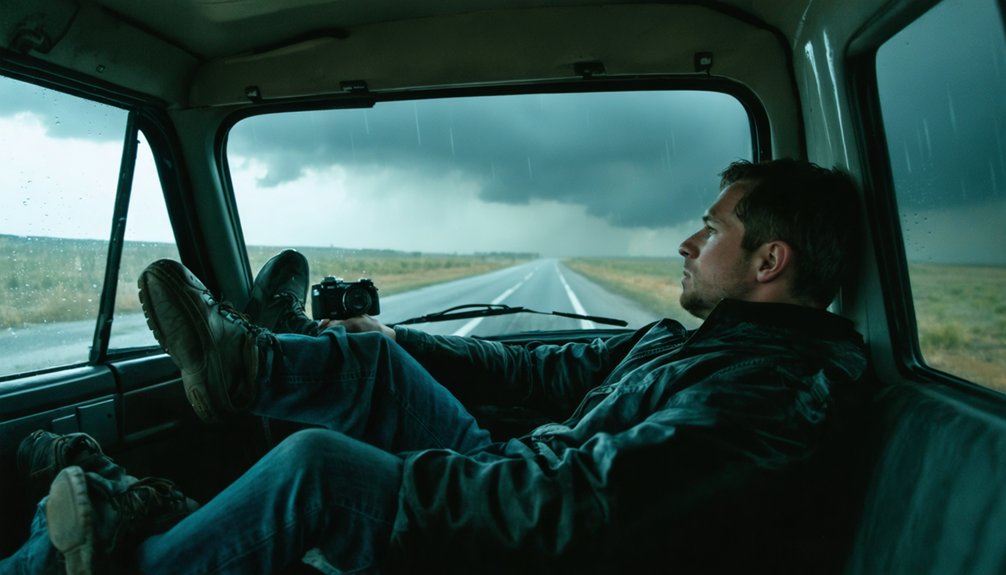
When you’re fatigued, your reaction time slows and your ability to detect hazards in heavy rain or blowing dust drops sharply.
Taking scheduled rest breaks before exhaustion sets in keeps your alertness calibrated to the demands of low-visibility driving.
You’ll make fewer lane, speed, and braking errors when you’re rested, and those margins matter most when conditions deteriorate fast.
Alertness Reduces Visibility Errors
Low visibility conditions—heavy rain, blowing dust, and dense fog—demand your full cognitive capacity, and fatigue systematically erodes exactly that. When you’re tired, your brain processes visual information slower, increasing your error rate precisely when accurate storm observation matters most.
Rest breaks aren’t optional comfort—they’re operational discipline. Scheduled pauses restore the alertness required to distinguish road boundaries, identify hazards, and maintain safe speeds on rain-saturated roads.
Crew communication also degrades under fatigue. When you’re exhausted, you miss radio updates, misread radar relays, and respond slower to route changes.
A rested crew processes information accurately and executes decisions efficiently.
Your freedom to chase depends on your capacity to drive safely. Protect that capacity by treating rest as a non-negotiable operational requirement, not an interruption.
Rest Prevents Low-Visibility Mistakes
Driving through heavy rain, blowing dust, or dense fog already strains your perceptual limits—fatigue compounds that strain by slowing your visual processing and narrowing your attention. When visibility drops, you need faster reaction times, not slower ones.
Scheduled rest hydration stops restore both mental sharpness and physical steadiness before errors accumulate. You’re also more likely to catch critical equipment checks—wiper function, defogger performance, sensor calibration—when you’re alert rather than exhausted.
Low-visibility conditions punish distraction immediately; a fatigued driver misreads road edges, misjudges standing water depth, and delays braking.
Building deliberate rest intervals into your chase plan isn’t a concession—it’s a tactical decision that keeps your judgment intact precisely when conditions demand the most from it.
Why a Two-Person Crew Reduces Fatigue Risk
One of the most effective fatigue-reduction strategies in storm chasing is fielding a two-person crew. When you divide responsibilities clearly, each person operates within a defined role — one drives, one monitors radar, tracks escape routes, and manages communication protocols. That separation prevents cognitive overload and keeps both crew members sharper over long shifts.
Crew coordination also distributes the mental workload during rapidly changing conditions. You can rotate driving duties, allowing genuine rest rather than passive riding. A rested driver reacts faster, reads road hazards more accurately, and makes sounder decisions under pressure.
Chasing alone forces you to handle every task simultaneously, compressing your attention and accelerating fatigue. A two-person structure doesn’t limit your freedom — it protects it by keeping you capable and in control longer.
Rest Break Timing and Lightning Risk Are Linked
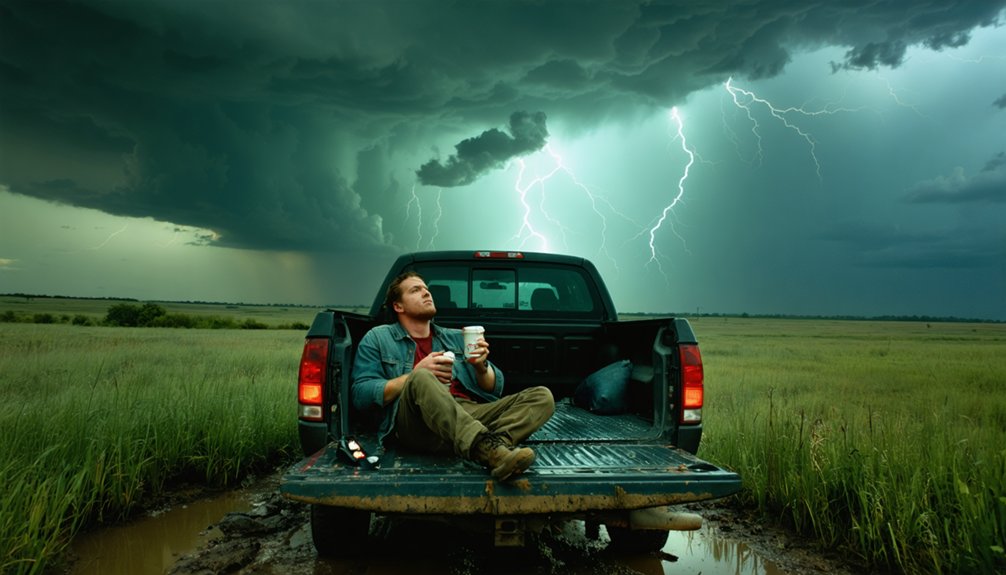
Crew structure controls fatigue, but it doesn’t eliminate every timing risk — particularly when lightning enters the picture. When you’re scheduling rest breaks, you must factor in lightning safety as a direct operational variable. A break taken outdoors while storm activity intensifies isn’t a rest — it’s an exposure.
Shelter timing dictates when and where you pause. If cloud-to-ground lightning strikes within one mile, you move immediately to a closed vehicle. You don’t wait.
Tall objects, fences, and power lines amplify your risk, so outdoor rest positions near these features are never acceptable.
Plan breaks at locations that already offer vehicle shelter. That way, your rest window doesn’t conflict with a sudden need to evacuate. Timing both decisions together keeps your crew protected and operationally sharp.
Why Escape Routes Require a Rested Driver
When fatigue sets in, your reaction time slows and you’ll miss the critical window to execute a safe escape route.
You need full alertness to assess shifting storm positions, re-evaluate road options, and commit to a new route without hesitation.
Rest breaks aren’t optional comfort stops — they’re operational requirements that keep your navigation accurate and your escape decisions sharp.
Fatigue Slows Escape Decisions
Fatigue doesn’t just slow your reaction time—it directly compromises your ability to execute a safe escape when a storm’s behavior changes suddenly. When you’re exhausted, processing weather radar updates and reading shifting storm structure becomes unreliable. You’ll miss critical cues that signal a tornado is repositioning or accelerating toward your location.
Your escape decisions require sharp, immediate judgment. A fatigued mind delays route selection, misreads road options, and hesitates when hesitation costs lives. You lose the autonomy you need to act decisively and protect your crew.
Scheduled rest breaks aren’t optional comforts—they’re operational requirements. Build them into your chase plan before fatigue accumulates. A rested driver executes escape routes cleanly. A tired one doesn’t get that second chance.
Alertness Enables Route Changes
Route changes during a storm intercept demand split-second spatial reasoning—you’re evaluating road options, storm motion, and traffic simultaneously while maintaining vehicle control. Fatigue collapses that capacity. A rested driver executes escape routes cleanly; a tired one hesitates.
Scheduled rest breaks aren’t optional—they’re operational protocol. Storm weather shifts rapidly, and your route decisions must match that pace.
Follow these four disciplines:
- Rest before fatigue appears, not after it degrades your judgment
- Verify equipment maintenance so navigation tools function when routes change
- Never position your vehicle where only one exit exists
- Cross-reference radar updates with physical road options continuously
Your freedom to chase depends on your ability to exit safely. Alertness isn’t comfort—it’s the mechanism that keeps every escape route viable.
Rest Prevents Navigation Errors
Navigation errors during escape aren’t random—they follow a pattern tied directly to driver fatigue. When you’re exhausted, you misread road intersections, misjudge distances, and fail to account for shifting weather patterns that alter your planned exit. Those mistakes compound fast under pressure.
Rest breaks aren’t optional comfort—they’re operational protocol. A rested driver processes route changes accurately, identifies hazards earlier, and executes turns without hesitation. Fatigue strips that precision away exactly when you need it most.
You also can’t ignore equipment maintenance here. Tired drivers skip pre-drive checks, miss warning indicators, and operate vehicles already compromised by long chase days. Build mandatory rest into your chase schedule before fatigue dictates your decisions. Your escape route only works if you’re sharp enough to drive it correctly.
How Fatigue Compromises Storm-Chasing Decisions
When fatigue sets in, it directly degrades your reaction time, situational awareness, and decision-making quality—three capacities you can’t afford to lose during a storm intercept. Poor sleep hygiene and inadequate stress management accelerate this decline, leaving you vulnerable during critical moments.
Fatigue compromises your chase in four specific ways:
- Slower reaction time increases collision risk on wet, high-traffic roads
- Reduced situational awareness causes you to misread storm motion and escape routes
- Impaired judgment leads to dangerous positioning near wall clouds or tornado paths
- Cognitive overload intensifies when role separation breaks down without adequate rest
You retain the freedom to chase effectively only when you’re mentally sharp. Fatigue removes that freedom by forcing reactive, error-prone decisions instead of calculated, confident ones.
Plan Your Rest Stops Before the Chase Begins
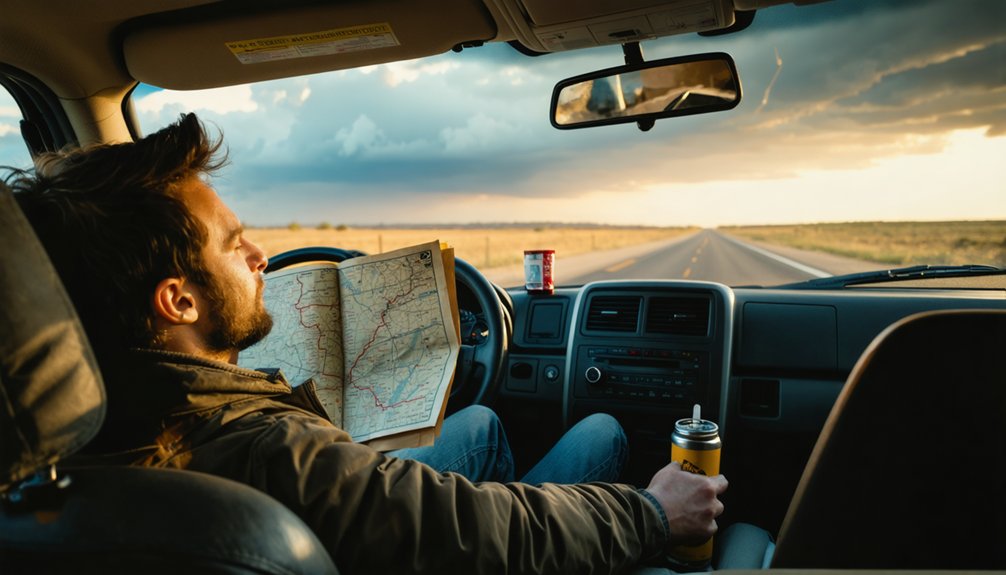
Preventing fatigue-driven errors starts before you ever leave the driveway. Build scheduled rest stops into your chase plan the same way you schedule weather prediction checks and equipment maintenance reviews.
Fatigue-driven errors are preventable — but only if rest stops are built into your chase plan before you leave.
Identify your target area, map your primary and alternate routes, then mark realistic pause points along the way. Don’t wait until exhaustion signals the need to stop — plan those intervals in advance and commit to them.
Factor in drive time, storm motion speed, and the likelihood of extended repositioning. If your route shifts mid-chase, reassess your rest schedule immediately.
Pre-planned pauses keep your judgment sharp when conditions deteriorate fast. Freedom on the road depends on deliberate preparation, and a rested crew makes smarter decisions at every critical moment.
Frequently Asked Questions
Can Caffeine Replace Proper Rest Breaks During a Long Chase Day?
No, energy drinks can’t replace proper rest. Sleep deprivation impairs your reaction time and decision-making, regardless of caffeine intake. You must schedule genuine rest breaks to maintain the alertness that safe storm chasing demands.
How Do Rest Breaks Affect CPR Readiness After a Lightning Injury?
When seconds decide survival, you can’t afford hesitation. Rest breaks keep your mind sharp, so your CPR training activates instantly after a lightning safety emergency strikes—ensuring you’re ready to act, not fumbling through fatigue.
Should Solo Chasers Cancel Trips if Fatigue Is Already Present?
Yes, you should cancel. Fatigue compromises your risk assessment and equipment readiness, and solo chasing already eliminates role separation. You’re responsible for every decision alone—don’t let tiredness strip away your final safety margin.
Do Unpaved Roads Require More Frequent Rest Stops Than Paved Routes?
Yes, you’ll need more frequent rest stops on unpaved roads. Wet dirt compromises vehicle traction and road surface stability, stranding you. Increased concentration demands accelerate fatigue faster, so schedule deliberate pauses to maintain sharp judgment and preserve your escape options.
How Long Should a Rest Break Last Before Resuming City Chasing?
You should avoid city chasing whenever possible, but if you must, take rest breaks of at least 15–20 minutes for ideal timing. Rest duration should restore your alertness before steering through complex, high-traffic urban conditions.
References
- https://www.atms.unca.edu/cgodfrey/courses/swfex/pdf/ChasingSafety.pdf
- https://www.reddit.com/r/stormchasing/comments/k89wnc/safety_tips_for_storm_chasing/
- https://www.flame.org/~cdoswell/chasesums/Chase_safety.html
- http://www.stormeyes.org/tornado/chasing/FAQ/
- https://www.livingskytours.com/storm-chasing-101/
- https://www.stormchasingusa.com/storm-chasing-and-safety/
- https://www.youtube.com/watch?v=h28hru7UhY8