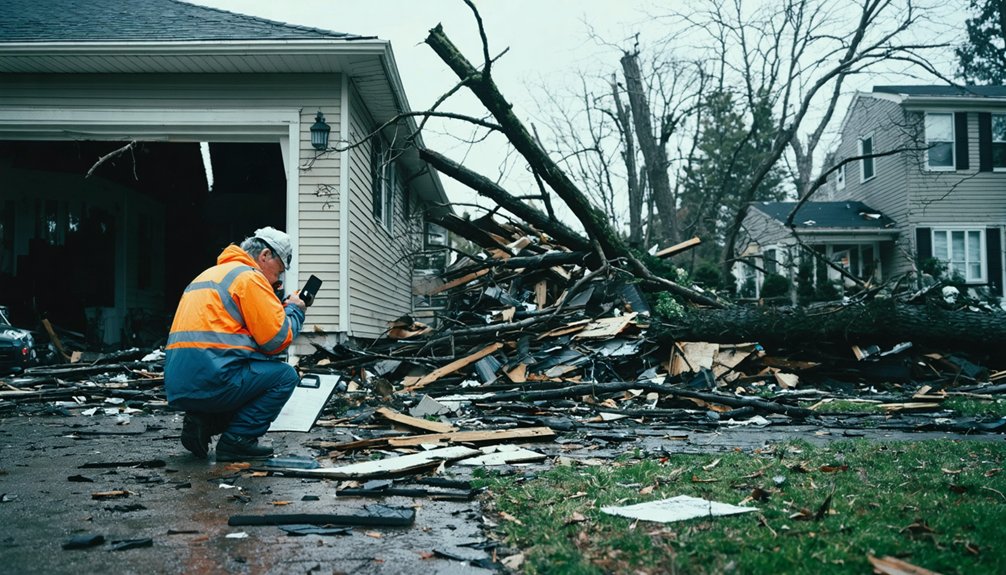
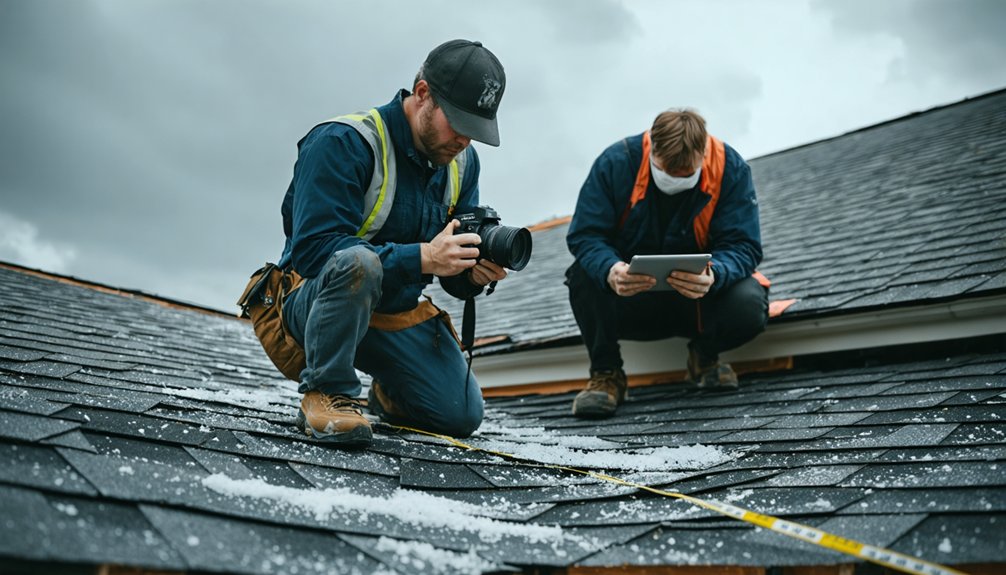
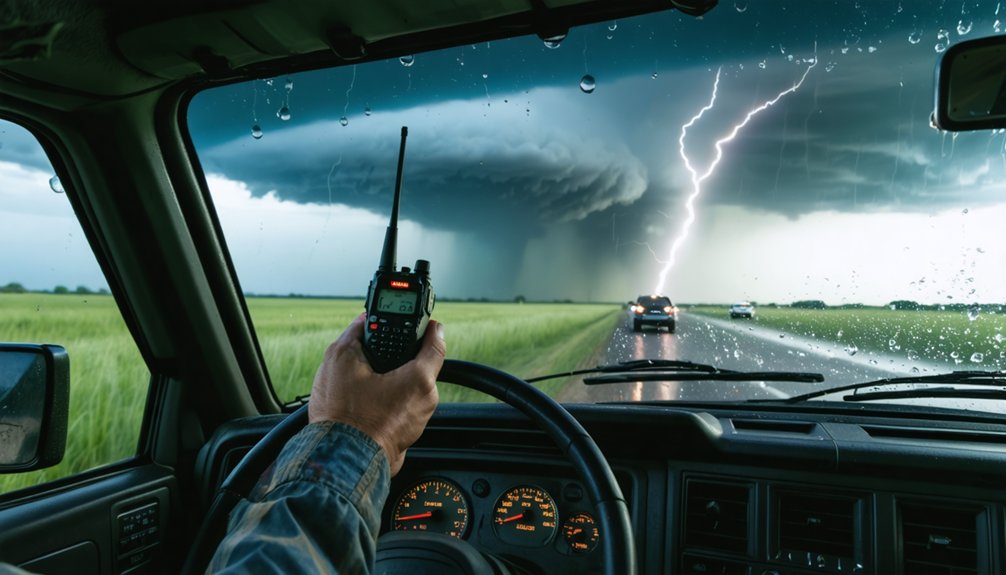
When you’re a storm chaser, you’re often the first set of eyes and hands on a disaster scene — and that puts you in a first responder role whether you’re trained for it or not. You must conduct a 360-degree scene size-up, establish communication with the Emergency Operations Center, and triage victims using standard protocols before official responders arrive. Pre-season equipment checks and clear command relationships keep your team safe and effective. The best practices covered ahead will sharpen every phase of your response.
Key Takeaways
- Storm chasers should establish clear command relationships with emergency services before deployment to ensure seamless coordination during active incidents.
- Upon official responders’ arrival, immediately brief the incident commander, transferring all situational data, triage notes, and identified hazards.
- Centralized reporting through the Emergency Operations Center prevents conflicting information and maintains operational clarity across all responding teams.
- Perform a 360-degree scene evaluation, confirming two clear escape routes and identifying downed power lines before committing to any position.
- Use precise language when relaying victim locations, injury categories, and hazard information to eliminate ambiguity and accelerate emergency response.
Why Storm Chasers Are Now the First Ones on Scene
Because storm chasers operate in the field long before official emergency personnel can mobilize, they’re often the first to reach victims in the immediate aftermath of a tornado or severe weather event.
Your chaser motivation—whether scientific, journalistic, or humanitarian—shapes how you engage with scene dynamics when seconds count.
You’re already positioned ahead of the storm. You understand the terrain, the timing, and the threat. When the damage path clears, you’re there.
That independent positioning gives you a critical advantage no dispatched unit can replicate.
Recognizing this reality means accepting responsibility. You may need to provide first aid, triage casualties, or relay survivor locations before any official responder arrives.
Your freedom to operate in the field carries direct, life-affecting consequences. Own that role deliberately.
Pre-Season Prep Every Chase Team Must Complete
Before storm season hits, you must review your severe weather procedures with every member of your chase team — no exceptions.
You’ll also need to run thorough equipment readiness checks, confirming that all gear performs reliably under the harsh conditions you’re likely to encounter.
These two foundational steps set the operational baseline your team depends on when it matters most.
Severe Weather Procedure Reviews
Every chase team must review severe weather procedures before the season begins—it’s non-negotiable.
Severe weather preparedness isn’t optional—it’s what keeps you operational when conditions deteriorate fast.
Storm response training sharpens your decision-making before you’re ever in the field.
Run through these four critical review areas:
- Fallen trees and debris protocols – Know your vehicle extraction procedures and alternate routing strategies.
- Flooded road response – Identify turn-around points before you encounter rising water.
- Power outage scenarios – Confirm your equipment functions independently of external power sources.
- Additional resource notification – Establish pre-season contact lists and trigger points for requesting backup.
You don’t improvise during a tornado.
You execute what you’ve already rehearsed.
Review early, review thoroughly, and own your preparation.
Equipment Readiness Checks
Your gear is your lifeline—and a single equipment failure in the field can compromise your entire operation. Before storm season hits, conduct thorough equipment maintenance across every system your team depends on—vehicles, communication devices, weather instruments, and medical supplies.
Don’t wait for failure to reveal weak points. Test everything under simulated field conditions. Inspect your chase vehicle’s tires, brakes, and fluids.
Verify that radios, scanners, and GPS units function reliably. Restock first-aid kits and confirm CPR equipment is accessible.
Evaluate whether gear upgrades are warranted—outdated technology creates dangerous gaps during rapidly evolving events. Newer mobile weather platforms and redundant communication systems give your team critical operational advantages.
Pre-season preparation isn’t optional. It’s the foundation of every safe, effective chase operation you’ll run.
How to Communicate Effectively With Emergency Command
Effective communication with emergency command can mean the difference between a coordinated response and dangerous confusion in the field.
You must establish clear command relationships before deployment, knowing exactly who you’re reporting to and what communication tools you’ll use.
Follow these four protocols:
- Keep lines open — Maintain continuous contact with your command center and relay critical updates immediately.
- Use centralized reporting — Direct consolidated field reports through the Emergency Operations Center to prevent conflicting information.
- Coordinate across agencies — Actively connect with other emergency services operating nearby.
- Speak precisely — Eliminate ambiguous language; misinterpretation during severe weather events costs lives.
You’re operating in a fluid environment.
Clear, timely communication keeps your team autonomous, effective, and safe.
Electrical Hazards, Floodwater, and Wind: Scene Dangers Chasers Miss
Clear communication keeps your command structure intact, but it won’t protect you from the physical dangers waiting at the scene.
Electrical safety demands you treat every downed power line as live, no exceptions. Don’t assume otherwise.
Flood risks compound that threat immediately. Water conducts electricity and conceals road drop-offs, debris, and structural damage beneath its surface. You can’t see what’s killing you until it’s too late.
Wind dangers shift without warning. High gusts destabilize your vehicle, reduce visibility, and turn debris into projectiles. Control your speed and never position yourself beneath rotating wall clouds.
Hazard awareness starts with a complete 360-degree scene assessment before you commit to any position.
Build that habit into every approach. Disciplined scene assessment isn’t optional — it’s what keeps you operational and alive.
Triage and First Aid Before Official Responders Arrive
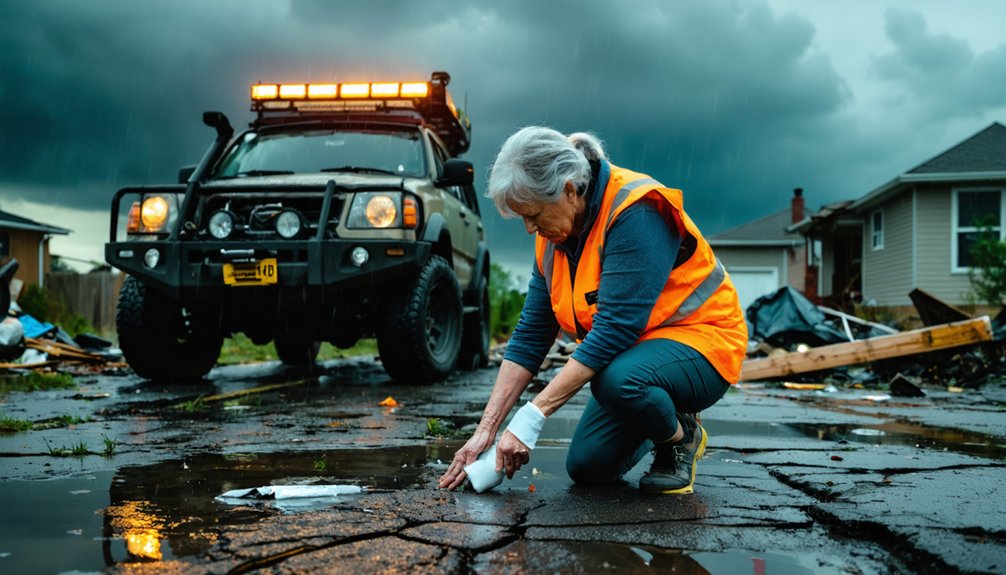
When you’re first on scene after a severe weather event, you must conduct an immediate injury assessment before official responders arrive, scanning all victims quickly to identify life-threatening conditions.
In mass-casualty situations like the 2011 Joplin tornado, you’ll apply standard triage protocols—prioritizing victims by severity, tagging them accordingly, and directing limited resources where they’re needed most.
If you encounter a lightning strike victim, initiate CPR immediately, since prompt action dramatically improves survival outcomes.
Immediate Injury Assessment Steps
Before official responders arrive, you must conduct a rapid, systematic injury assessment to maximize survivor outcomes. Your injury evaluation determines who receives immediate care and who can wait.
- Survey the scene — Confirm safety, identify hazards like downed power lines or flood waters, and establish your perimeter.
- Categorize victims — Apply victim prioritization using standard triage tags: immediate, delayed, minimal, or expectant.
- Assess life threats — Check airway, breathing, and circulation for each victim; initiate CPR immediately for lightning strikes.
- Document and communicate — Record injury types, victim counts, and locations; relay this directly to incoming emergency services and your command center.
Stay methodical. Every decision you make in these first minutes directly shapes survival outcomes.
Mass-Casualty Triage Protocols
Once you’ve completed your injury assessment, multiple casualties demand a structured approach that goes beyond individual patient care.
You’ll need to implement patient prioritization immediately, sorting victims by injury severity before official responders arrive.
Use the START triage method: tag casualties as immediate, delayed, minimal, or expectant.
Don’t fixate on a single patient—move efficiently through the scene, reassessing as conditions shift.
Field logistics become critical here.
Establish clear treatment zones, designate a staging area for incoming resources, and maintain a survivor count for incoming emergency personnel.
Reference tools like XM-Baron setups to relay critical information to command centers.
Your structured approach directly mirrors what chasers executed during the 2011 Joplin tornado—organized, decisive action that saved lives before official teams arrived.
CPR and Life-Saving Techniques
With triage complete, you’ll shift focus to immediate life-saving interventions for your highest-priority casualties. Your training determines who survives before official responders arrive, so execute these CPR techniques and life-saving strategies without hesitation:
- Start CPR immediately on unresponsive, pulseless victims—especially lightning strike survivors, where rapid intervention dramatically improves outcomes.
- Maintain proper compression depth and rhythm—30 compressions to 2 rescue breaths, pushing hard and fast at the sternum’s center.
- Deploy any available AED the moment the device is accessible, minimizing interruptions between compressions and shock delivery.
- Control severe bleeding through direct pressure or tourniquets while rotating CPR responders every two minutes to sustain compression quality.
Stay coordinated, communicate interventions to incoming emergency personnel, and don’t abandon your position until official responders assume command.
How Chasers Hand Off and Support Official Emergency Services
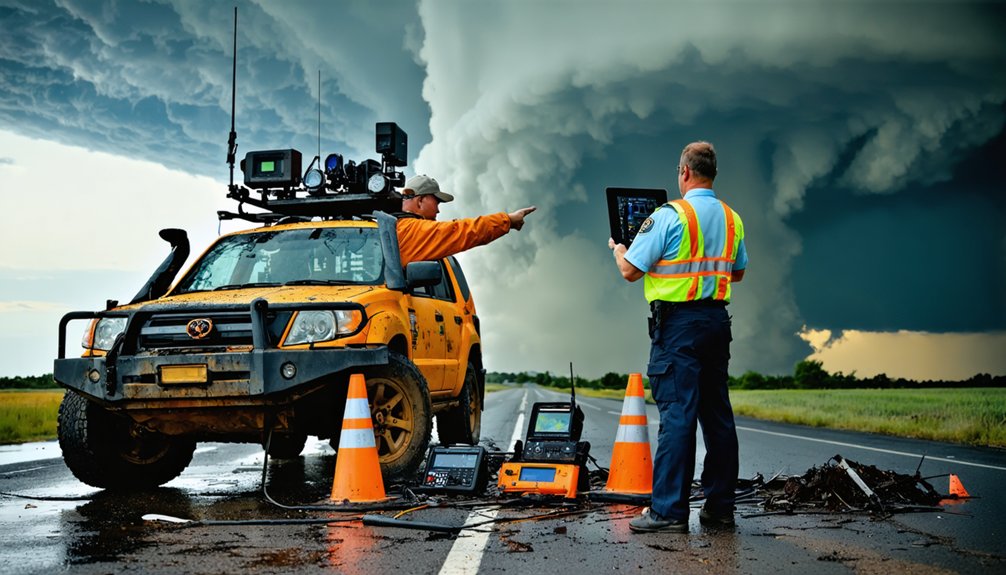
When official emergency personnel arrive on scene, you’ll need to shift your role quickly and efficiently. Step back, brief the incident commander, and transfer all situational data you’ve gathered.
Chaser collaboration isn’t optional here — it’s essential for a seamless shift that protects survivors.
Practice resource sharing by offering your XM-Baron data, communication channels, and triage notes directly to command personnel. Don’t assume they know what you’ve already done. Tell them clearly: who you’ve treated, where hazards exist, and what conditions are evolving.
Once you’ve handed off, follow the commander’s direction. You can still support spotter and media roles without interfering with official operations.
Staying coordinated, accountable, and adaptable guarantees your presence strengthens the response rather than complicates it.
The 360-Degree Size-Up That Keeps Chase Operations Under Control
Every storm scene demands a complete 360-degree size-up before you commit your team to any operational position. This incident evaluation isn’t optional—it’s your operational foundation.
A full 360 degree perspective reveals hazards that a tunnel-vision approach will miss entirely.
Before locking in your position, assess these four critical factors:
- Wind direction and debris paths — identify where projectiles are traveling
- Downed power lines — treat every line as live, no exceptions
- Flood zones and standing water — water conceals road damage and conducts electricity
- Escape routes — confirm at least two clear exit paths before stopping
One commander owns this evaluation. You don’t share that responsibility or delay it.
A disciplined size-up keeps your team autonomous, informed, and alive.
Frequently Asked Questions
What Legal Liability Do Storm Chasers Face When Providing First Aid?
Here’s the moment it matters most—you’re covered. Good Samaritan laws offer legal protections when you act in good faith. Understand liability waivers, know your training limits, and you’ll confidently provide aid without fear.
How Do Chasers Maintain Mental Health After Traumatic Disaster Scenes?
You’ll maintain mental health through structured post trauma support and stress management protocols. Debrief with your team, seek peer counseling, and recognize trauma signs early. You’re protecting your freedom to chase by prioritizing psychological resilience after difficult scenes.
Are Storm Chasers Required to Carry Specific Insurance During Operations?
You’re not federally mandated to carry specific insurance, but you’ll want liability coverage to protect your freedom of operation. Insurance requirements vary by state and organization, so research your local regulations before chasing.
What Technology Do Chasers Use to Document Scenes for Investigators?
You’ll use camera equipment to capture scene details and XM-Baron setups to gather survivor data. Prioritize data sharing with investigators through coordinated communication channels, ensuring you’re relaying accurate, timely documentation that supports official emergency response efforts efficiently.
How Do Chasers Coordinate With Hospitals About Incoming Mass Casualties?
You’ll use communication strategies through your EOC to activate hospital partnerships, relaying casualty counts, injury types, and ETAs. Coordinate directly with medical command, ensuring hospitals prepare resources before mass-casualty victims arrive on-scene.
References
- https://www.lexipol.com/resources/todays-tips/first-responder-safety-during-severe-weather/
- https://stormtrack.org/threads/storm-chasing-ethics-and-safety.26831/
- https://safetystanddown.org/wp-content/uploads/2022/02/Situational-Awareness-25-Best-Practices.pdf
- https://www.flame.org/~cdoswell/chasesums/Chase_safety.html
- https://www.weather.gov/oun/stormspotting
- https://stormtrack.org/threads/chasers-as-first-responders.10038/