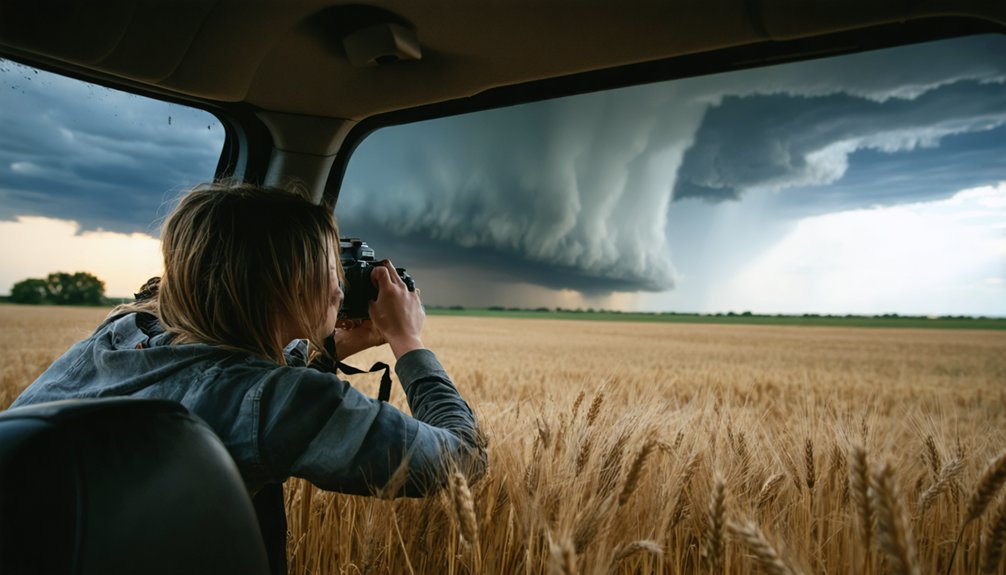
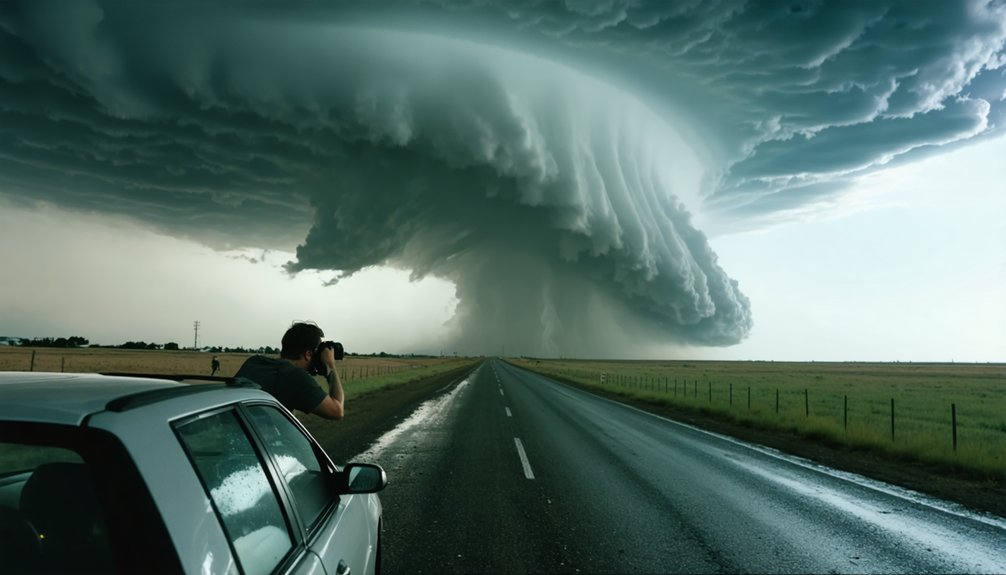
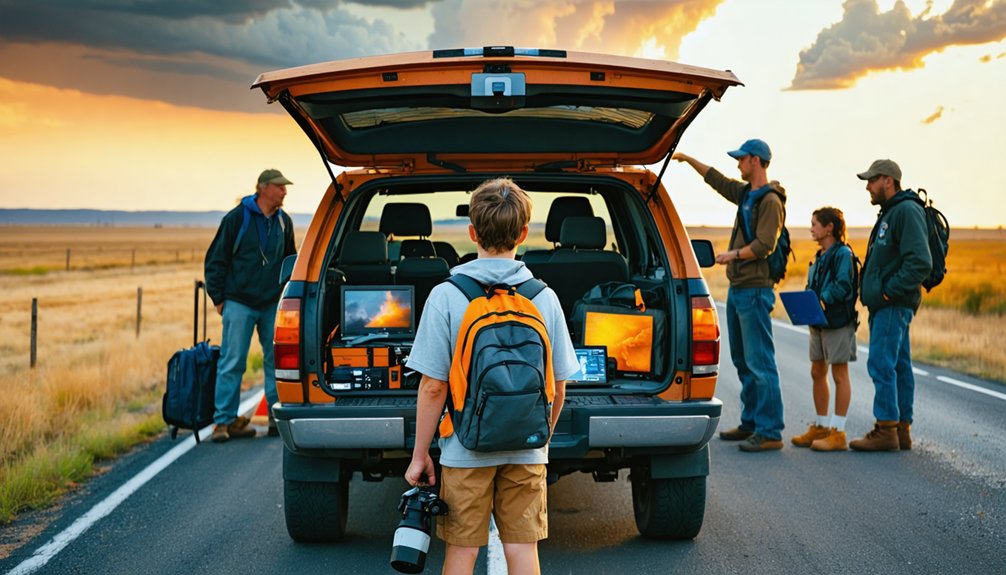
Before your first chase, you’ll need to build core skills, gear, and situational awareness. Take a free Skywarn class, study storm structure, and practice reading SPC convective outlooks daily. Pack polarized sunglasses, a reliable scanner, camera, and two mapped escape routes. Always position southeast of a tornado’s projected track and never core punch. Master these fundamentals first, and the deeper strategies ahead will sharpen every decision you make in the field.
Key Takeaways
- Take a free Skywarn class to learn storm structure identification before attempting any field chase activity.
- Assemble essential kit including polarized sunglasses, camera, tripod, charged phone, and a vehicle scanner for alerts.
- Use SPC convective outlooks and HRRR models to plan your chase target and forecast conditions independently.
- Position southeast of the tornado’s projected track and always pre-identify at least two escape routes.
- Stay on public roads, respect private property, and pack out all waste to protect future chasing access.
Core Storm Chasing Skills Every Beginner Must Build First
Enroll in a free Skywarn class to sharpen your ability to identify critical storm structure elements, including wall clouds, inflow bands, and RFDs.
Sharpen your storm structure recognition by enrolling in a free Skywarn class covering wall clouds, inflow bands, and RFDs.
Study the “Storm Analysis 101” video series to understand how storms organize, intensify, and decay.
Watch Skip Talbot’s safety-focused instructional videos before anything else.
Freedom in the field comes from competence, not boldness. The more precisely you understand storm dynamics and storm structure, the safer and more effective your decisions become.
How to Read Forecasts and Pick Your Best Chase Day
Once you’ve built a solid foundation in storm structure, shift your focus to the Storm Prediction Center’s daily convective outlooks, which are issued up to eight days in advance and serve as your primary planning tool. Read the outlook texts consistently to sharpen your weather terminology and forecast interpretation skills.
Don’t rely solely on others’ predictions — run your own analysis using GFS and HRRR models to identify prime chase targets independently. Compare your forecasts against SPC outputs to pinpoint missed variables and calibrate your accuracy over time.
Perform virtual chase drills at home to simulate real decision-making scenarios without risk. This disciplined, data-driven process builds the autonomy you need to select high-probability chase days confidently and execute positioning strategies on your own terms.
Build Your Storm Chasing Kit Before Hitting the Road
Before you hit the road, assemble a purpose-built kit that keeps you functional, safe, and mission-ready in rapidly evolving conditions. Your weather gear should include polarized sunglasses, a camera set to infinity focus, a tripod stored away during lightning events, and an infrared-capable camera for structural storm documentation.
Pack a notebook for hand-drawn storm diagrams and field notes you can reference without screen dependency.
Communication devices are non-negotiable. A reliable vehicle scanner outperforms mobile hotspot alerts in accuracy, so prioritize it. Keep your phone charged and accessible for radar monitoring.
Headlights on during rain or dust conditions aren’t optional — they’re protocol. Every item in your kit should serve a defined function. Dead weight costs you time, and time dictates positioning.
Master Safe Positioning and Escape Routes on Every Chase
Positioning determines whether you observe a tornado or become a casualty of one. Your default storm position should place you southeast of the tornado’s projected track, keeping the storm’s movement away from your location. Never approach from the north or cross in front of a moving storm — that’s how chasers get trapped.
Escape planning isn’t optional; it’s structural. Before stopping at any vantage point, identify at least two exit routes, prioritizing southward or southeast roads. Storms accelerate unpredictably, and a single paved road heading east won’t save you if the tornado jogs right.
Avoid core punching — driving through the precipitation core blindly risks hail strikes and zero visibility. Stay disciplined, stay mobile, and treat every repositioning decision as a calculated move, not a reaction.
Property Rights, Ethics, and Environmental Rules for New Chasers
Storm chasing takes you through rural farmland, private ranches, and ecologically sensitive terrain — and your legal and ethical obligations don’t pause because a tornado is on the ground. Property permissions aren’t optional courtesies; trespassing exposes you to legal liability and damages the chasing community’s reputation with landowners.
Follow these three non-negotiable rules:
- Stay on public roads unless you’ve secured explicit property permissions from the landowner beforehand.
- Practice environmental conservation by packing out all waste, avoiding crop rows, and never cutting through fenced land.
- Document damage responsibly — photograph storm destruction without disturbing debris fields, which may constitute active investigation scenes.
Your freedom to chase depends entirely on maintaining trust with rural communities and preserving access for every chaser who follows you.
Frequently Asked Questions
What Physical Fitness Level Do I Need for Storm Chasing?
You don’t need elite fitness, but you’ll want stamina for long drives, quick exits, and outdoor positioning. Prioritize storm safety by staying alert during weather monitoring, ensuring you can move fast when conditions demand it.
How Do I Find and Join an Experienced Storm Chasing Mentor?
Like a compass guiding you through open skies, connect with mentors via SpotterNetwork.org and Skywarn classes. You’ll gain storm chasing safety wisdom, equipment essentials knowledge, and real-world positioning data from experienced chasers who’ve mastered the field.
Are There Age Restrictions for Beginner Storm Chasers in the Field?
No formal age restrictions govern storm chaser eligibility, but you’ll need parental consent if you’re a minor. Prioritize safety training, master forecasting tools, and make sure you’ve completed SpotterNetwork.org’s program before deploying independently in the field.
How Much Money Should I Budget for My First Chase Season?
Budget $2,000–$5,000 for your first chase season. You’ll need to cover storm chasing equipment, weather forecasting tools, fuel, lodging, and food. Costs vary based on your gear quality and how many chase days you’re targeting.
Do I Need Special Vehicle Insurance Coverage for Storm Chasing Trips?
Like a knight reinforcing armor before battle, you’ll want to bolster your vehicle coverage. Standard insurance requirements rarely cover storm chasing; contact your provider directly to confirm or add specialized commercial/adventure-use protection before chasing.
References
- https://www.stormchasingusa.com/blog/learning-the-basics-about-storm-chasing/
- https://www.reddit.com/r/stormchasing/comments/1boanfg/how_do_i_get_started_storm_chasing/
- https://www.youtube.com/watch?v=6otZLjSZvPU
- https://www.reddit.com/r/stormchasing/comments/358qne/im_wanting_to_get_into_storm_chasing_what_should/
- https://www.livingskytours.com/storm-chasing-101/
- https://www.youtube.com/watch?v=FJWWHDFBRLI
- https://www.atms.unca.edu/cgodfrey/courses/swfex/pdf/ChasingSafety.pdf