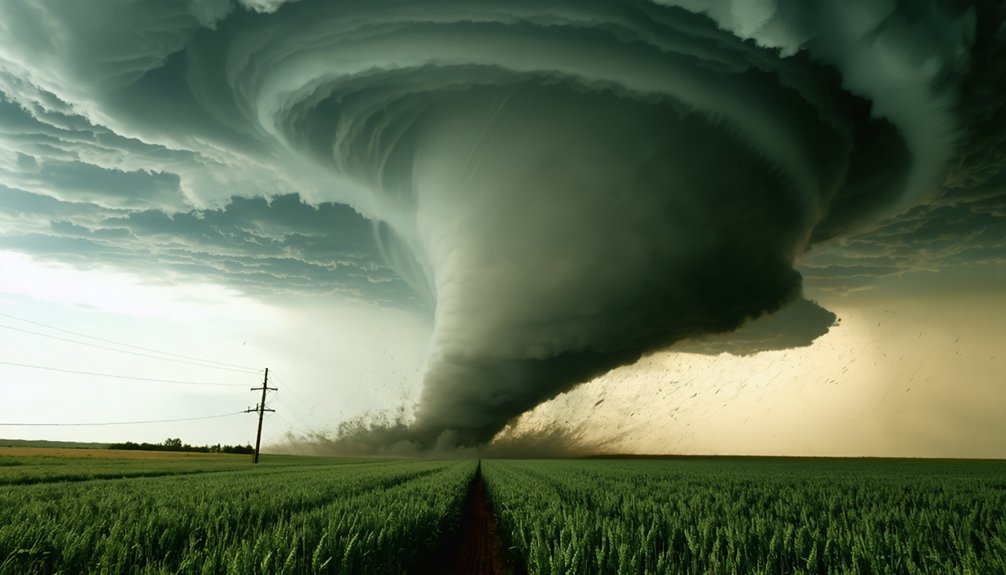
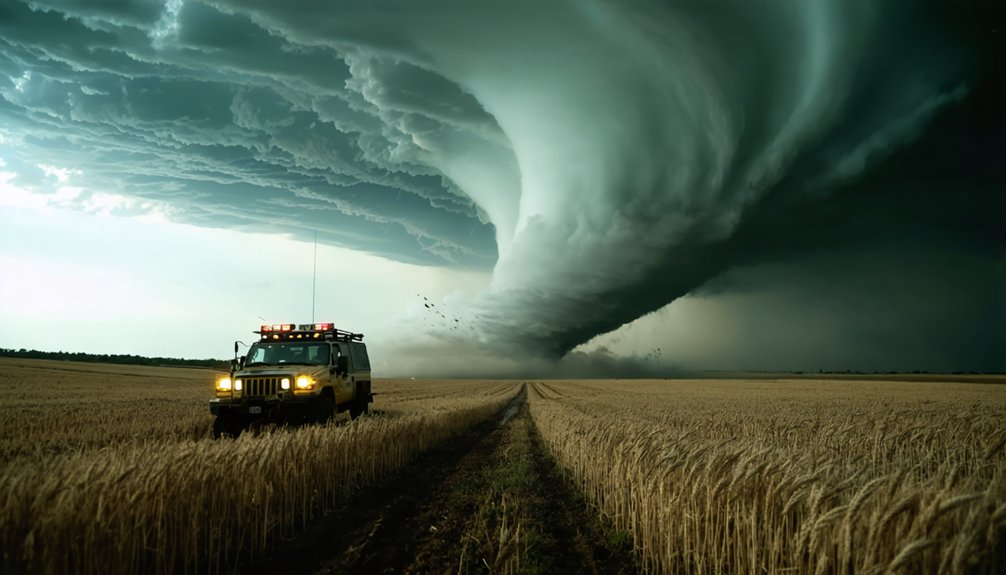
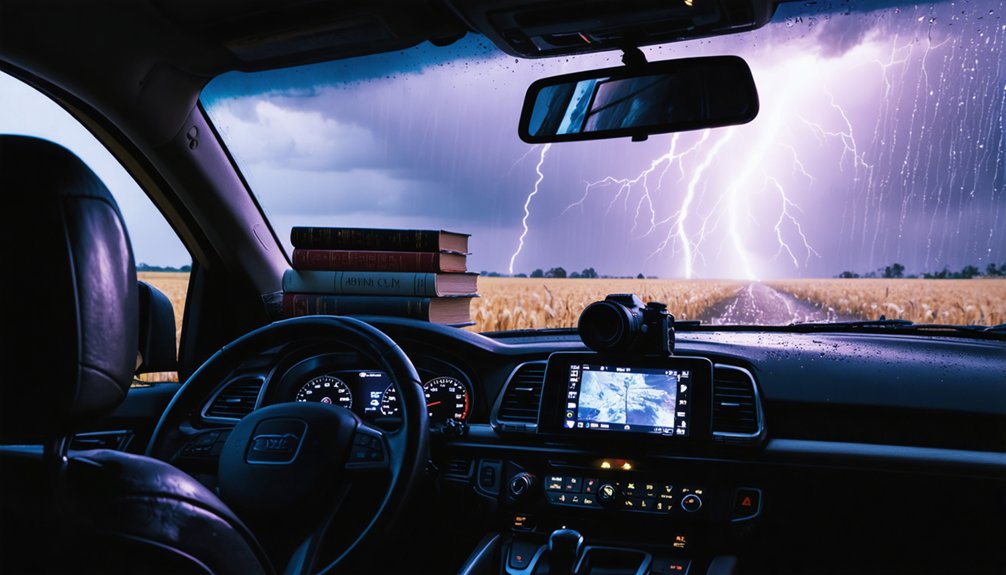
To find the best storm chasing accounts, you’ll want to spread across platforms strategically. Follow NOAA and NWS on Twitter/X for verified, real-time warnings with precise polygon coordinates. On Instagram, prioritize accounts like Ben McHone that cross-reference NWS data with raw footage. Use hashtags like #stormchase and #tornado to surface geotagged field reports. Always verify credentials against Storm Prediction Center records. The platform breakdowns and credibility checks ahead will sharpen your sourcing considerably.
Key Takeaways
- HuntersBase on Instagram provides reliable tornado updates using active storm prediction models and field data, complemented by the hashtag #hunters_chasing.
- Twitter/X delivers faster storm data than other platforms, with hashtags like #stormchase and #tornado surfacing live, geotagged reports.
- NOAA and NWS maintain authoritative social media presences across platforms, providing official warnings and verified storm data.
- Verify credibility by cross-referencing accounts with NWS reports, Storm Prediction Center records, and recognized meteorological organization affiliations.
- YouTube channels offering storm chase footage and meteorological breakdowns, searchable via “storm chase 4K” or “supercell analysis,” provide trustworthy content.
Instagram vs. Twitter vs. TikTok: Which Platform Wins for Real-Time Storm Coverage?
When choosing a platform for real-time storm coverage, each option carries distinct technical trade-offs. Instagram delivers high-resolution visuals and live streaming, making it ideal for documenting weather patterns as they develop. You’ll find chasers like Ben McHone broadcasting structured storm prediction analysis alongside raw footage.
Instagram’s high-resolution live streaming makes it the premier platform for real-time storm documentation and structured weather analysis.
Twitter/X prioritizes speed — text-based alerts move faster than any video upload, giving you road condition data within seconds of a chaser’s observation. TikTok optimizes for mobile compression, sacrificing some meteorological detail for rapid distribution to wider audiences.
If you’re tracking active rotation, Twitter’s hashtags like #stormchase surface unfiltered field reports fastest. For deeper weather pattern interpretation and storm prediction context, Instagram’s longer formats win.
Your best strategy combines all three simultaneously for maximum situational awareness.
Best Storm Chasing Accounts to Follow on Instagram
Instagram stands out as the strongest platform for visual storm documentation, so knowing which specific accounts to follow maximizes your real-time situational awareness. Start with HuntersBase, which delivers tornado updates grounded in active storm prediction models and field-verified data. Search the hashtag #hunters_chasing to locate additional chasers operating across multiple storm corridors simultaneously.
Ben McHone represents another high-value follow, combining raw chase footage with commentary on weather instrumentation and atmospheric conditions. His posts bridge visual impact with technical substance, giving you actionable context rather than spectacle alone.
Use Feedspot’s ranked lists to systematically identify top storm chasing influencers by follower count and posting frequency. Prioritize accounts that cross-reference National Weather Service data, ensuring the storm prediction information you receive stays accurate, independent, and operationally reliable.
Best Storm Chasing Accounts to Follow on Twitter/X
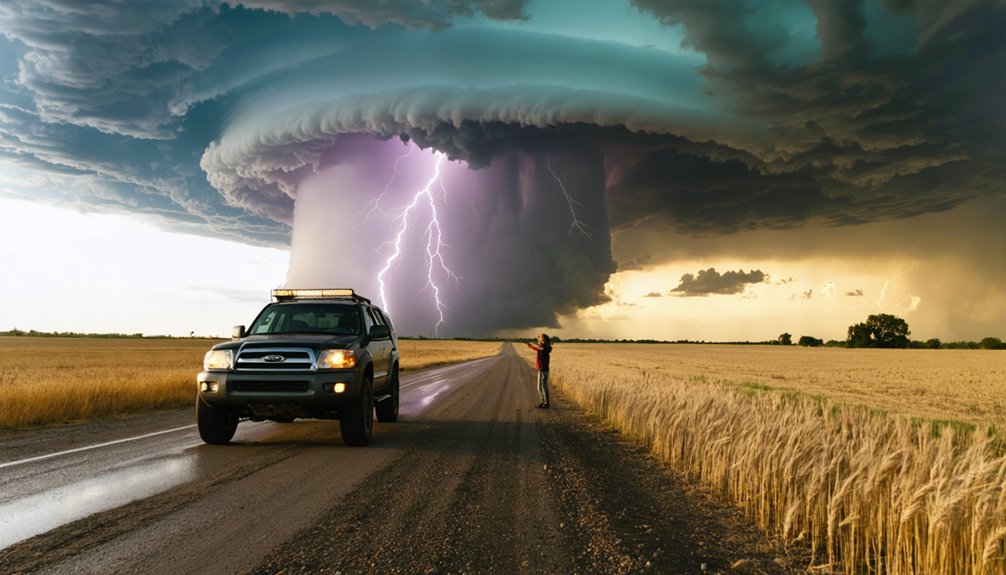
Twitter/X delivers storm data faster than almost any other platform, making it essential for real-time tornado tracking and road condition alerts.
While no single chaser dominates the space the way Instagram influencers do, you can build a strong feed by following NOAA and the National Weather Service alongside active chasers who cross-post from Instagram.
Searching hashtags like #stormchase and #tornado surfaces live, geotagged reports that keep you ahead of developing severe weather events.
Top Twitter Storm Chasers
While Instagram dominates visual storm content, Twitter/X delivers what chasers need most: speed. Real-time storm data flows faster here than any other platform, giving you ground-level reports before official bulletins even publish. Search #stormchase or #tornado to surface active threads instantly.
NOAA and the National Weather Service maintain authoritative Twitter presences, cross-referencing their storm data against what independent chasers post. That combination gives you a complete operational picture.
Many Instagram chasers simultaneously broadcast on Twitter/X, so you’re not sacrificing visual content for speed.
Apply smart filters: prioritize accounts that integrate safety tips alongside chase footage. Avoid accounts chasing clout over caution. Verify credentials through media partnerships or meteorological affiliations.
Twitter/X rewards precision — follow accounts that operate the same way.
Real-Time Alert Accounts
When seconds separate a warning from impact, real-time alert accounts on Twitter/X give you the operational edge. These accounts integrate storm chase technology—Doppler radar overlays, GPS coordinates, and mesocyclone rotation data—into rapid-fire posts that traditional media can’t match.
For tornado tracking, follow NOAA and the National Weather Service (@NWS), which issue official warnings with precise polygon coordinates and impact timelines.
Supplement those feeds with independent chasers who cross-post from Instagram, delivering ground-truth reports that satellites miss. Search #stormchase and #tornado to surface active threads during outbreak events. Filter by “Latest” rather than “Top” to access unfiltered, chronological updates.
Cross-reference every field report against NWS confirmation before acting on it—speed matters, but verified data protects your decisions and your safety.
Hashtags Worth Following
For deeper weather analysis, filter #wxtwitter — a tightly networked community of meteorologists and professional chasers exchanging model data, radar interpretations, and road condition reports.
Pairing hashtag monitoring with NOAA and NWS accounts creates a layered intelligence feed you control completely. You’re not waiting for curated broadcasts; you’re pulling raw information streams on your own terms, tracking multiple chase teams across different storm systems simultaneously.
Best Storm Chasing Accounts to Follow on YouTube
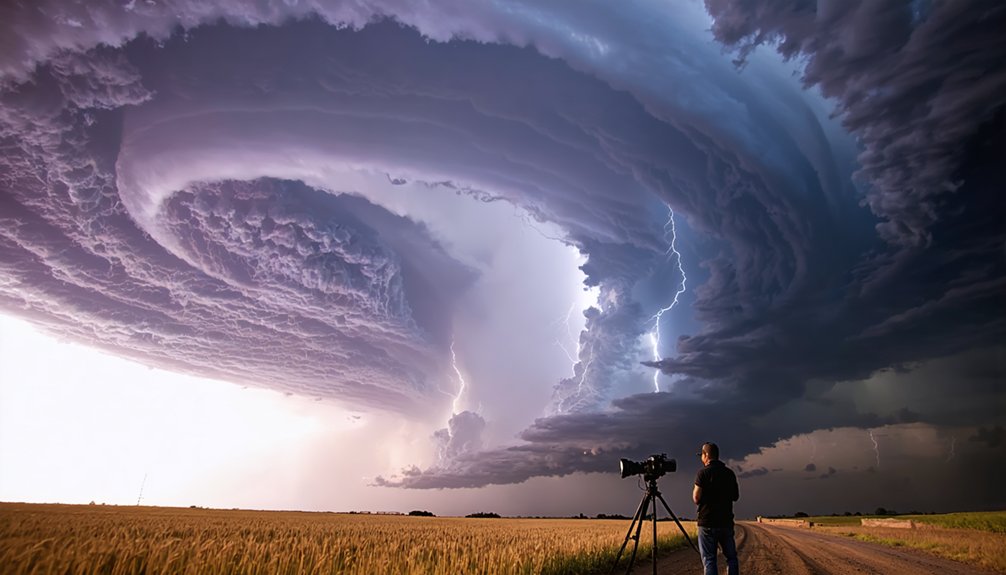
YouTube delivers full-length storm chase footage and in-depth meteorological breakdowns that short-form platforms simply can’t match. You’ll find channels documenting atmospheric phenomena with precision, walking through radar interpretation, storm structure analysis, and storm chasing technology like mobile Doppler units and drone integration.
Since no specific channel names appear in current verified data, use YouTube’s search filters strategically. Enter terms like “storm chase 4K,” “tornado intercept,” or “supercell analysis” to surface high-quality content. Sort by upload date during active severe weather seasons — spring through early summer — to locate the most current footage.
Prioritize channels that explain the meteorological science behind each chase rather than simply showcasing destruction. Credential indicators like media partnerships or NWS affiliations signal trustworthy, technically rigorous content worth your time.
Best Storm Chasing Accounts to Follow on Facebook
Facebook’s storm chasing groups let you tap into community-driven photo sharing, route discussions, and live streams from verified chasers.
You’ll find regional groups like “Oklahoma Storm Chasers” particularly useful for hyper-local coverage and real-time updates.
Before trusting any account or group, you should cross-reference their storm reports with official NWS data and confirm the chaser holds recognized weather credentials or media partnerships.
Top Facebook Storm Groups
When it comes to storm chasing coverage, Facebook groups deliver community-driven discussion, photo sharing, and live stream alerts that other platforms struggle to match. You’ll find verified chasers applying meteorological techniques to interpret radar signatures and share storm data analysis in real time.
Regional groups like “Oklahoma Storm Chasers” concentrate expertise geographically, giving you precise, localized coverage during active severe weather events.
Search for groups requiring credential verification before posting—these filter out noise and surface actionable intelligence. Members frequently cross-reference National Weather Service data, keeping discussion scientifically grounded.
Facebook’s algorithm also surfaces relevant local warnings directly to your feed, reducing the time you spend hunting for information. Prioritize groups where moderators enforce accuracy standards, ensuring every post contributes reliable, verified storm intelligence rather than speculation.
Verifying Facebook Storm Chasers
Verifying storm chasers on Facebook requires cross-referencing three core indicators: media partnerships, meteorological credentials, and NWS data alignment. Check whether the storm photographer holds documented affiliations with news agencies or research institutions.
Credentialed accounts typically cite AMS membership, university meteorology programs, or SKYWARN certification. Cross-reference their storm reports against NWS storm data archives to confirm accuracy.
Evaluate whether the weather educator explains atmospheric dynamics rather than simply posting destruction footage. Accounts demonstrating consistent forecast methodology, structured chase planning, and post-storm analysis signal reliability.
Review their posting history for geographic consistency with verified outbreak records.
Reject accounts lacking transparent sourcing. Authentic chasers publish coordinates, timestamps, and radar screenshots alongside field footage.
You deserve accurate storm intelligence, so prioritize verifiable data over dramatic content that sacrifices meteorological integrity for engagement.
Best Storm Chasing Accounts to Follow on TikTok
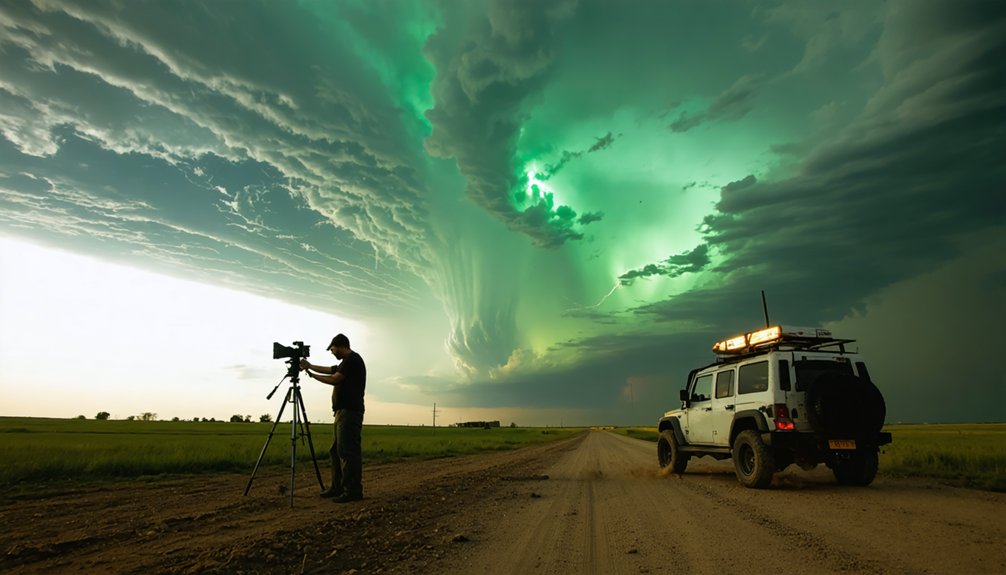
TikTok has emerged as a high-engagement platform for storm chase content, where short-form clips and real-time Live streams deliver dramatic weather events directly to mobile audiences. You can search trending hashtags like #stormchase or #tornado to locate active chasers producing verified storm photography and meteorological breakdowns.
TikTok’s algorithm surfaces content based on engagement velocity, meaning high-quality footage from credible chasers reaches you faster during active weather events. Prioritize accounts that integrate disaster preparedness messaging alongside visually compelling chase footage — these creators balance spectacle with actionable safety data.
Evaluate each account’s posting consistency, location accuracy, and cross-referencing with NWS alerts before trusting their coverage. Chasers who explain atmospheric conditions rather than simply filming destruction provide the most technically reliable and practically useful content for your storm awareness strategy.
How to Verify a Storm Chasing Account’s Credibility
Beyond identifying which accounts post compelling footage, you’ll need a structured method to assess whether a storm chasing account delivers accurate, trustworthy data.
Compelling footage alone isn’t enough—you need a reliable method to verify whether a storm chasing account delivers accurate, trustworthy data.
Historical incidents reveal that unverified accounts frequently misrepresent meteorological data, endangering followers who rely on real-time positioning.
Apply this verification framework:
- Cross-reference meteorological data against official NWS or NOAA reports to confirm storm classification accuracy and location coordinates.
- Audit historical incidents the chaser has documented, checking whether their reported storm intensities align with verified records from the Storm Prediction Center.
- Confirm credentials or media partnerships by identifying formal affiliations with recognized meteorological organizations or broadcast networks.
Accounts that withstand this scrutiny demonstrate disciplined, science-backed reporting.
You’ll avoid misinformation while gaining reliable, actionable storm intelligence that respects both your safety and your freedom to make informed decisions.
Red Flags That Signal a Fake or Reckless Storm Chaser
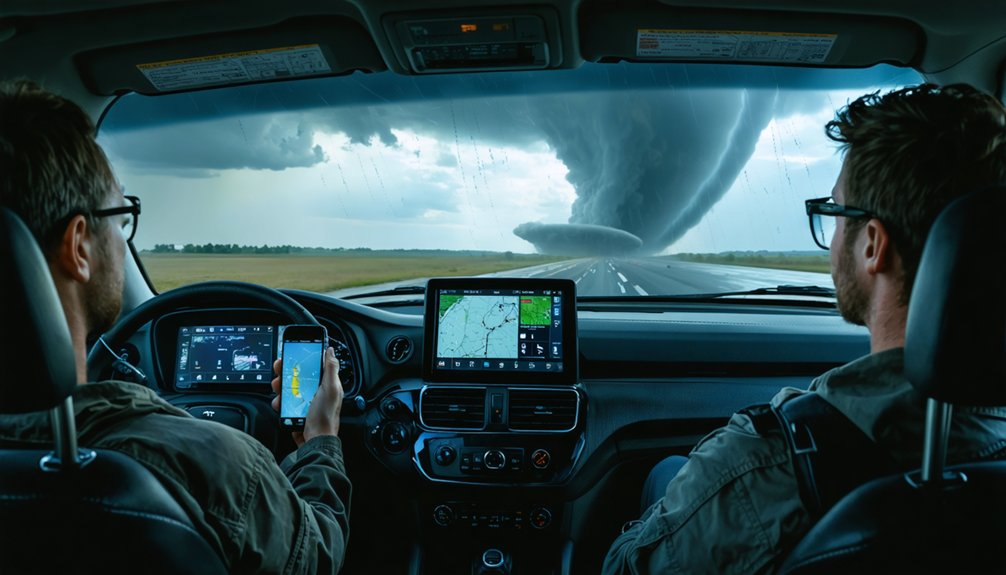
Once you’ve confirmed what a credible account looks like, spotting its opposite becomes straightforward. Watch for accounts that amplify weather myths—like claiming tornadoes never cross rivers or always move southwest—without correction. These tornado myths signal scientific illiteracy and undermine your ability to make informed safety decisions.
Additional red flags include:
- No verifiable credentials or media partnerships backing their claims
- Reckless positioning, including footage taken inside confirmed tornado paths
- Sensationalized captions prioritizing engagement over accurate meteorological data
- Absence of NWS cross-referencing when reporting storm intensity or damage ratings
- Encouraging followers to chase independently without proper training or equipment
Accounts exhibiting these patterns compromise your situational awareness. Disengage immediately and redirect to verified sources that prioritize data accuracy and personal freedom through informed decision-making.
Storm Chasing Accounts That Prioritize Safety Over Spectacle
While reckless accounts chase engagement metrics, safety-focused storm chasers treat every post as a data delivery mechanism—prioritizing NWS-verified storm tracks, EF-scale damage assessments, and structured chase debriefs over raw spectacle.
When you’re vetting accounts, look for these storm safety and chasing ethics indicators:
- Credential transparency – Operators openly disclose meteorological training, media affiliations, or spotter certifications.
- Real-time hazard communication – Posts include structured warnings referencing official NWS bulletins, not just dramatic footage.
- Post-event analysis – Accounts publish damage surveys with EF-scale classifications and storm-relative motion data.
Accounts like Ben McHone and HuntersBase consistently model responsible field behavior.
You’ll gain far more situational awareness following chasers who treat storm documentation as a scientific obligation rather than a content opportunity.
Frequently Asked Questions
Can Following Storm Chasers Online Help Me Prepare for Local Severe Weather?
Yes, following storm chasers boosts your weather safety and preparedness tips. You’ll get real-time data, track severe systems early, and cross-reference updates with NWS alerts—empowering you to make informed, independent decisions before dangerous conditions reach your area.
Do Professional Storm Chasers Earn Income From Their Social Media Accounts?
Yes, professional storm chasers monetize through social media monetization tools like ad revenue, merchandise, and storm chasing sponsorships. You’ll find they leverage platform algorithms and audience data to maximize earnings across Instagram, YouTube, and TikTok.
Are There Storm Chasing Accounts Specifically Designed for Children or Young Students?
Few accounts target children exclusively, but you’ll find educational content on TikTok and YouTube that emphasizes children’s safety alongside meteorological science. Search hashtags like #stormchase filtered through school-friendly, data-driven channels prioritizing learning over dangerous spectacle.
What Equipment Do Storm Chasers Typically Use to Film Their Footage?
Funny how a lightning bolt mirrors a camera flash — you’ll find storm chasers rely on camera gear like 4K DSLRs and dashcams, paired with safety equipment including helmets, GPS trackers, and reinforced chase vehicles.
Have Any Storm Chasers Been Seriously Injured While Filming Live Social Media Content?
Yes, storm chasers have suffered serious injuries during live broadcasts. Storm chasing dangers combined with social media risks push chasers into reckless proximity. You’d want to verify any account prioritizes meteorological safety protocols over viral, high-risk content creation.
References
- https://www.wired.com/2017/04/7-amazing-storm-chasers-follow-instagram/
- https://influencers.feedspot.com/storm_chasing_instagram_influencers/