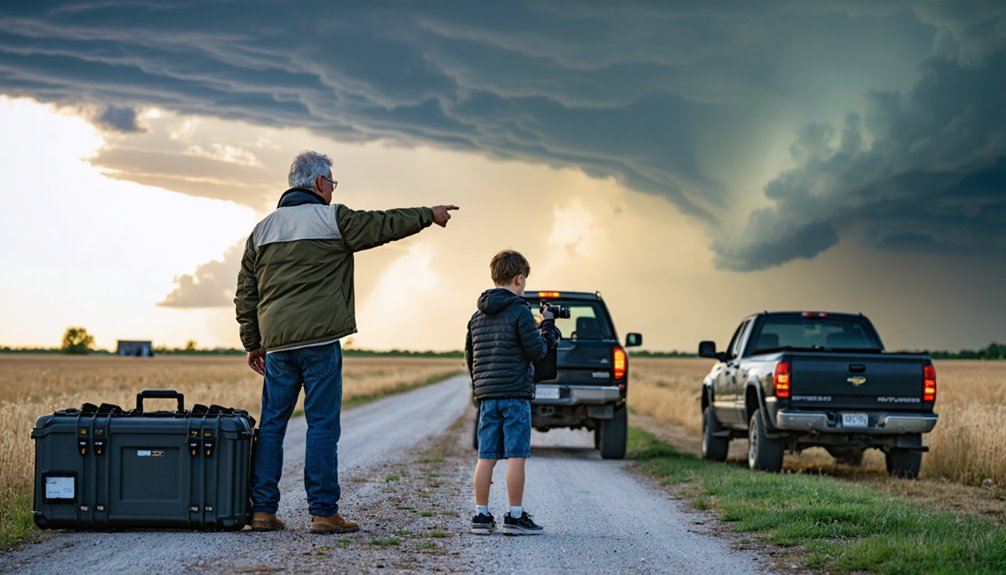
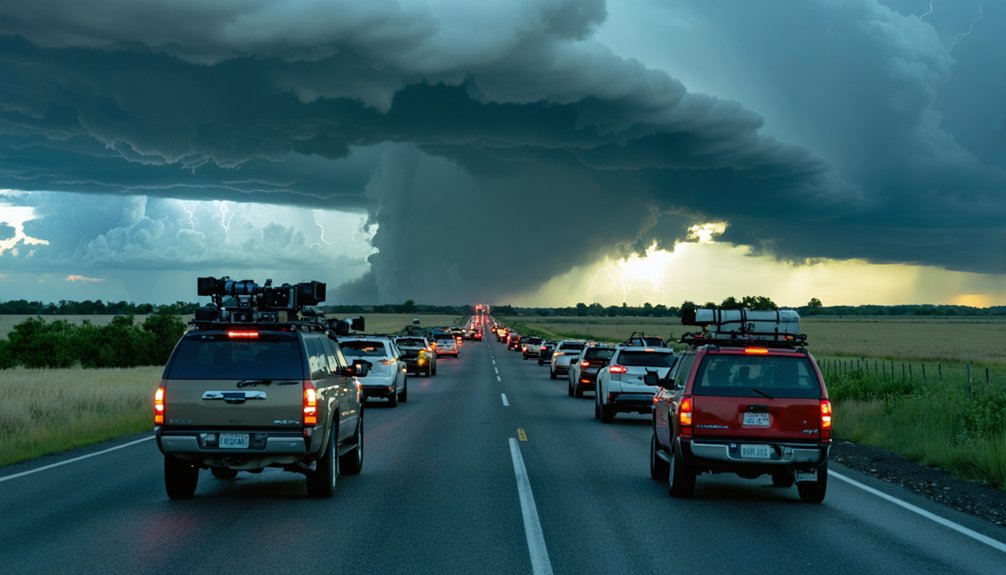
Storm chasing monetization on YouTube puts you in a complex financial battlefield. You’re competing against copyright theft, AI-generated fakes, and algorithmic bias that collectively erode your revenue before payouts arrive. Traditional video brokering delays compensation, while YouTube’s direct model offers more predictable returns and content ownership. Building multi-platform income streams reduces your vulnerability to any single revenue source. The strategies separating profitable chasers from struggling ones go much deeper than simply posting footage.
Key Takeaways
- YouTube monetization offers storm chasers direct ad revenue and content ownership, but inconsistent viral performance makes stable income challenging.
- Multi-platform strategies, including live streaming and merchandise, create redundant income streams that reduce dependence on a single revenue source.
- Major news distributors exploit copyright gaps, repurposing original storm footage through pseudo accounts without compensating independent creators.
- AI-generated storm content competes with authentic footage, benefiting from algorithmic favoritism while undermining legitimate creators’ engagement metrics and revenue.
- Financial pressures drive storm chasers toward riskier positioning for high-engagement content, creating dangerous ethical dilemmas with potentially fatal consequences.
What Storm Chasers Actually Earn on YouTube
Storm chasers pulling in YouTube revenue face a fragmented and often unpredictable income structure. Your YouTube earnings during early channel growth remain minimal, with ad revenue barely covering operational costs.
Exclusive posting can yield roughly $150 per video, but that figure fluctuates dramatically based on viewership. Viral performance is rare, meaning you can’t build reliable storm chaser income around occasional breakout content.
Live streaming offers stronger, more consistent returns, while video brokering through agencies introduces additional revenue but delays payment by months.
Meanwhile, large distributors exploit copyright gaps, monetizing your original footage through pseudo accounts while you absorb the losses. Understanding these income layers isn’t optional—it’s essential if you want financial independence rather than dependence on systems designed to benefit established media corporations over independent creators.
Why YouTube Beats Traditional Video Brokering for Storm Chasers
When you compare YouTube’s exclusive posting model against traditional video brokering, the revenue mechanics favor direct platform monetization on nearly every measurable axis. Brokering agencies pitch your storm chasing footage to news networks, but payouts lag months behind and remain inconsistent.
YouTube delivers more predictable, compounding returns through ad revenue and long-term video performance.
You also retain ownership and control. Brokering surrenders leverage to intermediaries who dictate terms. YouTube keeps you autonomous, letting you build equity in your own channel rather than someone else’s distribution network.
The revenue challenges don’t disappear on YouTube—viral success is rare, and early ad income stays minimal. But the ceiling is structurally higher, and your independence remains intact, making direct monetization the stronger long-term position.
How to Build Storm Chasing Revenue Across Multiple Platforms
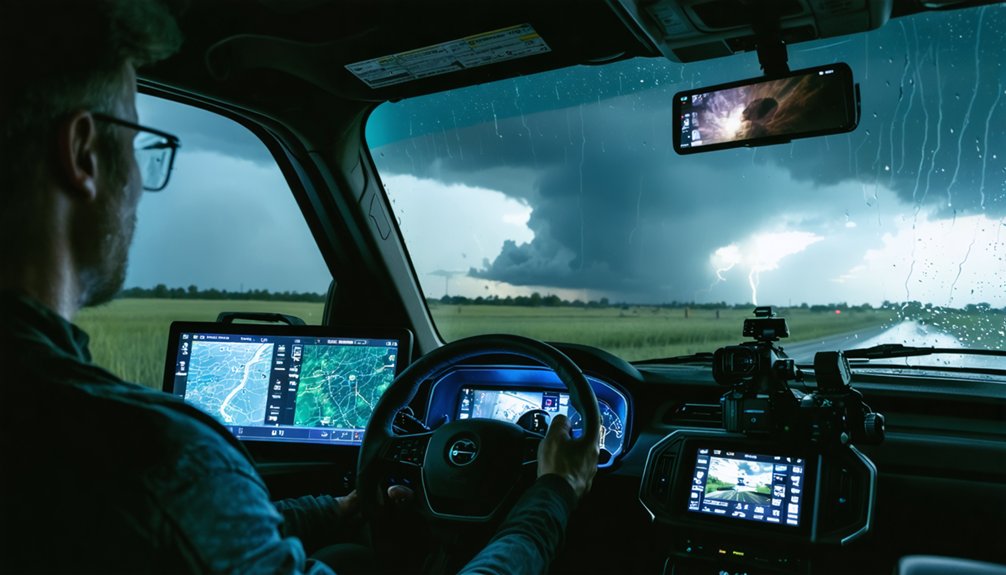
Building storm chasing revenue across multiple platforms isn’t about spreading content thin—it’s about engineering redundant income streams that reinforce each other. Your revenue strategies must operate systematically: YouTube exclusivity drives monetization, while live streaming captures real-time audience engagement.
Platform synergy means each channel feeds the others—social media amplifies video quality highlights, driving subscribers back to longer-form content.
Brand partnerships become attainable once you’ve demonstrated consistent community feedback loops and measurable audience trust. Merchandise sales extend your brand beyond footage, creating passive income independent of algorithmic performance.
Effective content planning means scheduling around seasonal storm activity while maintaining safety practices that protect both you and your reputation. Compromise safety, and you compromise everything—your audience, your partnerships, and ultimately your financial independence across every platform you’ve built.
Why Social Media Presence Determines Monetization Success
Your social media presence isn’t just a promotional tool—it’s the infrastructure that converts casual viewers into a loyal community that sustains long-term monetization.
When you build consistent engagement across platforms like X, Facebook, and Instagram, you’re diversifying your revenue exposure beyond YouTube’s algorithm-dependent ad structure.
Each platform you activate creates an additional monetization node, reducing your financial vulnerability to any single channel’s performance fluctuations.
Building Loyal Viewer Communities
For storm chasers monetizing on YouTube, social media presence functions as a primary revenue determinant rather than a supplementary marketing tool.
You’re building an ecosystem where community engagement drives algorithmic visibility, translating directly into measurable income streams.
Viewer loyalty compounds over time, creating predictable revenue baselines that occasional viral content can’t replicate.
You’ll find that audiences who participate consistently generate more sustainable income than passive viewers consuming single videos.
Multi-platform strategies amplify this effect.
When you distribute across Twitter, Instagram, and Facebook, you’re creating multiple entry points that funnel dedicated viewers back to YouTube monetization.
Each interaction strengthens audience commitment and reduces dependence on unpredictable viral performance.
Independent creators who prioritize community connection over content volume establish competitive advantages that larger media organizations can’t easily replicate through institutional resources alone.
Multi-Platform Revenue Diversification
Relying solely on YouTube ad revenue leaves your income vulnerable to algorithm shifts, demonetization decisions, and viral unpredictability.
Distributing content across Twitter, Instagram, TikTok, and Facebook builds audience touchpoints that generate independent revenue streams beyond any single platform’s control.
Each platform reveals distinct sponsorship potential. Instagram’s visual format attracts weather equipment brands, while TikTok’s discovery algorithm accelerates audience growth that feeds back into your YouTube subscriber count.
Cross-platform visibility also expands collaboration opportunities with meteorologists, emergency management organizations, and outdoor gear companies seeking authentic partnerships.
Multi-platform presence converts casual viewers into invested community members who follow your work regardless of platform disruptions.
This audience ownership — rather than platform dependency — creates the monetization resilience that sustains independent storm chasing careers against corporate copyright exploitation and algorithmic instability.
The Copyright Problem Quietly Stealing Chasers’ YouTube Revenue
While YouTube monetization offers storm chasers a viable revenue stream, a systematic copyright problem is quietly eroding those earnings. Major news distributors create pseudo accounts, capturing your original content and republishing it without authorization.
This copyright infringement directly triggers revenue loss, stripping content ownership rights from independent creators while sheltering large corporations under inconsistent legal protections.
You’re facing monetization risks that established media entities simply don’t encounter. The Copyright Alliance has documented these violations, yet enforcement remains fractured.
Beyond financial damage, ethical implications emerge when viewer trust deteriorates because audiences can’t distinguish your authentic footage from repurposed copies.
Industry standards currently favor corporate distributors over original producers, undermining content originality’s value.
Without stronger legal protections, your YouTube revenue remains vulnerable to systematic exploitation you didn’t consent to.
How News Networks Exploit Original Storm Footage for Free
News networks have refined a systematic process for extracting value from your original storm footage without direct compensation. Through pseudo-accounts and third-party brokers, they’ve created legal distance between themselves and footage ownership violations.
Here’s how news exploitation typically unfolds:
- Networks establish secondary accounts that acquire your footage through resharing rather than licensing.
- Legal frameworks shelter these entities from direct copyright consequences, leaving you without meaningful recourse.
- Monetization concentrates within established organizations while you watch your original content generate revenue for others.
You’re fundamentally funding network content libraries without compensation. The Copyright Alliance has documented these systematic violations, yet enforcement remains inconsistent.
Understanding this pipeline is critical before you distribute footage broadly, as your intellectual property rights erode the moment content enters uncontrolled distribution channels.
How AI Misinformation Is Draining Storm Chaser Revenue on YouTube
When AI-generated storm content floods YouTube’s algorithm, it competes directly with your authentic footage for viewer attention and ad revenue.
You’ll find that copyright enforcement gaps compound this problem, as YouTube’s systems can’t reliably distinguish between your original work and synthetic recreations that exploit identical search terms and metadata.
The result is measurable revenue erosion, where your channel absorbs the algorithmic penalty while AI-driven accounts capture the monetization opportunities your real-world risk-taking should have earned.
AI Content Flood Impact
The rise of AI-generated storm content on YouTube has created a direct revenue drain for legitimate storm chasers building audience-driven channels.
Platform algorithms can’t reliably distinguish authentic storytelling from fabricated AI content, which directly suppresses your engagement metrics and ad revenue potential.
Three critical impacts you’re facing:
- Audience trust erodes when viewers encounter AI misinformation, making quality control essential for protecting your channel’s credibility.
- Content originality gets devalued as algorithms reward volume over verified, real-world footage.
- Ethical implications multiply when fake storm content triggers unnecessary public panic.
You’re competing against machines flooding the platform with zero production costs.
Reclaiming algorithmic favor requires doubling down on verifiable, field-captured content that AI simply can’t replicate—your authentic presence remains your strongest competitive advantage.
Copyright Enforcement Gaps
AI-generated content isn’t the only force eroding your revenue—copyright enforcement gaps compound the damage by allowing major news distributors to legally strip-mine your original footage.
These distributors establish pseudo accounts specifically designed to repackage your work, monetizing it while you receive nothing. The Copyright Alliance has documented these systematic violations, yet enforcement limitations persist because legal frameworks inadvertently shelter large media entities.
The copyright challenges you face aren’t accidental—they’re structural. Established networks exploit platform policies that favor their institutional leverage over your individual claims.
You’re competing against organizations with legal teams dedicated to circumventing protections designed for creators like you. Until enforcement mechanisms close these gaps, your original storm footage remains vulnerable to institutional appropriation, concentrating monetization opportunities among corporations rather than the independent creators who captured the content.
Creator Revenue Erosion
Beyond copyright exploitation, a separate but equally damaging threat pulls revenue away from legitimate storm chasers: AI-generated misinformation flooding YouTube’s algorithm. Fabricated storm footage competes directly against authentic content, suppressing your views, ad revenue, and creator rights simultaneously.
AI channels exploit three specific vulnerabilities:
- Algorithmic favoritism toward high-volume AI content displaces verified storm chasing videos in search rankings.
- Viewer trust erosion causes audiences to question authentic footage, reducing engagement metrics that drive your revenue sustainability.
- Monetization dilution spreads advertiser budgets across fraudulent channels, shrinking payouts for legitimate creators.
You’re fundamentally funding your own competition by remaining on a platform that inadequately distinguishes real content from manufactured deception.
Without structural algorithmic reforms, independent storm chasers will continue absorbing disproportionate financial losses against opponents who produce content at zero risk.
Can Independent Chasers Compete With Big Media on YouTube?
How effectively can independent storm chasers compete against major media organizations on YouTube? The answer depends on your independent strategies and commitment to content originality. Large distributors exploit copyright gaps, republishing your footage through pseudo accounts while absorbing monetization revenue you’ve earned.
You’re not powerless, though. Audience growth favors creators who build genuine community connections rather than chasing viral moments. Your authenticity becomes a competitive advantage that corporate entities can’t replicate.
Monetization ethics matter here too. You’ll face pressure to pursue riskier footage for better engagement metrics, but compromising safety standards ultimately undermines long-term credibility. Major media organizations face no equivalent pressure.
Your sustainable competitive edge combines original documentation, consistent audience engagement, and principled content standards that corporate distributors structurally can’t match.
Does Monetization Push Storm Chasers Into Dangerous Situations?
Financial pressures that disadvantage independent creators don’t just affect revenue—they shape behavioral decisions with life-or-death consequences.
When income depends on capturing extreme footage, you face genuine ethical dilemmas that established media professionals rarely encounter.
Monetization structures create dangerous pursuits through three measurable pressure points:
- Proximity incentives reward closer, riskier positioning to generate compelling footage audiences engage with.
- Competitive content markets push newer chasers toward higher-risk scenarios to differentiate their material.
- Revenue delays from brokering agencies force creators toward immediate, high-engagement alternatives.
Three experienced chasers have already died pursuing tornado content.
Public perception dismisses them as reckless, ignoring systemic financial pressures driving their decisions.
You’re operating within a monetization framework that quietly incentivizes risk escalation while offering no structural protection against consequences.
How Storm Chasers Can Future-Proof Their Revenue Streams
Understanding the monetization landscape lets you build revenue systems that don’t collapse when a single income stream underperforms.
Future-proofing strategies require diversifying across YouTube monetization, live streaming, and video brokering simultaneously rather than depending on any single channel.
Income sustainability demands that you treat your social media presence as infrastructure, not supplementary promotion.
Build direct audience relationships that survive algorithm changes or platform policy shifts.
Protect your intellectual property aggressively.
Document your footage, register copyrights, and monitor redistribution through agencies like the Copyright Alliance.
Large distributors exploit enforcement gaps, so you can’t afford passive ownership.
Prioritize YouTube’s exclusive posting model for predictable baseline revenue while brokering generates delayed payouts.
Stack these streams deliberately, and you’ll maintain financial stability regardless of whether individual videos achieve viral performance.
Frequently Asked Questions
What Legal Resources Exist for Storm Chasers Fighting Copyright Theft?
Like a town crier demanding justice, you’ll find limited legal resources for copyright issues—consult intellectual property attorneys, leverage the Copyright Alliance, and assert content ownership through DMCA takedowns for effective legal advice against theft.
Do Storm Chasing Sponsorships Provide More Stable Income Than Youtube Ads?
Sponsorships offer you greater revenue stability than YouTube ads, which fluctuate unpredictably during early growth phases. Sponsorship advantages include consistent income flow, making revenue comparisons clearly favor sponsorships over ad-dependent models that restrict your financial independence.
How Do Weather Agencies Collaborate With Independent Storm Chasers Financially?
Weather agencies rarely fund you directly—collaboration models typically involve brokering agencies pitching your footage to news networks. These funding sources offer delayed payouts, leaving you managing unpredictable income streams while agencies profit from your risk-taking fieldwork.
Are There Storm Chaser Unions or Guilds Advocating for Creator Rights?
No formal storm chaser unions exist, but you’ll find advocacy emerging through copyright alliances addressing creator compensation gaps. These organizations tackle storm chaser ethics by challenging systemic exploitation that concentrates monetization power among established media corporations over independent creators.
What Insurance Options Protect Storm Chasers Pursuing Monetized Content Creation?
As a content creator, you’ll need specialized policies combining liability coverage, equipment insurance, and revenue protection. Insurers conduct rigorous risk assessment evaluating storm damage exposure, so you’re securing coverage that reflects your unique operational hazards.
References
- https://www.youtube.com/watch?v=K1gkje3ic2Q
- https://stormtrack.org/threads/younger-generation-of-chasers-being-swindled-for-weather-and-storm-video.30740/
- https://www.youtube.com/watch?v=6_44DEb4FNg
- https://www.youtube.com/watch?v=OyNhwKYxUws
- https://www.youtube.com/watch?v=MogZEEeYISs
- https://www.youtube.com/watch?v=LLZcUjpy0v0