For effective storm emergency communication, you’ll want to plan your contacts before the storm hits. Write clear, jargon-free messages that lead with the reason and close with a call to action. Conserve your battery by dimming your screen and disabling unused connections. Match your communication channel to your message’s urgency level. Know which emergency numbers to call and when—and there’s much more to unpack on each of these critical strategies.
Key Takeaways
- Establish an out-of-state contact as your primary communication hub to avoid congested local phone lines during emergencies.
- Structure emergency messages clearly: lead with the reason, add key details, and close with a direct call to action.
- Match your communication channel to urgency level, using wireless alerts for evacuations and texts for time-sensitive updates.
- Conserve phone battery by dimming your screen, disabling Bluetooth, and switching from calls to SMS messaging.
- Call 911 for life-threatening emergencies, dial 211 for local resources, and use multiple platforms to broadcast critical information.
Plan Your Emergency Communications Before the Storm
Before a storm hits, you’ll want a solid emergency communications plan in place. Start by establishing contacts with both local and out-of-state family members — this is the foundation of smart family preparedness.
A solid emergency communications plan starts with one simple step: connecting with family before the storm hits.
Designate a primary contact everyone can reach if local lines become congested.
For effective resource planning, compile a list of local and national disaster resources before the storm arrives. Bookmark sites like Ready.gov and follow the National Hurricane Center and FEMA on social media for real-time updates.
Prepare a content bank of trusted agency partner information so you’re not scrambling mid-crisis.
Develop a distribution strategy covering news releases, your website, and social media channels. Acting before the storm keeps you in control when it matters most.
Write Emergency Messages That People Will Actually Act On
When a storm emergency unfolds, your message must cut through panic and prompt immediate action — and that starts with structure. Lead with the reason, follow with supporting details, then close with a direct call to action.
Message clarity isn’t optional — it’s what separates compliance from confusion.
Keep your language simple, specific, and jargon-free. Avoid acronyms and unnecessary detail. Word your messages precisely so every reader, regardless of background, understands exactly what they need to do.
Don’t wait for perfect information before communicating. Respond quickly to establish authority before misinformation fills the void.
Tailor your tone to your audience’s emotional state — people under stress need calm, direct guidance. Say what matters, cut what doesn’t, and make the required action unmistakable.
Conserve Battery Life During Emergency Power Outages
Clear messaging only works if your device stays on long enough to send and receive it. During power outages, apply these battery saving techniques immediately: dim your screen, close unused applications, and disable Wi-Fi or Bluetooth when you’re not actively using them.
These device management strategies extend your operational window when the grid goes down.
Limit voice calls and switch to SMS instead — texts consume less bandwidth and keep networks less congested. When redialing, wait 10 seconds between attempts.
Check your phone’s manual for model-specific conservation settings you might be overlooking.
Your device is your lifeline to emergency alerts, family contacts, and critical updates. Don’t waste its power on non-essential activity.
Control what you can control, and stay connected when it matters most.
Choose the Right Channel for Each Emergency Message
Not every emergency message belongs on every platform — match your channel to your message type and urgency level.
Channel effectiveness depends on selecting the right medium for each situation. For high message urgency situations like evacuations or shelter warnings, use wireless emergency alerts immediately.
Send text messages for concise, time-sensitive notifications across importance levels. Social media works best for community engagement and gathering real-time intelligence.
Use email when you need to elaborate on complex emergency details.
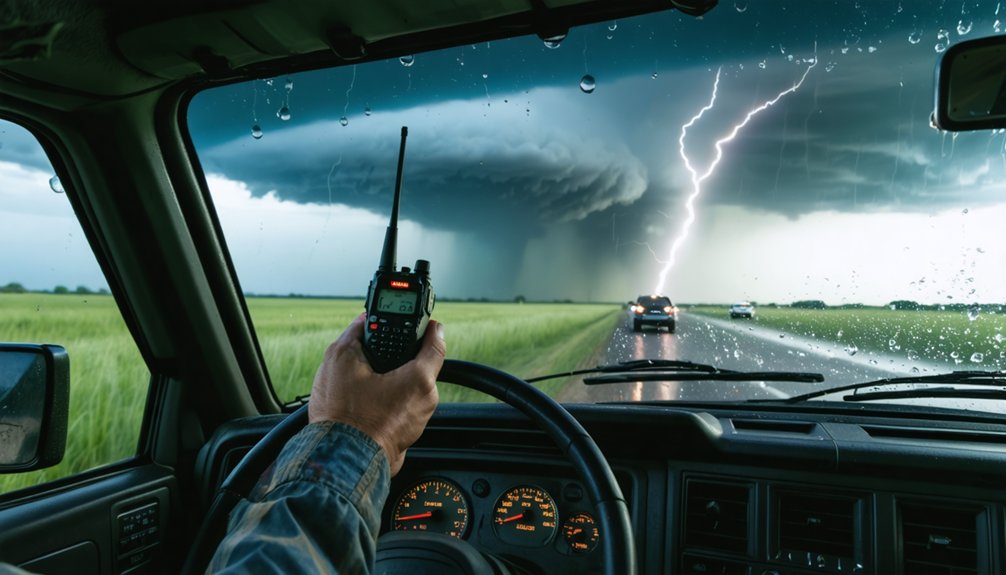
Don’t rely on a single channel. Broadcast across radio, TV, TikTok, Instagram, Facebook, and X simultaneously to maximize reach.
Each platform serves a distinct audience segment. Covering multiple channels guarantees your critical information reaches everyone, regardless of which platform they’re monitoring during the storm.
Know Which Emergency Contacts to Call and When
Knowing which number to call and when prevents clogged emergency lines and gets you faster help. Follow a clear contact hierarchy and mind your response timing to protect both yourself and others.
- Call 911 only for life-threatening emergencies requiring immediate police, fire, or medical response.
- Dial 211 for non-critical local resources like shelter locations and food assistance.
- Contact the Red Cross for disaster relief support outside law enforcement scope.
- Text “TalkWithUs” to 66746 or call 1-800-985-5990 for emotional distress support.
- Reach out-of-state family contacts first, as local lines often congest fastest during storms.
Keep every call brief and information-specific.
Sign up for Wireless Emergency Alerts and monitor your local Emergency Alert System to reduce unnecessary outbound calls during peak response periods.
Frequently Asked Questions
How Do I Communicate Emergencies if I Don’t Speak English Fluently?
Use translation apps to overcome language barriers. Text simple messages, as they’re easier to translate. Sign up for multilingual emergency alerts, and keep key phrases pre-written in English for quick communication during emergencies.
What Should I Do if My Emergency Contacts Are Unreachable?
When every second feels like an eternity, don’t panic. Use backup communication like texts or social media. Reach alternative contacts—neighbors, local shelters, or Red Cross. Try 211 for community resources if primary contacts remain unreachable.
How Can I Help Neighbors With Disabilities During a Storm Emergency?
Check on neighbors with disabilities before the storm hits. Share accessible resources like Ready.gov and local emergency alerts. You’ll strengthen community support by ensuring they’ve signed up for wireless alerts and have a clear evacuation plan.
Are There Special Communication Tools for Deaf or Hard-Of-Hearing Individuals?
You’ll find visual alerts, text messaging, and emergency apps invaluable for deaf or hard-of-hearing individuals. Download accessible apps, utilize SMS notifications, and arrange sign language interpreters to guarantee everyone receives critical storm updates effectively.
How Do I Verify if Emergency Information Online Is Accurate and Official?
Verify emergency info by cross-referencing official websites like Ready.gov, using fact-checking resources, and following social media alerts from FEMA. Tap community networks for local confirmation. Don’t trust unverified sources—always confirm through multiple authoritative channels.
References
- https://cat5resources.com/naturaldisastercommunication/
- https://www.usa.gov/blog/2019/07/five-quick-tips-for-sharing-information-during-an-emergency
- https://news.bryant.edu/when-disaster-strikes-12-tips-developing-crisis-communication-strategy
- https://www.juvare.com/thought-leadership/blogs/6-tips-for-effective-emergency-communication/
- https://training.fema.gov/emiweb/is/is242b/student manual/sm_03.pdf
- https://www.visitflorida.org/resources/crisis-preparation/hurricane-information/crisis-communications-tips/
- https://www.youtube.com/watch?v=eQueUz1Q9gM