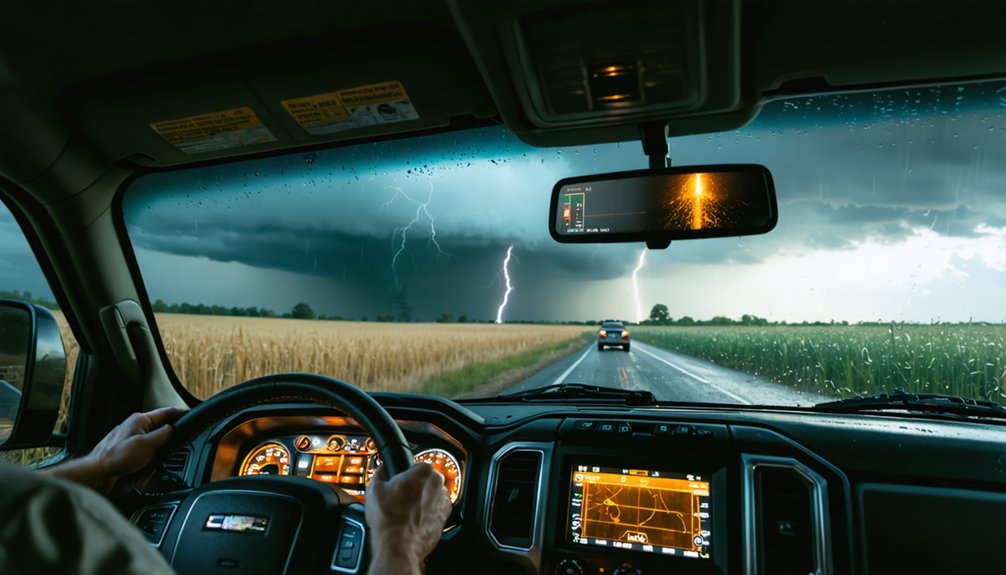
Waterspouts can hit 100 mph, so you can’t treat them like a photo op. Watch for dark surface spots, spiral water rings, and rapidly building cumulus clouds — they signal imminent formation. Turn your vessel 90 degrees to the waterspout’s tracked path to maximize lateral separation. Close all hatches, lower your sails, and get everyone into life jackets immediately. Monitor NOAA Weather Radio continuously and keep an exit plan ready — there’s much more to know before you head out.
Key Takeaways
- Monitor NOAA Weather Radio and watch for dark water spots, spiral patterns, and towering cumulus clouds signaling waterspout formation.
- Never treat waterspouts as photo opportunities; maintain a safe distance and prioritize escape over observation at all times.
- Turn your vessel 90 degrees to the waterspout’s tracked movement to maximize lateral separation quickly.
- Secure all hatches, lower sails, and ensure every crew member wears a life jacket before conditions worsen.
- File a float plan, keep VHF radio accessible, and rehearse emergency procedures before heading out on the water.
Know the Main Waterspout Hazards Before You Go
Waterspouts carry the same destructive potential as tornadoes, and treating them as a photo opportunity rather than a rapidly changing marine wind hazard can get you killed. Water safety starts with understanding what you’re dealing with before you leave the dock.
Waterspouts aren’t spectacles — they’re rotating columns of destruction that demand a course correction, not a camera.
Thunderstorms can develop rapidly, compressing your reaction window to near zero. Dark, threatening clouds signal incoming severe weather, and sudden wind increases or building seas confirm conditions are deteriorating fast. These aren’t gradual changes — they’re sharp, data-driven indicators that demand immediate decision-making.
Studying local weather patterns before departure gives you a baseline for recognizing anomalies on the water. The moment conditions shift unexpectedly, you need to act, not observe.
Respecting the hazard keeps your freedom to chase intact.
Spot the Warning Signs Before a Waterspout Forms
Before a waterspout fully develops, the water and sky broadcast measurable warning signs you can read in real time. Tracking these indicators gives you the reaction window you need to execute a clean escape.
Watch for these cloud formation and water disturbance signals:
- Dark spot appearing on the surface below a developing funnel
- Rings or spiral patterns expanding outward on the water
- Towering cumulus clouds building rapidly overhead
- Abrupt wind shifts or sudden speed increases
- High humidity combined with an unstable, churning sky
Each signal compresses your available response time. Once you identify two or more simultaneously, conditions are deteriorating fast. Don’t wait for confirmation—start repositioning immediately and monitor NOAA Weather Radio for real-time updates on storm progression.
Move at a 90-Degree Angle to Escape a Waterspout
Once a waterspout is confirmed on your beam or ahead, your fastest exit isn’t a straight retreat—it’s a hard turn to place your vessel at a 90-degree angle to the spout’s tracked movement.
This maneuver strategy maximizes lateral separation rather than trading speed against the spout’s forward velocity.
Track the spout’s direction using visual cues—its tilt, surface spray ring displacement, and cloud base drift. These indicators give you a reliable movement vector.
Once you’ve plotted that vector, execute your 90-degree turn immediately and hold course until the spout is well clear.
Don’t second-guess the angle. Closing distance to “get a better look” eliminates your margin.
Speed, heading discipline, and early execution are the variables you control—use them decisively.
Close Hatches, Lower Sails, and Get Everyone in Life Jackets
While your escape maneuver is already in motion, your crew has a parallel set of tasks that can’t wait. Crew safety depends on simultaneous action, not sequential steps.
Crew safety doesn’t wait for perfect timing — simultaneous action saves lives when seconds matter most.
Execute these immediately:
- Close and secure all hatches to block spray and debris
- Lower sails to reduce wind load and prevent capsizing
- Guarantee everyone aboard is wearing a life jacket
- Activate emergency signaling equipment so rescuers can locate you if conditions deteriorate
- Confirm your VHF radio is accessible for Coast Guard contact
Gusty winds can overturn small vessels within seconds, making flotation gear non-negotiable. Lowered sails reduce your vessel’s vulnerability to sudden wind shifts common near waterspouts.
Emergency signaling readiness isn’t optional — it’s your fallback if maneuvering fails and your crew needs outside assistance fast.
Monitor Weather Radio and Have an Exit Plan Ready
Securing the vessel and crew buys time, but staying ahead of a waterspout’s behavior requires continuous intelligence. Monitor NOAA Weather Radio before departure and throughout your outing — conditions shift faster than most boaters expect.
A VHF marine band radio isn’t optional; it’s your primary marine communication link to the Coast Guard and port authorities. If you spot a spout, radio your position and the spout’s location immediately.
Emergency procedures should already be rehearsed, not improvised under pressure. File a float plan with your marina before leaving shore.
Never let a developing storm cut off your route back to land. Your exit plan must exist before you need it — because once a waterspout accelerates, decision time collapses fast.
Frequently Asked Questions
How Far Away Should You Be to Safely Photograph a Waterspout?
For waterspout photography, there’s no officially defined safe distance, but safety distance guidelines recommend you stay far enough to maneuver perpendicular to its path immediately. Don’t compromise your escape route—prioritize distance over the perfect shot.
Are Waterspouts More Common During Certain Seasons or Months?
Ironically, yes — waterspouts peak in late summer and early fall. Weather patterns create ideal warm-water conditions then, so you’ll want heightened safety precautions during those months when you’re chasing your “perfectly calm” photography adventure.
Can a Waterspout Move Onto Land and Become a Tornado?
Yes, a waterspout can move onshore and evolve into a tornado. During waterspout formation, you’ll want to take waterspout safety precautions seriously—evacuate immediately if it’s heading inland, as intensity and destruction can rapidly increase upon landfall.
What Should You Do if Your Engine Fails Near a Waterspout?
When the chips are down, don’t panic. Lower your sails immediately, close hatches, and don your safety equipment. Emergency preparedness means moving at a 90-degree angle manually while signaling the Coast Guard via VHF radio.
Is It Legal to Deliberately Chase Waterspouts in a Vessel?
While no universal law explicitly bans waterspout chasing, legal considerations still apply—you’re liable if vessel safety is compromised. Authorities can cite negligence if you endanger others. Always prioritize safe distance over pursuit.
References
- https://www.weather.gov/mlb/waterspout_rules
- https://www.allatsea.net/water-spout-are-they-dangerous/
- https://www.icwr.ca/top-waterspout-hunters.php
- https://www.youtube.com/watch?v=EBGgnwwXO7k
- https://crazystormchasers.com/chasing-waterspouts-responsibly-and-safely/
- https://crazystormchasers.com/the-science-behind-chasing-waterspouts/
- https://crazystormchasers.com/best-tips-for-staying-safe-around-waterspouts/
- https://crazystormchasers.com/best-strategies-for-chasing-waterspouts/
- https://crazystormchasers.com/dangers-of-chasing-waterspouts-up-close/