When you’re chasing storms, your best hidden shelters aren’t marked tornado refuges — they’re church fellowship halls, fire stations, municipal activity centers, and reinforced grocery store back-storage areas. You should pre-identify these locations before leaving, map them along your chase corridor, and verify their capacity. Buildings with interior rooms, no windows, and reinforced construction offer the best protection. Knowing where these spots are before conditions deteriorate could be the difference that saves your life — and there’s much more you need to know.
Key Takeaways
- “Hidden” shelters include church fellowship halls, municipal activity centers, and reinforced grocery store storage areas that meet protective capacity without advertising as tornado refuges.
- Build a pre-chase shelter map using the Tornado Shelter Finder app, prioritizing locations with 100+ person capacity along your planned chase corridor.
- Key shelter types include community centers, fire stations, church facilities, and municipal emergency operations centers, each offering varying capacity and structural integrity.
- Shelter finder apps provide offline access, verified locations, capacity data, and editable entries to keep your shelter map accurate and current.
- In public shelters, prioritize interior zones like central hallways, reinforced rooms, and areas away from doors and windows to minimize projectile risk.
What “Hidden” Means for Storm Chasers Seeking Shelter
When storm chasers talk about “hidden” shelters, they’re not referring to secret locations — they’re describing facilities that don’t advertise their protective capacity but still meet the structural requirements to keep you alive during a tornado.
As a storm chaser, you need to identify these structures before you need them. A hidden shelter might be a church fellowship hall, a municipal activity center, or a grocery store’s reinforced back storage area. None of these broadcast themselves as tornado refuges, yet each offers legitimate protection.
Your survival depends on pre-mission reconnaissance — mapping these locations, noting their capacity, and calculating your distance from them. Freedom in the field comes from preparation, not improvisation.
Your survival depends on preparation — map the shelters, know the distances, and never leave safety to chance.
Knowing where every viable hidden shelter sits along your route gives you real operational control.
How to Build Your Pre-Chase Shelter Map Before You Leave
Before you chase, you need to build a personalized shelter map that plots every verified location along your anticipated route, including sites like Oaklawn Activity Center, Glenn Park Christian Church, and the Haysville Community Shelter.
Download the Tornado Shelter Finder app and cache it for offline access, since cell coverage fails precisely when you need it most.
Prioritize shelters by capacity—a 1,500-person facility like the Wichita location at 225 W Douglas Ave gives you far more margin than a 60-person station when a storm forces multiple chasers to shelter simultaneously.
Mapping Shelters Before Departure
Mapping your shelter route before you leave home is one of the most critical steps in pre-chase preparation. Use the Tornado Shelter Finder app and download it for offline access before you’re in the field.
Cross-reference shelter locations against your planned chase corridor, noting capacities, distances, and address details for each stop. Wichita area options like the Haysville Community Shelter (capacity 200) and Wichita’s downtown facility (capacity 1,500) give you scalable fallback points.
Build your shelter mapping strategy around interior positioning principles—low, central, away from windows. Solid storm preparedness means you’ve already identified two or three viable shelters per zone before departure.
Don’t rely on real-time searches when a tornado’s bearing down. Pre-load, print backup copies, and brief any chase partners on the plan.
Using Shelter Finder Apps
Shelter finder apps like Tornado Shelter Finder give you a structured, searchable database of verified locations—but their real value comes from how you use them before you’re in the field.
Strong shelter app features include offline access, capacity data, and editable entries—tools that shape your user experience when connectivity drops.
Build your pre-chase shelter map using these steps:
- Download offline maps covering your entire chase corridor
- Filter shelters by capacity, prioritizing locations holding 100 or more
- Cross-reference distances, flagging shelters within three miles of planned routes
- Add or edit shelter entries when you spot unlisted locations during scouting
You’re not waiting for the storm to plan—you’re moving into the field with verified options already locked in.
Prioritizing Shelter Capacity Needs
How to Build Your Pre-Chase Shelter Map Before You Leave
Capacity isn’t a secondary filter—it’s the first variable that determines whether a shelter works for your situation.
Before you leave, map shelters by size against your team count. Wichita’s central location holds 1,500 people; the Sedgwick Co. EOC handles 1,000. Smaller community resources like Glenn Park Christian Church cap at 100+, while Derby Fire Station No. 2 holds only 60+.
You need tiered options because shelter accessibility changes fast during active storm conditions. A large venue fills quickly when multiple chase teams converge.
Cross-reference capacity data with distance—closer isn’t always better if the shelter’s already overwhelmed. Build a prioritized list ranking three to five locations before you roll out.
Underground Storm Shelters Storm Chasers Rely On
When you’re out chasing storms, you’ll need to identify reinforced underground bunkers in advance, since their heavy-gauge steel doors and concrete construction offer the highest debris resistance available.
You should position yourself toward the center of any underground shelter, keeping clear of the entry hatch to avoid debris forced through during peak wind pressure.
Prioritize facilities with sealed, debris-proof entry points—flush-mounted hatches and reinforced door frames dramatically reduce your risk of injury from projectile material during a direct strike.
Reinforced Underground Bunker Access
Underground bunkers built to withstand EF5-level winds give storm chasers and prepared civilians one of the most reliable refuge options available during violent tornado events.
Mastering bunker construction techniques and underground safety measures lets you take control of your survival without depending on public infrastructure.
Key access and structural considerations include:
- Reinforced entry hatches using steel-framed doors prevent debris pressure from sealing you inside
- Concrete wall thickness of at least 8 inches resists lateral wind loading and projectile penetration
- Ventilation systems with filtered intake prevent debris and gas infiltration during extended shelter stays
- Interior positioning away from hatch entry points reduces injury risk if the seal compromises
Your bunker only protects you if it’s properly built and immediately accessible.
Debris-Proof Shelter Entry Points
Securing your bunker’s structural integrity means nothing if debris blocks or compromises the entry point before you can get inside. Storm chasers understand that shelter accessibility depends heavily on entry design.
Choose hatches rated for high-impact debris loads, typically steel-reinforced doors with inward-swinging mechanisms that debris pressure won’t jam shut.
Install recessed door handles to prevent snagging projectiles during violent wind events. A debris-deflecting awning or angled berm positioned above the entry redirects material away from the hatch.
Keep a battery-powered breaker bar inside for emergency preparedness, allowing you to force the hatch open if burial occurs.
Clear a minimum 3-foot radius around all entry points before severe weather arrives. Your ability to enter fast determines whether your shelter saves your life.
Strategic Underground Positioning Tips
Positioning yourself correctly inside an underground storm shelter separates a close call from a fatal outcome.
Once you’re underground, your decisions about placement directly affect your survival odds and shelter accessibility during violent wind events.
Stay centered, low, and away from the hatch or entry point. Maintain emergency communication capability by keeping a charged radio or signaling device within arm’s reach.
- Crouch or sit flat on the floor to minimize exposure to pressure changes
- Keep your back toward the strongest structural wall, away from the entry hatch
- Position emergency communication tools in a waterproof bag at your side
- Ascertain shelter accessibility paths remain clear of stored gear or loose objects
Your positioning isn’t passive — it’s your last active defense.
Public Buildings With Overlooked Interior Shelter Zones
While most people instinctively head for exits during severe weather, public buildings often contain interior shelter zones that go unnoticed until it’s too late.
You’ll find hidden shelter advantages in locations like grocery store back-storage areas, central hallways of civic buildings, and reinforced interior rooms within large public venues.
Storm shelter etiquette demands you move deliberately, avoid crowding doorways, and position yourself low against interior walls, away from windows and exterior barriers.
Crouch low, stay calm, and keep clear of windows — deliberate movement saves lives when seconds count.
The State Farm Center’s seating bowl and facilities like Wichita’s 225 W. Douglas Ave. location, holding 1,500 people, demonstrate how overlooked capacity exists in plain sight.
Know your nearest options before severe weather strikes.
Identify these zones during calm conditions so you’re never improvising when it matters most.
Grocery Store Shelter Spots Chasers Actually Use
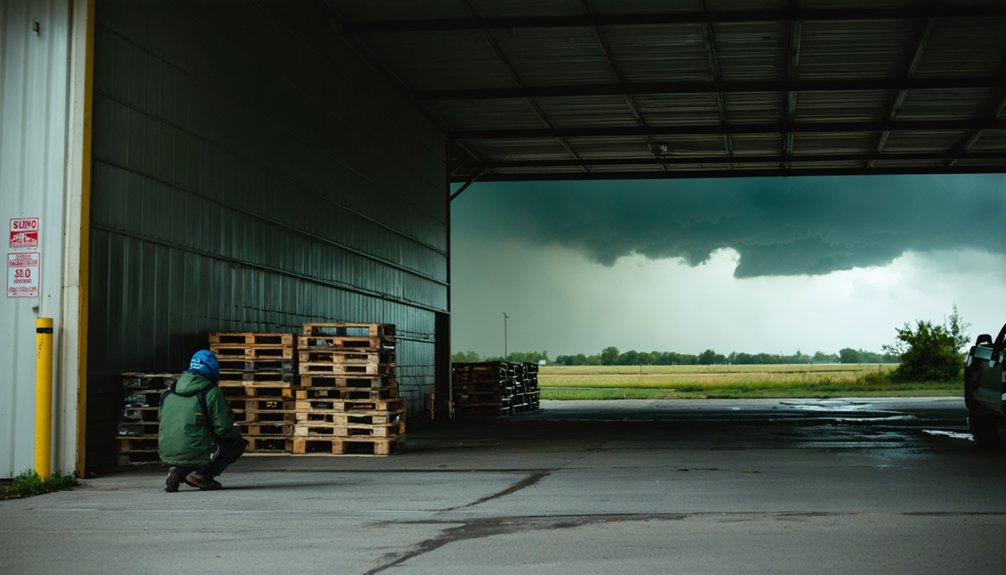
Storm chasers and seasoned shelter-seekers know that grocery stores aren’t just supply stops before a chase—they’re tactical shelter options when options run short.
When a tornado closes in and dedicated shelters aren’t reachable, the back storage areas of a grocery store offer legitimate protection. You’ll want to push through those storage doors immediately and position yourself centrally, away from exterior walls, windows, and loading dock entries.
Key positioning principles inside grocery store shelter spots:
- Head to back storage rooms — farthest from exterior walls and glass
- Stay low on the floor — reduces flying debris impact
- Avoid the main sales floor — ceiling fixtures and shelving become projectiles
- Clear obstacles around you — boxes and equipment create injury hazards
Church Basement Shelters Along Common Chase Routes
Church basements rank among the most reliable emergency shelter options along common tornado chase corridors, and knowing which ones sit near active routes can cut critical decision time when a storm closes fast.
As a storm chaser, you’re already plotting intercept paths, so layer church basement locations into your pre-mission route planning. Glenn Park Christian Church at 2757 S. Glenn Ave. in Wichita holds 100+ occupants and sits near active southern Kansas chase corridors.
Once inside a church basement, position yourself centrally, away from doors, windows, and exterior walls. Stay low and crouch against interior walls.
Position yourself centrally inside a church basement, away from doors, windows, and exterior walls — stay low against interior walls.
Use the Tornado Shelter Finder app offline to verify additional church basement options before you launch. Pre-identifying these locations keeps your options open when conditions deteriorate faster than anticipated.
Safe Positions Inside Stadiums and Large Arenas
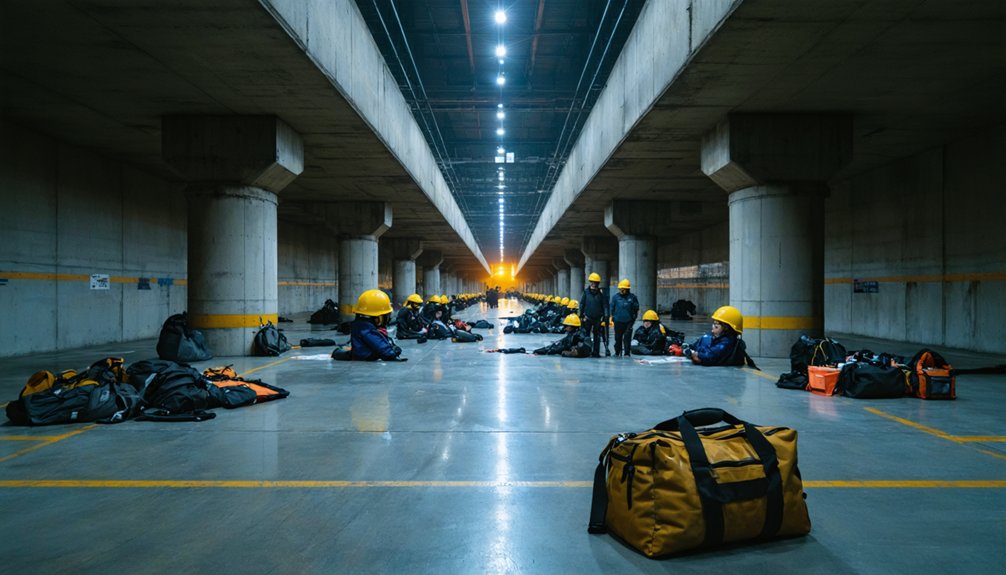
Basements and low-profile structures cover most shelter scenarios, but large venues like stadiums and arenas demand a different positioning strategy when you’re caught inside one during a tornado warning.
Understanding stadium layouts and emergency protocols could save your life.
Move immediately to the seating bowl‘s lower interior sections and stay away from concourse areas lined with doors and windows.
- Crouch low against interior seating bowl walls
- Avoid glass-fronted concourses and exterior entry points
- Follow venue staff directing you toward designated emergency shelter zones
- Cover your head and stay flat against reinforced interior structures
You’re responsible for your own positioning decisions.
Don’t wait for crowd movement to guide you — act on your knowledge first.
How to Read a Building for Shelter When the Sky Turns
When the sky turns threatening, you’ve got seconds to scan a building’s layout and identify interior safe zones — look for hallways, storage rooms, and reinforced concrete cores positioned away from exterior walls.
You’ll want to avoid any space with windows, glass partitions, or curtain walls, since structural failure there poses serious fragmentation risk.
Watch for load-bearing walls, stairwell enclosures, and posted emergency shelter signs — these structural markers tell you where a building’s designers anticipated the need for protection.
Spotting Interior Safe Zones
Apply these safe zones principles immediately:
- Central interior rooms — bathrooms, closets, and hallways redirect force away from occupants.
- Low floor positioning — crouch or sit flat to reduce exposure to airborne debris.
- Storage areas — back-of-building stockrooms in grocery stores or warehouses offer reinforced buffer zones.
- Distance from doors and windows — even reinforced entry points become projectile risks during peak wind loads.
You’re responsible for reading that space fast.
Train your eye before the storm demands it.
Avoiding Windows And Glass
Once you’ve locked in your interior safe zone, the next threat to account for is glass.
Window risks aren’t limited to direct impact — shattered panes travel fast and far, turning debris into projectiles that cut through clothing and skin.
Glass hazards extend beyond exterior windows. Interior glass partitions, display cases, and decorative panels all shatter under pressure differentials a strong tornado creates.
You need to position yourself where no sightline connects you to any glass surface.
That means avoiding hallways that terminate at exterior doors and steering clear of open office layouts with floor-to-ceiling windows.
Drop low, face away from any glass you can’t fully exit from, and place structural walls between yourself and every pane in the building.
Reading Structural Shelter Signs
Every building tells you where to go if you know what to read. Structural integrity shows itself through load-bearing walls, reinforced concrete, and interior corridors built without windows.
You’re looking for signs the building can absorb lateral force. Shelter signage, where posted, confirms designated safe zones—but you can’t always count on it being there.
Train your eyes to identify:
- Reinforced concrete or masonry walls — they handle wind shear better than framed partitions
- Central hallways without exterior exposure — low debris risk, strong overhead support
- Below-grade access points — basements and utility corridors outperform any above-ground room
- Load-bearing column placement — columns signal structural priority zones worth positioning near
Read the building fast. Your life depends on the seconds you spend doing it right.
Using Tornado Shelter Finder Apps During an Active Chase
When seconds count during an active tornado chase, having the Tornado Shelter Finder app pre-loaded and ready on your device can mean the difference between finding cover and being caught in the open.
This tool’s offline access capability guarantees you’re not dependent on spotty cell service when towers go down mid-storm.
Use the shelter app features to filter results by distance and capacity, prioritizing locations like Haysville Community Shelter’s 200-person capacity over smaller sites.
You can also add or edit shelter entries, keeping your database current before you deploy.
Pair the app with emergency notification systems to cross-reference real-time alerts with nearby shelter options.
Don’t wait until a tornado is bearing down—configure your settings, download offline maps, and verify shelter routes before you ever leave the driveway.
Shelter Options Chasers Use Along Classic Tornado Alley Routes
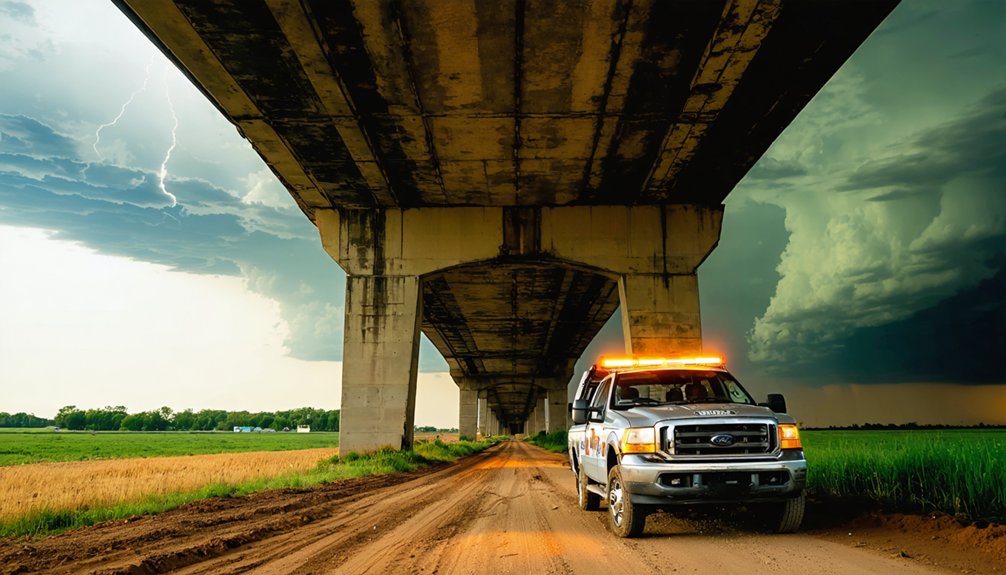
Along classic Tornado Alley routes, chasers rely on a layered set of shelter options that balance proximity, capacity, and accessibility under pressure.
You’ll encounter multiple shelter types across Kansas and Oklahoma corridors, each serving distinct storm safety needs when conditions shift fast.
Key shelter options chasers prioritize along active routes:
- Community centers and city halls — like Haysville’s 200-person facility — offer verified capacity with reinforced construction.
- Church facilities such as Glenn Park Christian Church provide mid-range capacity at 100+ persons with interior room access.
- Fire stations deliver structural integrity plus emergency coordination resources on-site.
- Municipal emergency operations centers like Wichita Sedgwick Co. EOC support 1,000+ occupants with professional emergency management staff.
You need these locations pre-loaded before you deploy — not during pursuit.
Frequently Asked Questions
Can Storm Chasers Legally Enter Closed Public Shelters During Active Emergencies?
You can’t legally enter closed public shelters without authorization, even during active emergencies. Always follow emergency protocols to avoid serious legal implications — respect official access restrictions and coordinate with local emergency management before attempting shelter entry.
How Do Storm Chasers Communicate Shelter Locations to Other Chasers Nearby?
You’ll share shelter locations through real-time radio frequencies, GPS coordinates, and storm tracking apps like Tornado Shelter Finder, enabling rapid shelter mapping updates with nearby chasers so everyone’s got immediate, accurate access to life-saving locations.
What Shelter Capacity Limits Should Storm Chasers Consider When Arriving Late?
Like a medieval town crier warning villagers, you’ve got to know your limits! When arriving late, check shelter size and occupancy limits fast—Haysville holds 200, Wichita fits 1,500. Don’t assume vacancy; always have backup options ready.
Are Storm Chaser Vehicles Ever Considered Safe Temporary Shelter Options?
You shouldn’t rely on storm chaser vehicles as safe temporary shelter options. They’re vulnerable to high winds and debris. Prioritize vehicle safety by practicing storm preparedness—always seek reinforced interior structures over any vehicle during active tornado threats.
How Often Are Shelter Databases Updated After Tornado Seasons End?
Shelter database accuracy isn’t guaranteed on a fixed schedule—you should verify listings independently after each tornado season. Timing matters, so actively check updates, as the database allows you to add or edit shelters yourself.
References
- https://survive-a-storm.com/tornado-shelter-finder/
- https://www.lakemartinstormshelters.com/news/safest-spot-storm-shelter
- https://www.youtube.com/watch?v=5mV7s_dgqq8
- https://www.dailymotion.com/video/x9fj6jg
- https://findyourtornadoshelter.com