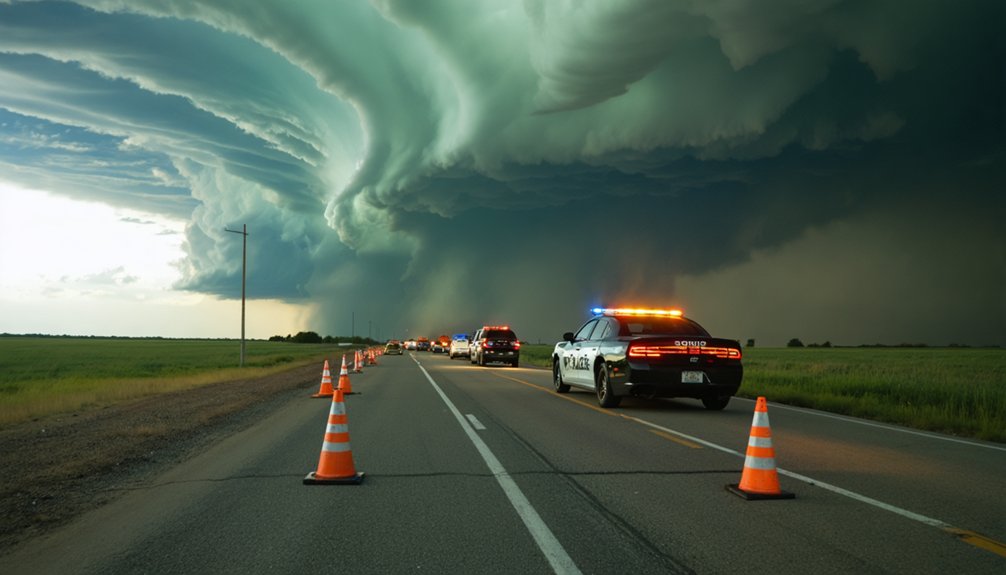
Cities are restricting storm chaser access because amateur chasers are flooding emergency corridors during severe weather, creating dangerous gridlock that blocks first responders. When a tornado warning goes out, you’ll see highways instantly jammed with smartphone-equipped thrill-seekers who turn critical routes into spectacles. Oklahoma has even proposed licensing bills to control road access and prioritize emergency vehicles. Stick around, because what these regulations actually require — and who they truly protect — gets far more complicated.
Key Takeaways
- Amateur storm chasers flooding highways during severe weather create dangerous gridlock that significantly complicates emergency response efforts.
- The surge in storm chasing, driven by smartphones and social media, has overwhelmed roads during critical emergencies.
- Unregulated independent chasers can obstruct access routes, potentially trapping civilians and hindering first responders reaching affected areas.
- Licensed chasers equipped with sirens and lights may drive more aggressively, increasing risks in already chaotic conditions.
- Minimal fines and weak enforcement make existing regulations largely ineffective at deterring dangerous storm chasing behavior.
Why Storm Chasers Are Clogging Roads During Emergencies
Storm chasing has exploded in popularity over the past decade, and technology is largely to blame. Smartphones, GPS, and social media have lowered the barrier to entry, flooding highways with amateur chasers whose storm chaser motivations range from scientific curiosity to viral fame.
During severe weather outbreaks, this surge creates dangerous gridlock on roads that emergency responders desperately need clear.
You’ve likely seen the footage — convoys of vehicles swarming tornado-warned areas, turning rural highways into parking lots. These traffic safety concerns aren’t hypothetical; they’re documented incidents that have complicated evacuations and delayed first responders.
When roads clog during active emergencies, lives are at risk. That reality is precisely why Oklahoma and other states are now considering stricter controls on who gets access to these corridors.
What Oklahoma’s Storm Chaser Licensing Bills Actually Require
Oklahoma isn’t playing around with its proposed storm chaser legislation — two bills are now on the table, and they’re built around very different levels of intervention.
Understanding the licensing implications matters before you hit the road.
Before you chase your first storm, know exactly what licensing demands — and what it could cost you.
Here’s what storm chaser regulations under these bills actually demand:
- Criminal background check — you must clear it before receiving any license.
- Proof of insurance — non-negotiable for approval.
- Endorsement requirement — media or university chasers need sign-off from a meteorologist or academic official.
- Vehicle equipment mandates — HB 2426 requires tracking devices, lights, signage, and sirens.
Licensed chasers gain emergency vehicle status, including access to closed roadways.
Violations carry fines up to $500 and possible license revocation.
Know exactly what you’re agreeing to.
Which Storm Chasers Get Licensed: and Which Get Blocked
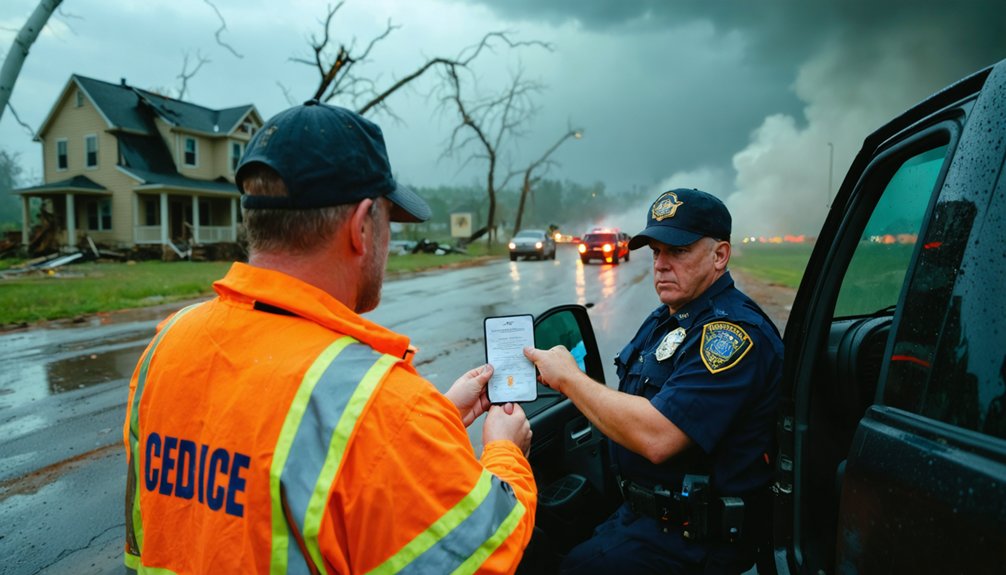
Under HB 2426, not every chaser makes the cut — and the dividing line falls sharply between institutional and independent operators. If you’re affiliated with a university, media outlet, or hold a meteorologist’s endorsement, you qualify.
Licensed chasers in these categories gain emergency vehicle status, road access, and the authority to operate where others can’t.
But if you’re an independent chaser or streamer, you’re facing real amateur restrictions. You must yield to licensed vehicles, and closed roads stay closed to you — regardless of your experience or skill level.
The $500 licensing fee alone won’t grant you entry without institutional backing.
This structure effectively hands TV networks and universities control over who gets access, leaving independent operators locked out when it matters most.
Why These Licensing Rules Could Make Roads More Dangerous
Granting emergency vehicle status to licensed chasers doesn’t automatically make roads safer — it may do the opposite. Emergency access without accountability creates new hazards, not solutions.
Consider what licensing actually enables:
- Reckless driving through fields and fences becomes easier when consequences disappear behind a license plate.
- Sirens and lights signal authority, encouraging aggressive maneuvering in already chaotic conditions.
- Fines capped at $500 provide little deterrent against life-threatening decisions during active storms.
- Road closures enforced by licensed chasers can trap civilians in dangerous positions, limiting your escape routes.
The bill claims it won’t protect reckless drivers, but its enforcement mechanisms remain weak.
You deserve regulations that genuinely reduce danger — not ones that institutionalize it.
Will Oklahoma’s Storm Chasing Bill Actually Be Enforced?
Even if Oklahoma’s storm chasing bills pass, enforcing them presents serious practical challenges.
Think about it — during a severe weather outbreak, law enforcement’s priority is public safety, not checking chaser credentials. Regulatory skepticism runs deep among experienced chasers, many with 40+ years in the field, who question whether these rules will hold up when roads are chaotic and storms are moving fast.
Enforcement challenges don’t stop there.
Who verifies that an unlicensed chaser yielded to a licensed one? Who tracks violations when everyone’s scrambling? The $500 fine feels more symbolic than deterrent.
The bill’s author already ordered an interim study due to significant pushback, signaling that even lawmakers recognize the gaps.
You should watch this legislation carefully — it’s far from settled.
Frequently Asked Questions
Could Oklahoma’s Storm Chasing Regulations Influence Other States Like Kansas?
Yes, Oklahoma’s rules could shape Kansas’s approach. You’ll notice both states share anti-chasing sentiment, and as storm chaser ethics evolve, emergency response collaborations may push Kansas toward similar licensing frameworks protecting public safety.
Do Storm Chasers Provide Emergency Services Beyond Just Weather Tracking?
Yes, you’ll find storm chaser contributions extend far beyond weather tracking. They’re actively serving as EMTs, first responders, traffic directors, and providing emergency communication through live streams, offering critical lifelines to those directly in harm’s way.
How Do Live Streams From Storm Chasers Help People in Danger?
Like a lighthouse guiding ships through a storm, chasers’ live streams give you real-time updates when you’re in danger’s path. You’ll gain critical safety awareness, helping you make life-saving decisions instantly.
What Criminal Background Requirements Must Licensed Storm Chasers Meet?
To meet licensing standards, you’ll need to pass a criminal history check. This requirement guarantees you’ve a clean record before gaining access to closed roadways, protecting both your freedom to chase and public safety.
Could Storm Chasing Licenses Eventually Be Revoked for Violations?
Yes, you could lose your license for violations. The proposals include fines up to $500 and possible revocation, making chaser accountability real. License enforcement exists, so you’ll want to protect your hard-earned chasing freedom carefully.
References
- https://www.foxweather.com/lifestyle/ok-rules-severe-weather-tornado
- https://www.youtube.com/watch?v=3z3dJvT4K0k
- https://abc7amarillo.com/news/local/oklahoma-storm-chasers-oppose-licensing-bill-fear-increased-danger-bary-nusz-house-bill-2426-tornadoes-severe-weather