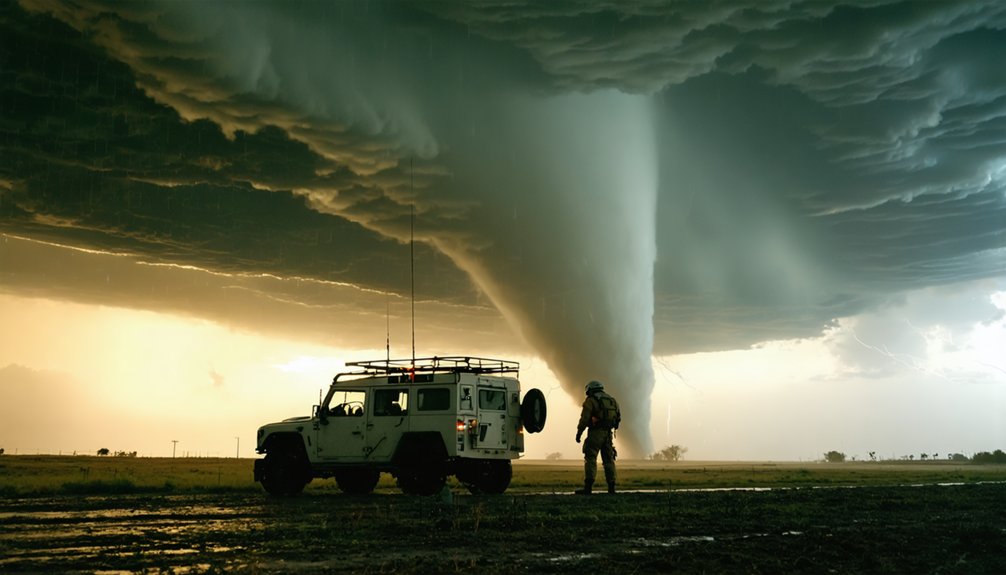
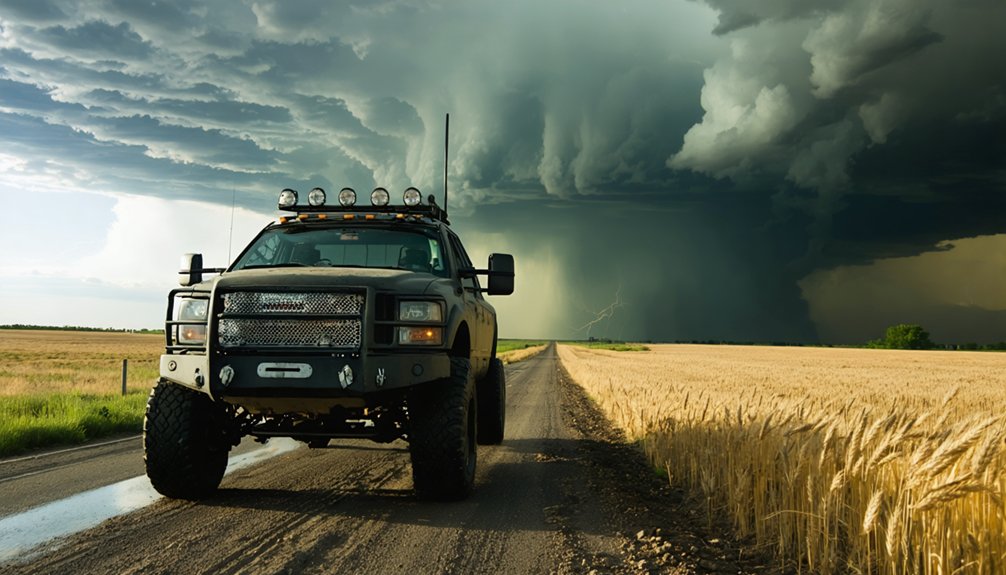
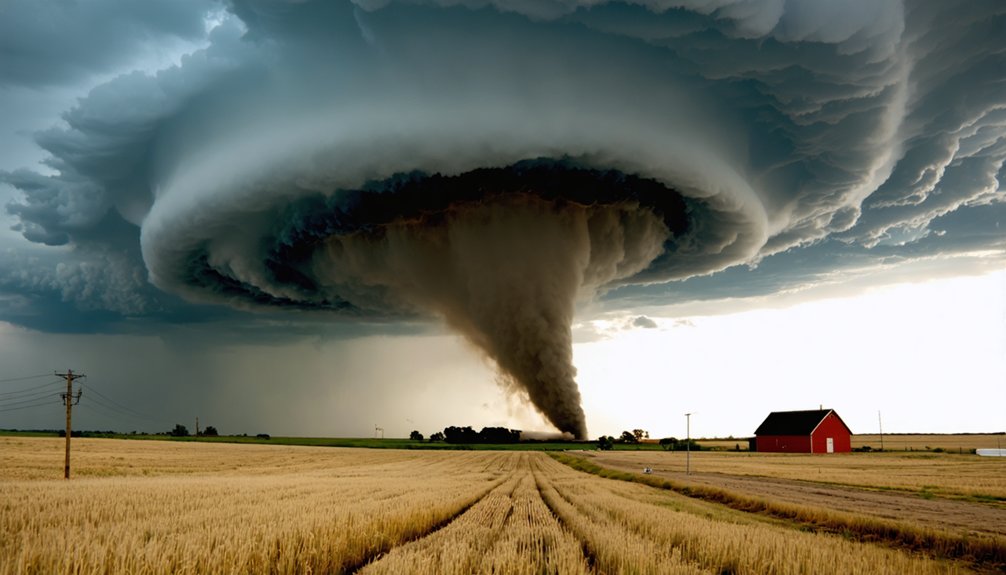
If you want to understand top storm chaser success stories in Tornado Alley, start with Reed Timmer’s armored Dominator intercepts, where disciplined preparation and radar precision—not recklessness—produced landmark tornado documentation. Elite chasers combine dual-polarization radar reads, wind shear analysis, and GPS-synchronized repositioning to execute repeatable intercepts. Commercial tours have logged EF3 catches in the Texas Panhandle using identical methodology. The most iconic intercepts share one common thread you’ll want to explore further.
Key Takeaways
- Reed Timmer’s armored Dominator vehicle enabled historic close-range tornado intercepts, producing scientific data that advanced understanding of tornado mechanics.
- Elite storm chasers combine meteorological training, radar interpretation, and rapid repositioning to consistently intercept tornadoes across Tornado Alley.
- Commercial storm chasing tours have recorded notable catches, including EF3 intercepts in the Texas Panhandle and Kansas mothership supercells.
- Dual-polarization radar, mobile units, and GPS-synchronized positioning have dramatically improved storm tracking precision and intercept success rates.
- High-resolution 4K and 6K cameras transform field intercepts into structured data collection, directly influencing modern forecasting models.
Reed Timmer’s Most Legendary Tornado Alley Intercepts
Reed Timmer has built his reputation on high-risk, close-range tornado intercepts across Tornado Alley, using the armored Dominator vehicle to document near-surface wind behavior and storm structure with multi-camera, high-resolution video. His approach blends meteorological innovation with calculated risk management, positioning him consistently inside violent storm environments that most chasers avoid.
During a May 20 event west of Huntsville, Alabama, he claimed what he described as “the most insane tornado intercept ever,” reinforcing his pattern of extreme-proximity field operations.
You’ll find his work sits at the intersection of scientific documentation and public-facing media, producing credible footage that advances understanding of tornado mechanics. His repeated success across multiple seasons demonstrates that disciplined preparation and technical execution, not recklessness, drive his results.
What Separates Elite Storm Chasers From the Rest
While raw ambition drives many into the field, elite storm chasers separate themselves through a precise combination of meteorological training, radar interpretation, and rapid repositioning under fast-changing conditions. Your meteorological expertise determines whether you’re intercepting a tornado or caught in a dangerous position with no exit.
Meteorological expertise doesn’t just improve your odds — it determines whether you intercept the storm or become its victim.
Elite chasers read wind shear data, dryline positioning, and supercell structure before they deploy. They’re not reacting — they’re anticipating.
Risk management isn’t optional; it’s embedded into every routing decision, fuel stop, and abort threshold.
What separates the best isn’t just boldness. It’s disciplined forecasting accuracy built across multiple seasons, reliable vehicles, and the ability to reposition within minutes.
You’ll find that consistent field performance — not singular dramatic moments — defines who earns lasting credibility in Tornado Alley.
The Skills That Drive Storm Chasing Success in Tornado Alley
Those disciplines—forecasting accuracy, radar reads, and repositioning speed—aren’t isolated traits. They form an integrated skill set that determines whether you intercept a tornado or miss it entirely.
Effective storm chase logistics require you to model atmospheric data early, identify dryline setups, and pre-position before convection initiates. You’re not reacting—you’re anticipating.
Weather prediction separates productive chasers from those burning fuel on dead storms. You need to read wind shear profiles, moisture convergence, and cap strength before leaving base.
Once you’re mobile, radar interpretation must be continuous and precise—storm-relative velocity data tells you rotation depth and intensity in real time.
Speed matters only when direction is correct. Combine accurate forecasting with disciplined logistics, and you’ll consistently reach tornadic supercells before they dissipate.
Best Commercial Storm Chasing Tours and Their Biggest Catches
If you’re looking to experience Tornado Alley storm chasing without building years of meteorological expertise yourself, commercial tour operators give you direct access to supercell intercepts guided by seasoned professionals.
Extreme Tornado Tours, for example, has logged standout catches including a close-range EF3 intercept in the Texas Panhandle and what they’ve called a “mothership supercell of the ages” in western Kansas.
The best tours succeed because they combine real-time radar analysis, strategic repositioning, and strict safety protocols to consistently put clients in range of significant tornado events.
Top Commercial Tour Operators
Commercial storm-chasing tours have turned Tornado Alley into a structured, repeatable product—and the best operators back that claim with documented catches. Extreme Tornado Tours stands out, logging a close-range EF3 intercept in the Texas Panhandle and a textbook mothership supercell across western Kansas. These aren’t lucky encounters—they’re the result of precise weather prediction and deep knowledge of regional storm patterns.
You’ll find that top operators combine professional-grade radar interpretation, disciplined vehicle positioning, and real-time forecast adjustments. They move when conditions shift and hold when margins tighten.
That operational precision separates documented success from missed opportunities.
If you want verifiable access to severe storm environments, the strongest commercial tours deliver consistency across multiple seasons—not just one headline intercept, but repeatable, structured performance in proven terrain.
Biggest Tornado Intercept Catches
A handful of commercial storm-chasing tours have built their reputations on documented, close-range tornado intercepts that go beyond seasonal averages. Extreme Tornado Tours recorded a notable EF3 intercept in the Texas Panhandle and positioned clients near a “mothership supercell” in western Kansas — both achieved through disciplined meteorological techniques and strict safety protocols.
You’re not just riding along; you’re benefiting from operators who combine radar interpretation, dryline positioning, and real-time storm-structure analysis to maximize intercept probability. These tours target Tornado Alley’s core — Texas, Oklahoma, and Kansas — where supercell frequency and wind shear create repeatable opportunities.
The best catches aren’t accidental. They reflect precise forecasting, rapid repositioning, and calculated risk management, giving you access to documented tornado events that most chasers never reach in an entire career.
What Makes Tours Successful
Those documented intercepts don’t happen by accident — they reflect the operational systems that separate successful commercial tours from the rest. When you choose a tour, you’re betting on their execution under pressure.
Three factors consistently define winning operations:
- Weather prediction accuracy — Top tours use professional-grade models and experienced meteorologists to position you within striking distance before storms develop.
- Storm safety protocols — Structured escape routes, redundant radar feeds, and disciplined decision-making keep you mobile and protected during rapidly evolving supercells.
- Logistical precision — Vehicle reliability, real-time repositioning, and route flexibility determine whether you intercept or miss entirely.
Extreme Tornado Tours’ EF3 intercept in the Texas Panhandle and their western Kansas mothership supercell didn’t happen by luck — they happened because every system worked exactly as designed.
National Geographic Chasers Who Changed Tornado Alley Field Work
When National Geographic began featuring storm chasers in Tornado Alley, it shifted field work from informal intercepts toward structured documentation prioritizing storm structure analysis, positioning, and timing.
These chasers dismantled tornado myths and weather folklore by replacing anecdotal accounts with reproducible, high-resolution visual data collected under controlled field conditions.
You’ll notice their methodology emphasized consistent access to supercell environments across the central Plains, where drylines and wind shear generate frequent tornado-favorable setups.
Rather than chasing spectacle, they prioritized measurable outcomes — usable footage, structural documentation, and repeatable positioning accuracy across multiple seasons.
Their influence reshaped what serious field work looks like. If you’re studying Tornado Alley intercept culture, their standard of combining meteorological precision with disciplined field execution remains the benchmark serious chasers reference today.
The Most Iconic Tornado Alley Intercepts Ever Documented
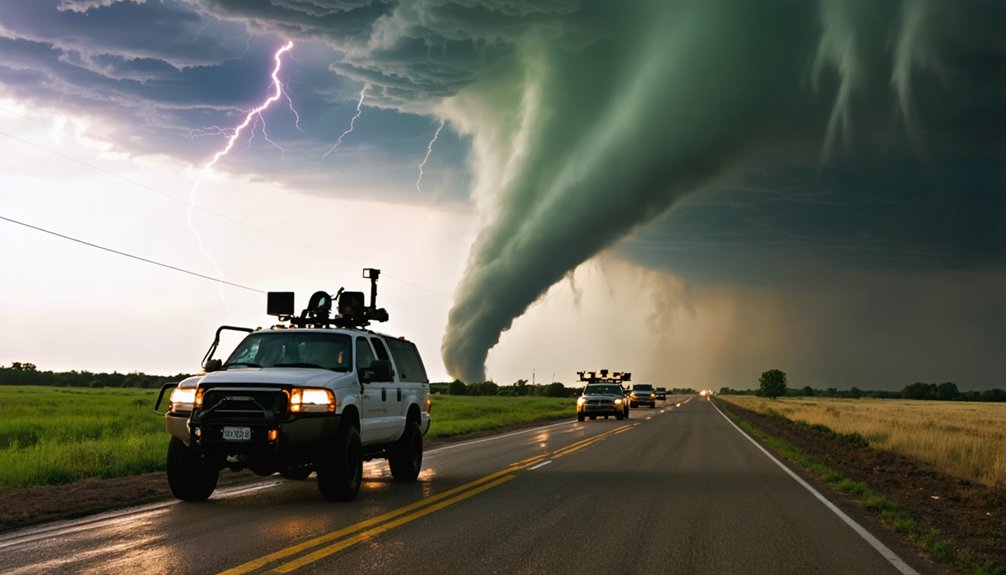
Few intercepts in Tornado Alley’s documented history match the scientific and cultural weight of the standout cases that defined modern field standards.
You’ll find that the most iconic runs share three measurable traits:
- Precise meteorological analysis that positioned chasers ahead of storm motion, not reacting to it.
- Detailed storm structure documentation capturing wall clouds, mesocyclone rotation, and near-surface wind behavior across multiple camera angles.
- Repeatable field performance across consecutive seasons, proving that elite intercepts aren’t accidents—they’re engineered outcomes.
Reed Timmer’s Alabama intercept and Extreme Tornado Tours’ EF3 contact in the Texas Panhandle both reflect this standard.
You’re not chasing luck here—you’re chasing preparation. The data collected from these runs continues shaping how forecasters and field teams operate today.
How Modern Technology Reshaped Storm Chasing in Tornado Alley
When you’re steering a fast-moving supercell, real-time radar platforms like GR2Analyst and RadarScope give you dual-polarization data that earlier chasers simply didn’t have.
You can now mount high-resolution cameras capturing 4K footage at 120 frames per second, turning raw intercepts into scientifically usable documentation of near-surface tornado behavior.
Mobile data integration ties these tools together, letting you stream live telemetry, update positioning, and coordinate with other chasers without breaking field momentum.
Real-Time Radar Advances
Many of the most critical breakthroughs in modern storm chasing trace directly to real-time radar technology, which transformed how chasers in Tornado Alley identify, track, and intercept severe storms.
Combined with satellite imagery and climate modeling, radar gives you sharper, faster storm data than any previous generation of chasers accessed.
Three advances that changed the game:
- Dual-polarization radar — it distinguishes rain, hail, and debris, letting you confirm tornado presence with precision.
- Mobile radar units — they push high-resolution data directly into the field, cutting your repositioning lag dramatically.
- Integrated satellite imagery overlays — they reveal mesoscale convective structure before a supercell fully organizes, giving you a positioning edge.
Climate modeling further sharpens your seasonal outlook, helping you target high-probability chase days weeks in advance.
High-Resolution Camera Technology
High-resolution camera technology has redefined what storm chasers can extract from a single intercept. You’re no longer limited to grainy footage that leaves wind speed and tornado structure open to interpretation. Modern 4K and 6K cameras capture near-surface rotation, debris fields, and condensation funnels with clinical precision, producing documentation that holds up against satellite imagery and historical records alike.
Reed Timmer’s multi-camera Dominator setup exemplifies this shift—every intercept generates layered visual data that meteorologists can analyze frame by frame. You gain freedom from ambiguity. What once required post-storm surveys now appears directly in the footage.
High frame rates freeze rapid structural changes, giving researchers measurable evidence rather than eyewitness accounts. Camera technology has turned field positioning into a data acquisition strategy, not just spectacle.
Mobile Data Integration
Mobile data integration has collapsed the gap between atmospheric modeling and field decision-making into a single dashboard you can mount on a chase vehicle’s dash. Real-time storm modeling feeds you updraft tilt, rotation depth, and hail probability simultaneously, cutting reaction time dramatically.
Three capabilities now define competitive intercept operations:
- Data visualization overlays merge radar, surface observations, and mesoscale analysis into one actionable display you interpret while moving.
- Mobile hotspot redundancy keeps your modeling pipeline live even when you’re deep in rural Tornado Alley terrain.
- GPS-synchronized storm-relative positioning lets you calculate intercept angles against a tornado’s forward motion with measurable precision.
You’re no longer guessing. You’re executing calculated field decisions backed by live atmospheric data, exactly the operational freedom serious chasers demand.
Frequently Asked Questions
What Time of Year Is Best for Tornado Chasing in Tornado Alley?
You’ll find peak tornado chasing conditions from late April through June, when seasonal patterns align with maximum wind shear and instability. Leverage weather forecasting tools to target prime supercell development across the central Plains.
How Much Does Joining a Commercial Storm Chasing Tour Typically Cost?
You’ll spend $3,000–$5,000 for a week-long commercial tour. Storm chasing gear and weather prediction tools are included. The storm’s closing in—your guides position you perfectly as a supercell erupts overhead.
Do Storm Chasers Need Special Permits or Licenses to Operate Legally?
You don’t need special permits to chase storms, but you’ll want proper insurance requirements covered and any equipment licensing secured for communication gear, keeping you legally compliant and free to operate across Tornado Alley’s open terrain.
How Do Storm Chasers Stay Safe During Extreme Tornado Intercepts?
Over 70% of tornado fatalities occur within 100 meters of the path. You’ll master storm safety through armored vehicles, real-time radar, and disciplined risk management—knowing when to reposition keeps you alive during extreme intercepts.
Which States in Tornado Alley See the Most Successful Chaser Intercepts?
You’ll find Texas, Oklahoma, Kansas, and Nebraska delivering the most successful chaser intercepts. You’re leveraging storm chasing gear and tornado safety protocols where supercells, drylines, and wind shear consistently create prime, repeatable interception opportunities across these free-range Plains states.
References
- https://www.nationalgeographic.com/environment/article/chasing-tornadoes
- https://extremetornadotours.com/
- https://www.nytimes.com/interactive/2024/07/19/magazine/tornado-alley-storm-chaser.html
- https://en.wikipedia.org/wiki/Storm_chasing
- https://www.instagram.com/reedtimmer/
- https://www.nationalgeographic.com/magazine/article/the-last-chase
- https://www.forbes.com/sites/jimclash/2025/05/17/the-highs-and-lows-the-booms-and-busts-of-storm-chasing/